


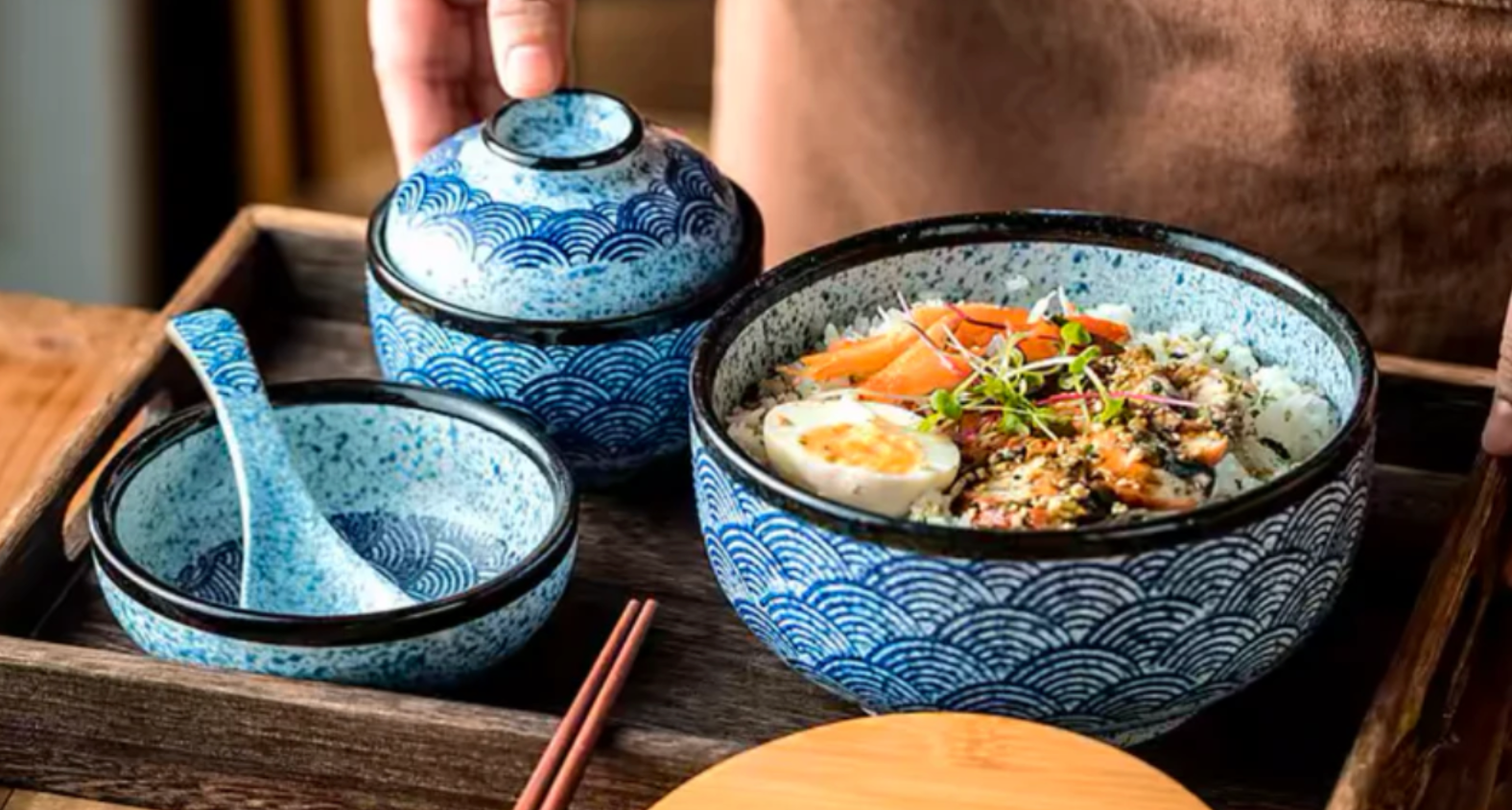
The Perfect Vessel: How Traditional Japanese Ramen Bowls Are Crafted
The heart of a great ramen experience lies not just in the broth or the noodles, but in the bowl itself. A traditional Japanese ramen bowl, or donburi, is more than just a container; it’s a crucial element of the meal, designed to showcase the dish, retain heat, and enhance the entire sensory experience.1
At Oriental Artisan, we believe that the vessel is as important as the cuisine. Here is a look at the meticulous craftsmanship and regional styles that go into creating the perfect, authentic ramen bowl.
More Than Ceramic: Understanding the Donburi
The term donburi (literally meaning ‘bowl’ or ‘container’) refers to the large, deep bowls used for rice dishes and, most commonly today, ramen.2 These bowls are purpose-built:
- Heat Retention: Their thick walls and heavy ceramic or porcelain construction are essential for keeping the broth piping hot from the first slurp to the last.
- Capacity: They are deep and wide enough to hold a generous portion of noodles, toppings, and the substantial volume of broth without spilling.3
- Visual Presentation: The shape, color, and glaze of the bowl frame the ramen, making the vibrant greens, pinks, and oranges of the toppings visually appealing against the rich broth.
The Craftsmanship: From Clay to Glaze
Traditional ramen bowls are made by skilled potters who combine historical techniques with contemporary needs. The process is a careful balance of elemental forces:
- Preparation and Shaping: The bowl begins as a lump of high-quality clay (often stoneware or porcelain). The potter meticulously throws the clay on a wheel to achieve the donburi’s signature shape — a wide mouth that tapers gracefully to a narrow foot.4 The lip must be perfectly rounded for comfort while drinking the broth.
- Bisque Firing: Once shaped and dried, the bowl undergoes its first firing in a kiln (the “bisque” firing) to solidify the clay without fully vitrifying it, making it ready for glazing.5
- Glazing: This is where the bowl gains its distinct character. The glazes are traditionally thick and rich, often applied by hand dipping or spraying. Different glazes react uniquely in the kiln, creating textures and colors that range from matte earth tones to vibrant, glossy finishes.6
- High Firing (The Yaki): The bowl is fired a second time at extremely high temperatures (often over $1200^{\circ}C$). This vitrifies the clay, making the bowl durable, non-porous, and capable of handling intense heat. The final color and texture of the glaze are revealed during this crucial, transformative step.
Regional Styles: The Bowl Reflects the Broth
Just as ramen styles vary by region, so do the bowls used to serve them:
- Arita-ware (Imari): Known for delicate, fine porcelain and intricate, hand-painted designs, often featuring deep blues or reds. These are sometimes used for lighter broths to emphasize elegance.
- Mino-ware (Minoyaki): Originating from Gifu Prefecture, this style is known for its wide variety of rustic, earthy glazes and robust forms, often used for richer broths like Miso or Tonkotsu.
- Bizen-ware (Bizen-yaki): These bowls are completely unglazed and gain their deep color and unique markings from the kiln’s ash and flame, reflecting a wabi-sabi aesthetic perfect for a truly authentic, simple presentation.7
A perfect ramen bowl is a testament to Japanese commitment to detail — a harmonious blend of form and function. It ensures the integrity of the chef’s creation, turning a simple meal into a satisfying, deep cultural experience.
Ready to complete your authentic ramen experience? Explore our collection of handcrafted Ramen bowls and bring the art of the Japanese table to your home.

Leave a comment
This site is protected by hCaptcha and the hCaptcha Privacy Policy and Terms of Service apply.