


Edo Kiriko vs Baccarat: Which Luxury Crystal Glass Is Worth Collecting?
When choosing a luxury crystal glass, should collectors choose the legendary French brilliance of Baccarat or the quiet mastery of Japanese Edo Kiriko?
The answer depends on what you value. Baccarat offers over 260 years of royal-backed French heritage, iconic status, and classical European elegance. Edo Kiriko delivers nearly two centuries of Japanese hand-cut artistry, where every piece carries the subtle imperfections of human hands and the philosophical depth of wabi-sabi.
For collectors seeking objects that transcend mere function—pieces that carry cultural memory, artisan stories, and heirloom potential—Edo Kiriko represents a compelling alternative to the grand European crystal houses. Here is why.
At a Glance: Edo Kiriko vs Baccarat
What Makes a Crystal Glass Worth Collecting?
Before comparing these two traditions, it is worth asking: what transforms a drinking vessel into a collectible?
Collectors increasingly recognize that value resides not in logos or price tags alone, but in five essential qualities:
Craftsmanship. The skill and time invested in creating each piece. Machine-made objects, however beautiful, lack the soul of human hands.
Heritage. Objects rooted in centuries-old traditions carry stories that mass production cannot replicate.
Rarity. Limited production, whether by small workshops or exclusive editions, creates scarcity.
Human Touch. The subtle variations that distinguish handcrafted pieces from identical factory outputs.
Cultural Meaning. Objects that embody a culture's aesthetic philosophy—whether French opulence or Japanese restraint—resonate on a deeper level.
As the global luxury market shifts toward slow luxury and authentic craftsmanship, collectors are asking not just what an object is, but who made it and how.
The Legacy of Baccarat: France’s Iconic Crystal House
Royal Beginnings
Baccarat's story begins in 1764, when King Louis XV of France granted permission to establish a glassworks in the small village of Baccarat in the Lorraine region. What began as a manufacturer of window panes and mirrors transformed in 1816, when the first crystal oven went into operation.
Seven years later, in 1823, King Louis XVIII gave Baccarat its first royal commission—for tableware—establishing a relationship with European royalty that would define the House for centuries.
The Science of Brilliance
In 1816, Baccarat artisans developed a closely guarded formula that transforms the four elements—earth, air, fire, and water—into crystal of unparalleled quality. This formulation, refined over more than two and a half centuries, gives Baccarat its signature clarity and brilliance.
For colored creations, Baccarat's master glassmakers enrich the crystal base with precious metallic oxides: gold for the iconic Rouge Baccarat (achieved through colloidal gold), cobalt for deep blues, manganese for purples. The crystal is fired at temperatures approaching 1,450°C using recipes that remain strictly confidential.
A Symbol of Status
Baccarat became the first crystal house to present chandelier elements in 1827 and colored pieces in 1839. By the mid-19th century, the House had served multiple European royal courts and won the gold medal at the 1855 Paris Exposition.
Today, Baccarat operates from a 12-hectare Manufacture in the Vosges forest—an "industrial cathedral" where centuries-old traditions meet technical innovation. The company has expanded into luxury hotels, with the Baccarat Hotel New York featuring the brand's chandeliers and crystal creations.
The Art of Edo Kiriko: Japan’s 200-Year Tradition of Cut Crystal
Born in Edo
Edo Kiriko was first developed in 1834, when Kagaya Kyūbei, a glassware seller in Edo's Ōdenmachō district (present-day Tokyo), experimented with engraving patterns on glass surfaces using emery sand. The name kiriko comes from the Japanese word kiru—to cut—and refers to the technique of carving patterns into glass.
The craft flourished during the Meiji era (1868–1912), when European cut-glass techniques and modern equipment were introduced, establishing the present style of Edo Kiriko. By the 1920s, improvements in glass materials and grinding methods elevated the quality of Edo Kiriko to new heights.
A Certified Traditional Craft
In 2002, Edo Kiriko was designated a traditional craft by Japan's Minister of Economy, Trade and Industry. It is recognized as a Tokyo Traditional Craft, representing the pinnacle of Japanese cut-glass artistry.
The Cutting Technique
Edo Kiriko is created by carving intricate patterns into the surface of layered colored glass using diamond-tipped grinders. The process begins with waridashi (marking the cutting lines), followed by multiple stages of grinding and polishing using both人工 abrasives and natural stones.
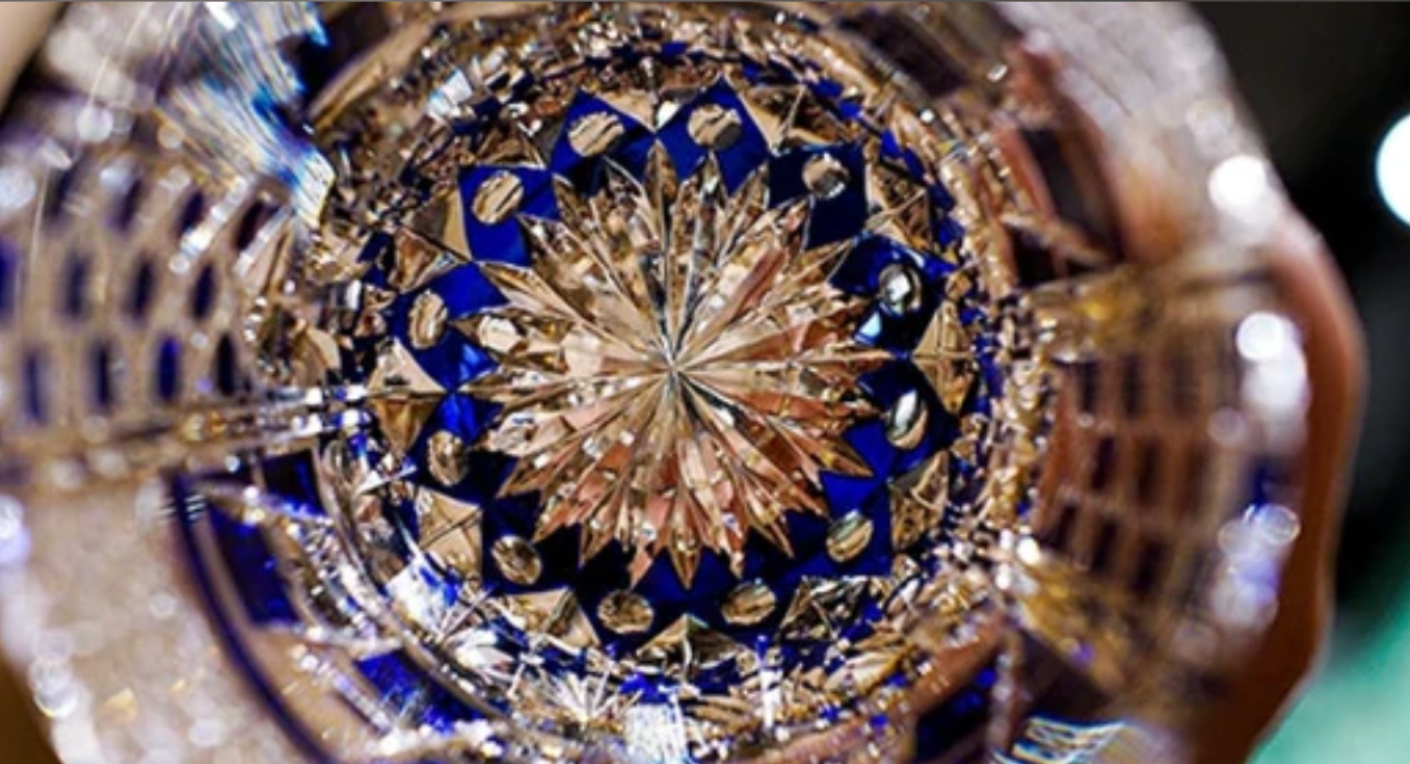
What distinguishes Edo Kiriko from European crystal is the layered glass technique. Pieces are typically produced from colored glass blanks with a transparent outer surface and a contrasting interior color. When the artisan cuts through the outer layer, the inner color is revealed, creating the signature contrast that defines Edo Kiriko.
Patterns with Meaning
Every cut in Edo Kiriko carries a name and profound cultural significance:
-
Kiku-tsunagi (Chrysanthemum Mesh): Resembling interconnected chrysanthemums—Japan's national flower—this pattern symbolizes longevity and rejuvenation.
-
Kagome (Basket Weave): Based on the hexagonal mesh of bamboo baskets, this pattern has long been regarded as a talisman to ward off evil.
-
Asanoha (Hemp Leaf): Symbolizing healthy growth and the resilient expansion of new endeavors.
-
Nanako (Fish Roe): Signifying fertility and continuous prosperity.
These motifs, drawn from patterns seen on traditional kimono, connect Edo Kiriko to the broader tapestry of Japanese visual culture.
The Artisan's Touch
Perhaps the most remarkable aspect of Edo Kiriko is that master artisans create these intricate geometric patterns without preliminary sketches. The designs are drawn freehand, guided by decades of experience, the sound of the grinding wheel, and the vibration felt through the fingertips.
Watching a master carve complex geometries in focused silence is "like witnessing a virtuoso's improvisation". Each piece carries subtle variations—the unmistakable signature of human hands at work.
Edo Kiriko vs Baccarat: Craftsmanship Compared
Cutting Techniques
Baccarat employs precision European crystal cutting, where symmetry and optical brilliance are paramount. The process involves teams of specialized artisans working in a large-scale Manufacture. Pieces are crafted through a combination of hand-blowing and machine-assisted cutting, with approximately 60% of pieces meeting the House's exacting standards.
Edo Kiriko is entirely hand-cut, with a single master artisan responsible for the entire piece. The technique uses diamond-tipped grinders to carve deep, precise geometric patterns into layered glass. The cuts are designed to interact with light and liquid, creating a kaleidoscopic effect that reveals new dimensions with every angle.
Design Philosophy
Baccarat pursues what might be called "outward brilliance"—a dazzling, chandelier-like radiance designed to impress and command attention. This is the crystal of grand palaces, royal courts, and luxury hotels. It is unapologetically opulent.
Edo Kiriko embraces a more introspective philosophy. The artisan's greatest devotion is often directed toward the view from inside the glass. The intricate patterns are designed to be amplified by the refractive index of the liquid within, creating "a private universe" for the person holding the glass.
This distinction reflects deeper cultural differences: Baccarat represents the objective beauty of Western classical aesthetics, while Edo Kiriko prizes a subjective beauty that speaks directly to the user's inner landscape.
Which One Is More Collectible?
From a collector's perspective, the answer depends on what you collect for.
Baccarat: The Safe Blue Chip
Baccarat offers established brand recognition, a deep secondary market, and the prestige of royal European heritage. Limited editions and collaborations—such as the recent Pikachu figurine limited to 25 pieces, valued at €50,000–70,000—demonstrate the brand's ability to generate collector excitement.
However, Baccarat produces in volume. The brand's pieces are widely available, and while quality remains exceptional, the sheer scale of production dilutes exclusivity.
Edo Kiriko: The Rising Star
Edo Kiriko offers something increasingly rare in luxury: genuine scarcity. Each piece is made by a single master artisan in a small workshop. Production is inherently limited by the time and skill required.
The craft is experiencing a global resurgence, with luxury consumers seeking "one-of-a-kind homeware and barware". High-end Edo Kiriko sets can fetch tens of thousands of dollars, and the market is growing.
More importantly, Edo Kiriko offers something Baccarat cannot: the emotional connection of owning a piece made by human hands, rooted in a specific cultural tradition, carrying patterns with centuries of meaning. As one observer notes, Edo Kiriko isn't just for admiring—"it's meant to be held, used, and loved".
Edo Kiriko Whisky Glass vs Baccarat Whisky Glass
For whisky enthusiasts, the choice between these two traditions is particularly meaningful.
Baccarat Whisky Glasses
Baccarat's whisky glasses—such as the iconic Harcourt 1841 design with its hexagonal base, six facets, and triple-knob stem—embody French luxury. The Harmonie collection features cut crystal that "works magic with reflections in the colors of precious drinks or your favorite whiskey".
Prices range from approximately $150 for simpler designs to $440+ for more elaborate pieces. Baccarat glasses are designed to impress—heavy, substantial, and unmistakably luxurious.
Edo Kiriko Whisky Glasses
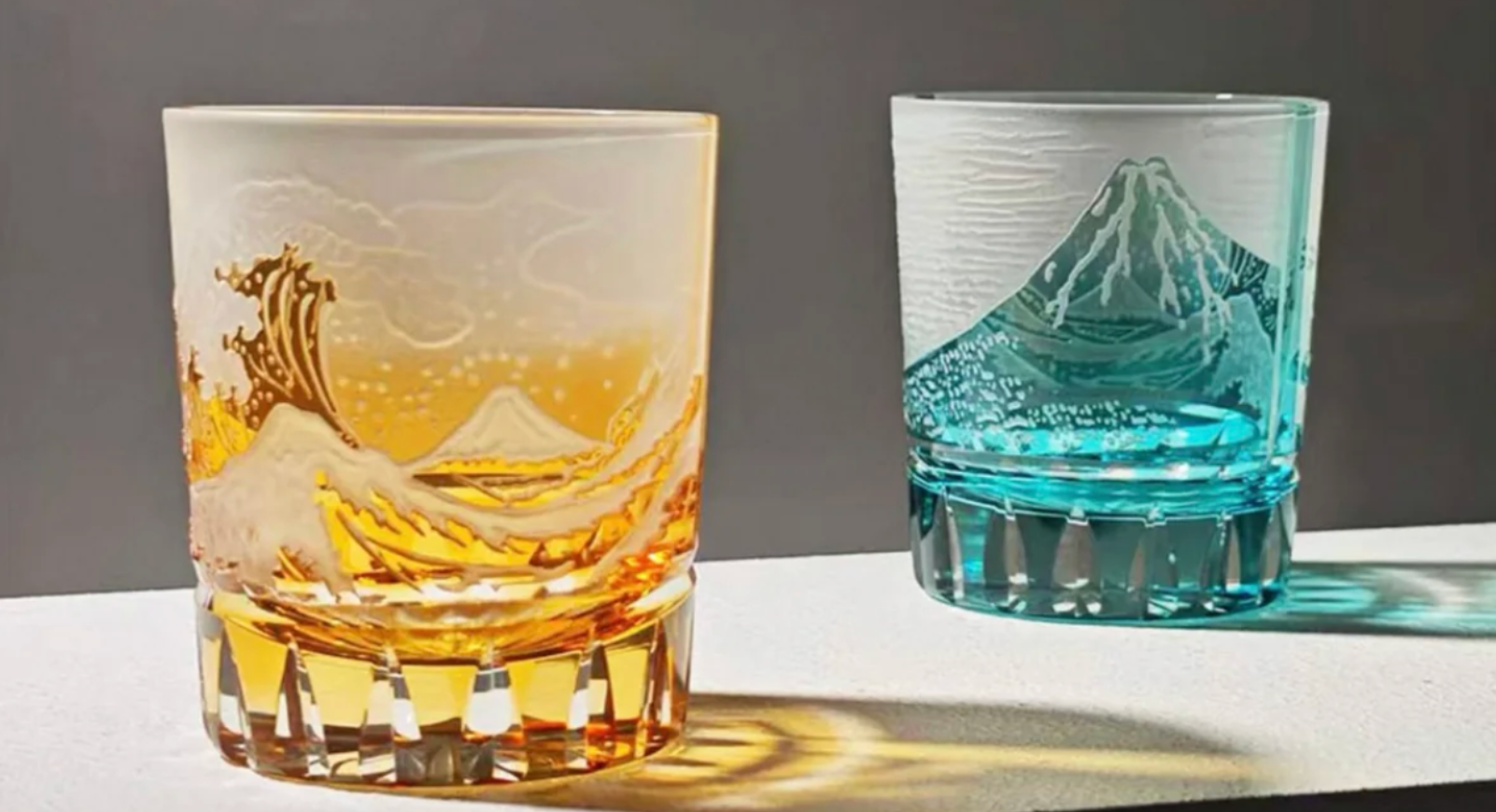
Edo Kiriko whisky glasses are designed with a different philosophy. The hand-cut patterns—whether the geometric precision of Hishibana or the fluid grace of Mai (inspired by classical Japanese dance)—are meant to enhance the whisky drinking experience from the inside out.
The tactile grip, cool touch, and "kaleidoscopic gleam" make Edo Kiriko glasses "a joy to use". Each piece is a conversation starter, carrying the story of the artisan who made it and the centuries-old tradition it represents.
Prices for authentic Edo Kiriko whisky glasses typically range from $195 to over $900, depending on the complexity of the pattern and the reputation of the artisan.
The Verdict for Whisky Collectors
For those who appreciate Japanese whisky—itself a category experiencing global renaissance—Edo Kiriko offers a natural pairing. The aesthetic harmony between Japanese whisky culture and Edo Kiriko craftsmanship creates a cohesive collecting experience that Baccarat, for all its brilliance, cannot replicate.
Why Collectors Are Turning Toward Japanese Craftsmanship
A significant shift is underway in the luxury world. Collectors are moving away from ostentatious branding toward quiet luxury—objects valued for their craftsmanship, cultural authenticity, and the stories they carry.
Japanese craftsmanship, rooted in the philosophy of monozukuri (the art of making things), embodies this shift perfectly. The global kōgei revival has brought traditional Japanese crafts to international attention, with collectors recognizing that objects made by human hands carry an emotional resonance that factory production cannot match.
The wabi-sabi aesthetic—finding beauty in imperfection, transience, and the marks of human hands—resonates with contemporary collectors seeking authenticity in an increasingly mass-produced world.
Edo Kiriko sits at the intersection of these trends: it is authentically Japanese, undeniably handcrafted, and carries centuries of cultural meaning. For collectors seeking objects that become heirlooms, it offers something increasingly rare.
How to Choose Between Edo Kiriko and Baccarat
Choose Baccarat if you value:
-
European luxury heritage with royal connections
-
Iconic brand status recognized worldwide
-
Classical elegance and unapologetic opulence
-
Established secondary market with predictable value
-
Team-crafted precision from a large Manufacture
Choose Edo Kiriko if you value:
-
Artisan craftsmanship by a single master
-
Japanese cultural heritage and the philosophy of wabi-sabi
-
Handmade uniqueness—no two pieces exactly alike
-
Quiet luxury that reveals itself over time
-
The story behind the object as much as the object itself
-
A growing collectible category with appreciation potential
Why Oriental Artisan Curates Edo Kiriko
At Oriental Artisan, we believe that the most valuable objects are not simply expensive—they are objects that carry centuries of human skill, cultural memory, and stories waiting to be passed on.
Our partnership with Japanese master artisans is built on a shared commitment to preserving traditional craftsmanship. Each Edo Kiriko piece in our collection is selected not just for its beauty, but for its authenticity, its cultural significance, and the skill of the artisan who created it.
We invite you to explore our curated collection of handcrafted Edo Kiriko whisky glasses and crystal artworks—pieces that represent not just luxury, but heritage.
Frequently Asked Questions
Is Edo Kiriko worth collecting?
Yes. Edo Kiriko offers genuine scarcity, master craftsmanship, and growing global appreciation. As a certified Tokyo Traditional Craft with nearly 200 years of history, each piece represents a tangible connection to Japanese cultural heritage. With the global shift toward authentic, handcrafted luxury, Edo Kiriko is increasingly recognized as a meaningful collectible and potential investment.
Why is Baccarat crystal so expensive?
Baccarat's prices reflect over 260 years of French luxury heritage, a closely guarded crystal formula, and the use of precious materials including gold for the iconic Rouge Baccarat. The brand's royal commissions, iconic status, and extensive craftsmanship—involving teams of specialized artisans in a historic Manufacture—contribute to its premium positioning.
What is the difference between Edo Kiriko and Baccarat?
The key differences lie in philosophy and production. Baccarat pursues "outward brilliance"—dazzling opulence designed to impress. Edo Kiriko embraces "subjective beauty"—introspective patterns designed to be appreciated from within the glass. Baccarat is produced by teams in a large Manufacture; Edo Kiriko is made by single master artisans in small workshops.
Which is the best crystal glass for whisky?
Both traditions produce exceptional whisky glasses, but they serve different experiences. Baccarat offers substantial, luxurious glasses that make a statement. Edo Kiriko offers hand-cut pieces that enhance the drinking experience through tactile pleasure and light interaction, paired naturally with Japanese whisky culture.
How can I identify authentic Edo Kiriko?
Authentic Edo Kiriko is handcrafted, resulting in slight variations that add uniqueness. Look for deep, precise cuts with geometric patterns. Genuine pieces are made by certified traditional craftsmen in Tokyo and typically come with documentation of their origin.
Conclusion
When choosing between Edo Kiriko and Baccarat, you are choosing between two distinct philosophies of luxury.
Baccarat represents the grand European tradition—crystal as spectacle, as status symbol, as the radiant centerpiece of a palace ballroom. It is magnificent, and it knows it.
Edo Kiriko represents something quieter, more intimate—crystal as companion, as meditation, as a private universe revealed only to the one holding it. It does not demand attention; it invites discovery.
For collectors seeking objects that transcend mere function—objects that carry the weight of human hands, the depth of cultural tradition, and the promise of becoming heirlooms—Edo Kiriko offers something increasingly precious in our age of mass production: authenticity.
The most valuable objects are not simply expensive. They are objects that carry centuries of human skill, cultural memory, and stories waiting to be passed on. Discover handcrafted Edo Kiriko at Oriental Artisan—where heritage meets the art of living.


Leave a comment
This site is protected by hCaptcha and the hCaptcha Privacy Policy and Terms of Service apply.