


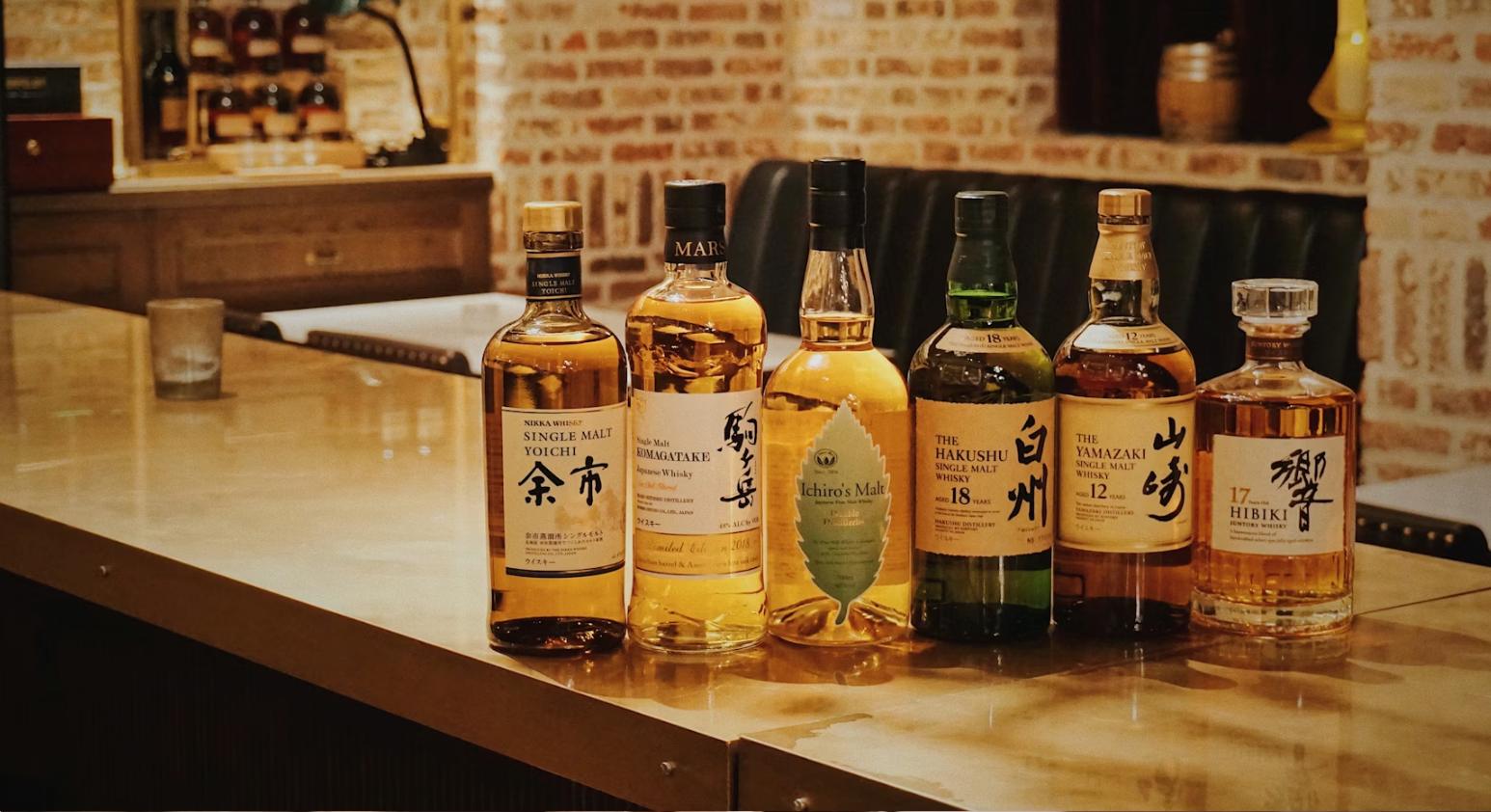
The Connoisseur’s Guide to Japanese Whisky: History, Artistry, and the Ritual of the Pour
The Philosophy of Harmony: Defining the Spirit of Wa
The landscape of Japanese whisky is governed not by the pursuit of raw power, but by the aesthetic of Wa, or harmony. While the spirit was originally modeled after the traditional methods of the Scottish Highlands, the Japanese evolution of the craft has moved toward a state of meticulous refinement, prioritizing balance over the singular, rugged intensity often found in Western counterparts. In the context of "Quiet Luxury," Japanese whisky represents a sophisticated restraint—a liquid embodiment of the minimalist design ethos where quality is signaled through the absence of discordance rather than the presence of loud, singular flavors.
The distinction between Japanese whisky and Scotch is fundamentally philosophical. Where the Scottish tradition often highlights the ruggedness of terroir through bold, peaty, or maritime profiles, the Japanese approach seeks the "engineered perfection" of the spirit. This involves a relentless focus on precision, where every rough or inconsistent element of the distillate is refined through precise blending and technical manipulation. The resulting profile is typically clean, elegant, and floral, offering a sensory experience that is approachably sophisticated yet deeply layered.
This pursuit of harmony extends into the concept of Tsukuriwake, a term meaning "diversity in making." Unlike Scottish distilleries, which traditionally focus on a singular "house style" of new-make spirit, Japanese distilleries are designed to act as comprehensive laboratories of flavor. Under one roof, a distillery like Yamazaki may utilize dozens of different yeast strains, varying fermentation lengths, and a diverse array of still shapes and sizes to produce a vast palette of component whiskies. This provides the master blender with an unparalleled range of "component colors" to create a final product that achieves a state of total sensory equilibrium.
| Philosophical Pillar | Scotch Whisky Tradition | Japanese Whisky Philosophy |
| Core Identity | Tradition and Regional Boldness | Refinement and Technical Precision |
| Environmental Role | Slow maturation in damp, cool climates | Accelerated interaction through seasonal swings |
| Flavor Profile | Intense Peat, Sea Salt, or Sherry | Honey, Green Apple, and Sandalwood |
| Distillery Logic | One Distillery, One Style | One Distillery, Infinite Diversity (Tsukuriwake) |
The Genesis of an Industry: A Century of Mastery
The narrative of Japanese whisky is defined by the symbiotic yet diverging paths of two pivotal figures: Shinjiro Torii and Masataka Taketsuru. In 1918, Taketsuru, an organic chemist from a sake-brewing family, traveled to Scotland to uncover the secrets of malt distillation. His journey took him to the heart of Speyside and Campbeltown, where he apprenticed at Longmorn and Hazelburn, meticulously documenting every aspect of production in what would become known as the "Taketsuru Notebooks".
Upon his return to Japan, Taketsuru partnered with Shinjiro Torii, a visionary who sought to create a whisky specifically tailored to the refined Japanese palate. In 1923, they established Yamazaki, the nation’s first malt distillery, in a region near Kyoto famous for its soft water and humid climate. However, the philosophical tension between Torii’s desire for a lighter, more approachable spirit and Taketsuru’s preference for a robust, Scottish-style malt eventually led to their separation.
Taketsuru eventually moved north to the island of Hokkaido, where the climate mirrored that of Scotland, to found the Yoichi Distillery in 1934. This divergence created the two giants of the industry: Suntory and Nikka. Suntory’s Yamazaki, Hakushu, and Chita distilleries focus on the ornate, fruity, and diverse blending possibilities, while Nikka’s Yoichi and Miyagikyo prioritize traditional Scottish techniques, such as the direct coal-fired stills at Yoichi—a method now largely abandoned in Scotland but preserved in Japan for its ability to produce a bold, charred character.
The Terroir of the East: Water as the Source of All Things
In the world of high-end spirits, the provenance of water is not merely a geographic detail; it is a fundamental chemical contributor to the spirit’s mouthfeel and aromatic profile. Japanese whisky production is defined by a preference for exceptionally soft water with low mineral content. High levels of calcium and magnesium, found in the harder waters of some Scottish regions and Kentucky, can lead to a "brittler" texture and can interfere with the metabolic efficiency of yeast during fermentation.
| Water Source | Distillery Association | Hardness Level | Sensory Impact |
| Rikyu no Mizu | Yamazaki (Kyoto) | Soft | Ornate, sweet essence; rich mouthfeel |
| Southern Alps Snowmelt | Hakushu (Yamanashi) | ~30 mg/L (Soft) | Crisp, herbal, minty; "forest" leaf notes |
| Yoichi River | Yoichi (Hokkaido) | Soft | Clean, refreshing; slight maritime salinity |
| Kiso Mountain Granite-Filtered | Mars Shinshu (Nagano) | Very Soft | Delicate, nuanced, and exceptionally smooth |
At Yamazaki, the distillery is situated where the Katsura, Uji, and Kizu rivers converge, creating a misty microclimate that is ideal for maturation. The water used, known as "Rikyu no Mizu," is drawn from an aquifer nurtured through mountains composed of sedimentary rocks like sandstone and limestone. This geological filtration provides enough minerals to support rich fermentation while maintaining the soft sweetness that allows the spirit's complex esters to flourish. Conversely, the Hakushu distillery, located at a much higher altitude in the Southern Japanese Alps, utilizes water filtered through granite. This results in an even crisper profile, with the water's natural purity reflecting the herbaceous and minty notes characteristic of the Hakushu "forest" malt.
The Alchemical Heart: The Mizunara Oak Legacy
The most distinctive aromatic signature in Japanese whisky is provided by Mizunara oak (Quercus mongolica var. crispula). This rare Japanese oak is native to the cold northern regions of Hokkaido and Tohoku, and its use is a direct reflection of Japanese persistence in the face of scarcity. During World War II, when trade blockades cut off the supply of American white oak and European sherry casks, Japanese distillers turned to Mizunara as a desperate alternative.
The wood was initially detested; it is highly porous and prone to leakage, earning it the reputation of "troublesome wood" among coopers. Furthermore, young spirits aged in Mizunara often displayed rough, overly woody notes. However, the discovery of the wood’s true potential required the Japanese virtue of patience. After 15 to 25 years of maturation, the wood undergoes a molecular transformation, releasing high concentrations of trans-whisky lactones.
While American oak is dominated by cis-whisky lactones, which impart vanilla and coconut, Mizunara’s trans-lactone profile introduces the profound scents of sandalwood, agarwood, and temple incense. This "Zen-like" aromatic quality has become the hallmark of premium expressions like the Yamazaki 18 and 25 Years Old.
| Wood Type | trans-3-Methyl-4-octanolide (mg/L) | Primary Aromas | Tactile Experience |
| American Oak | ~0.3 (Low) | Vanilla, Caramel, Toffee | Sweet and Creamy |
| Mizunara (20 Year) | ~2.5 (Moderate) | Sandalwood, Coconut | Silky and Ornate |
| Mizunara (40 Year) | ~29.6 (Extremely High) | Incense, Aloe, Oud | Viscous and Spiritual |
The New Wave: Pioneering the Craft Frontier
While the giants of Suntory and Nikka represent the established canon, a "New Wave" of boutique distilleries is redefining the category through extreme regionality and innovative production methods. These producers often emerge from the heritage of sake and shochu, bringing a uniquely Japanese approach to fermentation and equipment design.
Chichibu: The New Standard of Excellence
Founded by Ichiro Akuto in 2004, Chichibu is widely regarded as the pinnacle of craft whisky. Akuto’s family involvement in sake dating back to the 17th century informs his meticulous approach to malt. Chichibu utilizes floor malting, dunnage warehousing, and even onsite coopering—a rarity in any distillery world. The result is a series of single malts and "malt and grain" blends that consistently earn 90+ point ratings for their complexity and depth, often showcasing the specific terroir of the Saitama prefecture.
Shizuoka: The Art of the Wood-Fired Still
Shizuoka Distillery, located in the mountains of "Oku-Shizu," represents a fascinating intersection of history and innovation. The distillery is home to the world’s only wash still powered entirely by direct wood-firing. Local Shizuoka firewood is used to heat the still to temperatures of $800^{\circ}C$, significantly higher than the $150^{\circ}C$ typically achieved through indirect steam heating. This creates a more robust, "toasted" spirit with a powerful aromatic backbone. Shizuoka also maintains a historical link to the past by operating a still salvaged from the legendary, now-defunct Karuizawa Distillery.
Kanosuke: The Mellow Coast and Shochu Casks
Kanosuke Distillery, established by the historic shochu producer Komasa Jyozo, utilizes a three-still setup with varying neck shapes and lyne arm angles to layer flavors. Their "mellow" profile is achieved through maturation in re-charred casks that previously held "Mellowed Kozuru" rice shochu. The coastal warehouse at Fukiagehama beach allows the sea breeze to infuse the spirit with a subtle salinity, reflecting the southern Kyushu landscape.
Akkeshi and Nagahama: Regional Specialists
Akkeshi, located in the cold wetlands of Hokkaido, focuses on Islay-inspired peated malts, leveraging the island’s environment to create smoky profiles that bridge the gap between Scottish intensity and Japanese precision. Nagahama, the nation’s smallest distillery, has mastered the art of "world malt" blending. Their Amahagan series involves finishing blends of their own distillate and high-quality imported malts in unique woods like Sakura (cherry blossom), showcasing a flair for botanical experimentation.
The Ritual of the Glass: Engineering Sensory Appreciation
For the "modern epicurean," the appreciation of a fine spirit is an exercise in sensory synchronization. The choice of glassware is not a matter of style, but of physics. This is where the tradition of Edo Kiriko—the hand-cut glass art of Tokyo—serves as the ultimate bridge between the liquid and the palate.
The Functional Physics of Edo Kiriko
Edo Kiriko, originating in the early 19th century, is more than a decorative craft; it is a tool for managing light, temperature, and aeration. The magic of these glasses lies in their high-quality lead-free crystal, which offers a density and clarity far superior to common soda-lime glass.
-
Optical Enhancement: The intricate geometric cuts, such as the Asanoha (hemp leaf) or Kiku-tsunagi (chrysanthemum mesh), are designed to act as prisms. As light enters the glass, it is refracted through the facets, creating a kaleidoscopic display that accentuates the deep amber and gold hues of the whisky, a visual ritual that prepares the brain for the complexity of the taste.
-
Thermal Stability: Crystal’s density provides exceptional insulation. An Edo Kiriko glass, characterized by its substantial base and thick walls, maintains the spirit's temperature far longer than thin glassware. This is particularly critical for drinking "neat" or with a single ice sphere, as it prevents the rapid warming that can cause the spirit's more delicate floral notes to dissipate into harsh alcohol vapors.
-
Aeration Dynamics: The wide opening and slightly flared rim of Edo Kiriko "rocks" glasses are engineered to channel aromatics. The cut patterns inside the bowl technically increase the surface area of the glass, encouraging a gentle aeration as the spirit is swirled. This "unmasks" the layers of honey, fruit, and incense that the master distiller intended.
| Edo Kiriko Pattern | Cultural Meaning | Functional Benefit |
| Yarai (Bamboo Fence) | Protection / Warding off evil | Enhances tactile grip; prevents slipping |
| Nanako (Fish Scales) | Wealth / Prosperity | Maximizes light refraction for visual drama |
| Kagome (Basket Weave) | Safety / Harmony | Provides structural weight and thermal insulation |
| Shippo (Seven Treasures) | Good Fortune | Elegant symmetry that grounds the glass in the hand |
The Tactile Dimension of Weight
The "heft" of a crystal glass is a psychological and physical anchor. A standard Edo Kiriko glass is intentionally weighted to ground the user’s hand. This substantiality encourages a slower, more mindful sipping experience, moving the act of drinking from a routine to a ritual. The feel of the hand-cut facets against the fingers provides an additional tactile dimension that common, smooth glass cannot replicate, making the entire tasting experience more immersive.
The Mastery of the Pour: A Guide to the Japanese Rituals
The Japanese have developed a series of serving rituals that prioritize the spirit’s integrity while adapting it to the context of the meal or the environment.
The Zen of the Highball
The Japanese Highball is a study in precision. It is not merely whisky and soda; it is a carefully built architecture of temperature. The ritual begins with a tall, pre-chilled crystal glass filled with high-clarity ice. The standard expert method involves:
-
Adding one part whisky over the ice and stirring exactly thirteen and a half times clockwise to chill the liquid and the vessel.
-
Draining the meltwater and adding a second piece of ice to reach a level point.
-
Topping with three parts sparkling water and stirring gently another three and a half times.
-
A single, vertical lift of the bar spoon to homogenize the mixture without dissipating the carbonation.
The Mizuwari Ritual
Mizuwari (whisky and water) is the "queen" of the Japanese drinking scene, favored for its ability to lower the ABV to that of wine or beer, making it an ideal companion for delicate dishes like sushi. The ritual emphasizes a 1:2 or 1:2.5 ratio of whisky to mineral water. The use of soft mineral water is non-negotiable, as hard tap water can introduce metallic notes that disrupt the spirit’s Wa.
Neat and Twice Up
For the purist, high-end malts like the Yamazaki 18 or the Hibiki 21 are served neat at room temperature. However, the "Twice Up" method—adding an equal measure of room-temperature soft water—is frequently used by professionals during nosing sessions. The addition of water breaks the surface tension of the spirit, releasing "trapped" aromatic compounds and allowing the full spectrum of the distillery's character to bloom.
Visual Documentation: The Aesthetic of Stillness
To properly convey the "Quiet Luxury" of Japanese whisky, photography must mirror the minimalist elegance of the spirit itself.
-
Lighting: High-contrast, directional light that catches the sharp silhouettes of the Edo Kiriko cuts. Shadows should be deep and intentional, emphasizing the clarity of the ice and the amber richness of the spirit.
-
Textures: Metallic accents from bar tools and the coarse grain of a Mizunara oak surface provide a tactile backdrop.
-
Focus: Sharp focus on the "beads" of condensation on the glass and the crystalline structure of hand-cut ice, capturing the "live" feeling of the ritual.
Conclusion: The Vessel as the Final Step of the Craft
The pursuit of Japanese whisky is a journey into the heart of artisanal persistence. From the century-old foundations of Yamazaki to the wood-fired innovation of Shizuoka, every bottle is a narrative of geography, chemistry, and time. Yet, as the connoisseur knows, the spirit is only the first movement of the symphony.
To drink a master-level whisky from a standard glass is to mute the very nuances that the master distiller spent decades refining. A spirit defined by Wa requires a vessel defined by the same principles of harmony and precision. Edo Kiriko glassware represents this essential final step. It is the lens through which the light of the spirit is viewed, the insulator that preserves its temperature, and the weight that grounds the ritual.
Oriental Artisan’s collection of handcrafted Japanese glassware is curated for the modern epicurean who recognizes that the vessel is as vital as the pour. Each piece is a functional masterwork, created by artisans who carry the "Shuseki" mantle of excellence. We invite you to complete your collection and elevate your ritual.
Discover the definitive collection of Edo Kiriko and handcrafted crystal at Oriental Artisan. Because the final step of the craft is yours.


Leave a comment
This site is protected by hCaptcha and the hCaptcha Privacy Policy and Terms of Service apply.