


The Path to Mindfulness: A Comprehensive Guide to Tibetan Buddhism and the Sacred Art of the Mala
The Himalayas stand as a colossal sentinel between the mundane and the celestial, a geographical fortress that has preserved the most intricate spiritual technologies of human history. Within this rarefied atmosphere, where the air is thin and the silence is absolute, Tibetan Buddhism evolved not merely as a religion, but as a sophisticated science of the mind. Central to this practice is the Mala—a string of 108 beads that serves as a tactile bridge between the practitioner and the infinite. While often mistaken for mere ornamentation in the Western eye, the Mala is a precision instrument, a "spiritual abacus" designed to anchor human consciousness in the present moment. This analysis explores the convergence of Himalayan history, philosophical rigor, and the sublime craftsmanship of the Oriental Artisan, establishing the Mala as a vessel for both ancient wisdom and modern tranquility.
The Essence of Tibetan Buddhism: The Roof of the World and the Science of Mind
The spiritual landscape of Tibet is inextricably linked to its extreme geography. The Tibetan Plateau, often termed the "Roof of the World," spans approximately 1,500 miles, providing a natural sanctuary for the development of Vajrayana, or Tantric Buddhism. This isolation allowed Tibetan scholars to translate and preserve an enormous corpus of Sanskrit Buddhist literature that was later lost in its native India, creating a unique repository of human thought known as the Kangyur and Tengyur.
The Dual Waves of Transmission
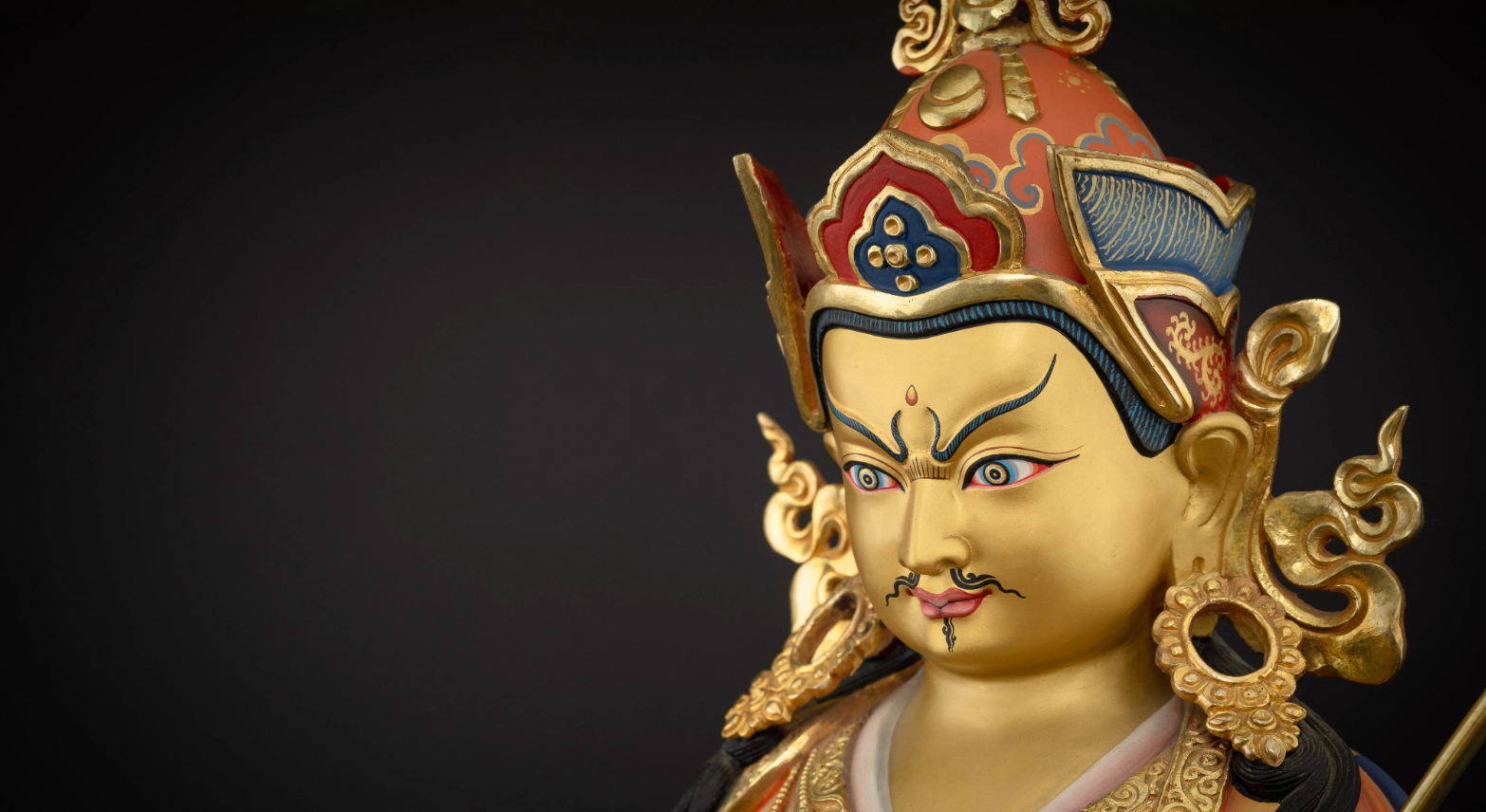
The history of the faith is defined by two distinct periods of dissemination. The first occurred in the 7th century CE under King Songtsen Gampo, who unified Tibet and introduced the first Buddhist images via his Chinese and Nepalese queens. However, it was the 8th-century arrival of the Tantric master Padmasambhava, also known as Guru Rinpoche, that truly rooted the dharma in Tibetan soil. He is credited with subduing the indigenous spirits of the Bon religion and establishing the Nyingma, or "Ancient," school.
The second wave, or the "Later Diffusion," began in the 11th century with the arrival of the Indian scholar Atisha. His influence led to a reform movement that emphasized monastic discipline and philosophical study, giving rise to the Gelug, Kagyu, and Sakya schools. Each lineage maintains distinct ritual specialties, yet all are united by the pursuit of Bodhicitta—the altruistic aspiration to achieve enlightenment for the benefit of all sentient beings.
| Historical Figure | Role and Significance | Time Period |
| King Songtsen Gampo | Unified Tibet; introduced Buddhism through royal marriages. | 7th Century CE |
| Padmasambhava | The "Second Buddha"; established Tantric practice in Tibet. | 8th Century CE |
| Shantirakshita | Scholarly abbot who founded the first Tibetan monastery, Samye. | 8th Century CE |
| Atisha | Initiated the reform movement and the Sarma (New) translation schools. | 11th Century CE |
| The 5th Dalai Lama | Unified spiritual and temporal authority; built the Potala Palace. | 17th Century CE |
The Philosophical Architecture
Tibetan Buddhism operates on a foundation of intellectual rigor, utilizing the Madhyamika (Middle Way) and Yogachara (Mind-Only) philosophies. The practitioner acknowledges that the root of all suffering is avidya, or ignorance—specifically, a fundamental misunderstanding of the nature of reality.
The Four Noble Truths provide the diagnostic framework for this condition. Life is characterized by dukkha (unsatisfactoriness), which arises from samudaya (attachment and craving). The cessation of this suffering, nirodha, is possible through the implementation of the Eightfold Path, a comprehensive curriculum of ethics, meditation, and wisdom.
Symbols and Rituals: The Language of the Divine
In the high Himalayan valleys, spirituality is not compartmentalized; it is the very fabric of existence. The environment is saturated with physical reminders of the path, transforming the landscape into a living mandala.
The Sonic Alchemy of Mantras
The most pervasive of these symbols is the mantra Om Mani Padme Hum. It is an invocation of Avalokiteshvara, the Bodhisattva of Compassion, whose physical manifestation is believed to be the Dalai Lama himself.
The mantra is a sonic representation of the path to enlightenment. It is more than sound. It is a vibration. Each syllable targets a specific realm of existence and a corresponding poison of the mind.
| Syllable | Spiritual Quality | Target Affliction | Realm of Rebirth |
| Om | Generosity | Pride / Ego | Deva (Gods) |
| Ma | Ethics | Jealousy / Lust | Asura (Demi-gods) |
| Ni | Patience | Passion / Desire | Human |
| Pad | Diligence | Ignorance / Prejudice | Animal |
| Me | Renunciation | Greed / Possessiveness | Preta (Hungry Ghosts) |
| Hum | Wisdom | Hatred / Aggression | Naraka (Hell) |
The symbolism of the "Jewel in the Lotus" reflects the potential for transformation. Just as a lotus grows from the mud of a swamp to bloom in pristine beauty, the human mind can rise from the "muck" of negative emotions to attain the "jewel" of enlightenment.
Kinetic Prayer: Wheels and Stones
The physical engagement with the divine extends to the Mani wheel, or prayer wheel. These devices, often containing millions of copies of sacred mantras, are spun clockwise to release blessings into the world. For the Tibetan practitioner, the physical act of spinning a wheel or moving a bead is equivalent to the verbal recitation of the prayer. This kinetic prayer serves to purify negative karma and accumulate merit, a concept central to the Himalayan worldview.
The Anatomy of a Mala: Sacred Geometry and Symbolic Design
The Tibetan Mala, or threngwa, is a masterpiece of symbolic engineering. It is a garland of 108 beads, a number that resonates through the mathematics of the cosmos and the intricacies of the human psyche.
The Mystery of 108
The number 108 is considered sacred across multiple Eastern traditions, representing a state of spiritual wholeness.
-
The 108 Afflictions: It is believed that there are 108 earthly desires or "kleshas" that obscure the mind’s natural brilliance.
-
Astrological Rhythms: 108 represents the product of the 12 zodiac constellations and the 9 planetary influences, linking the practitioner to the celestial order.
-
The Heart Center: In the energetic anatomy of the body, 108 nadis (energy lines) are said to converge at the heart chakra.
-
Sacred Texts: The Tibetan Buddhist canon, the Kangyur, consists of 108 volumes of the Buddha's spoken teachings.
The Functional Elements
A Mala is far more than a string of beads. It is a microcosm of the universe. Every component serves a specific purpose in the architecture of meditation.
-
The Guru Bead (Sumeru): This is the 109th bead, typically larger or made of a distinct material. It symbolizes the "Mountain of the World" and represents the teacher who guides the student. Upon reaching this bead, the practitioner does not cross it, but reverses direction, honoring the teacher-student relationship and the non-linear nature of progress.
-
The Tassel: Representing the lotus flower or the roots of the Bodhi tree, the tassel signifies the interconnectedness of all beings and the "oneness" of the divine.
-
The Thread (Sutra): The cord running through the beads represents the "Cosmic Creative Force" that sustains the universe, holding all phenomena together in a cohesive whole.
-
Overhand Knotting: Traditionally crafted Malas feature a hand-tied knot between every bead. This is a hallmark of artisan quality. It provides the tactile space necessary for the thumb to move each bead rhythmically during Japa, or repetitive counting.
-
Divider Beads: Often placed at intervals of 27, these spacers act as checkpoints, allowing the practitioner to gauge their progress without opening their eyes.
The Alchemy of Materials: Seeds, Woods, and Gemstones
The material from which a Mala is crafted is a deliberate choice, intended to harmonize with the practitioner’s specific energy or spiritual goal. In the tradition of the Oriental Artisan, these materials are sourced with a reverence for their geological and botanical origins.
The Botanical Lineage: Bodhi and Sandalwood
The most traditional materials are those with direct links to the life of the Buddha.
-
Bodhi Seeds: These seeds come from the Ficus religiosa or related species, the same type of tree under which Siddhartha Gautama achieved enlightenment. For the Buddhist, the Bodhi seed is the ultimate symbol of potential—the "seed" of awakening that exists within every sentient being.
-
Sandalwood: Valued for its cooling property and its "liquid gold" fragrance, sandalwood is believed to soothe the nervous system and promote deep mental clarity. Because of its over-harvesting, authentic, ethically sourced sandalwood is a rarity that represents a commitment to environmental stewardship.
The Mineral Kingdom: Gemstones and Intentions
Gemstones are used to amplify specific intentions, drawing upon the vibrational properties of the earth.
| Gemstone | Primary Benefit | Chakra Alignment |
| Amethyst | Enhances intuition and spiritual wisdom. | Crown / Third Eye |
| Lapis Lazuli | Promotes objectivity and mental endurance. | Throat |
| Rose Quartz | Fosters self-love and emotional harmony. | Heart |
| Turquoise | Provides protection and heals the spirit. | Throat / Heart |
| Jade | Attracts luck, health, and longevity. | Heart |
| Obsidian | Grounds energy and shields from negativity. | Root |
Lapis lazuli, with its deep celestial blue flecked with golden pyrite, has been a favorite of the Tibetan elite for centuries, symbolizing the "wisdom of the sky". Similarly, carnelian and garnet are used for "increasing" practices, intended to build creative power and internal fire.
Choosing Your Path: Alignment and Intent
For the seeker, selecting a Mala is an act of intuition as much as it is a study of properties. The process begins with identifying a personal "north star"—a quality or state of being that the individual wish to cultivate.
Determining Personal Energy
A Mala should feel like an extension of the practitioner’s own energetic field. If a person feels scattered or anxious, grounding stones like lava rock or tiger's eye offer stability. If the goal is heart-centered healing, the soft pinks of rose quartz or the vibrant greens of malachite serve as catalysts for opening the emotional body.
The Rite of Use: Etiquette and Technique
The use of a Mala is a ritualized choreography of the hands. It is a physical anchor for the wandering mind.
-
The Left Hand: Traditionally, the Mala is held in the left hand, which is associated with the receptive, internal side of the self.
-
The Middle Finger: The beads are draped over the middle finger, while the thumb pulls each bead toward the heart.
-
Avoid the Pointer: In many traditions, the index finger is avoided, as it represents the ego—the very thing the practitioner seeks to transcend.
-
Breath Synchronization: Each bead movement is paired with a full inhalation and exhalation, or a single recitation of a mantra. This rhythmic cadence calms the heart rate and focuses the mind’s erratic "chatter".
The Oriental Artisan Difference: The Soul of the Handcrafted
In a globalized economy, the market is flooded with mass-produced Malas made of plastic, synthetic resins, and poor-quality thread. These items may resemble spiritual tools, but they lack the "energetic integrity" of items crafted with conscious intent.
The Perils of Mass Production
Mass-produced beads often originate in factories where profit is the only metric of success. These items are frequently made with child labor or in unsafe working conditions, and the materials are often chemically treated to mimic natural stones. For a practitioner, using a tool born from such "negative merit" can be counterproductive to the goal of spiritual purification.
The Legacy of the Master Artisan
At Oriental Artisan, the Mala is treated as a "relic of the future"—an object designed to outlive its owner and carry the patina of a lifetime of devotion. The brand’s craftsmen are often fifth-generation masters in Kathmandu, Nepal, or Dharamsala, India. They do not measure their work in hours, but in the perfection of each hand-tied knot and the selection of each uniform bead.
Authenticity matters because the Mala is a vessel for energy. A hand-strung Mala, blessed by the hands of a practitioner or a monastic community, carries a "vibrational weight" that mass-produced plastic cannot replicate. The choice of an authentic Mala is a vote for the preservation of culture, the dignity of the artisan, and the integrity of the practitioner's own path.
| Feature | Traditional Handcrafted Mala | Mass-Produced "Spirit" Jewelry |
| Material | Natural seeds, ethically sourced wood, genuine gems. | Plastic, glass, synthetic resin, or dyed wood. |
| Knotting | Hand-tied knots between every bead for durability. | Beads strung loosely or with cheap glue. |
| Thread | Strong silk or woven cotton. | Thin nylon or elastic prone to snapping. |
| Energy | Infused with artisan intent and traditional blessings. | Inert, factory-born, devoid of spiritual context. |
| Provenance | Direct links to Himalayan artisan communities. | Obscure supply chains with no accountability. |
The Sacred Pause: Integrating Mindfulness into Daily Life
The true power of the Mala is realized when it moves from the altar to the world. It acts as a tactile reminder of one's vows and intentions throughout the day. Whether worn around the neck as a "garland of merit" or wrapped around the wrist as a portable sanctuary, the beads serve to keep the practitioner grounded in the face of modern chaos.
As the world grows louder and more digital, the demand for analog tools of presence increases. The Mala is the ultimate analog device. It requires no battery, no screen, and no software. It only requires a breath and a hand.
Starting Your Journey: The Invitation to Transcendence
To hold a Mala is to hold a fragment of the Himalayas in the palm of the hand. It is an invitation to join a lineage of seekers that stretches back to the time of the Buddha.
The path to mindfulness is not a destination; it is a series of moments, each marked by the click of a bead and the settling of the heart. Oriental Artisan invites the discerning practitioner to begin this journey with a tool that is as profound as the intention behind it.
Choose a piece that speaks to the soul. Honor the hands that created it. And step onto the path with the confidence that the universe is held together by the same thread that runs through the beads.
Start your journey today. Explore the Oriental Artisan collection of authentic, handcrafted Tibetan Malas and discover the sacred tool that will anchor your path to enlightenment.

Leave a comment
This site is protected by hCaptcha and the hCaptcha Privacy Policy and Terms of Service apply.