


Artikel: Chinese vs. Japanese Ceramics: A Complete Guide to History, Craftsmanship, Styles, and Collecting
Chinese vs. Japanese Ceramics: A Complete Guide to History, Craftsmanship, Styles, and Collecting
Two Traditions, Countless Expressions of Clay and Fire
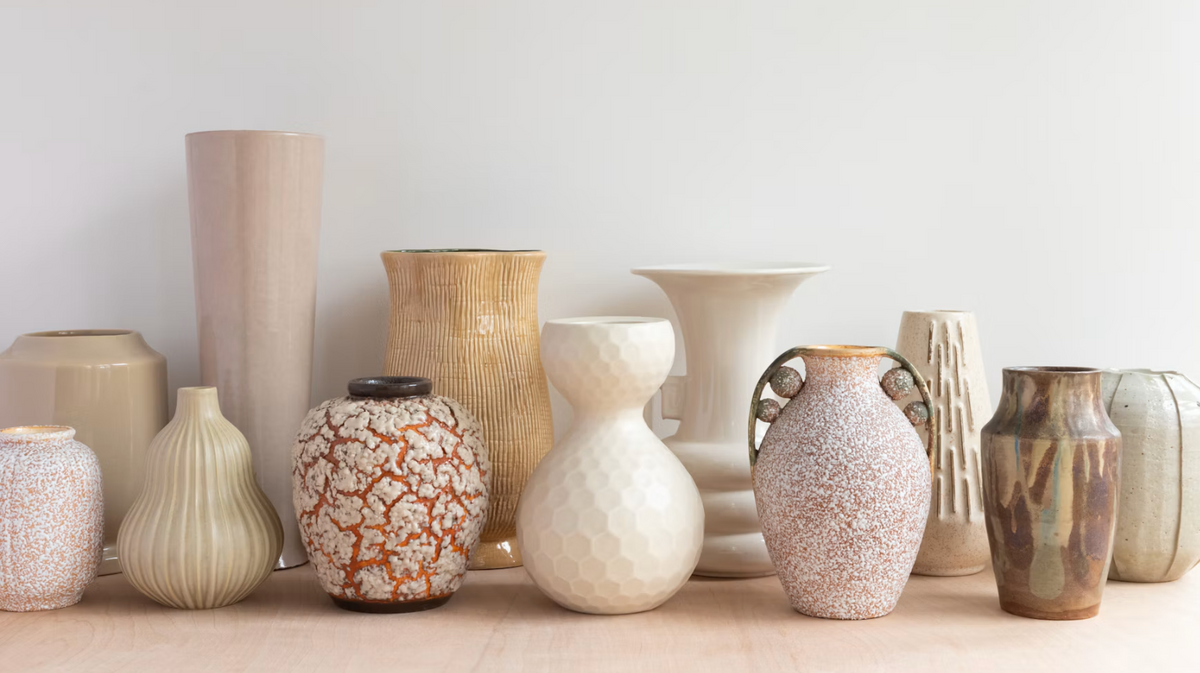
Place a finely painted Jingdezhen porcelain cup beside a Japanese tea bowl with an irregular rim and an ash-marked surface. The first might captivate with its luminous whiteness and intricate decoration. The second may invite your fingers to follow its contours, discovering subtle changes in texture left by the maker and the kiln.
Both are expressions of remarkable ceramic craftsmanship. Yet they tell different stories.
The principal difference between Chinese and Japanese ceramics lies not in a single material or aesthetic, but in their historical development, regional kiln traditions, cultural uses, and approaches to design. China developed sophisticated high-fired ceramics and porcelain centuries before Japanese porcelain production emerged. Japan cultivated its own ancient pottery traditions while adapting technologies and artistic influences from China and Korea.
Chinese ceramics encompass everything from restrained Song dynasty monochromes to richly decorated imperial porcelain. Japanese ceramics range from earthy Bizen stoneware to brilliantly painted Arita and Kutani porcelain.
Neither tradition is inherently more refined, authentic, or valuable.
Understanding their differences begins with appreciating the remarkable diversity within each.
Chinese vs. Japanese Ceramics at a Glance
| Feature | Chinese Ceramics | Japanese Ceramics |
|---|---|---|
| Historical foundations | Ancient pottery, early high-fired wares, and pioneering porcelain production | Prehistoric Jōmon pottery, regional stoneware, and later porcelain production |
| Celebrated traditions | Jingdezhen, Yixing, Longquan, Dehua, Ru, Jun, Ding | Arita, Imari, Kutani, Bizen, Shigaraki, Hagi, Mino, Raku |
| Materials | Porcelain, stoneware, earthenware, Zisha clay | Porcelain, stoneware, earthenware, regional clays |
| Glazes | Celadon, Qingbai, monochromes, blue-and-white, enamels | Ash, Shino, Oribe, Raku glazes, painted porcelain |
| Decorative styles | Monochrome refinement, calligraphy, symbolic painting, colorful enamels | Natural firing effects, textured surfaces, painted motifs, elaborate enamel decoration |
| Tea traditions | Gongfu brewing, Gaiwan, Yixing teapots, small tasting cups | Matcha bowls, Kyusu teapots, Yunomi cups, chanoyu |
| Familiar tableware | Porcelain bowls, tea cups, serving dishes, covered vessels | Rice bowls, ramen bowls, small plates, sake vessels |
| Collecting | Kiln attribution, imperial and scholar traditions, historical provenance | Regional kilns, artist lineages, tea ceramics, studio pottery |
| Contemporary appeal | Tea rituals, tableware, interior objects, collecting | Tea and sake rituals, dining, interior design, collecting |
These are historical tendencies, not fixed national rules. Chinese potters have long celebrated spontaneous surfaces and unusual forms, while Japanese porcelain makers have produced some of the world's most elaborate ceramic decoration.
The History of Chinese Ceramics
From ancient pottery to porcelain
China's ceramic history extends back thousands of years.
Neolithic cultures developed pottery for cooking, storage, ritual, and burial. The painted pottery associated with Yangshao cultures and the finely made black pottery associated with Longshan traditions demonstrate sophisticated knowledge of clay long before porcelain appeared.
Over successive centuries, Chinese potters refined kiln construction, clay preparation, and firing.
By the early imperial periods, high-fired glazed wares had become increasingly accomplished. The technological development of porcelain was gradual rather than the achievement of a single inventor or kiln.
During the Tang dynasty (618–907), Chinese ceramic production expanded in technical and artistic scope. Sancai, commonly associated with three-color lead glazes, became particularly celebrated in funerary ceramics. White wares and celadons also developed in important kiln regions.
The Song dynasty: an extraordinary age of refinement
The Song dynasty (960–1279) remains central to the history of Chinese ceramics.
Kilns developed distinctive ceramic languages. Ru ware became admired for delicate, subdued glazes. Ding ware was celebrated for pale bodies and refined decoration. Jun wares demonstrated remarkable glaze effects, while Longquan produced increasingly sophisticated celadons.
Song ceramics could be quiet, sensual, and technically ambitious. Their beauty frequently emerged from the relationship between form, glaze, and light rather than elaborate painted decoration.
This legacy challenges the assumption that Chinese ceramics are primarily colorful or ornate.
Jingdezhen and the transformation of porcelain
Jingdezhen, in Jiangxi Province, became one of the world's most influential porcelain centers.
Its importance grew through the Song and Yuan periods. During the Yuan dynasty (1271–1368), cobalt-blue decoration beneath transparent glaze developed into a defining porcelain tradition.
Under the Ming dynasty (1368–1644), imperial patronage, specialized workshops, and international demand supported production on an extraordinary scale.
During the Qing dynasty (1644–1912), decorators further expanded enamel palettes, including techniques associated with famille verte and famille rose porcelain.
Porcelain from China traveled to Japan, Southeast Asia, the Middle East, and Europe, influencing ceramic production far beyond its original kilns.
Today, Jingdezhen remains a center of both established techniques and contemporary experimentation.
A present-day example of its craft tradition is Oriental Artisan's Handmade Silver-Gilded Bamboo Gaiwan, a porcelain tea vessel described as made in Jingdezhen and finished by hand. Its relationship between painted decoration and functional form illustrates the continuing appeal of Chinese ceramic artistry.
The History of Japanese Ceramics
Jōmon pottery and Japan's early ceramic heritage
Japan possesses one of the world's remarkable prehistoric pottery traditions.
Jōmon pottery, produced over an extended prehistoric period, includes vessels with cord-marked surfaces and, in certain periods and regions, dramatically sculptural rims.
It establishes an important historical point: Japanese pottery existed long before porcelain technologies reached the archipelago.
Yayoi pottery subsequently developed forms suited to changing agricultural and domestic practices.
During the Kofun period, Haji earthenware and haniwa terracotta figures became important parts of material culture.
From approximately the fifth century, technologies transmitted through the Korean Peninsula contributed to the development of Sue ware, a high-fired ceramic tradition.
The Six Ancient Kilns
During Japan's medieval period, regional pottery centers developed distinctive identities.
The Six Ancient Kilns are:
-
Bizen
-
Shigaraki
-
Seto
-
Tokoname
-
Echizen
-
Tamba
These centers became known for production that included storage vessels, everyday pottery, and later ceramics appreciated within tea culture.
Bizen is particularly associated with unglazed, high-fired stoneware. Shigaraki is celebrated for its characteristic clay and expressive firing effects. Seto developed a broad tradition of glazed ceramics.
Their histories demonstrate how local clay, available fuel, kiln technology, and regional demand shaped Japanese pottery.
The transformation brought by tea
From the medieval period into the sixteenth century, imported Chinese tea objects were highly prized in Japan.
Over time, Japanese tea practitioners also developed strong preferences for locally made wares, including bowls whose irregular shapes and restrained surfaces expressed particular ideals of beauty.
The development of chanoyu, the Japanese tea ceremony, elevated the cultural significance of ceramics such as Raku, Shino, and Oribe ware.
The emergence of Japanese porcelain
Japanese porcelain production began in the Arita region in the early seventeenth century.
Korean potters played a foundational role in this development, following turbulent historical exchanges that included the forced movement of craftspeople during Japan's late-sixteenth-century invasions of Korea.
Japanese porcelain initially drew significantly on Chinese models, particularly blue-and-white decoration.
It subsequently developed recognizable regional styles, including Imari and Kakiemon, while decorated porcelain from Arita became an important export to Europe.
The diversity remains visible in contemporary Japanese ceramic collections. Oriental Artisan's Japanese Imari Series Handcrafted Tea Cups offer an accessible introduction to the colorful decorative language associated with Japanese porcelain.
How Chinese Ceramics Influenced Japanese Pottery
The histories of Chinese and Japanese ceramics are inseparable from centuries of artistic and technological exchange.
Chinese ceramics entered Japan through trade, diplomacy, religious networks, and cultural contact.
Certain imported vessels became especially desirable among Japanese aristocrats, religious institutions, and tea practitioners.
Chinese ceramic influence can be understood across several dimensions.
Technology: Kiln design, glaze knowledge, porcelain production, and related techniques circulated throughout East Asia.
Decoration: Chinese blue-and-white designs, celadon surfaces, symbolic imagery, and ornamental motifs influenced Japanese ceramic production.
Tea culture: Tea practices originating in China contributed to Japanese tea traditions, where they developed their own distinctive ceremonial and aesthetic expressions.
Collecting: Chinese ceramics acquired cultural prestige in Japan, influencing what collectors valued and how objects were displayed.
Korean ceramic traditions were equally important in this exchange. Korean potters introduced and developed important techniques in Japan, including methods central to early Japanese porcelain production.
Influence, however, should not be mistaken for imitation.
Japanese artisans adapted imported knowledge to local clay resources, domestic requirements, artistic tastes, and established pottery traditions.
Likewise, Japanese ceramics later developed substantial international influence of their own.
The story is one of exchange, adaptation, and creative independence.
Materials: Porcelain, Stoneware, Earthenware, and Clay
One of the most useful ways to compare ceramics is through their material composition.
The terms pottery and ceramics are often used interchangeably in everyday conversation, but they cover several material categories.
Porcelain
Porcelain is generally made from a refined ceramic body containing suitable clay minerals and other materials that vitrify during high-temperature firing.
Its characteristics often include a relatively white body, a hard fired structure, and, where sufficiently thin and appropriately formulated, translucency.
Jingdezhen and Arita are famous porcelain-producing centers.
Porcelain is not exclusively Chinese, and not every white ceramic object is porcelain.
Stoneware
Stoneware is generally fired to a dense, relatively low-porosity body.
Depending on the clay, it may appear brown, gray, red, cream, or nearly black.
It can be glazed or unglazed.
Bizen pottery is an important Japanese example, while Chinese high-fired stoneware has an equally long and diverse history.
Earthenware
Earthenware is typically fired at lower temperatures and often remains more porous than mature porcelain or stoneware.
A glaze may make the surface suitable for holding liquids, depending on its composition and condition.
Historical pottery from both countries includes earthenware traditions.
Zisha clay
Zisha is associated particularly with Yixing in Jiangsu Province, China.
These mineral-rich clays are celebrated for their use in teapots, often left unglazed to showcase the clay's natural character.
Different Zisha materials, including Zini, Hongni, and Zhuni, can produce different colors and working properties.
For an example, explore Oriental Artisan's Shuiping 130ml Yixing Zini Teapot, whose compact proportions are designed for repeated Gongfu tea infusions.
How material affects everyday use
| Material | Typical Character | Practical Consideration |
|---|---|---|
| Porcelain | Often smooth, dense, and sometimes translucent | Useful for tea tasting, serving, and detailed decoration |
| Stoneware | Substantial and available in varied textures | Popular for bowls, cups, plates, and studio pottery |
| Earthenware | Often warmer in tone and more porous | Care depends strongly on glaze and firing |
| Unglazed Zisha | Exposes natural clay color and texture | Often chosen for dedicated Gongfu tea brewing |
Material affects weight, heat transfer, porosity, and cleaning, but construction and glaze quality are just as important.
Chinese vs. Japanese Ceramic Glazes and Firing Techniques
Ceramic glaze is a glass-forming coating that melts or develops during firing.
Its appearance depends on chemistry, application, kiln temperature, atmosphere, and cooling.
Celebrated Chinese glaze traditions
Celadon: Known for green tones that may range from pale jade to deeper olive. Longquan celadon is particularly significant.
Qingbai: A pale, often bluish-white glaze associated especially with Chinese porcelain of the Song and Yuan periods.
Ru ware: Admired for subdued, often blue-green or gray-green surfaces in historical examples. Contemporary Ru-style ceramics interpret this aesthetic in different ways.
Jun ware: Associated with opalescent glazes and, in some examples, purple or reddish effects.
Blue-and-white porcelain: Created by applying cobalt-based decoration before covering it with a transparent glaze and firing.
Famille rose: A category of colorful overglaze enamel decoration strongly associated with Qing porcelain.
These approaches reveal the extraordinary breadth of Chinese ceramic decoration.
Celebrated Japanese glaze traditions
Shino: Often associated with thick white glazes, warm surfaces, and iron decoration in Mino ceramics.
Oribe: Known for expressive forms, distinctive green and other glazes, and painted decoration.
Natural ash effects: Ash deposited during wood firing may melt onto the surface, creating unpredictable patterns.
Raku: A distinctive category connected to hand-formed tea bowls and particular glazing and firing practices.
Arita and Kutani enamels: Colorful decoration that demonstrates Japan's refined porcelain traditions.
What happens inside the kiln?
A ceramic glaze is not simply paint applied to a finished object.
During firing, minerals undergo complex physical and chemical transformations.
Iron-containing materials, for example, may produce different colors depending on glaze chemistry and firing atmosphere.
Ash can settle on an object and fuse with its surface. Some glazes develop crystalline or mottled effects during controlled cooling.
The degree of variation depends on the process. Not every apparently spontaneous effect is accidental, and skilled potters often exercise considerable control over seemingly unpredictable results.
For a contemporary Chinese example, see Oriental Artisan's Elegant Crystalline Glaze Gaiwan Tea Set, a Jingdezhen-associated piece that places decorative glaze effects at the center of its visual character.
Chinese Ceramic Aesthetics: Refinement, Expression, and Diversity
Chinese ceramics cannot be reduced to a single visual philosophy.
Song monochrome wares frequently reveal the expressive potential of restraint. Their carefully considered proportions allow subtle glaze colors and surface variations to command attention.
Ming blue-and-white porcelain represents a different achievement: the marriage of disciplined ceramic forming and confident painted composition.
Qing porcelain introduced further possibilities through extensive enamel decoration, often incorporating flowers, landscapes, symbolic creatures, and literary references.
Chinese folk pottery, scholar's objects, and contemporary studio ceramics introduce still more aesthetic approaches.
Decoration can convey cultural meaning, but symbols should always be understood within their particular historical context.
An object from an imperial workshop and one made for ordinary domestic use may belong to entirely different artistic worlds.
Japanese Ceramic Aesthetics: Restraint, Experimentation, and Everyday Beauty
Japanese ceramics are frequently associated with wabi-sabi, an aesthetic appreciation of impermanence, imperfection, and understated beauty.
In ceramic practice, this may appear through an irregular silhouette, a subtle asymmetry, or a glaze surface that records the firing process.
The related concept of shibui is often used to describe quiet, restrained sophistication.
Yet these terms do not describe every Japanese ceramic tradition.
A brightly decorated Kutani cup may be every bit as Japanese as a rough-textured Bizen bowl.
Arita porcelain can display extraordinary precision, symmetry, and elaboration. Kyoto ceramics have long included refined, highly colorful decorative work.
The twentieth-century Mingei movement added another important dimension by celebrating the artistic quality of everyday crafts.
To experience the visual range of Japanese glaze traditions, consider the Mino Ware "Autumn Harmony" Tea/Sake Cup Set of Five, whose varied colors and finishes offer an approachable expression of Japanese ceramic diversity.
Famous Chinese Ceramic Traditions
Jingdezhen porcelain
Jingdezhen is celebrated for porcelain production, from historic imperial wares to contemporary studio pieces.
Its traditions include blue-and-white painting, delicate white porcelain, colored glazes, and intricate hand decoration.
Yixing Zisha pottery
Yixing is especially famous for unglazed teapots.
Collectors study the relationship among clay composition, potter, form, construction, and finishing.
A thoughtfully made Yixing pot may be admired both as functional teaware and as sculptural craft.
Longquan celadon
Longquan, in Zhejiang Province, is associated with an important celadon tradition.
Some historical examples are particularly admired for their luminous green glazes and carefully balanced forms.
Longquan wares were widely traded and influenced ceramic production elsewhere in Asia.
Dehua porcelain
Dehua, in Fujian Province, is renowned for white porcelain, including sculptural forms and vessels.
The term blanc de Chine is widely used in Western collecting to describe celebrated categories of Dehua white porcelain.
Ru, Jun, Ding, and other Song wares
These traditions demonstrate the variety of Chinese ceramic aesthetics during the Song period.
Ru ware is associated with quietly luminous glaze surfaces. Jun wares display complex glaze effects. Ding wares are admired for pale bodies and refined decoration.
Historical classifications are sometimes complicated by changing scholarly interpretations, kiln archaeology, and later reproductions.
A contemporary object described as Ru-style should not be confused with a ceramic surviving from the historic Ru kilns.
For buyers interested in this aesthetic, Oriental Artisan's Cream Ru-Ware Porcelain Kung Fu Tea Set offers a contemporary cream-colored crackle-glaze interpretation with a 250ml teapot, three cups, and matching tray.
Famous Japanese Ceramic Traditions
Arita and Imari porcelain
Arita became a major Japanese porcelain center during the seventeenth century.
Early blue-and-white wares developed into richly decorated styles, including the colorful enamel traditions associated with Imari.
The historical name Imari often refers to the port through which Arita porcelain was shipped.
Kutani ware
Kutani is particularly associated with expressive enamel colors and decorative compositions.
Floral, figurative, and geometric designs can create a striking contrast with plain stoneware.
An example is Oriental Artisan's Authentic Kutani Ware Ceramic Sake Cups, described as hand-painted Japanese ceramics.
Bizen ware
Bizen pottery is celebrated for its unglazed, high-fired stoneware.
Color and surface variation can arise from the placement of vessels, the firing atmosphere, ash, and contact with other materials.
A Bizen vessel can communicate extraordinary complexity without painted decoration.
Shigaraki ware
Shigaraki ceramics are known for their regional clay, characteristic textures, and expressive firing surfaces.
Historically important in practical pottery and tea culture, Shigaraki continues to inspire contemporary makers.
Hagi ware
Hagi, associated with Yamaguchi Prefecture, is especially admired for tea bowls and distinctive glaze and clay characteristics.
Some Hagi vessels develop changes in appearance with use, although this varies by body and glaze.
Raku ware
Raku is closely connected to the Japanese tea ceremony.
Traditional Raku tea bowls are often formed by hand and appreciated for their intimate scale, tactile character, and individual artistic expression.
Mino, Seto, Mashiko, and Kyo ware
Mino encompasses a remarkably diverse ceramic heritage, including Shino and Oribe.
Seto has long been an important center of Japanese ceramic manufacturing. Mashiko became prominent through studio pottery and the folk-craft movement.
Kyo ware, associated with Kyoto, includes sophisticated decorative ceramics connected to the city's artistic culture.
The Japanese Mino-yaki Sake Set demonstrates how regional ceramic traditions continue to find expression in contemporary drinkware.
Chinese vs. Japanese Teaware: Which Should You Choose?
The best ceramic vessel for tea depends less on its nationality than on how you prepare and enjoy the drink.
Chinese and Japanese tea traditions employ different tools for different purposes, and many enthusiasts happily use both.
Chinese Gaiwan
A Gaiwan is a lidded bowl used to brew and decant tea.
It is particularly versatile for Gongfu preparation, where leaves undergo multiple short infusions.
Glazed porcelain Gaiwan are often preferred for tasting unfamiliar teas because they are relatively easy to clean and do not retain flavors in the way some unglazed clay vessels can.
Yixing teapots
A Yixing teapot is a compact vessel associated with repeated infusions of loose-leaf tea.
Many enthusiasts enjoy using unglazed Zisha teapots for oolong, aged teas, and other styles.
Because some unglazed clay surfaces can retain residues and aromas, users may reserve particular pots for related tea types.
However, claims that Zisha automatically improves every tea should be treated cautiously. Clay quality, vessel design, preparation, and personal preference all matter.
Chinese porcelain tea cups
Small porcelain cups allow drinkers to examine the color, aroma, and taste of tea across successive infusions.
Their comparatively neutral glazed surfaces make them useful for tasting.
Japanese Yunomi
A Yunomi is an everyday Japanese tea cup, often taller than a small Chinese Gongfu tasting cup.
It is suited to enjoying tea directly, usually without a handle.
Japanese Chawan
A Chawan is a bowl associated particularly with the preparation and drinking of matcha.
Its shape and interior space are designed to accommodate whisking.
Japanese Kyusu
A Kyusu is a Japanese teapot, frequently associated with green tea preparation.
Many familiar examples have a side handle and integrated strainer.
Kyusu vessels vary considerably in clay, glaze, form, and capacity.
Which teaware is right for you?
| Your Tea Preference | Consider | Why |
|---|---|---|
| Exploring different loose-leaf teas | Porcelain Gaiwan | Versatile brewing and easy cleaning |
| Gongfu oolong sessions | Yixing Zisha teapot | Compact form for repeated infusions |
| Matcha preparation | Japanese Chawan | Open bowl suitable for whisking |
| Japanese loose-leaf green tea | Kyusu | Practical pouring and straining |
| Everyday drinking | Yunomi or porcelain cup | Comfortable direct serving |
| Sharing tea with guests | Coordinated tea set | A complete arrangement of functional vessels |
For an accessible starting point, explore Oriental Artisan's Chinese Gaiwan collection, Yixing Zisha teapot collection, or curated teaware collection.
The best tea vessel is the one that suits your brewing habits, feels comfortable in your hands, and encourages you to return to the ritual.
Chinese vs. Japanese Ceramic Tableware
The distinction between Chinese and Japanese ceramics becomes especially interesting at the dining table.
Chinese tableware includes bowls for rice, noodles, soups, and shared dishes, as well as serving plates, small sauce dishes, and individual tea vessels.
Japanese tableware includes rice bowls, noodle bowls, small side dishes, serving plates, and dedicated sake vessels.
Both traditions use highly varied forms and decorations.
In Japanese dining, carefully coordinated but non-identical dishes may create a sense of visual rhythm. Chinese dining traditions also encompass elaborate combinations of serving and individual vessels, from restrained everyday ceramics to sophisticated banquet porcelain.
For ramen, a generously proportioned bowl matters more than an abstract aesthetic label.
The bowl should accommodate broth, noodles, and toppings comfortably while remaining manageable to handle.
Oriental Artisan's Authentic Japanese Ramen Bowl Set — Handcrafted Ceramic Dinnerware Set of 6 combines a principal noodle bowl with complementary tableware and utensils.
When choosing either Chinese or Japanese tableware, consider the weight, shape, glaze condition, cleaning instructions, and suitability for the foods you actually serve.
How to Identify Chinese and Japanese Ceramics
Can you tell whether a ceramic object is Chinese or Japanese simply by looking at it?
Not reliably. Appearance can provide useful clues, but origin and authenticity require a combination of physical examination, historical knowledge, marks, and provenance.
A blue-and-white porcelain dish may resemble Chinese Ming decoration while having been produced in Japan.
A contemporary object may reproduce the shape and glaze of a historical original without sharing its age or origin.
Examine the maker's marks
Chinese ceramics may carry reign marks, studio marks, inscriptions, or artist signatures.
Japanese ceramics may include potter's marks, kiln marks, inscriptions, or workshop identifiers.
A reign mark is not necessarily evidence that an object was made during the reign named.
Study the material and glaze
Look at the clay body, exposed foot ring, glaze thickness, decoration, and firing characteristics.
These features can support an attribution but rarely prove it alone.
Consider the vessel's form
Teapot proportions, bowl shapes, handles, lids, and feet may be associated with particular regional traditions.
However, copying and adaptation have been common throughout ceramic history.
Request provenance
For valuable pieces, ask about previous ownership, workshop documentation, invoices, exhibition records, and specialist assessments.
A trustworthy seller should distinguish documented facts from stylistic descriptions or educated assumptions.
For deeper reading, see Oriental Artisan's Authentic Jingdezhen Porcelain: A Collector's Guide.
Which Is More Valuable: Chinese or Japanese Ceramics?
Neither Chinese nor Japanese ceramics are universally more valuable.
An exceptionally rare Chinese imperial porcelain vase and a historically important Japanese tea bowl belong to different collecting markets, each with its own standards.
Value depends on several factors: attribution, age, provenance, condition, rarity, artistic significance, craftsmanship, and demand.
Historical ceramics can command substantial auction prices, but contemporary ceramic objects should not be evaluated according to the same expectations.
An unsigned functional bowl may be beautifully made yet modestly priced. A work by a recognized contemporary ceramic artist may be valuable because of its artistic merit and documented authorship rather than age.
For beginning collectors, the most sensible approach is to buy objects you genuinely appreciate, seek reliable information, and develop knowledge before treating ceramics as financial investments.
How to Choose Between Chinese and Japanese Ceramics
Best for tea enthusiasts
Begin with your preferred brewing method.
If you enjoy repeated infusions and exploring the changing character of tea leaves, a Chinese porcelain Gaiwan or Yixing teapot may be appropriate.
For matcha or Japanese green tea, consider a Chawan or Kyusu.
Best for everyday dining
Prioritize form, durability, and cleaning.
A well-made Chinese porcelain bowl and a Japanese stoneware bowl can both be excellent everyday choices.
Check whether each product is specifically described as food-safe, microwave-safe, or dishwasher-safe. Do not assume these characteristics from nationality or ceramic category.
Best for minimalist interiors
Look for restrained palettes, harmonious proportions, and considered surfaces.
Chinese celadon, pale monochrome porcelain, Japanese Shigaraki, and certain Bizen works can all complement minimalist interiors.
The choice should be based on the object itself rather than a national stereotype.
Best for decorative collecting
Explore kiln histories, regional materials, artist lineages, and documented provenance.
A Jingdezhen porcelain sculpture, a Japanese Raku bowl, or a distinctive studio-made vase may become a focal point within a collection.
Best for meaningful gifts
Select pieces according to the recipient's interests.
A tea enthusiast might appreciate a Yixing teapot. Someone who enjoys entertaining may prefer Japanese sake ware or a coordinated serving set.
A collector or interior design enthusiast may value a sculptural ceramic object.
Best for first-time collectors
Start with a useful object from a reputable source.
One carefully chosen cup or bowl can introduce you to form, glaze, balance, and craftsmanship.
As your knowledge grows, so can the collection.
Selected Chinese and Japanese Ceramics Worth Exploring
The following selection illustrates different approaches to ceramic craftsmanship and everyday use.
| Ceramic Object | Tradition | Best For |
|---|---|---|
| Handmade Silver-Gilded Bamboo Gaiwan | Chinese Jingdezhen porcelain | Decorative Gongfu brewing |
| Shuiping Yixing Zini Teapot | Chinese Zisha pottery | Repeated tea infusions |
| Cream Ru-Ware Tea Set | Contemporary Chinese Ru-style ceramics | Refined tea presentation |
| Elegant Crystalline Glaze Gaiwan | Chinese Jingdezhen ceramics | Expressive glaze appreciation |
| Japanese Imari Tea Cups | Japanese decorated porcelain | Colorful teaware |
| Mino "Autumn Harmony" Cups | Japanese Mino ware | Everyday tea and gifting |
| Kutani Ceramic Sake Cups | Japanese Kutani ware | Decorative drinkware |
| Japanese Ramen Bowl Set | Japanese ceramic tableware | Noodle dining |
Each reveals a different aspect of ceramic beauty: precise form, expressive glaze, painted ornament, tactile material, or thoughtful function.
A particularly rewarding collection might include examples from both countries, allowing their similarities and differences to become visible through daily use.
Frequently Asked Questions
1. What is the main difference between Chinese and Japanese ceramics?
Chinese and Japanese ceramics differ chiefly in historical development, regional traditions, artistic techniques, and cultural uses. China developed porcelain technologies much earlier, while Japan has an ancient indigenous pottery history and later developed its own porcelain industry. Both traditions include elaborate decoration, restrained aesthetics, pottery, stoneware, and porcelain.
2. Which country invented porcelain?
Porcelain developed in China through a long process of ceramic innovation. Archaeologists and historians distinguish between early high-fired porcelaneous wares and fully developed porcelain, so assigning a single invention date is misleading. Chinese porcelain production was well established centuries before Japanese porcelain manufacturing began in the early seventeenth century.
3. How did Chinese pottery influence Japanese ceramics?
Chinese ceramic technology, decorative styles, tea objects, and kiln traditions influenced Japanese pottery through trade and cultural contact. Korean ceramics and potters also played crucial roles in transmitting and developing techniques. Japanese artisans adapted these influences to local materials and artistic preferences, producing distinctive traditions rather than simply reproducing Chinese styles.
4. Is Japanese porcelain different from Chinese porcelain?
Both are porcelain, but their historical production methods, regional materials, decorative traditions, and artistic development differ. Chinese Jingdezhen porcelain and Japanese Arita porcelain are celebrated examples. Their distinction is more meaningful in terms of workshop, period, form, decoration, and provenance than in a claim that all porcelain from either country shares one appearance.
5. Why are some Japanese ceramics intentionally irregular?
Certain Japanese ceramic traditions value irregularity because it can express handmade individuality, natural variation, and an appreciation of impermanence. This sensibility is particularly associated with some tea ceramics. However, Japanese ceramics also include extremely precise, symmetrical, and elaborately decorated porcelain, so irregularity should not be treated as a universal feature.
6. What is Jingdezhen famous for?
Jingdezhen, in Jiangxi Province, China, is famous for its historic porcelain production, particularly blue-and-white ceramics, imperial wares, refined porcelain bodies, and sophisticated decorative techniques. It became a major international porcelain center and remains an active location for both traditional workshops and contemporary ceramic artists.
7. What makes Yixing teapots special?
Yixing teapots are celebrated for their distinctive Zisha clay bodies, compact forms, and close relationship with Chinese Gongfu tea culture. Many are left unglazed, revealing the character of the clay. Collectors value the quality of materials, construction, proportions, finishing, documented authorship, and suitability for brewing.
8. What are Japan's Six Ancient Kilns?
Japan's Six Ancient Kilns are Bizen, Shigaraki, Seto, Tokoname, Echizen, and Tamba. These historic pottery regions are recognized for their long production histories and distinctive regional traditions. Their ceramics demonstrate how local clay resources, kiln development, and changing cultural needs contributed to Japan's diverse pottery heritage.
9. How can I tell whether pottery is Chinese or Japanese?
Examine the clay body, glaze, decoration, shape, marks, and construction techniques, but do not rely on any feature alone. Historical styles were frequently copied and adapted across East Asia. Reliable identification may require provenance records and expert examination, particularly for valuable antiques.
10. Which is better for tea: Chinese or Japanese ceramics?
Neither is inherently better. Chinese Gaiwan and Yixing teapots are especially associated with certain loose-leaf brewing traditions, while Japanese Chawan and Kyusu serve different methods of preparing and enjoying tea. The best choice depends on the tea, brewing method, vessel size, handling, and personal preference.
11. Are handmade ceramics more valuable?
Handmade ceramics can be highly desirable, but handcraftsmanship alone does not determine value. A piece's quality, maker, rarity, condition, artistic importance, and provenance all matter. A carefully produced functional ceramic may be an excellent purchase without being a valuable collectible, while exceptional studio ceramics can command substantial prices.
12. Where can I buy authentic Chinese and Japanese ceramics?
Look for retailers and workshops that clearly explain origin, material, ceramic tradition, and craftsmanship. Oriental Artisan offers a curated selection of Chinese and Japanese teaware, tableware, and ceramic décor. When provenance matters, review individual product descriptions and request additional documentation rather than relying on appearance or traditional style names alone.
Discover Chinese and Japanese Ceramics at Oriental Artisan
The appeal of a ceramic object often becomes clearest through living with it.
A cup acquires familiarity through daily tea. A bowl becomes associated with shared meals. A carefully chosen vessel changes the atmosphere of a room without demanding attention.
At Oriental Artisan, our philosophy of Art of Quiet Living begins with objects that bring craftsmanship, cultural meaning, and considered beauty into ordinary moments.
Our collections explore the rich artistic histories of China and Japan, from porcelain tea vessels and Yixing clay teapots to Japanese sake ware and functional tableware.
Whether you are beginning a collection, selecting a meaningful gift, or searching for an object you will enjoy every day, we invite you to discover the craftsmanship behind each piece.
Explore Chinese and Japanese Ceramics at Oriental Artisan.
The finest ceramic object is not necessarily the oldest, rarest, or most elaborate. Sometimes it is simply the one you look forward to using again tomorrow.

Hinterlasse einen Kommentar
Diese Website ist durch hCaptcha geschützt und es gelten die allgemeinen Geschäftsbedingungen und Datenschutzbestimmungen von hCaptcha.