


The Art Lover’s Guide to Japan: Museums, Art Islands, Craft Towns and Places Worth Traveling For
A tea bowl can hold a landscape. Its foot may reveal the clay beneath the glaze; its rim may carry a slight movement left by the maker; its surface may remember the passage of flame. In Japan, such an object can become the beginning of a journey: from a table to a workshop, from a workshop to a town, and from that town into a much larger history of taste.
Japan’s artistic culture lives in museums, but also in the joinery above a temple entrance, light passing through cut glass, the interval between garden stones, and the arrangement of vessels at dinner. Contemporary installations on the Seto Inland Sea extend this conversation into architecture and landscape. A small ceramics shop can make it intimate again.
For an art lover, traveling through Japan means discovering relationships between art, craft, ritual and everyday life. This guide connects the major destinations with places where objects are still made, and offers practical routes for seeing them without turning every day into a race.
Where should art lovers go in Japan? Start with Tokyo for museum breadth and contemporary art, Kyoto for living craft and historic spaces, Kanazawa for decorative arts and design, and Naoshima and Teshima for art in the landscape. Add one ceramic region that matches your interests: Arita for porcelain, Tokoname for teapots, Mashiko for studio pottery, or Bizen for unglazed firing traditions.
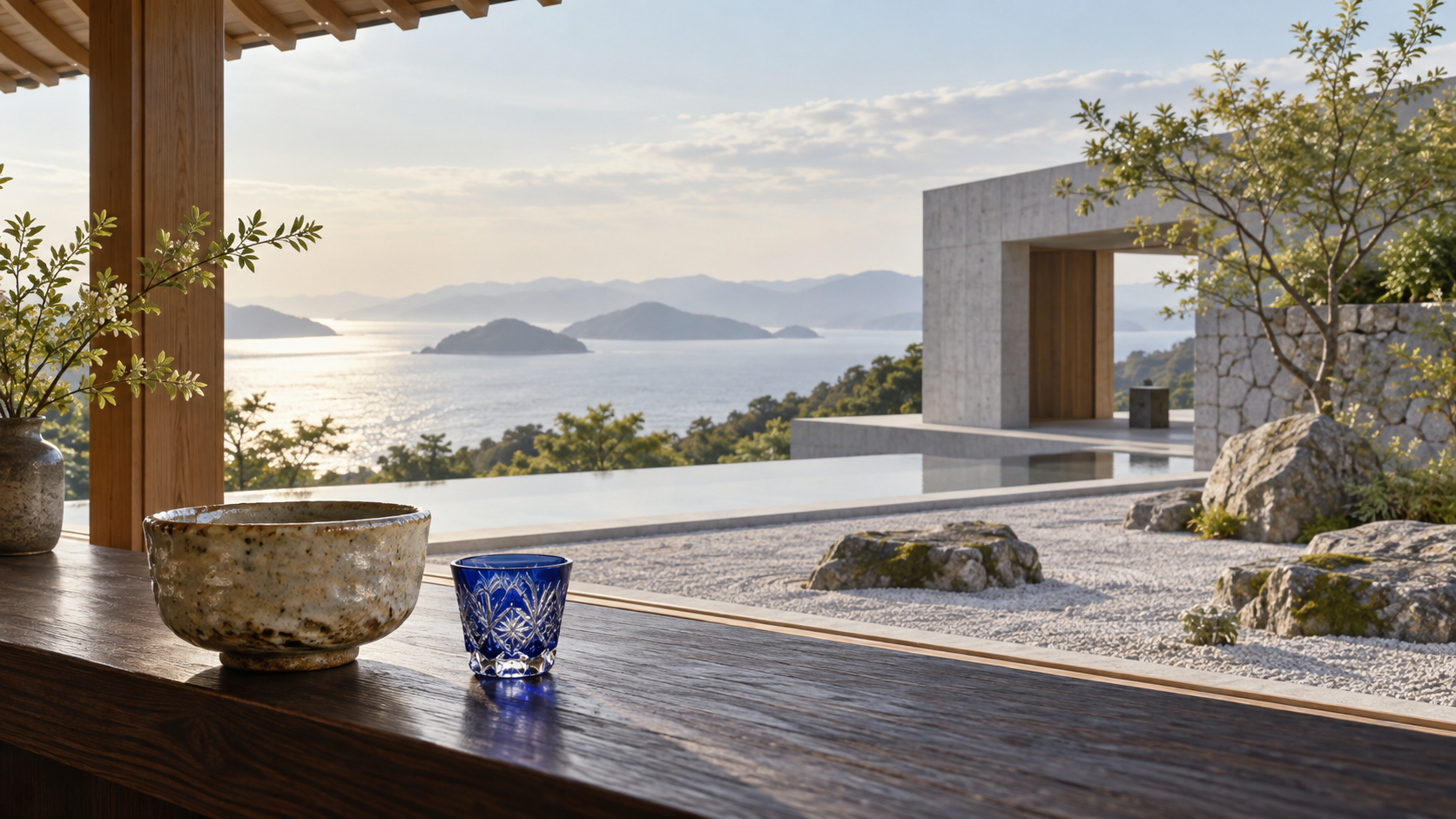
Planning information checked September 2026. Exhibitions, reservations, transport and workshop access can change; use the official links before booking. Suggested day allocations are editorial planning recommendations, not guaranteed travel schedules. The cover is an AI-generated illustration of an imagined setting.
A quick guide to Japan’s art destinations
| Destination | Best for | Suggested allocation | Planning priority |
|---|---|---|---|
| Tokyo | Museum collections, contemporary exhibitions, glass and design | 3–4 days | Group visits by neighborhood |
| Kyoto | Ceramics, textiles, tea culture, gardens | 3–4 days | Arrange specialist visits ahead |
| Kanazawa | Modern craft, gold leaf, architecture | 2 days | Check individual exhibition calendars |
| Naoshima and Teshima | Site-specific art and island architecture | 2–3 days | Book museums around ferry connections |
| Arita and Imari | Porcelain and collecting | 2–3 days | Separate town visits from rural kilns |
| Mashiko | Studio pottery and Mingei | 1–2 days | Allow substantial travel from Tokyo |
| Tokoname or Seto | Teapots or ceramic production history | 1 day each | Use a Nagoya-area base |
| Bizen, especially Imbe | Unglazed ceramics and kiln culture | 1 day | Combine with an Okayama stay |
| Hagi | Tea ceramics and historic streets | 2 days | Treat it as a dedicated detour |
Understanding Japan through art and craft
Japan rewards attention to relationships: between a vessel and the food it holds, between a screen and the light behind it, between a building and the route through its garden. Museum categories remain useful, yet traveling becomes richer when you also ask how an object was used, who commissioned it, and what environment gave it meaning.
These traditions developed through exchange as well as local invention. Chinese and Korean ceramics, Buddhist material culture, international trade and modern industrial design all belong within the story. Describing Japanese craft as untouched by outside influence obscures much of what makes it interesting.
A few aesthetic terms offer starting points. Wabi and sabi have distinct, evolving histories; the familiar combined phrase can direct attention toward restraint, age and transience, but should not become a label for every uneven bowl. Shibui suggests a subdued refinement that may reward repeated looking. Mono no aware concerns sensitivity to impermanence, extending well beyond cherry blossoms.
Ma, often discussed through space and interval, becomes tangible when a doorway delays a view or a pause changes your experience of a room. Treat these ideas as questions to bring to a place, rather than a checklist that proves something is authentically Japanese.
Mingei is more historically specific: a twentieth-century movement associated with Yanagi Sōetsu, Hamada Shōji and Kawai Kanjirō that reconsidered the beauty of everyday craft. Its attention to ordinary objects provides a useful counterweight to collecting only famous signatures. The Japan Folk Crafts Museum offers an institutional introduction; its collection also encourages thinking beyond national borders.
Tokyo: museum breadth and a living design culture
Tokyo is the strongest starting point for a broad Japan art itinerary. Its scale accommodates historical collections, experimental exhibitions, specialist dealers, everyday design and traditional crafts. The practical challenge is geography: select one main area each day and leave space around it.
Ueno, Yanaka and the historical foundations
Begin in Ueno at the Tokyo National Museum. Choose a manageable focus, such as Buddhist sculpture, ceramics or textiles, rather than trying to absorb the whole institution. Rotating displays mean that a famous work in the collection is not necessarily on view during your visit.
Use your first museum visit to develop a vocabulary. Compare how clay and porcelain respond to decoration. Look at the relationship between an object’s outline and its imagery. Notice whether a display describes religious use, domestic use or elite patronage. These distinctions make later encounters in shops much more informative.
Yanaka and the wider Yanesen area offer a change of scale through smaller streets, temples and independent businesses. This is a neighborhood to walk attentively, respecting homes and places of worship. Do not confuse the Nezu neighborhood here with the Nezu Museum, which is across the city in Minami-Aoyama.
Roppongi and Aoyama: choose the exhibition first
In Roppongi, the Mori Art Museum is a major contemporary-art destination. Its program makes checking the actual exhibition essential: a museum’s reputation cannot tell you whether this month’s subject matches your interests. Allow time for installations, moving images and reading, which often demand a different pace from paintings.
The Nezu Museum in Minami-Aoyama brings Japanese and East Asian art together with architecture and a garden. Visit the galleries before walking outside, then consider how the change of light affects your attention. Gallery and garden access depend on the museum’s calendar; do not assume the grounds function as an independently open public park.
In Aoyama and Ginza, look beyond shopfronts to display design, material finishes and the relationship between objects. Department-store craft exhibitions and specialist shops can be useful introductions to living makers. Ask for the maker’s name and production region, since a Tokyo retail address does not establish where a piece was made.
Kiyosumi-Shirakawa and Komaba
The Museum of Contemporary Art Tokyo in Kiba Park gives particular attention to postwar Japanese art within a wider international context. It pairs geographically with the Kiyosumi-Shirakawa area. Select this as a substantial museum day rather than attaching it to an already crowded western-Tokyo schedule.
For craft, give the Japan Folk Crafts Museum in Komaba its own breathing room. Its importance lies partly in shifting the visitor’s questions: from “Who is the star artist?” to “What makes this ordinary form so convincing?” Afterwards, even an everyday cup can become an exercise in judging proportion, weight and usefulness.
Tokyo for collectors: what to look for
Tokyo offers opportunities to explore Edo Kiriko, studio ceramics, lacquer, prints and tea utensils. Browse across price levels before buying. A modest, clearly documented contemporary object can be a more satisfying acquisition than an expensive piece with a vague attribution.
Edo Kiriko is a cut-glass tradition associated with Tokyo and its surrounding production area. The Tokyo metropolitan craft directory lists the Kameido Umeyashiki Edo Kiriko showroom in Koto as a sales destination; the cooperative’s English resources provide background. A showroom listing does not promise a cutting demonstration, so arrange workshop experiences separately.
Compare the rhythm of cuts, the balance between clear and colored areas, and the finish around the rim. Ask about the glass composition and the workshop responsible. Color, weight or the word “crystal” alone does not establish origin. For further exploration at home, Oriental Artisan’s Edo Kiriko collection provides a related starting point; consult each listing for its particular materials and provenance.
Kyoto: the living heart of Japanese craft
What should an art lover do in Kyoto? Combine a craft museum, a focused ceramics walk, a garden or historic interior, and one advance-booked craft or tea experience. This reveals both the objects and the circumstances in which they acquire meaning.
The Kyoto Museum of Crafts and Design is a useful orientation point. Kyoto’s craft world spans ceramic work, weaving, dyeing, lacquer, bamboo and metalwork. Seeing techniques together helps explain why a finished tea setting or interior can depend on several specialized trades.
Ceramics: follow the material beyond the motif
Kyō-yaki and Kiyomizu-yaki describe Kyoto ceramic traditions with a wide range of bodies, finishes and styles. They do not name one uniform glaze. Along Gojozaka and the approaches toward Kiyomizu, compare studio work and retail selections while remembering that a neighborhood’s historical association does not authenticate everything sold there.
Ask whether a piece is porcelain or another ceramic body, where it was formed and fired, and how the decoration was applied. A painted maple leaf is only one part of the object. The quality of the foot, rim and overall balance deserves equal attention.
The Kiyomizuyaki Pottery Complex in Yamashina offers another perspective on Kyoto’s production and sales networks. It is a separate destination from the Higashiyama slopes. Make the journey for a particular shop, appointment or confirmed event; do not assume that every business welcomes drop-in studio visitors.
Tea, textiles and the complete setting
A tea experience becomes more rewarding when you look at how objects work together: the bowl’s volume, the cloth’s texture, the placement of a flower vessel, and the room’s light. Choose a host who explains the setting as well as the preparation. Different tea traditions use different utensils, so avoid treating one demonstration as a complete account of Japanese tea.
For textiles, begin by distinguishing weaving from dyeing, then ask about the particular technique and its maker. For lacquer, ask about the substrate and coating. For bamboo, inspect the preparation of strips and the consistency of joints or weaving. The aim is to learn how decisions become visible in a finished object.
Build your day around two anchors, perhaps a morning craft introduction and an afternoon garden or appointment. Leave the time between them for lunch, walking and a return to a shop. Kyoto’s best purchases often follow a second look after the first excitement has settled.
Naoshima, Teshima and the Seto Inland Sea
Naoshima is worth visiting if you value contemporary art, architecture and the experience of place. It works best when given unhurried time. Naoshima and Teshima together deserve two to three days for most art-focused travelers, with ferry and museum planning completed before arrival.
Naoshima: architecture changes the encounter
At the Chichu Art Museum, Tadao Ando’s architecture and natural light shape encounters with work by Claude Monet, James Turrell and Walter De Maria. The museum is largely set into the ground, making movement, enclosure and illumination central to the experience.
Do not approach this as a sequence of quick photographic stops. Pause before entering the next room. Notice how your eyes adjust and how scale changes your sense of the work. The journey through the building is part of what you have traveled to experience.
Naoshima also includes Benesse House Museum, the Art House Project and the Naoshima New Museum of Art, among other venues. These are distinct visits, not a single all-inclusive attraction. Choose your priorities using the official facilities calendar; collection changes and maintenance closures can materially affect a route.
Teshima: give the artwork time
Teshima Art Museum brings together artist Rei Naito and architect Ryue Nishizawa in a space closely connected with air, light and water. Its apparent simplicity is precisely why it benefits from patience. It offers a different experience from a museum where the visitor moves past many separate objects.
Avoid scheduling an immediate onward connection after a tightly timed visit. Travel across the island, the weather and your own pace all require room. A day with one important encounter can be more memorable than one that compresses several destinations into ferry deadlines.
How to plan the islands
Use Benesse’s access information and transport links to connect your mainland arrival with island ferries and local transport. Uno and Takamatsu are important gateways, but the useful port depends on the specific island and sailing. Check departure port, arrival port and onward connection individually.
A workable outline is one arrival day with a modest Naoshima visit, one fuller Naoshima day, and one Teshima day. Alternatively, stay on the mainland and accept the additional daily transfers. Accommodation on an island provides atmosphere, but does not remove the need to organize museum admission.
Inujima can reward a longer Setouchi journey, particularly for travelers interested in industrial heritage and adaptive reuse. Add it only after checking its access and opening arrangements. The Setouchi Triennale is a periodic event: do not assume a festival-year artwork or transport service remains available in another year.
Japan’s ceramic towns: choose a tradition, then a route
Ceramics make geography tangible. Local materials, historical customers and firing practices help explain why a tea bowl from one region may feel completely different from a vessel from another. Regional names are useful beginnings, but contemporary makers can work both within and beyond expected styles.
Arita: Japanese porcelain’s formative landscape
Arita in Saga Prefecture is closely associated with the beginning of Japanese porcelain production in the early seventeenth century. Its story includes Korean expertise and international exchange. The town rewards travelers interested in porcelain bodies, painted decoration and the connection between production and trade.
Begin with historical interpretation before shopping. Then compare underglaze blue with overglaze color, the weight of different forms, and the space a painter leaves undecorated. A densely painted plate and a restrained white vessel may demand very different skills. Complexity alone does not settle which is better.
For a first visit, allow time to walk the historic area and visit a small number of retailers or exhibitions. A specific kiln visit may require extra transport and an appointment. The official Arita and Imari destination guide provides an initial geographical overview.
Imari: understand the name before collecting
Imari is linked to the historic shipping of porcelain from the wider region, including Arita. Consequently, “Imari” on an antique label may describe a commercial or stylistic category rather than a precise place of manufacture. Modern Imari production and the pottery village of Okawachiyama add another layer to the story.
For collectors, the practical question is what the seller means by the term on this particular piece. Is it contemporary local work, an older export object, or a later interpretation of a familiar decorative style? Ask for the date, workshop attribution and condition to be stated separately.
Combine Imari and Arita when porcelain is a principal reason for your journey. Keep some time for comparing objects across shops instead of selecting immediately from the first display. Oriental Artisan’s Arita versus Kutani guide offers a related introduction to two distinct porcelain traditions.
Karatsu: ceramics understood through tea
Karatsu in Saga offers a different emphasis from Arita’s porcelain. Its ceramic traditions are strongly associated with tea, and many pieces invite attention to clay, glaze and spare painted gestures. Contemporary work is varied, so arrive ready to discover rather than looking only for one familiar earthy appearance.
Imagine a bowl in use. Is there room to whisk comfortably? How does the rim meet the lips? Does the foot feel assured? These practical questions often reveal more than a dramatic photograph. A restrained surface can be worth sustained looking, especially when its proportions are convincing.
For hands-on study, JNTO documents a Karatsu ceramics experience at Kentaro kiln. Treat it as a lead to confirm directly, including the current format, language, firing arrangements and delivery options.
Hagi: time and the tea bowl
Hagi in Yamaguchi is a destination for travelers who want ceramics alongside a historic townscape. Hagi ware is associated with tea culture and often admired for soft glazes and surfaces that can change with use. Individual clay bodies and finishes vary, so ask the maker how a specific piece should be treated.
Look at the transition between glaze and exposed clay, then examine the foot and overall volume. A visibly changing surface is not an instruction to neglect cleaning or drying. Follow the maker’s care advice, especially for porous vessels.
Hagi lies away from the most straightforward Tokyo–Kyoto route. Give it a dedicated overnight stay rather than treating it as a brief stop between distant cities. The official Hagi destination guide helps place ceramics within the wider town visit.
Mashiko: studio pottery and Mingei
Mashiko in Tochigi is particularly rewarding for visitors interested in functional studio pottery and the legacy of Hamada Shōji. Its appeal includes objects made to participate in daily life: bowls, plates, mugs and vessels that can teach proportion through use.
Before buying, compare several examples of the same basic form. Ask permission to lift them. Notice differences in balance, handle comfort and the relationship between the base and opening. A piece that fits your hand and habits may become a better long-term companion than the most conspicuous object on the shelf.
A Tokyo day trip is possible, but travel consumes a meaningful part of the day. An overnight stay provides more time for browsing or an arranged experience. Consult the official Mashiko guide and current local transport information; pottery-fair dates and associated crowd conditions should be checked each year.
Seto: the scale of ceramic history
Seto in Aichi is one of Japan’s Six Ancient Kilns and a place to study ceramic production across a long period. Its importance extends beyond one fashionable surface or collectible shape. For travelers interested in how craft becomes an industry, that breadth is the attraction.
The Seto-Gura Museum offers an introduction to the city’s pottery culture and production environment. Use it to develop questions about division of labor, changing markets and how familiar domestic objects were made.
A visit from the Nagoya area can combine historical interpretation with shopping. Ask where an object was produced and which processes involved handwork. Mold use, wheel work, hand finishing and hand painting describe different stages; they do not fit neatly into a single handmade-or-factory binary.
Tokoname: the teapot as a complete design
Tokoname, also in Aichi, is another of the Six Ancient Kilns and an important destination for Japanese teapots. The Pottery Footpath reveals chimneys, kiln buildings and ceramic materials embedded in the townscape.
For a kyūsu, consider capacity, handle orientation, lid fit and the internal filter. Tell the seller what tea you prepare and for how many people. A small, beautifully made pot may be perfect for concentrated infusions yet unsuitable for the large servings you normally drink.
Ask about cleaning and whether the interior is glazed. Do not infer performance from red color alone. Tokoname suits a dedicated day from a Nagoya-area base; trying to cover both it and Seto thoroughly in one day sacrifices the browsing and conversation that make craft travel useful.
Bizen: reading fire on clay
Bizen ware is especially associated with unglazed high-fired ceramics, with surfaces shaped by clay, ash and conditions in the kiln. The Imbe district in Okayama Prefecture provides a strong introduction through its pottery streets and working community.
Compare several sides of a vessel. Ask how its position in the kiln contributed to the surface. This shifts attention from a single attractive front to the object’s full volume. An understated piece can become more compelling when the maker explains the decisions behind its firing.
The official Imbe guide establishes the area’s pottery context, while Setouchi’s ceramics itinerary identifies the Bizen City Museum of Art as another starting point. Bizen pairs geographically with an Okayama stay before or after the islands, provided you reserve a separate day.
Beyond ceramics: destinations shaped by other materials
Wajima lacquerware: a living tradition in recovery
Wajima’s lacquer tradition is important for its layered workmanship and specialist production culture. Understanding it means looking beyond the final shine to the preparation and repeated work beneath the surface.
Following the 2024 Noto disasters, access and workshop circumstances must be checked individually. Consult Ishikawa’s official travel updates and confirm directly that a host is receiving visitors before making a detour. A published experience listing is not sufficient evidence that every earlier arrangement has resumed. Buying through a maker’s confirmed sales channel can also support continued work when a studio visit is unsuitable.
Takaoka: metal with a human finish
Takaoka in Toyama connects casting traditions with contemporary objects for the home. Metalwork becomes much easier to appreciate when you distinguish casting from the finishing that follows it. Look at edges, texture and the way weight contributes to use.
The official Takaoka craft directory introduces the production network; Toyama tourism also lists Risaburo Foundry as a visitor experience. Confirm the specific tour or workshop, since a sales area and an operating foundry can have different access arrangements.
Beppu, Echizen and Hida: a different journey for each material
In Beppu, bamboo craft invites close attention to split strips, tension and structure. The Beppu City Traditional Bamboo Crafts Center offers interpretation and bookable hands-on opportunities. It makes most sense within a Kyushu itinerary, rather than as a quick extension from Kyoto.
Echizen in Fukui rewards paper enthusiasts. A documented washi walking and making experience provides an entry into papermaking culture. Ask how fibers and intended use shape the finished sheet: writing paper, wrapping and architectural applications make different demands.
Hida Takayama brings wood into focus through carving, construction and finishes. Its woodworking heritage includes yew carving and Hida Shunkei lacquerware. Look for the relationship between grain and form, then allow enough travel time for its mountain setting.
Kanazawa: where decorative arts meet contemporary design
Kanazawa is especially rewarding for travelers who want craft museums, contemporary art and gardens within one city. Two days provide a useful introduction without reducing the city to a brief stop between trains.
Begin with the National Crafts Museum, which specializes in modern and contemporary craft and design. It belongs in Kanazawa, an important correction for anyone relying on older references to its former Tokyo location. Check the exhibition program before deciding which day to visit.
Pair it with the 21st Century Museum of Contemporary Art, Kanazawa. Its architecture and contemporary program offer a productive contrast with conventional expectations of a craft city. Access to individual installations can differ from access to public areas, so read current ticket instructions carefully.
At the D.T. Suzuki Museum, architecture and garden spaces encourage a slower encounter. Give yourself time to sit. A quiet museum should not automatically become a short museum visit.
Reserve another part of the stay for Kenrokuen and the city’s historic districts, then explore gold leaf and decorative arts through specialist shops or an arranged experience. Ask whether a piece is made locally or sold locally. Kutani belongs to the wider Ishikawa ceramic story, so distinguish the production location from a Kanazawa shop address. Oriental Artisan’s Kutani collection offers a further route into the tradition after your trip.
Gardens and architecture: learning to see the interval
An art-focused journey should include spaces that ask something different from gallery looking. In a garden, the composition may change with every step. In a traditional interior, a threshold can frame an outdoor view while a deep eave changes the light inside.
Try one simple exercise: stop at three points along the same route and describe what has entered or left the view. This makes framing visible. Then compare the experience with a contemporary museum, where concrete walls or roof openings may similarly guide attention.
Materials also record different kinds of time. Timber darkens; a garden shifts with growth and weather; stone may remain visually steady while reflected light moves across it. Avoid translating every instance into a generalized claim about Zen. Ask about the actual building, garden, patron and tradition involved.
For photography, take the permitted image and then lower the camera. Sit or stand quietly long enough to notice sound, temperature and the scale of your own body within the space. These qualities rarely fit into a photograph, yet often become the strongest memories of a design journey.
What should art lovers buy in Japan?
Buy the object whose maker, materials and purpose you can understand, and whose presence you want in your daily life. A useful cup, textile or small vessel can carry as much personal meaning as a major display piece.
| Object | Questions that improve the purchase |
|---|---|
| Tea bowl | Which maker and clay? What use and care are recommended? |
| Teapot | What capacity, filter and handle orientation suit my tea? |
| Cut glass | Who cut it, where, and from which glass material? |
| Lacquerware | What substrate and coating were used? How is it maintained? |
| Bamboo or wood | Which material and finish? Does it need a liner or special care? |
| Textile | Woven, dyed or printed? What fibers and cleaning method? |
| Original print, later impression or reproduction? What documentation? | |
| Metalwork | Which metal or alloy, which finish, and what intended use? |
Set a purpose before shopping: a daily tea object, a small collection of contemporary cups, or one piece for a particular shelf. This provides a useful boundary without closing off discovery. Take dimensions of the place where a larger work will live.
Ask for an itemized receipt, the maker’s name in Japanese and Roman letters if possible, and care information. For a significant purchase, keep photographs and any condition description with the documentation. A wooden box can be meaningful, but its presence alone does not prove an attribution.
Packaging deserves its own conversation. Ask whether the retailer can pack for international transport and whether shipping includes insurance and a clear damage procedure. Keep lids and fragile projections protected separately. Verify relevant destination requirements and carrier restrictions before committing to materials or older objects that may need special handling.
How to recognize authentic Japanese craftsmanship
A signature, regional label or attractive irregularity is a clue, not a complete authentication. Stronger confidence comes from several elements agreeing: a traceable maker or workshop, a clear technique description, appropriate documentation and a seller able to answer concrete questions.
Examine the whole object with permission. Check the base, rim, underside and joins, not only the decorated front. Ask about repairs, restoration or functional limitations when relevant. A maker can deliberately leave tool marks; a factory can also imitate irregularity. Neither roughness nor symmetry settles the matter alone.
“Handmade” covers many combinations of labor and tools. A mold-formed body might be individually finished and painted; a wheel-thrown pot might receive standardized decoration. Ask which steps were performed by hand rather than insisting on a romantic image of one person making everything without assistance.
Price reflects factors including labor, scale, reputation, scarcity and retail context. It does not independently prove quality or future value. Buy within your knowledge, and treat uncertain antique attribution as a reason for specialist examination rather than an invitation to guess.
Japan art itineraries: seven, ten and fourteen days
These routes assume the stated days are available in Japan. Long-haul arrival fatigue and an early departure can remove useful sightseeing time. Book the inflexible visits first, then arrange the remaining days around them.
Seven days: Tokyo and Kyoto
Best for a first art-focused visit with historical breadth and living craft. Spend days 1–3 in Tokyo, day 4 transferring to Kyoto with a light afternoon, and days 5–7 in Kyoto. Three Tokyo nights and three Kyoto nights work if departure is late on day 7; otherwise add a final night.
In Tokyo, choose Ueno on one day, Roppongi or Aoyama on another, and either contemporary art in the east or the Folk Crafts Museum for the third. In Kyoto, divide your time among ceramics, a broader craft introduction, and gardens or a booked tea experience.
This route leaves the islands for another visit. If contemporary art is your overriding priority, replace a city segment rather than trying to add the islands without adding days.
Ten days: Tokyo, Kyoto and Setouchi
Best for travelers who want both cultural foundations and site-specific contemporary art. Allocate days 1–3 to Tokyo; day 4 to transfer and a modest Kyoto introduction; days 5–6 to Kyoto; day 7 to reaching the Setouchi gateway and, if connections permit, Naoshima; day 8 to Naoshima; day 9 to Teshima; and day 10 to departure travel.
This is a purposeful itinerary rather than a leisurely one. Protect day 7 from ambitious museum commitments until the actual transport is confirmed. If day 10 involves an international flight, stay on the mainland beforehand and leave a generous margin.
If craft matters more than another island, exchange Teshima for Bizen from an Okayama base. That is a meaningful change of emphasis, not an inferior version of the route.
Fourteen days: a collector’s journey
Best for a wider introduction combining Tokyo, Kanazawa, Kyoto, Bizen and the islands. This route avoids forcing distant Kyushu pottery towns into an already full cross-country journey.
| Days | Base or movement | Focus |
|---|---|---|
| 1–3 | Tokyo | Historical collections, contemporary art, glass or craft shopping |
| 4 | Tokyo to Kanazawa | Transfer and a gentle city introduction |
| 5 | Kanazawa | Crafts museum, contemporary art or a specialist appointment |
| 6 | Kanazawa to Kyoto | Travel and a quiet afternoon |
| 7–8 | Kyoto | Ceramics, tea, textiles, gardens |
| 9 | Kyoto to Okayama | Transfer and time to organize the next visits |
| 10 | Bizen/Imbe from Okayama | Pottery streets, museum or booked workshop |
| 11–12 | Naoshima | Selected museums and architecture |
| 13 | Teshima, then mainland | One focused island visit and return buffer |
| 14 | Onward departure | Travel to the departure city or airport |
Check the actual rail itinerary between Kanazawa and Kyoto; the standard rail connection involves a transfer at Tsuruga. Use JR West’s transfer guidance and current booking information rather than older direct-train descriptions.
For a slower version, omit Teshima or reduce the number of city moves. For a porcelain specialist, build a separate northern-Kyushu route around Arita, Imari and Karatsu. A focused regional trip can deliver more collecting knowledge than a larger national circuit.
When is the best time for an art-focused Japan trip?
Spring and autumn often suit walking between museums, gardens and shops, but they are also popular travel periods. Choose dates based on the regions and exhibitions that matter to you rather than assuming one season is best everywhere.
Spring offers changing gardens and fresh light, with crowd pressure around well-known blossom destinations and holiday periods. Autumn can be rewarding for gardens and craft travel, but foliage timing varies by latitude, elevation and year. Reserve accommodation early when your dates overlap major local demand.
Summer calls for slower outdoor pacing in hot and humid areas. Put an indoor visit in the middle of the day and leave flexibility for weather. Winter can suit a city-based museum itinerary; rural transport, snow and shorter daylight require more attention in relevant regions.
Pottery fairs and craft events can bring many makers together, which is useful for comparison. They can also mean crowded roads, full accommodation and less time for individual conversation. Verify the organizer’s current dates and decide whether you want the energy of an event or the quieter rhythm of an ordinary working week.
Practical planning for a better craft journey
Check each museum’s calendar, not only its normal weekly hours. Holiday substitutions, exhibition changes and maintenance can close a venue on an otherwise plausible day. Keep one alternative visit nearby rather than rebuilding your entire itinerary on the spot.
For workshops, confirm whether the booking is a demonstration, a making session, a shop visit or a private studio appointment. Ask about language support, accessibility, group size and what you will actually do. Some making experiences require later firing, so establish whether overseas delivery is possible and what it costs.
Rural transport deserves advance attention. Save the return route as well as the outward route, and verify the distance from the station to the actual workshop. A town name on a railway map does not guarantee that its kilns are clustered beside the platform.
Travel with space for purchases, but avoid carrying fragile objects through every transfer if the seller offers reliable shipping. Keep purchase documents accessible. For large works, obtain a shipping quotation before you decide: packing dimensions can matter as much as the object’s weight.
Respect the workshop as a workplace. Arrive on time, ask before photographing people or processes, and do not handle unfinished work or tools. A short prepared list of questions usually leads to a better exchange than expecting the maker to explain an entire tradition spontaneously.
Bringing the art of Japan home
The most lasting effect of a craft journey may appear at an ordinary breakfast. A cup becomes clay, technique and a remembered conversation. A glass becomes the changing pattern of light across the table. A textile recalls the decisions that produced its color and texture.
Oriental Artisan approaches objects through this connection between craftsmanship and daily life. Readers can continue exploring Japanese Mino ware, sake ware, and artisan home objects, reading the individual product details for origin, materials and technique. The broader collection includes traditions from both China and Japan; their differences are part of the pleasure of learning.
A meaningful collection need not be large. It can begin with one well-chosen object that you understand a little better, use a little more attentively, and continue to enjoy long after the journey ends.
Frequently asked questions
What are the best places in Japan for art lovers?
Tokyo, Kyoto, Kanazawa, Naoshima and Teshima form a strong first shortlist. Together they cover historical collections, living craft, contemporary art and architecture. Add a ceramic town only after deciding which tradition interests you most. Arita, Mashiko, Tokoname and Bizen offer different experiences and belong to different regional routes, so trying to include all of them usually requires a much longer trip.
What is the best Japanese city for art?
Tokyo offers the broadest starting point, especially when you want historical museums and contemporary exhibitions in one stay. Kyoto is particularly compelling for craft, gardens and the relationship between objects and ritual. Kanazawa is a strong choice for decorative arts and design. The best city depends on your interests and the exhibitions actually open during your dates.
Is Tokyo or Kyoto better for art lovers?
Choose Tokyo for range, large collections and a substantial contemporary-art program; choose Kyoto for living craft, historic spaces and tea-related material culture. A first visit benefits from both. With limited time, focus each city around a few geographic clusters. Traveling repeatedly across town can consume the hours you hoped to spend looking at art or speaking with makers.
Is Naoshima worth visiting?
Yes, particularly if architecture and site-specific contemporary art are central to your interests. Its museums reward time and advance planning. Travelers mainly seeking antiques or traditional ceramic shopping may prefer a craft town instead. Look at the current facilities calendar and exhibition information before committing, since the experience depends on which venues are available during your stay.
How many days should I spend on Naoshima?
Plan roughly two days for a considered introduction, allowing for arrival and movement around the island. Add another day if Teshima is a priority. The right allocation depends on your selected museums, accommodation and ferry connections. A day trip can provide a selective visit, but it cannot comfortably reproduce the range or pace of a longer stay.
What are Japan’s most famous pottery towns?
Arita, Imari, Karatsu, Hagi, Mashiko, Seto, Tokoname and Bizen are important names for travelers to investigate. They represent different histories, materials and audiences. The Six Ancient Kilns is a specific grouping that includes Seto, Tokoname, Bizen, Echizen, Shigaraki and Tanba; it is not a ranking of every major ceramic destination or a synonym for Japanese pottery generally.
Where should ceramic collectors visit in Japan?
Porcelain collectors should consider Arita and Imari, while tea enthusiasts may be drawn to Karatsu, Hagi and Tokoname. Mashiko suits interest in functional studio pottery, and Bizen offers close study of unglazed firing traditions. Choose one region for deeper exploration and arrange significant appointments ahead. Collecting knowledge grows through comparison and conversation, both of which need time.
Where is Edo Kiriko made?
Edo Kiriko is associated with Tokyo and its surrounding production area, with an important craft presence in eastern Tokyo. Use the cooperative and official craft directories to identify current makers and visitor destinations. The location of a shop alone does not establish a glass’s origin. Ask who made and cut the specific piece, and retain its accompanying documentation.
What traditional Japanese crafts should I look for?
Ceramics, cut glass, lacquerware, bamboo, woodworking, textiles, washi and metalwork all reward attention. Select according to your interests and intended use rather than buying one example of every category. Ask about the maker, materials and technique. A clear explanation of how a small everyday object was made can make it more meaningful than an impressive but poorly documented purchase.
Where can I buy authentic Japanese ceramics?
Maker-run shops, established galleries, kiln retailers and museum shops are useful starting points, provided the particular object is clearly described. Ask for the workshop name, production region and technique. A shop in a famous pottery town may also carry work from elsewhere. Good provenance concerns the object itself, supported by an accurate receipt and any relevant maker documentation.
What should collectors buy in Japan?
Buy work that combines personal appeal with an understandable attribution and a practical plan for use or display. Tea bowls, teapots, prints, glass and small sculptural vessels can all be rewarding. Confirm condition and transport before paying. Neither age nor a high price guarantees artistic quality, and a contemporary piece can be an excellent foundation for a thoughtful collection.
How can I tell whether Japanese pottery is handmade?
You usually cannot establish the entire process from appearance alone. Ask which stages involved wheel throwing, molding, hand finishing, painting or other methods. Tool marks and variation can provide clues, but can also be imitated or deliberately controlled. A maker’s explanation and reliable provenance are more useful than assuming that irregularity proves handwork or symmetry disproves it.
What is the best season for an art trip to Japan?
Spring and autumn often provide comfortable conditions for combining museums with walking and gardens. Your best dates also depend on regional weather, holiday demand and specific exhibitions. Summer and winter can work well with suitable pacing and transport planning. Check craft-event dates annually rather than building a trip around an old festival listing or a generic seasonal promise.
How many days do I need for an art-focused Japan itinerary?
Seven days gives a selective introduction to Tokyo and Kyoto. Ten days can add Setouchi at a purposeful pace. Fourteen days offers room for Kanazawa and a geographically convenient craft destination such as Bizen. Count usable days on the ground carefully: arrival fatigue, early flights and long transfers reduce time available for museum visits and workshop appointments.
Can I visit artisan workshops in Japan?
Yes, some workshops welcome visitors through demonstrations, classes or appointments, but access is not universal. Confirm the current arrangement with the host, including language, photography and what the experience includes. For ceramics, ask when firing finishes and whether shipping is available. Treat a studio visit as an agreed appointment at a working business rather than an open invitation.
What is the difference between Japanese art and Japanese craft?
Art and craft overlap, while retaining distinct institutional and historical contexts. A ceramic vessel may be functional, sculptural and collectible at the same time. It is useful to ask about material, technique, purpose and reception rather than imposing a simple hierarchy. Museums and workshops can then reveal different aspects of the same object without one account cancelling the other.
What is Mingei?
Mingei is a twentieth-century movement associated with the recognition of beauty in everyday folk craft, particularly through Yanagi Sōetsu and fellow advocates. It is not a blanket term for every Japanese handmade object. Visiting the Japan Folk Crafts Museum offers a grounded introduction and encourages attention to use, proportion and ordinary materials alongside the names of celebrated individual makers.
What Japanese ceramics are best for tea?
The best choice depends on the tea, preparation method and your habits. A matcha bowl needs an appropriate shape for whisking, while a leaf-tea pot needs suitable capacity, pouring behavior and filtration. Tokoname, Hagi, Karatsu and Kyoto traditions offer different possibilities. Ask about the individual vessel’s intended use and care instead of choosing solely by its regional name.

Hinterlasse einen Kommentar
Diese Website ist durch hCaptcha geschützt und es gelten die allgemeinen Geschäftsbedingungen und Datenschutzbestimmungen von hCaptcha.