
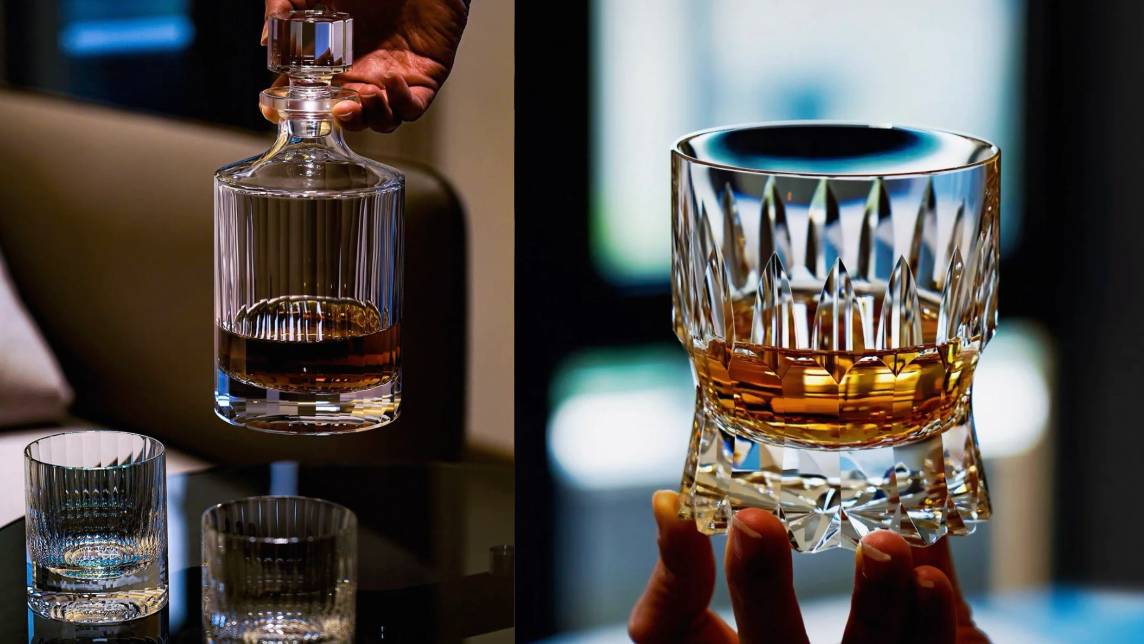
A friend orders whisky neat at a bar, takes a moment to smell it, then turns the glass around to see the pattern catch the light. Which part of that scene should guide your gift? If the pause over the aroma is what they value, choose a glass that narrows at the top. If they linger over the pattern and the feel of the vessel, look at a Japanese cut-glass tumbler. If they ask for a single large ice cube, find out how wide that cube is before you buy anything.
For a boxed Japanese whisky glass gift, our pick for a collector who likes floral cutting is the 250 ml Violet Kohana Blossom. For a smaller tumbler, look at the 195 ml Violet Kaze. For someone who loves tasting different whiskies, consider a dedicated nosing glass. A couple who tastes together may get more pleasure from two matching glasses than from one elaborate piece. The rest of the choice comes down to shape, color, how the glass fits the hand, and what will actually arrive in the box.
You can buy any of these without knowing the recipient’s favorite distillery. The trick is to choose a vessel for something you have seen them do. A glass for a drink after dinner, a glass for comparing bottles and a glass that commemorates a trip can each be a beautiful present. They ask different things of the design. Explore Oriental Artisan’s whisky glasses.
Japanese whisky glasses compared for gifting
| Glass | Listed capacity or configuration | Best fit | Detail worth checking |
|---|---|---|---|
| Violet Kaze | 195 ml, 85 mm high, 70 mm diameter | Someone who likes a compact cut tumbler | Size against the glass they already reach for |
| Violet Kohana Blossom | 250 ml, 90 mm high, 80 mm diameter | A floral crystal collector or formal gift | Wooden presentation box is specified |
| Violet Shippo | 345 ml, 95 mm high, 75 mm diameter | A drinker who likes more volume and geometric cuts | Internal opening if buying for a particular ice cube |
| Mount Fuji glass | Product lists 10 oz for the glass | Someone with a memory or interest tied to Japan | Select the intended glass configuration |
| Whisky Nosing and Tasting Glass | One, two or six glasses with wooden box options | A comparative taster or tasting host | Number of glasses selected and whether separate boxes are needed |
Start with the drink they actually make
A neat pour occupies only a small portion of a typical tumbler. That leaves room to see the color, move the glass gently and enjoy the feel of a substantial object during conversation. Someone who drinks this way for pleasure may be completely happy with an open tumbler. Someone who makes notes about aroma may prefer an opening that brings the nose closer to the space above the spirit. The bottle on the shelf does little to distinguish these people. Watch what they do after they pour.
A whisky over ice asks for different proportions. There must be room for the ice to enter, room around it for the liquid, and enough space below the rim to carry the glass comfortably. A stated capacity only tells you the volume the vessel holds under the conditions the maker used. It cannot tell you whether a rigid square of ice will pass through the mouth. That detail can matter more than the difference between two glasses a few ounces apart.
An Old Fashioned drinker may think of the glass as part of a composition involving ice, spirit and a curl of orange peel. A broad, accessible mouth makes the garnish easier to position and gives the drinker room to sip around the ice. Someone who loves a long highball needs space for a different proportion of mixer and ice. If that is the drink you have seen in their hand for years, look at the actual height and usable volume before buying a short tumbler for its pattern.
A person who chooses by the look of a drink deserves a choice just as specific. A strongly colored wall alters how the whisky appears from the side. Clear areas can show the liquid against a lighter background; cut sections break up the view into facets. For a collector who photographs bottles and compares shades of amber, a largely clear vessel has practical appeal. For the person who loves what candlelight does to violet glass, the color is part of the gift.
What is Edo Kiriko, and why choose it as a gift?
Edo Kiriko is a Japanese cut-glass tradition associated with Tokyo. In a cut design, material is removed from the surface to form the pattern. Turn a glass and you can follow the line of a cut through changes in reflection. On colored glass, a contrast between the outer color and the clearer areas can make a pattern particularly legible. From across a dinner table you see the overall design. In the hand you can inspect where individual lines meet.
When you buy, start with what the individual product identifies about origin, material and technique. A Japanese-inspired silhouette, a mountain motif and a Japanese cut-glass designation describe different aspects of an object. A mountain design can be deeply meaningful to the recipient in its own right. Someone collecting a particular tradition, however, may want the stated place of manufacture and description of the cutting. Give that person the product details along with the glass so they can keep the information with the piece.
Pattern is an excellent way to make a choice personal without engraving a name. A person who draws botanical subjects might love a flower emerging from strong violet glass. Someone who chooses geometric textiles may enjoy repeated intersecting circles. A friend who likes a sense of motion in an otherwise simple room may prefer sweeping lines. These are observations about the person, and they make better reasons to pick a design than a generic recommendation that every collector should own the same motif.
If the terms still feel unfamiliar, open two designs side by side and look at the empty spaces. How much glass is left quiet between the cuts? Does the eye travel around the circumference or settle on a single flower? Imagine the recipient picking up the glass with the pattern partly hidden by their fingers. Would the rest of it still look beautiful to them? Comparing two actual objects this way is easier than memorizing a list of pattern names before shopping.
For a floral collector: Violet Kohana Blossom, 250 ml
Violet Kohana Blossom is our choice for someone who appreciates a floral subject in a jewel-toned material. The listing identifies Japanese hand-cut, lead-free crystal and includes a wooden presentation box. Its dimensions are approximately 90 mm high by 80 mm in diameter, with a capacity of 250 ml. This is a useful middle scale among the violet glasses in this guide. It gives the piece presence in the hand without the volume of the larger Shippo. See the Violet Kohana Blossom glass.
Choose it for a retirement, anniversary or significant birthday if the recipient likes objects they can examine closely. A flower arranged across a curved surface reveals itself a little at a time as the glass turns. That suits someone who enjoys the object even before a drink is poured. The wooden box is useful if you are handing over one glass at a formal dinner. You can write a brief card explaining what in the design reminded you of them.
Think about the colors already present at home. A violet accent can stand alone on an otherwise restrained shelf, or it can sit among colored ceramics and textiles. If you have only seen clear glass in the recipient’s home, ask whether that reflects a preference or simply the contents of a standard set. A bright object can be a delightful change when you have a reason for it. For a recipient who deliberately keeps the bar monochrome, choose a clearer design instead.
For a couple, consider whether each would want the same motif. Two Kohana glasses establish a coordinated pair if you order the appropriate quantity. One Kohana and a different cut-glass design can feel more personal when the two drinkers have distinct tastes. If the shared activity is blind tasting rather than collecting, matching shapes have an advantage: each person encounters the drink in the same form. That is a practical reason to choose a pair over two separate designs.
For the person who likes a smaller glass: Violet Kaze, 195 ml
The Violet Kaze offers a more compact scale at 195 ml. Listed dimensions are 85 mm in height and 70 mm in diameter. The wind-inspired pattern places the emphasis on movement across the surface. Choose it for the person whose favorite glass is already on the smaller side, especially if an after-dinner pour is an occasion to sit and talk. Explore the Violet Kaze whisky glass.
A change of just ten millimeters in diameter can be noticeable in the hand. One way to shop online is to measure a tumbler the recipient already likes at its widest point, then compare its outline with the photographs. Also note where they hold it. Some people rest a glass low against the palm, others hold it lightly near the lip. The widest diameter alone cannot describe comfort, but an object already in the cupboard gives the number a real reference.
Kaze is a good gift to consider when the recipient lives in a smaller apartment or keeps a handful of personal objects on a narrow drinks shelf. A compact shape can have plenty of visual presence when the cuts create movement around the glass. If cupboard space is particularly tight, compare the advertised height with the actual clearance. Owners of older drinks cabinets sometimes have much less usable shelf height than an online photograph would suggest.
For an ice drinker, pause over the width. A published diameter may include the walls and the widest part of a body that tapers toward the mouth. Measure the ice the person normally uses or ask for the internal rim dimension if clearance is decisive. A compact glass that suits a neat pour brilliantly may frustrate a person devoted to a particular oversized mold. If that detail is unknown, the gift recipient’s usual style of drink is your best guide.
For a bold geometric pattern: Violet Shippo, 345 ml
Violet Shippo has the largest listed capacity of these three violet examples at 345 ml. The glass measures approximately 95 mm high and 75 mm in diameter. Its repeating circles are a distinctive choice for a collector interested in geometry and continuity. The product describes the Shippo motif in connection with harmony, giving the giver a natural starting point for an anniversary note or a present celebrating an enduring friendship. See the Violet Shippo glass.
The dimensions illustrate why capacity and width deserve separate columns in a comparison. Shippo is advertised with a larger capacity than Kohana yet a smaller diameter. If you are choosing the glass that gives a particular ice shape more clearance, the higher capacity cannot settle the question. On the other hand, a recipient who wants more space for a drink over ordinary ice may find the added volume useful. Ask about the opening only if the fit is essential to the purchase.
A geometric pattern also changes how a pair looks. Two matching Shippo glasses have a strong rhythm when placed side by side. A single one on a desk or sideboard becomes a small study in repeated curves. For someone who collects textiles, architectural details or graphic prints, that relationship may be the most interesting part of the object. Give the piece with a note referring to something in their home you have always admired. The gesture connects the design to their eye.
If you are choosing between Shippo and Kohana for a formal gift, decide whether you want the card to mention a relationship or a personal taste. Interlocking circles readily suggest connection. A flower can recall a garden, a shared trip or a favorite subject in a painting. Either can honor an anniversary. The design that lets you write the more particular sentence is usually the stronger gift, provided the size also suits the way the person drinks.
For a traveler or mountain lover: a Mount Fuji glass
A Mount Fuji motif makes immediate sense to someone who has seen the mountain from a train, walked with it on the horizon, or hoped for a clear day on a trip to Japan. That association can be more important than expertise in whisky. The glass gives the recipient a small physical reminder of the place whenever they pour something. Oriental Artisan lists a 10 oz Mount Fuji glass and describes a single-glass wooden presentation option. Explore the Mount Fuji glass configurations.
Start on the product page and read the selected configuration all the way through. “Set” can describe the product family, while the option in your cart determines what you receive. If you want one presentation box for each of two people, establish that both the item count and packaging suit that purpose. If you want one joint gift, a coordinated presentation might matter more. View the contents and price after selecting your preferred option and before you compare it with other glasses.
Choose the mountain motif for the recipient who would tell its story when a friend notices the glass. Someone who treats the home bar as a gallery may instead enjoy an abstract pattern that invites a closer look. A drinker who plans to compare aromas may use the mountain tumbler after dinner and a nosing glass for organized tastings. If you are the person who shared the trip, write down the name of the place where you saw Fuji together. That is an addition no retailer can supply.
For the serious taster: one nosing glass or a matched set?
A nosing glass is designed for smelling and tasting a spirit. Its narrower opening brings the nose toward the aroma above the liquid. This is a good choice for someone who compares bottles, keeps tasting notes or enjoys asking friends what they notice in a small pour. Oriental Artisan offers one, two and six glasses with wooden-box configurations. Select the count according to how the recipient tastes. Compare the boxed whisky tasting glass options.
One glass makes sense for someone learning their way through a bottle over time. Two are particularly useful for comparisons because the recipient can return to each drink without emptying and rinsing the first glass. Matching forms also reduce one source of variation. If two whiskies smell different, the taster need not wonder how much of that difference came from using a broad tumbler for one and a narrower glass for the other.
Six glasses make sense for a host who holds organized tastings. Count both guests and pours when planning a present. Six people can each try one whisky at a time, while three people could compare two samples side by side. A couple who rarely entertains might prefer two glasses that can remain accessible. Before buying a larger set, picture how the glasses will be cleaned, dried and stored after everyone leaves.
A choice between the nosing glass and Japanese cut crystal can also reflect what the recipient already owns. A keen taster may have plenty of specialist glasses but no single beautiful tumbler for a quiet evening. A collector with a full cabinet of colorful rocks glasses might welcome a matching tasting pair that lets them host a different kind of gathering. Ask which part of the evening their current glassware handles least well. That question can turn a near-duplicate into a genuinely welcome addition.
How to choose glassware for ice, cocktails and neat pours
For a big ice cube, measure its widest span in the orientation needed to pass through the opening. A square can fit along one dimension and still catch at the corners of a round mouth. The body may widen below the rim, but the ice has to pass through the narrowest part first. If the recipient freezes clear ice in a favorite mold, check a finished piece instead of relying solely on the size printed on its packaging. Leave comfortable clearance for adding it gently.
For ordinary ice, the space left for liquid and movement becomes more important. A glass filled nearly to the top can be awkward to carry from kitchen to table. If someone likes a generous amount of ice, choose a volume that leaves headroom for the drink they actually make. If they use a single small cube and otherwise enjoy the appearance of a restrained pour, a smaller glass may be just right. Full capacity is a specification rather than a suggested serving.
Cocktail enthusiasts often have preferences that are easy to discover without discussing glassware at all. Ask whether their favorite home drink is short and stirred or long and sparkling. A low tumbler suits many short drinks brought to the table on ice. A taller drink needs room for its mixer, bubbles and garnish. If the object you want to give is a short piece of cut glass, choose it for an occasion that makes sense in the recipient’s repertoire.
A neat pour puts the relationship between the hand, the rim and the nose in the foreground. A taster looking for an intimate aroma may reach for a nosing glass. A reader who likes one drink beside a book may prefer the stability and easy access of a tumbler. Both people drink whisky neat. The setting tells you which glass would improve the moment. If you buy the tumbler for the reader, slip a bookmark inside the card as a personal finishing touch.
A purchase plan for weddings, birthdays and business gifts
For a wedding, find out whether both partners enjoy whisky. If they do, a matching pair lets them use the gift together immediately. If one prefers another drink, a flexible tumbler can serve water or a mixed drink as easily as whisky. If they have distinct tastes in design, consider complementary patterns with similar usable proportions. That way the glasses look like two individual choices that belong at the same table.
For a parent’s birthday, start with something they already do every week. A small Kaze can suit someone who pours a little whisky after Sunday dinner. A tasting pair can set up a recurring experience for you to share on visits. A Fuji glass can hold the memory of a family holiday. If your parent already has a cabinet of presents saved for special occasions, write an invitation to use this one on a particular evening.
For a colleague or client, the best choices work within what you actually know. When a shared interest in whisky is established, a boxed tasting glass or a single cut tumbler can be appropriate. If the occasion involves a company, check its gift policy and any budget limit first. Packaging matters here because the piece may be handed over in a meeting or shipped to another location. Establish how many separate boxes you need when ordering multiple gifts.
An engraved piece can be particularly personal, but a strong cut pattern already provides visual detail. Look at the area available for the inscription and think about how the letters relate to the cuts. A date, initials or a short line in a card may be enough. If you prefer a personalized whisky glass, consult a product that explicitly offers this service and check timing for the chosen wording. View the personalized Violet Peacock whisky glass.
What to know about caring for cut crystal
Care is part of choosing a gift that will actually be used. The violet cut-crystal glasses featured here specify hand washing. If the recipient puts every item straight into a dishwasher, talk about that preference before buying an intricate piece. People who enjoy the ritual of rinsing a favorite glass after dinner may find the extra moment entirely natural. A housemate managing a busy shared kitchen might prefer keeping such a piece for quieter evenings.
For these glasses, follow the product instructions for lukewarm water, mild detergent and a soft cloth. Give the glass space in the sink so it does not knock against heavy pots or the tap. Avoid sudden temperature changes and abrasive materials. Allow it to dry thoroughly before returning it to a box. Include the care details with the present, particularly when giving to a first-time collector who might otherwise treat it like their ordinary dishwasher-safe glasses.
Storage deserves a moment of thought as well. Measure the height of the drinks shelf and leave enough space to lift the glass out easily. Place separate pieces where their rims will stay clear of each other. A presentation box can be helpful for storage between occasional uses, while a favorite everyday tumbler may belong at the front of a cupboard. A good gift remains close enough to reach when a friend says, “Shall we open that bottle?”
A closer look at the Mount Fuji gift options
The Mount Fuji product selector offers a transparent single glass, a transparent double-glass set and single glasses in pink, blue, yellow or green. It also lists a customization fee as a separate choice. Select an option that names the glass or pair you want. A fee covers a service, and selecting that entry on its own does not describe a gift containing a whisky tumbler. The mountain itself rises from the base, so consider the view looking down as well as the view across the room.
For newlyweds who stood together on a clear morning in Japan, the transparent double set has an obvious appeal. They can see the mountain through the glass and use the pair together without choosing a favorite color for either person. For siblings who shared the trip, two different single colors may carry the memory more personally. If you select two single glasses, check the current price of each option and the presentation details rather than using the displayed price of a double set for comparison.
Suppose the recipient takes photographs of the same view in different seasons. A clear mountain glass gives the contents of the glass a role in the picture: water and an amber drink produce different views through the base. A colored version introduces another element even when the vessel is empty. Ask yourself which scene they would notice first. Choosing on that basis makes the color decision about something more personal than matching a bar cart.
Questions to settle before you order a whisky glass gift
Is a whisky glass a good present if I cannot choose a bottle?
Yes. A glass works with a bottle the recipient already knows and lets them choose what to pour. If their favorite activity is tasting unfamiliar whiskies, buy a nosing glass or matched pair. If they like to sit with one familiar whisky over ice, look at the tumbler dimensions. Choose a Japanese cut-glass piece when the recipient has a clear interest in its color, pattern or craftsmanship as well.
Is an expensive glass always a better tasting glass?
Price cannot answer that question. A well-shaped tasting glass may be exactly right for comparing aromas, even when a more intricate piece costs considerably more. Cut crystal can offer pattern, material and handwork that a collector values independently of a tasting exercise. Identify which qualities the recipient cares about and assign your budget accordingly. The better gift is the one they can picture themselves using.
What size should I buy if I am buying my first Japanese whisky tumbler?
Use a familiar glass as a reference. The 195 ml Kaze is a compact option, the 250 ml Kohana sits between the other examples here, and the 345 ml Shippo offers additional volume. Compare the height and width as well as capacity. For a large ice mold, confirm the inner mouth dimension. For a neat pour, give more weight to how the form feels and how the design looks to the recipient.
What is the best choice if I still have two favorites?
Choose the one you can give with a specific memory or invitation. A floral cut for the person who taught you to name the plants in their garden. A matched tasting pair for the friend who always saves a small sample for you. A mountain glass for the partner who watched the clouds clear above Fuji. When the use, the dimensions and the memory all point to the same glass, the gift is ready. Find a Japanese whisky glass for their table.

Hinterlasse einen Kommentar
Diese Website ist durch hCaptcha geschützt und es gelten die allgemeinen Geschäftsbedingungen und Datenschutzbestimmungen von hCaptcha.