
Article: The Ultimate Guide to Calligraphy Brushes: Types, Materials, Techniques & How to Choose
The Ultimate Guide to Calligraphy Brushes: Types, Materials, Techniques & How to Choose
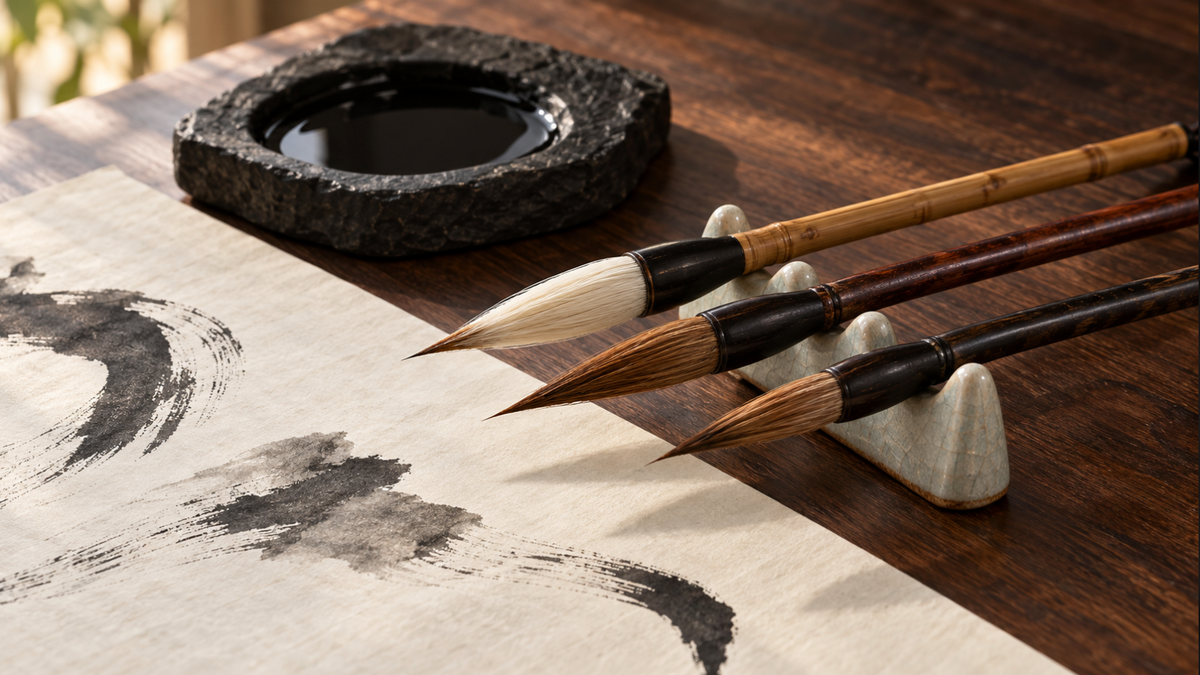
A brush rests in water until its stiffened hairs begin to loosen. Lifted, shaped and touched to ink, it gathers into a point. On paper, that point opens under pressure, then narrows as the hand rises. A single stroke records the movement.
A traditional calligraphy brush is a tapered bundle of flexible hairs mounted in a handle and used with separately prepared ink. Its material, dimensions and construction determine how it holds ink, bends and returns to shape. Choosing well makes practice more intelligible: the brush responds in a way you can learn to recognize.
This guide concerns Chinese and Japanese writing brushes, rather than modern brush pens or Western lettering tools. Whether you are beginning regular script, exploring ink painting or selecting a gift, start with the writing you want to make.
What Is a Calligraphy Brush?
A traditional calligraphy brush produces lines through the coordinated movement of its flexible head. Pressure changes how much hair touches the paper; angle, speed and ink loading change the resulting mark.
In Chinese, it is a máobǐ (毛笔), a hair brush. In Japanese, fude (筆) means brush and commonly refers to writing or painting brushes in this context. Chinese calligraphy is often called shūfǎ; Japanese calligraphy, shodō.
A rigid nib offers a relatively fixed contact surface. A hair brush can gather, spread, turn and lift within one stroke. Modern brush pens may imitate some of this behavior, but their ink reservoirs and tips create a different working experience.
For a buyer, three questions matter immediately: Will the head suit the character size? Will its spring help the intended movement? Will it release ink predictably on the chosen paper?
A Brief History of Chinese and Japanese Calligraphy Brushes
Brushmaking developed alongside writing, and its history extends well beyond any single inventor story. Surviving early brushes and written traditions document an established craft in ancient China. Later production centers included Xuanzhou and Huzhou, whose names remain associated with writing brushes. [1]
The instrument also helped shape artistic possibilities. A stroke can carry weight, direction and changes of pace within its outline. The Metropolitan Museum of Art describes the shared brush-and-ink foundation of Chinese painting and calligraphy, while explaining the exceptional cultural status accorded to writing. [2]
Chinese writing traditions reached Japan through sustained cultural exchange, including scholarship and Buddhism. Japanese practitioners developed distinctive forms of expression using kanji and kana. The Met's account of Japanese brush writing traces the importance of copied Buddhist texts, poetry and the development of kana calligraphy. [3]
In the Chinese scholar's studio, the brush belongs to the Four Treasures of the Study (文房四宝): brush, ink, paper and inkstone. Traditionally, an inkstick is ground with water on the stone. The brush carries that ink; the paper receives it according to its surface and absorbency. [4]
These tools form a working system. A change in paper can alter the apparent behavior of a familiar brush.
Understanding the Anatomy of a Calligraphy Brush
A brush's behavior comes from the relationship between its point, fuller body and handle. Looking only at the finest tip misses much of its construction.
Point and belly
The point gathers hairs into a narrow contact area for fine marks. The fuller portion behind it, often called the belly, supplies ink and opens as pressure increases.
A well-formed head should transition smoothly between these states. A fine point alone does not establish quality: a new head may be held perfectly together by sizing, the temporary dressing applied before sale.
Handle and construction
Bamboo and wood are familiar handle materials; lacquer, porcelain and decorative finishes also have long associations with scholar's objects. Handle thickness, weight and surface influence comfort, especially during sustained practice.
Inside the head, hair selection and arrangement govern support and ink delivery. Some constructions combine a supporting core with an outer layer; others use different arrangements suited to their purpose.
The four traditional qualities
Chinese brush assessment often invokes 尖、齐、圆、健. These describe practical virtues rather than ornamental perfection. [5]
| Quality | Meaning | What the writer should notice |
|---|---|---|
| 尖 — Jiān | A fine, gathered point | A clean beginning or delicate ending |
| 齐 — Qí | Orderly alignment when spread | Hairs work together without irregular scattering |
| 圆 — Yuán | A full, balanced head | Smooth changes of direction |
| 健 — Jiàn | Resilience and responsive strength | The head recovers after appropriate pressure |
Evenness does not mean cutting every natural tip to the same length. The formed head depends on carefully arranged hairs of different lengths.
The Main Types of Calligraphy Brush Hair
Hair names indicate likely behavior, but they do not describe every aspect of performance. Processing, proportions, head shape and exposed length can make two similarly labeled brushes feel quite different.
Goat hair: soft and absorbent
Yángháo (羊毫) commonly denotes goat-hair brushes. These are associated with softness, flexibility and substantial ink capacity. A well-made example can produce both fine lines and full, rounded strokes. [1]
Softness asks the writer to manage the head actively. If you press deeply and drag without lifting, the hairs may remain spread. This can make a very soft brush demanding at first, although teachers may deliberately introduce one to develop pressure control.
Choose goat hair when its slower, supple response suits the work. Do not assume pale hair is automatically goat hair or that softness indicates poor quality.
Weasel hair and the name “wolf hair”
Lángháo (狼毫) is conventionally translated as “wolf hair,” but the traditional material is associated with weasel hair. The literal English label can therefore mislead. [1]
These brushes commonly offer a firmer response useful for articulated strokes and fine work. That makes them worth considering for controlled regular script, but neither firmness nor a brown color proves composition or quality.
Oriental Artisan's Langhao brush with cloisonné and mother-of-pearl decoration provides a relevant example of the commercial label. For any purchase, ask for the actual composition if purity or animal origin matters.
Mixed hair: a designed balance
Jiānháo (兼毫) combines hairs to balance properties. A maker might seek a supportive center, an absorbent body and a fine working point. The result depends on the recipe and arrangement, not simply on containing two materials.
Mixed hair can be a useful first choice because it may offer both ink capacity and an easier recovery after pressure. A blend is a construction choice, not an automatic sign of compromise.
Rabbit, horse and other materials
Rabbit hair appears in Chinese brush traditions under names including zǐháo (紫毫). Horsehair is also used in writing brushes, including Japanese examples. Other animal hairs and contemporary synthetic fibers expand the range of possible responses. [1], [6]
Ask about the particular brush rather than treating a material name as a complete specification.
| Hair type | Flexibility | Spring or recovery | Ink capacity | Uses worth considering | Beginner suitability |
|---|---|---|---|---|---|
| Goat | Usually very supple | Often gentle | Often generous | Rounded writing, washes, expressive work | Useful with guidance; may require more control |
| Weasel / Langhao | Usually firmer | Often lively | Depends strongly on head size | Defined strokes, fine writing, detail | Helpful when size suits the exercise |
| Mixed hair | Recipe-dependent | Can balance support and softness | Recipe-dependent | General writing and varied practice | Often a practical starting point |
| Rabbit | Often firm | Can be responsive | Construction-dependent | Deliberate line work and specialist brushes | Assess the individual example |
| Horse | Variable by hair selected | Can provide strong support | Construction-dependent | Practice, larger writing, blends | Some firm or mixed examples suit beginners |
| Synthetic / blended synthetic | Engineered and variable | Product-dependent | Product-dependent | Practice or animal-free requirements | Check handling and full composition |
These are tendencies and selection suggestions, not performance grades.
Soft, Hard and Mixed Brushes: What's the Difference?
Soft, hard and mixed describe broad handling categories. “Hard” means relatively firm hair; the brush still needs to flex.
| Category | Typical behavior | Useful starting question |
|---|---|---|
| Soft — 软毫 | Opens readily, responds sensitively to pressure | Can I lift and gather the head consistently? |
| Hard — 硬毫 | Offers more resistance and clearer recovery | Does the spring help my stroke without fighting it? |
| Mixed — 兼毫 | Combines properties according to its construction | Does this particular blend suit my exercise? |
A beginner studying medium regular script might appreciate a supportive mixed brush. Someone writing fine inscriptions might prefer a compact, firmer head. An experienced artist seeking broad, ink-rich movement may welcome a softer brush.
These are starting points. A teacher's model, the character size and the paper should guide the final decision.
Chinese vs Japanese Calligraphy Brushes
Chinese and Japanese brushes share fundamental principles and overlapping materials. Their national labels do not establish fixed differences in stiffness, size or quality.
Differences become more useful when tied to an actual task: small Chinese regular script, Japanese kanji practice, flowing kana or a large exhibition work. Japanese calligraphy encompasses multiple writing forms and cannot be reduced to a single brush type. [3]
| Consideration | Chinese writing context | Japanese writing context |
|---|---|---|
| Common terminology | Máobǐ; material and script names | Fude; purpose and format descriptions |
| Writing forms | Regular, running, cursive, clerical and seal scripts | Kanji and kana, with varied scripts and formats |
| Hair | Soft, firm and mixed options | Soft, firm and mixed options |
| Dimensions | Determined by character scale and intended effect | Determined by writing format and intended effect |
| Construction | Varies by maker and brush type | Varies by maker and brush type |
| Buying priority | Match the brush to the model and paper | Match the brush to the model and paper |
A Chinese-made brush may suit Japanese practice and vice versa, but suitability should be established through dimensions and handling. When considering traditional calligraphy brushes at Oriental Artisan, compare the intended task with the listed specifications rather than inferring suitability from cultural styling.
How to Choose the Right Calligraphy Brush
Choose by character size and writing task first, then refine by hair response, construction and budget. If you study with a teacher, their recommendation is the most useful starting point.
By experience level
| Experience | Priorities | Sensible purchase approach |
|---|---|---|
| Beginner | Manageable size, reliable point, supportive response | Start with one appropriate brush and learn its behavior |
| Intermediate | Better control of release, recovery and line variation | Add a contrasting material or head proportion |
| Advanced | A specific response for a particular model or paper | Compare individual constructions and makers |
| Professional | Repeatability, specialist behavior and dependable supply | Assess performance within the actual working process |
Before selecting a first brush, compare the stated purpose with the exercise you plan to study; the calligraphy brush collection provides the current specifications.
A collection grows most usefully around needs. Buying several unfamiliar brushes at once can make it difficult to identify why a stroke changes.
By writing style
For regular script (kaishu), look for a head that supports deliberate beginnings, turns and endings. Running script (xingshu) asks for fluid transitions; cursive script (caoshu) may require the brush to sustain connected movement.
Clerical script (lishu) often brings attention to broad, controlled changes of pressure. Seal script (zhuanshu) rewards sustained control of line. None of these scripts belongs exclusively to one hair type.
For Japanese shodō, specify the exercise more closely. Kanji practice, kana and large expressive writing place different demands on the head.
Treat these observations as selection guidance, not rules assigning one material to each script.
By character size
The head's base diameter and exposed hair length are more useful than total handle length. Diameter influences available width and capacity; exposed length influences how far the head can bend.
| Intended scale | What to examine | Common mismatch |
|---|---|---|
| Small characters and inscriptions | A fine point and a head controllable with shallow pressure | A large head that hides the working area |
| Medium practice characters | Enough body for the broadest stroke and a comfortable recovery | A tiny head that needs constant reloading |
| Large characters | Greater head volume, reach and ink supply | A small brush pushed beyond its comfortable spread |
| Fine painting detail | Point stability and controlled release | A soft, long head chosen only for appearance |
There is no universal conversion from brush diameter to character height. Stroke width, paper and technique change the relationship.
By material and purpose
If you struggle to recover the point, try a more supportive head before assuming a more expensive brush will help. If the brush feels resistant and ink-starved for your intended work, consider a fuller or softer construction.
For practice, prioritize predictable handling. For finished work, test the brush with the intended ink and paper. For collecting, ask about documented maker and provenance. For gifting, consider both the recipient's practice and presentation.
For small regular script, the Cloisonné and Mother-of-Pearl Calligraphy Brush Gift Set is listed with an 8 mm tip diameter and 26 mm exposed bristle length. These measurements provide a useful starting point for comparison.
By budget
Pay for qualities you can identify: better hair selection, careful assembly, a response you prefer or decorative work you value. The Kumano brush cooperative emphasizes that a higher price does not make a brush universally better for every use. [6]
An expensive gift brush can be a considered purchase. A simpler practice brush can also be the right instrument.
What Makes a High-Quality Calligraphy Brush?
A high-quality brush should perform coherently for its intended use: gather to a usable point, deliver ink consistently and recover under appropriate handling.
Before purchase, seek head dimensions, composition details, close photographs and a clear description of intended use. After correct preparation, assess it with familiar paper and ink.
Look for a secure mounting, comfortable handle finish and head that behaves consistently. Persistent heavy shedding, an unstable head or continuing irregular splitting merits discussion with the seller.
Assess balance in your own grip. A decorative handle may feel comfortable to one writer and tiring to another. Ornament cannot substitute for a well-formed head.
The decorated writing brush illustrates how a buyer can value functional specifications and surface craftsmanship separately. Both deserve attention.
How Traditional Calligraphy Brushes Are Made
Traditional brushmaking builds a working shape from selected hairs. The apparent simplicity of the finished object conceals repeated sorting and alignment.
The Kumano cooperative documents a process that includes material selection, preparation, combing, removal of unsuitable hairs, alignment, mixing, core formation, outer wrapping, binding and mounting. The exact sequence varies between traditions and brush types. [7]
A broad account follows eight stages:
- Select and sort: Choose suitable hairs by quality and intended role.
- Prepare: Clean and condition them using the workshop's methods.
- Align: Bring natural working ends into the required arrangement.
- Form: Build the taper and supporting body.
- Bind: Secure the base of the head.
- Mount: Fit the head into its handle.
- Finish: Shape the brush and apply any protective dressing.
- Inspect: Check formation and, where the maker's process includes it, writing behavior.
Huzhou, particularly its associated brushmaking communities, is another important tradition. Its name should describe documented origin, rather than serve as a generic synonym for a good brush. [5]
Regional histories explain the craft; they do not establish the provenance of an unrelated product.
How to Use a Calligraphy Brush for Beginners
Begin with correct preparation and a small set of repeatable exercises. Consistency becomes easier to understand when the paper, ink and brush remain familiar.
Prepare the new brush
New heads are often stiffened with sizing. Follow the maker's instructions to release the appropriate portion gently; never force a dry, rigid head to bend.
Some fine Japanese brushes are used with only part of the head released. Others are prepared through the full working head. The Kumano cooperative distinguishes care for fully released brushes from small brushes whose base remains sized. [6]
Hold, load and move
Sit comfortably with the paper stable. Hold the handle securely without clenching; a relatively upright position is a useful starting point for many writing exercises.
Grip height and wrist support vary with teachers, scripts and scale. Fine writing may use support; larger work may draw on a freer wrist and arm.
Moisten the working hair as instructed and remove excess water before loading ink. Shape the head gently at the dish edge. It should carry enough ink to write without uncontrolled dripping.
Practice horizontal and vertical strokes, dots and a slow press-and-lift movement. Notice how increased contact broadens the stroke and lifting narrows it. Follow a teacher's stroke model for the script you are learning.
Change one variable at a time. If every sheet uses a different ink dilution, diagnosing the brush becomes difficult.
How to Clean and Care for a Calligraphy Brush
Clean promptly, preserve the head's shape and let it dry completely before storage. Care should follow the maker's instructions, especially for fine brushes with a partly sized base.
For a fully released brush, gently rinse ink from the working hair, including the base. Avoid crushing the point against a basin. Remove excess water, smooth the hairs and, where possible, suspend the brush tip downward in a ventilated, shaded place. Do not cap it while damp. [6]
A partly released fine brush may require careful wiping of the working tip rather than washing out its still-sized base. Shoyu's practical care guide also treats large and small brushes differently. [8]
Avoid prolonged soaking, direct heat and leaving a brush standing on its point. Keep decorative handles away from unnecessary water.
For routine cleaning, start with water. Ask the maker before introducing soap, solvent or a specialist cleaner. Follow their advice if dried ink persists.
A brush's usable life depends on frequency, materials and care; no reliable lifespan applies to every example. Loss of point can reflect residue, bent storage, broken hairs or wear. Clean and reassess before attempting repair, and avoid trimming the working tip.
Common Calligraphy Brush Mistakes to Avoid
The most useful corrections address a specific mismatch between tool and task.
- Choosing an oversized head: Compare the broadest intended stroke with what the brush can produce comfortably.
- Pressing harder to solve every problem: Try a slower lift and cleaner recovery.
- Overloading with ink: Adjust the load before changing brushes.
- Letting ink dry in the head: Clean at the end of the session.
- Storing while damp: Wait until the head has dried throughout.
- Judging by decoration or price alone: Examine composition, dimensions and intended use.
- Changing everything simultaneously: Keep a familiar practice setup while evaluating a new tool.
A poor stroke is evidence to examine, not an immediate verdict on either the brush or the writer.
Are Handmade Calligraphy Brushes Worth the Investment?
A handmade brush can be worth its cost when skilled selection and assembly produce a response you value. The word “handmade” alone does not establish that response.
Brushmaking often involves workshops and several specialists. A product need not be made entirely by one individual to embody careful work. Equally, a traditional label does not guarantee consistency.
The Kumano artisan profiles show how strongly makers attend to hair preparation and the needs of particular calligraphers. [9] This is a useful way to understand value: the work serves a specific writing experience.
Collectors may also value a documented maker, regional tradition or unusual handle craft. Ask which of these you are paying for. The head remains a working, wearing component even when the handle is treasured.
Calligraphy Brushes as Meaningful Gifts
A calligraphy brush makes a thoughtful gift when it reflects an existing interest or opens a realistic path into practice.
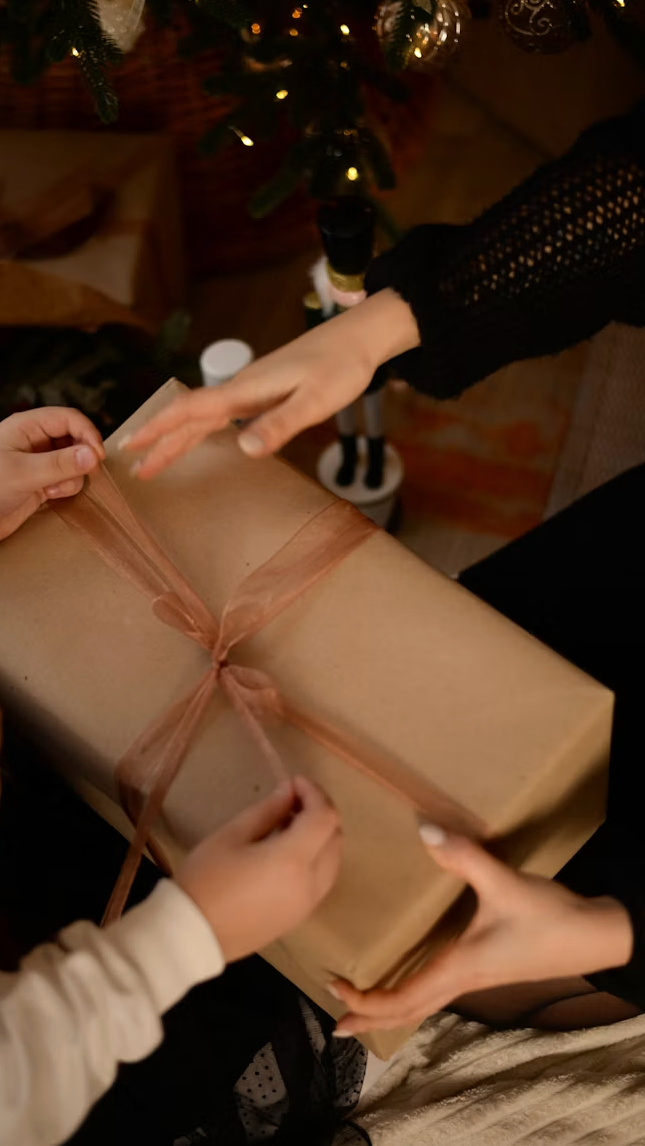
Graduations, academic achievements, retirements and professional milestones provide natural occasions. Birthdays, Lunar New Year and Christmas can also suit a gift chosen for an artist, teacher, writer or collector.
For a beginner, include suitable paper, ink and a lesson recommendation. For an experienced practitioner, learn their preferred dimensions and materials. A beautifully presented brush can still miss the mark if its response is unsuitable.
Oriental Artisan's calligraphy brush gift set includes a gift box and six color options. Ask about any personalization before ordering.
A short handwritten note can explain why the instrument was chosen: to mark an achievement, encourage a new practice or honor years of teaching.
Frequently Asked Questions
What is a Chinese calligraphy brush called?
It is called a máobǐ (毛笔), literally a hair brush. The term distinguishes the flexible writing instrument from other kinds of pens. Individual brushes may also be described by hair material, head proportions, maker or intended use. Those details are more useful for purchasing than the general name.
What is the best calligraphy brush for beginners?
The best starting brush fits the teacher's exercise and offers manageable handling. A supportive mixed or firm brush is often worth considering, but some teachers begin with softer hair. Character size matters: a fine inscription brush and a brush for large practice characters solve different problems.
What is the difference between goat hair and wolf hair brushes?
Goat hair is generally associated with a softer, absorbent response. “Wolf hair,” or Langhao, conventionally refers to weasel hair and commonly suggests firmer handling. These labels describe tendencies. Construction, exposed length and blending can substantially change the feel, so check the actual specification when comparing products.
Are Chinese and Japanese calligraphy brushes the same?
They share important materials and construction principles, but individual brushes serve different tasks. Japanese kana, large kanji practice and Chinese small regular script need not use the same head. Compare dimensions, ink handling and the teacher's model rather than assuming a national label determines suitability.
What size calligraphy brush should I use?
Choose a head that can form the intended strokes without excessive pressure or constant reloading. Start with character scale, then compare base diameter and exposed hair length. Manufacturers' size names vary, so “small” or “medium” alone is insufficient. Ask for measurements and examples of the intended writing.
What brush is best for small Chinese characters?
Look for a fine point and controlled ink release at shallow pressure. Compact, responsive heads are useful candidates, but “small regular script” covers a range of scales. Match the brush to the model and paper. A long handle does not indicate that the head is intended for large characters.
Can calligraphy brushes be used for painting?
Many can be used for ink painting, although suitability depends on the marks required. Fine outlines, broad washes and textured strokes place different demands on the head. If you alternate media, confirm compatibility and cleaning requirements. A writing brush is not automatically the ideal brush for every painting technique.
How do I prepare a new calligraphy brush?
Read the maker's directions before releasing the sized head. Gently soften the intended working portion without bending it while rigid. Some fine brushes retain a sized base, while other heads are released more fully. Preparation should preserve the construction rather than apply one method indiscriminately to every brush.
How do I clean a Chinese calligraphy brush?
Follow its care instructions and clean promptly after use. A fully released head generally needs ink rinsed from the working hair before reshaping and drying. Avoid prolonged soaking, heat and damp storage. Fine or partly sized heads can need a different method, so seek advice when their construction is unclear.
How long does a calligraphy brush last?
There is no fixed lifespan. Frequency of use, pressure, paper, ink, hair quality and cleaning all affect wear. Judge its condition by writing behavior: whether it still gathers, releases ink and responds as needed. Residue may be treatable; damaged natural tips do not become new again through reshaping.
Are expensive calligraphy brushes worth it?
They can be, when the price reflects qualities you need or craftsmanship you appreciate. A specialist head, documented maker or elaborate handle may justify additional cost for a particular buyer. Compare those benefits with your intended use. Price alone cannot establish that a brush will improve your writing.
Where can I buy a high-quality traditional calligraphy brush?
Buy from a seller that explains materials, dimensions, intended use and care, and answers questions about provenance. A specialist workshop, trusted teacher or knowledgeable retailer can help narrow the choice. Before purchasing an unfamiliar premium brush, establish what is confirmed and what remains a general description.
Discover Traditional Calligraphy Brushes at Oriental Artisan
A good brush earns familiarity through use. You begin to recognize how much ink it carries, when the head opens and how lightly the hand must rise.
That attention belongs naturally to Oriental Artisan's Art of Quiet Living. Preparing a sheet, arranging the tools and writing a few considered lines gives an everyday object a place in a personal practice.
For further reading, explore The Stroke of Silence: Finding Serenity in the Art of East Asian Calligraphy.
Choose for the writing you hope to make, the materials you appreciate and the pleasure of returning to the desk.
Explore Calligraphy Brushes at Oriental Artisan.
Oriental Artisan — Art of Quiet Living.
Sources and Further Reading
1. ChinaCulture — Four Treasures of the Study.
2. The Metropolitan Museum of Art — Chinese Calligraphy.
3. The Metropolitan Museum of Art — Brush Writing in the Arts of Japan.
4. Smithsonian National Museum of Asian Art — Four Treasures of a Scholar's Studio.
5. China National Intellectual Property Administration — Huzhou Writing Brush.
6. Kumano Brush Cooperative — Frequently Asked Questions.
7. Kumano Brush Cooperative — How Writing Brushes Are Made.
8. Shoyu Online — Caring for and Cleaning Brushes.

Leave a comment
This site is protected by hCaptcha and the hCaptcha Privacy Policy and Terms of Service apply.