


Jingdezhen Porcelain: A Collector's Guide to the "Porcelain Capital" of the World
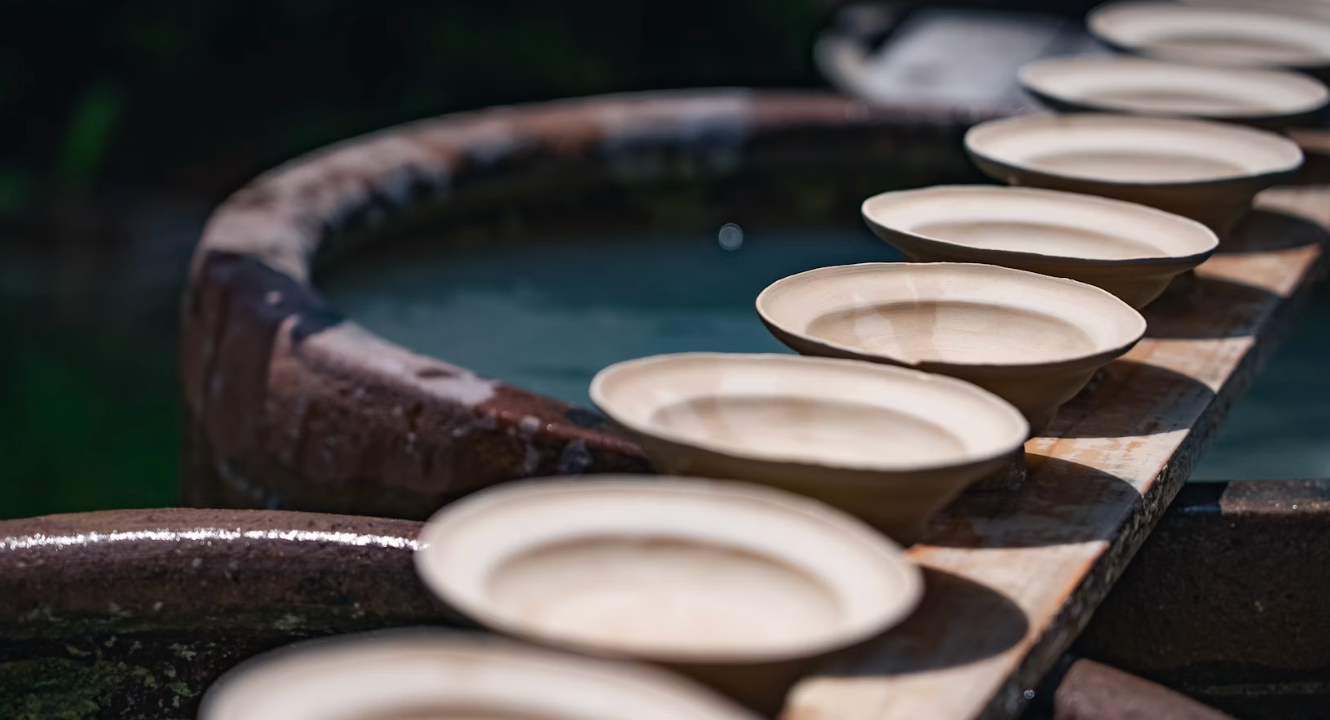
The air inside the workshop is thick with the quiet hum of creation. A master artisan, his hands weathered by decades of devotion, centers a mound of pristine white clay on a spinning wheel. With a touch so precise it seems to belong to music rather than labor, the clay rises, arches, and becomes a vessel of impossible thinness. Across the room, seated by a window that pours in the soft Jiangxi light, a painter dips a brush into cobalt oxide and, with the fluidity of calligraphy, draws a lotus pond onto a bisque-fired cup. Each petal is a breath, each leaf a whisper. Outside, the dragon kilns glow, their ancient chambers holding vessels that will emerge as luminous as jade, as smooth as silk, and as resonant as a temple bell. This is not a scene from a historical reenactment. It is a Tuesday morning in Jingdezhen, the Porcelain Capital of the world, where a tradition spanning more than a millennium continues with an urgency that is both humble and sublime.
For collectors, tea masters, interior designers, and connoisseurs of authentic Chinese craftsmanship, Jingdezhen is more than a city on a map. It is the beating heart of a global ceramic heritage, a place where clay and fire and human genius have conspired to create some of the most exquisite objects the world has ever known. From the silent halls of the British Museum to the minimalist interiors of modern luxury homes, Jingdezhen porcelain embodies a convergence of art, history, and enduring beauty.
What elevates this single city to such an undisputed throne? What makes Jingdezhen the undisputed Porcelain Capital of the world? The answer is written in the unique alchemy of its earth, the unbroken lineage of its artisan families, the patronage of emperors, and a relentless, thousand-year pursuit of perfection that continues to shape the very meaning of fine porcelain. This guide is an invitation to journey into that story — to understand not just the “what” and the “how,” but the profound “why” behind every handcrafted piece that emerges from this legendary city.
What Is Jingdezhen?
Nestled in the northeastern corner of Jiangxi province in southeastern China, Jingdezhen occupies a landscape of lush green hills and winding rivers. Its geographical location is no accident; it is intimately tied to the natural resources that birthed its destiny. The city sits on rich deposits of kaolin clay, the pure white “china clay” that gives true porcelain its translucency, whiteness, and strength. Combined with abundant forests for fuel, navigable waterways for transport, and the protective seclusion of the mountains, nature seemed to have designed this valley for a singular purpose.
Historically, Jingdezhen’s name is itself an imperial seal of approval. During the Jingde era (1004–1007) of the Northern Song Dynasty, the emperor was so captivated by the city’s celadon and white wares that he ordered all pieces made there to bear the mark “Made in the Jingde Period.” The town, previously known as Xinping and then Changnan, gradually adopted the reign title, becoming Jingdezhen — a city named for the very concept of refined virtue. The term “Changnan,” pronounced in the local dialect, is widely believed by scholars to be the etymological root of the word “China” in Western languages, a testament to the city’s role as the gateway through which Chinese civilization was perceived by the world.
Today, Jingdezhen’s global reputation is formally recognized. UNESCO has designated it a Creative City of Crafts and Folk Art. It is a living museum where the Imperial Kilns, which for centuries produced wares exclusively for the emperor’s table, exist alongside thousands of independent studios. Major museums from the Metropolitan Museum of Art to the Musée Guimet in Paris dedicate entire galleries to Jingdezhen ceramics. For collectors, the name “Jingdezhen” on a piece is a hallmark of provenance, a promise that the object in hand is a leaf on a vast, living tree of ceramic heritage that has never stopped growing.
What is Jingdezhen?
Jingdezhen is a city in Jiangxi province, China, universally recognized as the birthplace of porcelain and the world’s “Porcelain Capital.” For over 1,700 years, it has been the foremost center of ceramic production, renowned for its pure kaolin clay, imperial kilns, and continuous tradition of handcraftsmanship. It is the source of many of the world’s most important and valuable ceramics, from Song Dynasty masterpieces to contemporary studio art.
The History of Jingdezhen Porcelain
To hold a piece of Jingdezhen porcelain is to hold the weight of centuries. Its history is not a linear timeline but a symphony of innovation, a series of revolutionary breakthroughs that each redefined what ceramic art could be.
From Han Dynasty Beginnings to Song Dynasty Innovations
The story begins in the Han Dynasty (202 BC–220 AD), when the area’s earliest kilns produced simple stoneware. But the defining transformation came during the Song Dynasty (960–1279), a golden age of Chinese aesthetics. Jingdezhen potters mastered the production of qingbai (青白), the celebrated bluish-white or “shadow blue” porcelain. These wares, with their glassy, translucent glaze pooling in carved recesses to create a subtle blue tint, were so thin they were described as “bodiless.” They were a sensation, capturing the refined, nature-inspired ethos of Song literati culture and establishing Jingdezhen as a center of true porcelain, distinct from the heavier ceramics of other kilns.
The Yuan Dynasty and the Blue and White Revolution
The Yuan Dynasty (1271–1368) witnessed perhaps the single most important innovation in ceramic history: the perfection of blue and white porcelain, or qinghua (青花). Two factors collided. First, Jingdezhen’s potters had access to supremely pure kaolin, which could withstand the high temperatures needed to fuse the cobalt pigment under a clear glaze. Second, the vast Mongol empire facilitated the import of Persian cobalt ore — the “Mohammedan blue” — which had a vibrant, saturated hue that local Chinese cobalt could not yet match. The result was a technical and artistic miracle: snowy-white porcelain painted with deep, sapphire-blue designs of dragons, phoenixes, scrolling lotuses, and narrative scenes.
These wares were not just for the Chinese court. They were made for export, designed to the tastes of the Islamic world and, later, Southeast Asia. The famous David Vases in the British Museum, dated to 1351, are the benchmark pieces, demonstrating that by this time, Jingdezhen was already producing monumental, museum-quality ceramics for a global market.
Ming Dynasty and the Rise of the Imperial Kilns
If the Yuan Dynasty invented a new language, the Ming Dynasty (1368–1644) wrote its encyclopedia. In the early Ming, the Hongwu Emperor established the official Imperial Kilns (Yuqi Chang) at Jingdezhen’s Zhushan (Pearl Hill), a vast bureaucratic complex dedicated to the exclusive production of porcelain for the court. The demands were absolute. Wares that did not meet perfection were smashed and buried on site — archaeologists have excavated tons of such shards, revealing the pitiless standards of the era.
The Ming period saw the flowering of Yongle and Xuande period blue and white, often considered the apogee of the style, where the cobalt exhibited a prized “heaped and piled” effect with dark, shimmering spots. It also gave birth to the extraordinary monochrome glazes of the jilan (霁蓝, sacrificial blue) and jihong (霁红, sacrificial red), as well as the dazzling doucai (斗彩, “contrasted colors”) technique, which combined underglaze blue with overglaze enamels. A single doucai “chicken cup” from the Chenghua period sold at auction for $36 million, a staggering testament to the period’s esteem.
Qing Dynasty Refinement
The Qing Dynasty (1644–1912) brought technical mastery to its zenith. Under the Kangxi, Yongzheng, and Qianlong emperors, the Imperial Kilns were supervised by visionary directors like Lang Tingji and Tang Ying, men who were not just administrators but ceramic scientists and artists. They expanded the palette to the full spectrum, perfecting the famille rose (粉彩, fencai) enamels with their opaque, rose-pink tones derived from colloidal gold, and the famille verte (五彩, wucai) with its brilliant greens.
Qing potters achieved an unprecedented command of monochrome glazes — the flambé copper reds, the teadust greens, the mirror-black mirrors. They also replicated other materials in porcelain, creating vessels that looked exactly like wood, bronze, bamboo, or jade. It was a period of virtuoso skill, where craftsmanship aspired to the condition of magic.
Modern Jingdezhen
The 20th century brought revolution, war, and, eventually, a renaissance. The state-run factories of the Mao era preserved techniques but often at the cost of artistic individuality. Since the 1980s, Jingdezhen has experienced a profound rebirth. The old Imperial Kilns are a protected archaeological park. Thousands of private studios have sprung up in the city’s alleyways, attracting a new generation of artists and ceramic masters who are blending deep tradition with contemporary concepts. Today, Jingdezhen is a vibrant, chaotic, and deeply creative city where you can watch a 70-year-old master hand-paint a famille rose vase in the morning and visit a cutting-edge gallery installation in the afternoon. It remains, as it has always been, a city of fire and clay and relentless imagination.
Why Jingdezhen Became the Porcelain Capital
Jingdezhen’s millennium-long dominance is not a matter of chance. It is the result of a unique convergence of geology, geography, imperial power, and human capital that no other place has ever replicated.
The Gift of Kaolin: The hills around Jingdezhen contain some of the world’s purest deposits of kaolin clay, named after the Gaoling (高岭, “High Ridge”) mountain near the city. Kaolin is an essential ingredient in true porcelain. It consists of fine, plate-like particles of kaolinite mineral formed from the decomposition of feldspar-rich granite. Unlike ordinary earthenware clays, kaolin can withstand temperatures of up to 1,300°C (2,372°F) without slumping. When fired, it vitrifies — turning glassy and non-porous — and becomes brilliantly white and often translucent. The local petuntse (baidunzi, 白墩子, porcelain stone), a type of sericite- and quartz-rich rock, complements kaolin by providing the glassy flux that fuses the clay body into a single, resonant whole. The discovery of this perfect partnership in the Song Dynasty was the foundational secret of Jingdezhen.
Abundant Natural Resources: Beyond the clay, the surrounding forests provided an inexhaustible supply of wood to fire the massive dragon and egg-shaped kilns. The Chang River flows directly through the city, providing the water necessary for washing and refining clay, the power for the trip-hammer mills that crushed porcelain stone, and, crucially, a transportation artery. Finished wares could be packed onto boats and shipped across the empire’s canal network or down the Yangtze to the world.
A Deep Bench of Artisan Talent: For centuries, Jingdezhen’s division of labor was legendary. A single piece of porcelain might pass through the hands of dozens of specialized craftsmen: one who refined the clay, another who threw the form, a specialist in trimming, a master carver, a painter of outlines, a painter of washes, a glaze mixer, a kiln loader, a kiln firer. This system, described by the 17th-century French missionary Père d’Entrecolles in his famous letters that introduced porcelain secrets to Europe, meant that skill was not just a matter of individual genius but a collective, highly efficient industrial art. Children were apprenticed young and spent a lifetime perfecting a single task, producing a level of fluency that can never be matched by a generalist.
Imperial Patronage and Its Demands: The establishment of the Imperial Kilns transformed Jingdezhen into a city in service to perfection. The court’s demands were unlimited in terms of resources and merciless in terms of quality control. This relentless pressure, funded by the wealth of an empire, drove centuries of continuous innovation. Tang Ying, the great supervisor of the Yongzheng and Qianlong eras, lived with the potters, documented every glaze formula, and personally oversaw the creation of over 57 new types of wares. His treatises on ceramics remain essential reading for anyone seeking to understand the depth of Chinese ceramic science.
Jingdezhen, therefore, was not just a kiln site; it was the world’s most sophisticated and long-lived creative ecosystem, a city where nature, empire, and art became indistinguishable.
How Jingdezhen Porcelain Is Made
The creation of a single piece of fine Jingdezhen porcelain is a monumental act of patience. There are no shortcuts. From raw earth to finished vessel, a piece may pass through more than 30 distinct processes, each requiring a master’s touch. Here is the journey:
Selecting Kaolin Clay
It begins with the earth. Artisans select specific grades of kaolin and porcelain stone, often blending clays from different deposits to achieve the precise balance of whiteness, plasticity, and strength required for a particular form. The formula is a closely guarded art, often passed down through families.
Refining the Clay
The raw materials are crushed, levigated (washed in water to separate fine particles from grit), and then left to mature for months, sometimes years. This aging process, called chenfu (陈腐), allows bacterial action to increase the clay’s plasticity, much like a sourdough starter. The resulting paste is then laboriously kneaded or “wedged” to remove all air bubbles — a single pocket of air can destroy a piece in the kiln.
Wheel Throwing
On the potter’s wheel, the master thrower centers the clay and pulls the form. This requires an almost meditative concentration. Jingdezhen porcelain is renowned for its extreme thinness, often described as “thin as paper.” Achieving a perfectly symmetrical vessel with walls no thicker than a coin, in one smooth pull, is the work of a lifetime. Some of the most delicate “eggshell” porcelain requires the thrower to work in a kind of trance, guided by touch alone.
Hand Carving and Sculpting
Before the porcelain is fully dry, master carvers may incise intricate patterns — scrolling vines, lotus flowers, dragon scales — directly into the leather-hard surface. This anhua (暗花, “secret decoration”) technique creates a subtle design visible only when light passes through the thin porcelain, a whispered dialogue between light and clay.
Hand Painting
This is the soul of Jingdezhen artistry. The artist mixes cobalt oxide for underglaze blue, or finely ground colored glass for overglaze enamels, and paints freehand onto the absorbent, unfired surface. There is no room for error; the bisque-fired body instantly absorbs the pigment, so every brushstroke is final. The painting styles range from the calligraphic heaped-and-piled technique of the Ming dynasty to the exquisite, Gongbi-style detail of famille rose, which may require dozens of layers and firings to build up subtle gradients of color on a single flower petal.
Glazing
The glaze is not a simple coat of paint; it is a complex suspension of silica, feldspar, limestone, and other minerals. It can be applied by dipping, pouring, or spraying. Jingdezhen’s classic yingqing (shadow blue) glaze is a pool of pale, translucent jade. The exact thickness of the glaze determines the final color and depth, particularly in monochrome pieces, where the drama is in the single, perfect hue. A jilan sacrificial blue glaze relies on a critical concentration of cobalt, and even a micron of difference in application can alter the result.
High-Temperature Firing
The pieces are carefully loaded into the kiln, placed in saggers (protective fireclay boxes) to shield them from flames and ash. The firing reaches temperatures of 1,280–1,350°C (2,336–2,462°F), where the kaolin vitrifies into a hard, glassy body and the glaze fuses to it. The kiln master, a figure of almost shamanic authority, judges the temperature not just by pyrometers but by observing the color of the flame, the glow of the kiln interior, and even the behavior of tiny test pieces placed at the spyhole. An entire firing, representing weeks of collective labor, can be ruined in minutes by a gust of wind, a drop in temperature, or a misjudgment of atmosphere (oxidation versus reduction). Firing is the trial by fire, where art meets fate.
Quality Inspection
When the kiln cools, the pieces are drawn out and inspected with ruthless scrutiny. The standards at the highest levels are absolute. A piece with a pinhole, a slightly uneven rim, a speck of ash on the foot, or a color deemed a fraction off will be discarded. What passes inspection is not just an object but a survivor of a process designed to produce only the extraordinary. This is why fine Jingdezhen porcelain is considered a gift of the fire — a collaboration between human will, natural materials, and an element that is, ultimately, uncontrollable.
What Makes Jingdezhen Porcelain So Special?
To the untrained eye, all white porcelain might appear similar. But to the connoisseur, Jingdezhen porcelain occupies a realm of its own, defined by a constellation of qualities that no other ceramic tradition fully captures.
Exceptional Materials
The unique chemistry of Jingdezhen kaolin and porcelain stone creates a body that is not just white, but resonant. Tap a fine Jingdezhen cup, and it rings with a clear, musical note. Hold it to the light, and it reveals a warm, buttery translucency. This material purity is the foundation of everything else.
Extraordinary Craftsmanship
The division of labor and the multi-generational transmission of skill produce a level of virtuosity that borders on the superhuman. The “thin as paper” throwing, the freehand painting of a complex landscape on a curved surface, the carving of a pattern so fine it’s nearly invisible — these are not mere techniques. They are cultural DNA expressed through the hands.
Imperial Heritage
The DNA of Jingdezhen porcelain is intertwined with the demands of emperors. The pursuit of perfection was not a marketing strategy; it was a matter of life and death, or at least career survival. This legacy of absolutist quality, of producing wares “for the emperor’s eye,” infuses the culture to this day. There is a lingering sense that good enough is never enough.
Artistic Innovation
Jingdezhen has always been a place of restless creativity. It absorbed cobalt from Persia, enameling techniques from Europe, and modern aesthetics from global art movements, and, in every case, transformed them into something distinctly, profoundly Chinese. It is a tradition that has always honored the past while relentlessly pushing toward the future.
Functional Elegance
Jingdezhen porcelain, especially its tea ware, is designed for use. A well-made gaiwan will have a precisely flared rim that dissipates heat so your fingers don’t burn. A thin cup will caress the lip in a way no thick-walled vessel can. The design is not just about appearance; it’s about the haptic poetry of daily ritual.
Remarkable Durability
True porcelain fired to 1,300°C is an incredibly hard, vitreous material. Despite its delicate appearance, a high-quality Jingdezhen cup is dense, non-porous, and chip-resistant. It will not absorb tea stains or odors, and with reasonable care, it will last for generations, an heirloom to be passed down, not a disposable object.
What makes Jingdezhen porcelain unique?
Jingdezhen porcelain is unique due to its rare local kaolin clay, which fires to an unmatched pure white translucency and a resonant, musical body. Its distinction, however, lies in the human element: a millennium-long, unbroken tradition of specialized craftsmanship fostered by imperial patronage. The combination of peerless materials, a division of labor that produces extraordinary virtuosity, and an inherited cultural imperative to achieve absolute perfection creates porcelain of unparalleled delicacy, strength, and artistic depth.
Famous Styles of Jingdezhen Porcelain
The artistic vocabulary of Jingdezhen is vast, but several iconic styles form the cornerstone of any serious collection.
Blue and White Porcelain (青花瓷 - Qinghua)
The undisputed icon of Chinese porcelain. Blue and white is created by painting designs with cobalt oxide onto the unfired porcelain body, then covering it with a clear glaze and firing at high temperature. The result, after centuries of mastery, is an endless variety of expression — from the bold, energetic brushwork of Yuan dynasty floral scrolls to the refined, landscape-painting precision of the Kangxi period. A piece of Jingdezhen blue and white is not just decorated; it is a painting on a three-dimensional canvas, where the glaze becomes a lustrous varnish that deepens the blue to an inky, jewel-like intensity. It is the quintessence of ceramic elegance.
Famille Rose (粉彩 - Fencai)
Developed during the Kangxi period and perfected under Yongzheng and Qianlong, famille rose is the apogee of overglaze enamel artistry. Unlike the transparent washes of earlier wucai, famille rose employs an opaque white enamel base made with lead arsenate, which allows for the creation of soft, graded shading and a palette dominated by pinks, yellows, and soft greens. The technique was influenced by European enameling introduced by Jesuit missionaries, which Jingdezhen artists synthesized with traditional Chinese motifs. The result is a style of lush, painterly softness, perfectly suited to the depiction of birds among flowering branches, delicate ladies in garden pavilions, or impossibly detailed floral rosettes. Famille rose pieces are celebrated for their intimate, romantic beauty.
Jilan (霁蓝) and Monochrome Glazes
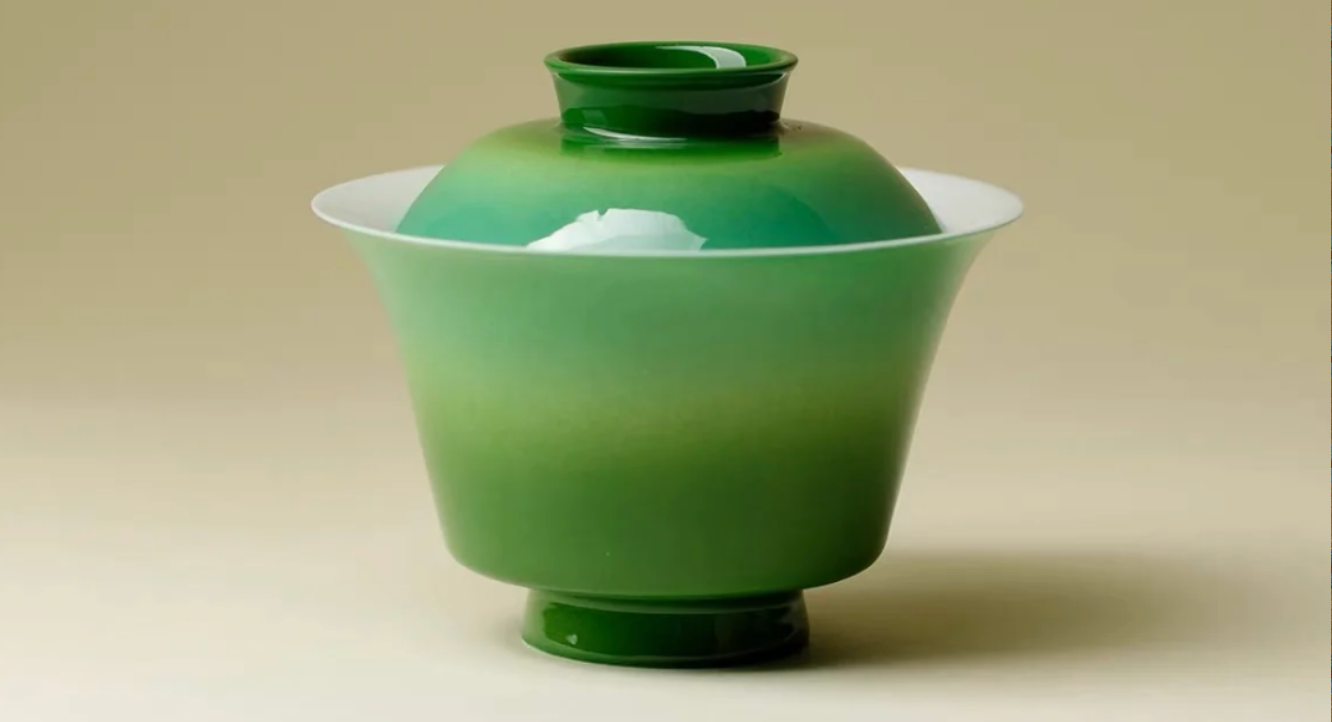
The monochrome porcelains of Jingdezhen represent a reduction of ceramic art to its most essential form: a single, flawless color. Jilan, or sacrificial blue, is a deep, resonant cobalt blue glaze of staggering richness, used on ritual vessels at the Temple of Heaven. The equally famed jihong (sacrificial red) is a copper-red glaze of heartbreaking beauty, so difficult to control that a single successful piece was considered an omen of good fortune. Other monochromes include tianlan (clair de lune, a pale soft blue), chayemo (teadust, a speckled olive green), and heiyou (mirror black). Without any painted distractions, these pieces celebrate the pure sensuality of color, form, and the glaze’s glassy depth. They are the ultimate test of a potter’s technical control.
Blanc de Chine Influences
While the classic “Blanc de Chine” white porcelain is centered in Dehua, Fujian province, Jingdezhen has a parallel tradition of sculptural white porcelain, often with a translucent, subtly blue-tinged yingqing glaze. Jingdezhen artisans produce exquisite figures of Guanyin, Bodhidharma, and other deities, as well as delicate incense burners and brush rests, where the play of light over the pure, sculptural form is the only ornament. This style emphasizes the spiritual purity of the white clay itself.
Celadon (青瓷 - Qingci)
Although Longquan is the most famous celadon center, Jingdezhen has a deep history with this jade-green glaze, particularly during the Song Dynasty. The Jingdezhen interpretation often leans into the delicate qingbai range, a whisper of green over the white body, creating the “shadow blue” effect. It evokes the texture of polished jade, the most revered material in Chinese culture, reflecting the aesthetic ideal of inner luminosity and quiet virtue.
Contemporary Studio Ceramics
Walk through the Sanbao art district or the Taoxichuan creative park in Jingdezhen today, and you will witness a thrilling dialogue between heritage and innovation. Contemporary ceramic masters are deconstructing traditional forms, experimenting with startling new glaze chemistries — crystalline glazes that bloom like frost on a window, volcanic crater textures, and conceptual installations that critique consumer culture. Yet even in the most avant-garde work, the ghost of kaolin, the echo of the kiln, and the rigor of Jingdezhen technique are present. Collectors are increasingly drawn to these contemporary pieces as a way of owning a piece of Jingdezhen’s living, evolving story.
| Style | Period of Prominence | Key Characteristics | Collectibility Note |
|---|---|---|---|
| Blue and White (Qinghua) | Yuan–Present | Underglaze cobalt on white porcelain; limitless motifs. | The classic; focus on brushwork quality and cobalt hue. |
| Famille Rose (Fencai) | Qing (Kangxi–Qianlong) | Opaque overglaze enamels with soft, painterly shading. | Highly prized for artistic detail; condition is paramount. |
| Monochrome Glazes | Ming–Present | Single-color glazes (red, blue, teadust, etc.) celebrating form and color. | Demand perfect glaze surface and rich, vibrant tone. |
| Shadow Blue (Qingbai) | Song–Present | Translucent, pale blue glaze over a white body; carved decoration. | Seek well-carved pieces where the glaze pools in the cuts. |
| Contemporary Studio | 21st Century | Individual artist expression; innovative forms and glazes. | Value tied to the artist’s reputation and conceptual depth. |
Why Jingdezhen Porcelain Is Highly Collectible
The impulse to collect Jingdezhen porcelain cuts across cultures and centuries. Kings, scholars, emperors, and modern art enthusiasts have all been drawn to its flame. Why?
Historical Importance: A vase from Jingdezhen is not a standalone object; it is a primary source document of cultural history. It encapsulates the trade routes of the Silk Road, the aesthetics of a Song Dynasty emperor’s court, the scientific achievements of the Qing dynasty, and the global exchange between East and West. Collecting such pieces is a form of stewardship, holding a tangible link to the past.
Scarcity and Authenticity: Antique pieces in excellent condition are vanishingly rare. Even contemporary works by recognized masters are produced in small numbers due to the high failure rate of the kiln. This scarcity, coupled with an insatiable global demand, provides a strong undercurrent of value. A master’s piece is not a product; it is a survivor.
Artistic Excellence: Each piece is a physical record of an artist’s highest aspiration. The gesture in a master’s brushstroke, the perfect curve of a thrown bowl, the depth of a successful copper-red glaze — these are moments of aesthetic triumph. Collectors live with this excellence, and it enriches their daily lives in a way that mass-produced objects cannot.
Hand Craftsmanship and the Human Touch: In an age of digital perfection, the slight asymmetry of a hand-thrown cup rim, the minuscule variations in a hand-painted line, and even the tiny spur marks from the kiln are not flaws; they are a comforting, irreplaceable record of the human hand and the real fire. You are collecting someone’s life’s work.
Investment Potential: The market for top-tier Chinese ceramics, both antique and contemporary, has shown consistent, sometimes spectacular, growth. The astronomical auction results for imperial Ming and Qing pieces are well known, but there is also a growing, vibrant market for works by living national treasure masters and studio artists. Acquiring a piece directly from a trusted curator while an artist’s career is on the ascent can be a deeply rewarding cultural and financial decision.
Museum Validation: The inclusion of Jingdezhen porcelain in the permanent collections of the world’s greatest museums — from the Palace Museum in Beijing to the V&A in London — is the ultimate institutional endorsement. These objects are preserved, studied, and displayed for millions of visitors, confirming their status as touchstones of human creativity.
Emotional and Cultural Value: A collector of Chinese tea ware might speak of how a particular Jingdezhen gaiwan “feels like a friend” in the morning. An interior designer might use a large monochrome vase to anchor the spiritual mood of an entire room. The value is not just in the object but in the relationship it fosters with beauty, with ritual, and with a culture that has learned to find eternity in a cup of tea. This emotional resonance is the soul of collecting.
Jingdezhen Porcelain and Chinese Tea Culture
To speak of Jingdezhen porcelain without tea is to speak of the sea without water. The two traditions are symbiotically intertwined, each elevating the other to an art form. The Chinese tea ceremony, gongfu cha, is a meditation on precision, presence, and sensory appreciation. The tea ware is an active participant in this rite, and Jingdezhen artisans have spent centuries perfecting its instruments.
Gaiwans: The gaiwan, a lidded bowl, is the universal brewing vessel. In Jingdezhen porcelain, it becomes an object of profound elegance. The porcelain’s thinness allows the brewer to feel the exact temperature of the water. The flared lip is engineered to be cool to the touch, even when the body is blistering hot, allowing for graceful pouring. The lid is fitted to trap aroma but can be tilted with a fingertip to create a precise opening for the liquor to flow out while retaining the leaves. An expertly thrown Jingdezhen gaiwan transforms brewing into a ballet of subtle movements.
Tea Cups: The tactile experience of the lip on the rim of a fine porcelain cup is a revelation. A Jingdezhen pinming (tea-tasting) cup is thin enough to feel almost weightless, transmitting the warmth of the tea directly to the hand. The interior is glazed in a pure white or soft celadon, providing a pristine canvas against which the true color of the tea — from pale jade white tea to deep amber Wuyi oolong — can be admired. The cup captures and concentrates the aroma, funneling it to the nose for the critical first sip.
Gong Dao Bei (Fairness Pitcher): This pitcher, used to hold the decanted tea before it’s poured into cups, is a sculptural object. Jingdezhen artisans create them in forms that are a joy to hold, with perfectly dripping spouts that never dribble. The white interior again allows for the appreciation of the tea’s clarity and color, ensuring every guest receives a pour of identical strength and character.
Teapots: While Yixing clay is famous for absorbing tea oils, Jingdezhen porcelain teapots are prized for their neutrality and elegance. They impart no flavor of their own, making them perfect for the precise, note-by-note tasting of delicate high-mountain oolongs, fresh green teas, and complex white teas. A hand-painted porcelain teapot, depicting a scholar’s garden or bamboo grove, adds a layer of artistic contemplation to the tea session.
Tea Trays and Accoutrements: Even the functional accessories — the small brush rests, tea scoops, and water bowls — are elevated. Jingdezhen artisans produce tea trays with hand-painted scenes, resting on small porcelain feet. The entire chaxi (tea setting) becomes a curated microcosm of aesthetic intention, where every object, from the largest tray to the smallest cup, is a work of art. The heat retention, purity, and sensory pleasure of Jingdezhen porcelain make it the connoisseur’s choice for honoring the leaf.
How to Identify Authentic Jingdezhen Porcelain
In a market flooded with mass-produced imitations and ceramic pieces that appropriate the “Jingdezhen” name, how does one discern the authentic article? Connoisseurship is a skill built on observation and touch. Here are the key indicators:
Clay Quality: Turn the piece over and look at the unglazed foot ring. Authentic Jingdezhen porcelain clay should be a bright, clean white, with a fine, smooth, almost sugary texture. If the clay body is gray, coarse, or yellowish, it indicates lower-quality material not from the Gaoling region.
Glaze Depth: The glaze should feel like a layer of glass, not a thin paint. Look for a deep, lustrous surface that interacts with light. On blue and white pieces, the glaze should be thick and glossy, creating a sensation of depth between the white background and the cobalt painting. Monochromes should have a rich, even, almost viscous-looking coating.
Hand-Painted Details: Use a magnifying glass. A genuine hand-painted piece will show the tracks of the artist’s hand: slight variations in the thickness of a line, the tiny points where a brush loaded with pigment first touched the surface, the subtle overlaps of color washes. A decal or printed pattern will look mechanically flat and will often show a halftone dot pattern under magnification. The artistic spirit of a hand-painted line is alive; a printed line is dead.
Throwing Marks: Run your finger along the inside of a bowl or cup. A wheel-thrown piece will often have subtle, rhythmic, concentric ridges — the fingerprint of the potter’s hands and the spinning wheel. A slip-cast piece will be perfectly uniform and smooth, lacking this organic texture. These marks are treasured as evidence of the potter’s touch.
Balance and Proportion: A master potter has an intuitive sense of proportion. A well-made teapot will feel balanced in the hand, neither top-heavy nor clumsy. Its lid will fit with a soft, precise “click.” The spout and handle will be in harmonious alignment. This quality of “rightness” is hard to fake.
Artist Signatures and Marks: Most high-quality contemporary pieces from a known studio or master will be signed or stamped on the base. The mark might be the artist’s name, a studio name, or a poetic phrase. Learn the styles of artists you admire. However, be aware that marks can be copied, so the mark alone should not be the sole authentication criterion.
Kiln Quality and the Foot: The unglazed foot ring reveals much. It should be cut cleanly with a beveled edge. You may feel a fine grit where the piece rested on silica sand in the kiln. The bottom of the foot should show the glassy, non-porous character of fully vitrified clay. A sandy, absorbent foot suggests low-temperature firing and a weaker body.
Provenance: The most reliable way to be certain of authenticity is to buy from a reputable, transparent source. A trusted curator who works directly with the artisans in Jingdezhen, who can tell you the story of the artist and the specific piece, provides a level of assurance that an anonymous marketplace cannot. Provenance is not just history; it is a form of truth.
Jingdezhen Porcelain in Modern Luxury Living
Jingdezhen porcelain is not a relic for a display cabinet; it is a living element that can transform a modern interior. Contemporary designers and tastemakers are increasingly drawn to its ability to provide soul, texture, and cultural gravitas to a space.
In Japandi and Wabi-Sabi Interiors: The warm minimalism of Japandi, a fusion of Japanese and Scandinavian design, finds its perfect ceramic counterpart in Jingdezhen celadon and shadow-blue wares. A simple, hand-thrown vase with an organic, slightly asymmetrical form, in a muted glaze, brings a touch of handmade humanity to a clean-lined room. The wabi-sabi philosophy of finding beauty in imperfection and transience is embodied in the subtle throwing marks and the unique kiln effects of each piece.
As Sculptural Art Objects: A single, monumental Jingdezhen monochrome vase — in sacrificial red, teadust, or a dramatic flambé blue — can serve as the focal point of a room, a sculpture of pure color and form that doesn’t need flowers to command attention. Contemporary ceramic artists in Jingdezhen are creating large-scale, abstract forms that are collected and displayed like major paintings, their complex glazes serving as the landscape.
In Luxury Dining and Tea Ceremony: The ritual of the table is elevated by the tactile and visual pleasure of fine porcelain. A set of hand-painted blue and white dinner plates, each slightly different, turns a meal into a curated art experience. For the tea lover, a dedicated tea station with a Jingdezhen gaiwan, cups, and a small water tray, perhaps arranged on a rosewood table, becomes a personal sanctuary for the daily gongfu cha ritual — a moment of peace and mindfulness grounded in a beautiful object.
Blending Heritage with Contemporary Design: The most sophisticated interiors don’t just replicate a period look; they create a dialogue between eras. A sleek, modern sofa is brilliantly juxtaposed with a 17th-century-style Ming vase lamp on a side table. A minimalist kitchen is warmed by a collection of contemporary Jingdezhen tea bowls on an open shelf, their varied glazes creating a quiet art installation. The key is the art of curation: selecting pieces that speak to you, and letting their inherent quality and story elevate the entire space. Jingdezhen porcelain brings a whisper of the scholar’s studio, the emperor’s court, and the artisan’s fire into the quiet luxury of the modern home.
Why Oriental Artisan Curates Jingdezhen Porcelain
In a world of mass production, where so much is indistinguishable and impermanent, Oriental Artisan was founded on a simple but radical idea: that the objects we live with should have a soul. We are not just a purveyor of ceramics; we are a curator, a bridge, and a guardian of a living heritage.
Our journey is to the heart of Jingdezhen, into the narrow laneways and sunlit studios where master artisans — many from families that have worked with clay for generations — shape, paint, and fire porcelain of extraordinary character. We work directly with these artists, forming relationships built on deep respect for their craft. We seek out pieces that embody the authentic virtues of Jingdezhen: the purity of its materials, the eloquence of its hand-painted brushwork, the emotional resonance of its glazes, and the quiet perfection of forms that have been refined over centuries.
Every piece we offer is chosen with a collector’s eye. We look for the subtle throwing ring that proves a bowl was born on a wheel, the spontaneous vigor of a master’s brushstroke in a blue and white landscape, the mirror-like depth of a successful monochrome. We believe that true luxury is not about opulence; it is about integrity, rarity, and a direct connection to human skill. A piece from Oriental Artisan is meant to be more than a decorative object. It is an heirloom — a teacup to be cradled in the morning quiet, a vase to anchor a room, a gift that carries the weight of a thousand-year tradition.
We exist for the collectors, the tea enthusiasts, the interior designers, and the discerning individuals who refuse to compromise. We serve those who understand that a home filled with meaningful objects is a life enriched. Oriental Artisan is your trusted source for museum-quality, handcrafted Jingdezhen porcelain, a destination where the story of the Porcelain Capital continues — not behind museum glass, but in your hands.
Frequently Asked Questions
What is Jingdezhen porcelain?
Jingdezhen porcelain is true, high-fired porcelain made in Jingdezhen, China, using local kaolin clay and a continuous tradition of highly specialized hand craftsmanship. It is celebrated globally for its pure white body, translucency, resonant “ring,” and extraordinary artistic range, from imperial blue and white and famille rose enamels to sublime monochrome glazes.
Why is Jingdezhen called the Porcelain Capital?
Jingdezhen earned this title because it has been the global epicenter of fine porcelain production for over 1,000 years. It possessed the world’s finest kaolin clay deposits, developed revolutionary techniques like blue and white porcelain, housed the exclusive Imperial Kilns for centuries, and sustained an unmatched ecosystem of master artisans.
Why is Jingdezhen porcelain so expensive?
The cost reflects an extraordinary investment of time, skill, and material, along with a high failure rate. A single piece can involve dozens of specialized masters, rare minerals, and multiple high-temperature firings. The many pieces that fail quality inspection are destroyed, so the price of the surviving masterwork covers the cost of perfection.
Is Jingdezhen porcelain handmade?
Authentic high-quality Jingdezhen porcelain is predominantly handmade. Processes like wheel throwing, hand carving, and freehand painting are performed by artisans who have often spent decades mastering a single skill. While some studios use slip-casting for certain forms, the artistic value lies in the handwork, and reputable sources, like Oriental Artisan, exclusively feature artisan-made pieces.
What makes Jingdezhen porcelain different from other ceramics?
It is the alchemy of specific local kaolin and porcelain stone that fires at extremely high temperatures to create a uniquely white, vitrified, translucent body. This material purity is matched by an unbroken, multi-generational culture of extreme specialization and an imperial heritage that demanded perfection, producing a finesse unmatched elsewhere.
How is Jingdezhen porcelain made?
The process involves mining and refining kaolin clay, aging it, throwing or molding the form, hand carving, and freehand painting with cobalt or enamel pigments. The piece is then glazed and fired in a reduction kiln at up to 1,300°C. Many pieces require multiple firings. The entire sequence can take weeks and involves dozens of specialized hands.
How can you identify authentic Jingdezhen porcelain?
Examine the unglazed foot for pure white, fine-textured clay. Look for signs of the hand: subtle throwing rings, the varied pressure of a brushstroke (best seen with a loupe), and a deep, lustrous glaze. The piece should feel balanced and ring clearly when tapped. The surest way is to buy from a trusted curator who guarantees provenance.
What is the best Jingdezhen tea ware for a collector?
A hand-painted blue and white gaiwan or a set of thin, eggshell porcelain tasting cups is an ideal starting point. For the seasoned collector, a master’s monochrome jilan glaze gong dao bei (fairness pitcher) or a sculptural celadon tea tray represents a pinnacle of both art and function, transforming the tea ceremony into a curated ritual.
Is Jingdezhen porcelain suitable for everyday use?
Yes, exceptionally so. True porcelain is non-porous, incredibly hard, and chemically stable. It will not absorb stains or odors. A well-made Jingdezhen cup is surprisingly durable. Using it daily is the greatest honor you can pay the artisan, allowing the tactile poetry of the piece to enrich your morning ritual.
Why do museums collect Jingdezhen porcelain?
Because Jingdezhen wares represent a pinnacle of human technical and artistic achievement. They chronicle over a millennium of cultural, technological, and aesthetic history, encompassing imperial patronage, global trade, and deeply sophisticated artistic movements. They are considered essential primary documents of world civilization.
How should I care for my Jingdezhen porcelain?
Hand-wash your pieces with mild soap and warm water. Avoid harsh detergents and abrasive pads. Never put museum-quality or gold-accented porcelain in a dishwasher or microwave. With this minimal care, fine Jingdezhen porcelain is remarkably resilient and will maintain its pristine beauty for generations.
Where can I buy authentic Jingdezhen porcelain?
To ensure authenticity and quality, you should purchase from a reputable, specialized curator with direct relationships to the artisans. Oriental Artisan sources directly from master studios in Jingdezhen, offering a carefully selected collection of authentic, handcrafted pieces with transparent provenance, from tea ware to decorative art.
Conclusion
For more than a thousand years, Jingdezhen has been a place where the raw materials of the earth — a pure white clay, a cobalt-blue mineral, the fierce heat of a pine-wood fire — are transformed into some of humanity’s most celebrated works of art. But the true alchemy is not in the kiln; it is in the hands and the hearts of the people. Every hand-thrown cup, every brush-painted vase, and every luminous monochrome bowl is a vessel filled with generations of accumulated knowledge, an unbroken chain of artistic devotion, and a profound sense of cultural heritage that pulses just beneath the glaze.
This is the legacy that the Porcelain Capital offers the world — not a frozen museum piece, but a living, breathing tradition that is as relevant in a contemporary minimalist interior as it was in an emperor’s palace. It invites you to slow down, to touch, to see, and to collect with intention. To bring a piece of this story into your life is to participate in a conversation that has been unfolding since the Song Dynasty, a quiet dialogue between the artist’s hand and your own daily ritual.
We invite you to discover Oriental Artisan’s curated collection of authentic Jingdezhen porcelain. Experience firsthand why this legendary city continues to capture the imagination of collectors, tea masters, and design lovers around the world. Welcome to the Porcelain Capital. Its fire is still burning, and its greatest works may be yet to come.

Leave a comment
This site is protected by hCaptcha and the hCaptcha Privacy Policy and Terms of Service apply.