


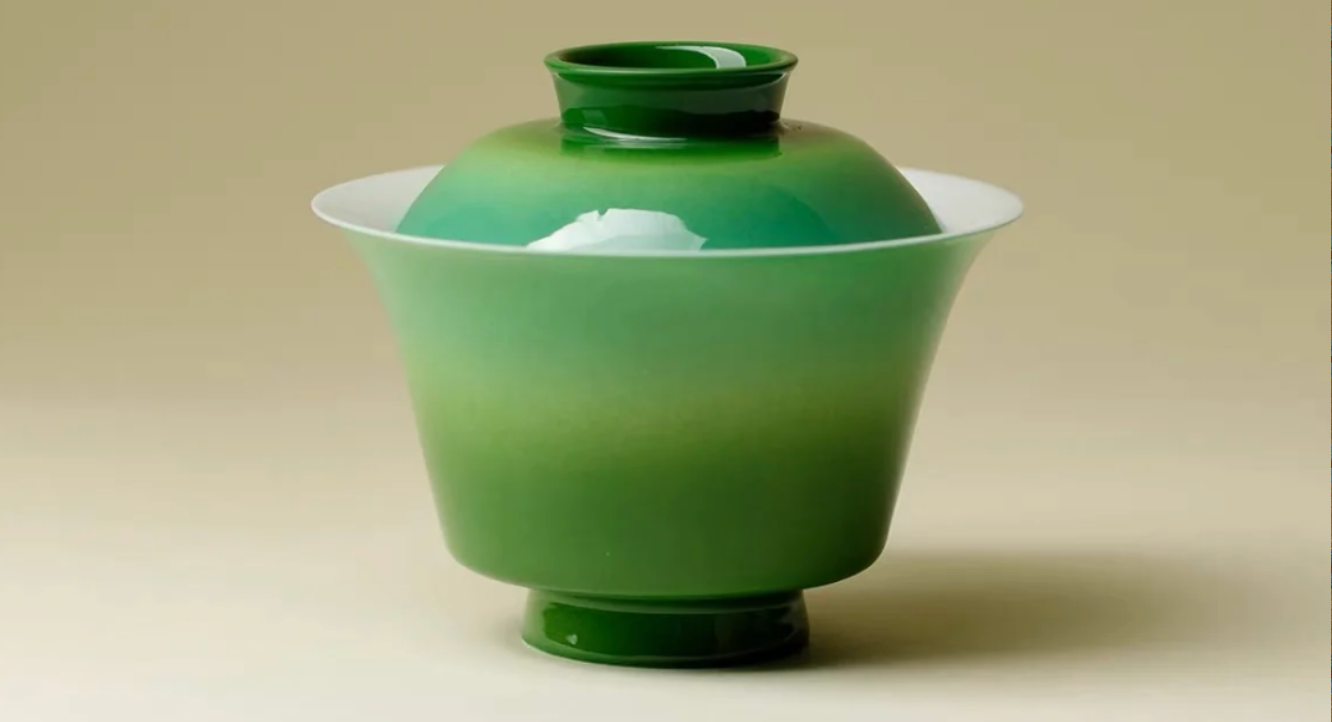
The Magic of Kiln Transformation: When Fire Becomes the Artist
A ceramic vessel enters the kiln bearing a carefully prepared glaze—brushed, dipped, or sprayed with meticulous precision. Days later, after the inferno has done its work and the kiln has slowly cooled, the piece is lifted from the ashes. What emerges is not merely the sum of the potter’s intentions. Blues have become purples. Copper glazes blush with unexpected crimson. Crystals have bloomed where none were planned. The surface flows like frozen lava, alive with depths that seem to shift in the light. This is kiln transformation—the moment when fire ceases to be a tool and becomes the artist.
How can a blaze that consumes oxygen and minerals produce beauty that no human hand can fully control? Why have collectors, emperors, and tea masters for a thousand years regarded these unpredictable effects as the pinnacle of ceramic art? And what does it mean for a vessel to be born not from absolute command, but from a collaboration between earth, mineral, and flame?
This article journeys into the heart of one of China’s most captivating ceramic mysteries—the magic of kiln transformation (窑变, Yáo Biàn). You will discover its ancient origins, the science that makes it possible, the philosophy that makes it profound, and the reasons why every authentic kiln-transformed piece is an unrepeatable treasure.
What Is Kiln Transformation (窑变)?
What is kiln transformation?
Kiln transformation (窑变, yáo biàn) is the spontaneous and unpredictable metamorphosis of ceramic glaze during high-temperature firing. Triggered by subtle shifts in kiln atmosphere, temperature, mineral interactions, and flame movement, it creates one-of-a-kind colors, crystalline formations, and flowing textures that no artisan can fully predetermine. The term literally translates as “kiln change” or “kiln transmutation,” and it is among the most revered phenomena in traditional Chinese ceramics.
窑变 (Yáo Biàn) has no exact English equivalent because it describes more than a visual effect—it names a relationship. The word yáo (窑) means “kiln,” and biàn (变) means “transformation” or “change.” Together they evoke a process in which the kiln becomes an active creative force, altering the surface of the ceramic in ways that belong as much to nature as to human craft.
In ancient China, potters approached kiln transformation with a mixture of awe and reverence. A firing could ruin weeks of work, or it could yield a masterpiece that no one could ever reproduce. Early ceramic masters sometimes regarded these unpredictable results as omens, gifts from the kiln god, or expressions of nature’s hidden order. Over centuries, what began as an accidental marvel evolved into a deliberately courted art—one that remains at the summit of ceramic achievement today.
When you hold a kiln-transformed teacup or vase, you are holding a moment of fire that will never occur in exactly the same way again. That singularity is the soul of yáo biàn.
The History of Kiln Transformation
Origins in Ancient China
Kiln transformation has roots stretching back more than a thousand years, to the Tang Dynasty (618–907 CE) and earlier. Potters firing wood-fueled climbing kilns noticed that certain glazes emerged from the inferno with unexpected colors—copper green turning oxblood red, iron brown blooming with celestial blue. At first, these were treated as accidents, sometimes even as kiln failures. But as the visual power of these “accidents” became undeniable, potters began to study them, seeking to coax rather than command.
The Song Dynasty: When Fire Became an Art Form
It was during the Song Dynasty (960–1279 CE) that kiln transformation ascended to the realm of high art. This era, celebrated for its refined aesthetics and philosophical depth, produced some of the most coveted ceramics in history.
Jun Ware (钧窑) from Henan province is perhaps the most famous early expression of intentional kiln transformation. Jun potters applied thick, opalescent blue glazes over stoneware bodies, often splashed with copper-rich pigments. In the reduction atmosphere of the kiln, the copper turned brilliant red, purple, or lavender, bleeding into the blue like a sunset captured in glaze. Each Jun vessel became a tiny abstract cosmos. The Song imperial court treasured Jun ware for its unpredictable beauty, elevating it to the status of an official tribute ceramic.
Ru Ware (汝窑), Guan Ware (官窑), and Longquan Celadon (龙泉青瓷) from the same period also exhibited subtle kiln-transformation effects, though often expressed through crackle patterns, jade-like translucency, and faint color shifts rather than dramatic color bursts. The Song aesthetic of restrained elegance found a perfect partner in these gentle transformations, where the mark of the fire was quiet but unmistakable.
Jingdezhen and the Imperial Porcelain Capital
As the epicenter of Chinese ceramic production shifted to Jingdezhen (景德镇) during the Yuan, Ming, and Qing dynasties, kiln transformation became intertwined with the quest for the perfect porcelain surface. Jingdezhen’s artisans developed extraordinary reduction-fired copper-red glazes, such as the legendary “sacrificial red” (jihong) and the fluid “peach bloom” glazes, which depended on precise yet fundamentally unpredictable kiln conditions. The imperial kilns produced countless masterpieces, but even within the same batch, no two were identical. Emperors and connoisseurs learned to value this variation as the signature of an authentic, living craft.
From accidental discovery to celebrated achievement, kiln transformation traveled a path that mirrors the very process it describes: beginning as raw material, passing through the fire, and emerging as something infinitely richer.
The Science Behind Kiln Transformation
Behind the poetic language of transmutation lies a complex dance of chemistry and physics. While a full technical explanation fills entire textbooks, a few core principles make the magic accessible.
The Role of High Temperature
Kiln-transformation effects typically require extreme heat—often between 1200°C and 1300°C (around 2200°F to 2370°F) for porcelain and stoneware. At these temperatures, the glaze vitrifies into a glass-like melt, and the metal oxides within it become chemically mobile, capable of migrating, reacting, and recrystallizing as the piece cools.
Oxidation vs. Reduction Atmospheres
The kiln atmosphere—the balance of oxygen and fuel gases during firing—is the single most powerful variable in kiln transformation.
-
Oxidation firing provides ample oxygen, allowing metals to express their “normal” colors: iron yields warm amber or brown, copper stays green or turquoise.
-
Reduction firing starves the kiln of oxygen, pulling oxygen atoms away from metal oxides. This chemical theft dramatically alters colors. Iron shifts toward celadon greens, deep blacks, or subtle blues. Copper can transform from green to the coveted oxblood red, as seen in jihong and Jun glazes.
A single firing might cycle between oxidation and reduction phases, layering effects in ways that are fiendishly difficult to replicate.
The Alchemy of Metal Oxides
A small palette of metal oxides drives most kiln-transformation magic:
-
Iron (Fe₂O₃): Yields celadon green, tenmoku black, amber, or tea dust depending on atmosphere and cooling.
-
Copper (CuO/Cu₂O): Responsible for brilliant turquoise in oxidation, and the famous reds, purples, and peach blooms in reduction.
-
Cobalt (CoO): Produces stable, deep blues—used in the celebrated blue-and-white wares—but can also participate in complex color interactions.
-
Titanium (TiO₂): Encourages crystalline growth and can enhance opalescence.
-
Manganese, iron, and other trace elements: Contribute to the rainbow of unpredictability.
These oxides do not simply paint the glaze; they dissolve into the molten glass and, during cooling, may precipitate as microscopic crystals, metallic flecks, or layered color bands. The kiln becomes a high-temperature chemical reactor, and every tiny change in the recipe reshapes the final palette.
Crystallization and Cooling
Some of the most breathtaking kiln-transformation effects—snowflake-like crystal clusters, golden “oil spots,” and iridescent halos—are born during the cooling phase. As the temperature drops at a specific rate, certain minerals crystallize out of the supersaturated glaze. Control over the cooling curve is as crucial as the firing itself, and yet the exact pattern of crystal formation remains delicately sensitive to minute thermal variations. This is why even today, with digital pyrometers and programmable kilns, the finest yáo biàn effects retain a stubborn air of spontaneity.
Fire as the Final Artist
“The potter begins the work. The kiln finishes it.”
Artisans who work with high-fire reduction techniques often speak of the kiln as a collaborator, not a mere oven. They select clays, formulate glazes, shape vessels, and load the kiln with deep knowledge. They position each piece strategically, anticipating the flame’s path. And then, they surrender.
What follows is a dialogue between intention and nature. The artisan provides the conditions; the fire provides the transformation. This partnership challenges the modern illusion of total control. In an age of industrial precision and digital reproduction, kiln transformation whispers an older truth: that beauty often requires letting go, that imperfection is not failure but fingerprint.
The unpredictability is not a flaw to be eliminated; it is the very source of kiln transformation’s power. A perfectly controlled kiln would produce perfectly predictable surfaces—smooth, uniform, and ultimately lifeless. The Chinese ceramic tradition recognized that absolute control belongs to machines, not to art. By embracing the fire’s creative agency, potters produce work that feels alive.
Why Every Kiln-Transformed Piece Is Unique
Why is every kiln-transformed ceramic unique?
No two pieces in a kiln experience exactly the same environment. Micro-variations in temperature, flame flow, oxygen concentration, ash deposits, and cooling speed create distinct chemical and physical conditions for every square centimeter of glaze. Because kiln transformation is an emergent property of these countless interacting variables, the resulting colors, crystals, and textures become as singular as a fingerprint. Even two cups fired side by side in the same kiln will never be identical.
Consider the factors that conspire to guarantee uniqueness:
-
Kiln placement: The front of a wood-fired kiln may run hotter and experience stronger flame impingement than the back. A piece near the firebox receives more ash; a piece deep in the chamber may cool more slowly.
-
Flame paths: Turbulent gasses swirl through the kiln, painting unpredictable reduction zones and temperature gradients across the ware.
-
Oxygen levels: Fluctuations in the reduction atmosphere shift the oxidation state of metal ions moment by moment, altering color development.
-
Ash and vapor: In wood firing, fly ash lands on the glaze and melts into a natural glass, creating rivulets and speckled textures unique to each vessel’s position.
-
Glaze thickness: Thicker areas may pool and crystallize differently, while thin edges can show subtle color transitions.
-
Cooling speed: A crack in the kiln door, a sudden draft, or the thermal mass of surrounding pots can all alter cooling rates, affecting crystal size and surface finish.
All these elements fuse together into a single unrepeatable event. A kiln-transformed piece is not merely one of a kind; it is a physical record of a specific moment in the life of the fire.
Kiln Transformation vs. Industrial Ceramics
To appreciate the depth of yáo biàn, it helps to compare it directly with mass-produced ceramics.
| Feature | Handmade Kiln-Transformed Ceramics | Factory Ceramics |
|---|---|---|
| Uniformity | Every piece shows natural variation; uniqueness is celebrated. | Pieces are virtually identical; uniformity is the goal. |
| Craftsmanship | Shaped and glazed by skilled artisans, often using ancestral techniques. | Machine-assisted or fully automated production; minimal hand touch. |
| Glaze Character | Rich, layered, organic; colors shift, crystals form, surfaces possess depth. | Flat, consistent color; no spontaneous effects. |
| Artistic Value | Each piece is a collaboration between human and fire, carrying deep artistic intention and natural beauty. | Primarily functional or decorative, with limited artistic singularity. |
| Uniqueness | Absolutely one of a kind; impossible to replicate exactly. | Mass-produced; interchangeable. |
| Collectibility | Highly collectible; appreciated by museums and connoisseurs. | Rarely collected as art. |
| Luxury Appeal | Embodies slow craftsmanship, heritage, and the enchantment of the unpredictable. | Offers convenience and consistency, but lacks narrative and rarity. |
For the collector, tea enthusiast, or interior designer, the choice is not merely between two objects but between two philosophies: one that values the living trace of the maker and the kiln, and one that values flawless repetition.
Why Collectors Love Kiln Transformation
What draws a discerning collector to a piece of kiln-transformed ceramic? The answer weaves together emotion, intellect, and aesthetics.
Rarity and Unrepeatability
A kiln-transformed work exists in a category of one. Even the artist who made it cannot produce an exact twin. This singularity imbues each piece with a quiet drama—owning it is to hold a moment that the universe will never stage again.
Human Craftsmanship
Behind every piece lies an artisan who understands clay, glaze chemistry, kiln loading, and the capriciousness of fire. The human story—the training, the failures, the triumphs—is baked into the glaze itself. Collectors often speak of feeling connected to the maker through the object.
Historical and Cultural Resonance
Kiln transformation is a living lineage stretching back to the Song Dynasty and beyond. To own such a piece is to participate in a conversation that has included emperors, scholars, and tea masters across a millennium. This depth adds layers of meaning that no factory product can offer.
Emotional Depth
A kiln-transformed teacup is not static. As it’s used, subtle tea stains may deepen its character; changing light reveals new facets. It ages gracefully, much like a fine patina on bronze, becoming a companion rather than a mere possession.
Investment Value
Authentic, high-quality kiln-transformed ceramics from respected artisans and studios have shown strong appreciation over time. Their uniqueness and historical pedigree make them attractive to both passionate collectors and astute investors.
Functional Beauty
Many kiln-transformed pieces—teacups, teapots, gaiwans—are designed for daily ritual. Their beauty does not quarantine them in display cabinets; it enhances the act of drinking tea, turning a quiet moment into an encounter with art.
Kiln Transformation and Chinese Tea Culture
In China, tea and ceramics share an inseparable bond. The cup from which one drinks is not a neutral vessel; it shapes the sensory experience and reflects the drinker’s cultivation. This is why kiln-transformed tea ware holds a special place in gongfu cha (the Chinese tea ceremony).
A gaiwan with a transmutation glaze that shifts from celadon green to a blush of copper at the rim becomes a miniature landscape, inviting contemplation before the first sip. Teacups with crystalline “oil spot” patterns catch the light and the tea liquor, the dark glaze making the tea’s color sing. Teapots with flowing, lava-like surfaces feel warm and alive in the hand, their unglazed or partially glazed clay bodies breathing with the tea.
Beyond aesthetics, many tea practitioners believe that kiln-transformed surfaces, especially those with microcrystalline textures, subtly influence the taste and mouthfeel of the tea, smoothing edges and enhancing fragrance. Whether or not one ascribes to this sensory subtlety, there is no doubt that the visual and tactile presence of a kiln-transformed piece elevates the entire ritual. The act of pouring tea becomes a moment of shared beauty between guest, host, and the thousand-year-old dialogue of earth and fire.
The Philosophy of 窑变
At its deepest level, kiln transformation is a philosophy expressed in clay and flame.
Chinese thought has long embraced the beauty of imperfection and transience. The Taoist concept of ziran (自然), or “spontaneity,” teaches that the highest artistry arises not from forcing but from harmonizing with the natural way of things. A kiln-transformed glaze, with its flowing rivers of color and unplanned crystalline blooms, is ziran made visible. It is a reminder that the universe is a process, not a fixed product.
There is also a quiet resonance with the Japanese aesthetic of wabi-sabi, itself heavily influenced by Chinese Zen and Taoist sensibilities. The asymmetrical, the weathered, the irregular—these qualities speak to the truth of existence, which is always changing, always imperfect, and therefore achingly beautiful. A kiln-transformed teacup wears its flaws proudly, because its flaws are not errors but encounters with reality.
When an artisan loads a kiln, they must accept that the fire may destroy their work or gift them a masterpiece beyond their imagination. This surrender is not passivity; it is a form of profound trust—in materials, in process, in the cosmos. Every firing is a meditation on uncertainty, a practice in letting go.
In a world obsessed with precision engineering and digital simulation, the philosophy of yáo biàn offers an alternative: that the most moving beauty is not the kind we completely control, but the kind we welcome.
How to Identify Authentic Kiln-Transformed Ceramics
As the popularity of kiln transformation grows, so does the market for imitation pieces that mimic the effect with decals, sprayed-on patterns, or low-fire chemical treatments. An informed eye can distinguish the genuine article. Here are key indicators of authentic kiln-transformed ceramics:
-
Organic transitions: Real kiln effects flow and blend seamlessly. Look for smooth gradients rather than hard, mask-like edges between colors.
-
Depth and layering: True high-fire glazes have a three-dimensional quality. Crystals sit beneath the surface, metallic flecks shimmer at different depths, and the glaze may show subtle rivulets or pooling.
-
Natural variation across the surface: An authentic piece will have areas of different color intensity, crystal density, or texture that correspond to its position in the kiln. No perfectly repetitive pattern.
-
Crystal formations: Under magnification or even to the naked eye, genuine crystalline glazes display complex, random crystal structures—stars, fans, snowflakes—not uniform dots.
-
Evidence of the maker’s hand: Small throwing ridges, subtle finger marks, or slight asymmetry signal handmade origins. Factory imitators usually erase all signs of the potter’s touch.
-
Provenance and documentation: Reputable studios and galleries provide information about the artisan, kiln type, firing temperature, and atmosphere. This transparency is a hallmark of authenticity.
-
Tactile quality: High-fired stoneware and porcelain feel dense and resonant. Run your finger over the surface; a real kiln-transformed glaze is smooth like glass, not plasticky or overly uniform.
If you are ever uncertain, seek guidance from a trusted source with deep knowledge of Chinese ceramics and access to established artisan networks.
Why Oriental Artisan Celebrates Kiln Transformation
At Oriental Artisan, kiln transformation is not merely a category of product—it is a living heritage that we are honored to share. Our curatorial philosophy is rooted in a deep respect for the artisans who have dedicated their lives to the ancient conversation between clay and fire.
We work directly with skilled ceramic masters—many from Jingdezhen and other historic kiln centers—who continue to fire in traditional reduction atmospheres, often using wood or gas kilns that demand constant vigilance and instinct. These artisans formulate their own glazes from raw minerals, load each kiln with intention, and then, with quiet patience, await the fire’s verdict. Every piece that survives this trial and emerges transformed is a testament to their mastery, and to the unpredictable grace of the kiln.
Oriental Artisan curates kiln-transformed ceramics that honor the past while embracing the present. Whether a teacup that reveals a miniature galaxy in its purple-and-blue depths, a vase whose crystalline surface catches the morning light, or a gaiwan that seems to hold a storm in its glaze, each piece is selected for its aesthetic power, its authenticity, and its ability to become part of your daily life and lasting collection.
We see ourselves as a bridge—between centuries-old ceramic traditions and the modern homes where these treasures are cherished, between the slow craftsmanship of the artisan and the discerning eye of the collector. By offering only genuine, collector-quality kiln-transformed works, we hope to preserve and promote an art form that is as spiritually rich as it is visually spectacular.
To explore our curated collection is to step into a world where every piece tells a story of earth, mineral, and flame.
Frequently Asked Questions
What is kiln transformation?
Kiln transformation (yáo biàn) is the unpredictable change in a ceramic glaze’s color, texture, and crystal structure during high-temperature firing. Caused by complex interactions between kiln atmosphere, minerals, and temperature, it creates unrepeatable effects that make each piece unique. This phenomenon is central to the beauty of many traditional Chinese ceramics.
What does 窑变 mean?
窑变 (yáo biàn) literally means “kiln transformation” or “kiln change.” Yáo (窑) is the kiln, and biàn (变) denotes change, metamorphosis, or transmutation. The term captures the idea of the kiln as an active creative agent, transforming the potter’s initial glaze into something new and unpredictable.
Why is kiln transformation unpredictable?
Kiln transformation arises from innumerable microscopic variables: flame turbulence, subtle temperature gradients, fluctuating oxygen levels, mineral impurities, cooling speed, and piece positioning. The interaction of these factors is so complex that no artisan, no matter how skilled, can perfectly predict the final outcome. The fire itself brings an element of chance.
Is kiln transformation intentional?
Yes and no. Artisans create the conditions that make transformation possible—specific glaze recipes, reduction atmospheres, controlled cooling—but they cannot dictate every detail. The goal is not total control but a skilled collaboration with natural forces. The intentionality lies in setting the stage for a beautiful surprise.
What causes glaze to change color during firing?
Color changes result primarily from metal oxides (iron, copper, cobalt, etc.) responding to high heat and kiln atmosphere. In reduction firing, oxygen is pulled from these oxides, altering their chemical state and the wavelengths of light they absorb and reflect. This can turn copper green to red, or iron brown to celadon blue.
Why are kiln-transformed ceramics expensive?
Their value stems from rarity, skill, and the high failure rate. Each piece requires expert glaze formulation, careful kiln management, and often a significant percentage of loss during firing. Because no two pieces are identical, each is a collector’s item. The slow, handcrafted process and deep cultural heritage further justify the investment.
Can kiln transformation be replicated?
No two kiln transformations are ever identical. Even with the same glaze batch and kiln loading, micro-variations guarantee uniqueness. While certain characteristic effects can be repeatedly achieved, the exact pattern, placement of colors, and crystal formations will always differ. This unrepeatability is the hallmark of authentic kiln transformation.
Is every kiln-transformed ceramic unique?
Absolutely. Position in the kiln, flame path, draft, and a thousand other variables ensure that each piece develops its own distinct surface. Two cups fired side by side will emerge as siblings, not twins. This individuality is one of the most cherished qualities of kiln-transformed work.
What is reduction firing?
Reduction firing is a ceramic process in which the kiln’s oxygen supply is restricted, creating a fuel-rich atmosphere. This chemically reduces metal oxides in the glaze, altering their colors dramatically. It is essential for creating celadon greens, oxblood reds, and many of the other striking effects associated with kiln transformation.
What makes kiln-transformed tea ware special?
Beyond their beauty, these pieces enhance the tea ritual with their tactile warmth and one-of-a-kind character. The evolving glaze surface interacts with light and tea, inviting contemplation. Many tea masters treasure such cups and teapots for their ability to turn an ordinary moment into an aesthetic and meditative experience.
Why do collectors value kiln transformation?
Collectors prize kiln-transformed ceramics for their singularity, historical resonance, and the mastery they represent. Each piece is a dialogue between human creativity and natural forces, a tiny artifact of unrepeatable beauty. Over time, these works can appreciate in value while offering a deep, personal connection to the ceramic arts.
Where can I buy authentic kiln-transformed ceramics?
Authentic kiln-transformed pieces are available from reputable galleries and curators who work directly with artisans. Oriental Artisan offers a carefully curated selection of kiln-transformed tea ware and decorative ceramics sourced from master potters in Jingdezhen and other historic kiln regions, ensuring genuine craftsmanship and artistic integrity.
Conclusion
Kiln transformation is more than a ceramic technique—it is a dialogue between earth, minerals, fire, and time. It reminds us that the most extraordinary beauty often emerges not through absolute control, but through collaboration with nature itself. Every kiln-transformed vessel is a singular moment in history, preserving the unpredictable artistry of fire in a form that can be held, admired, and cherished for generations.
From the revered Jun ware of the Song Dynasty to a contemporary crystalline teacup emerging from a Jingdezhen kiln today, yáo biàn continues to enchant, surprise, and humble. It is a living tradition that turns the act of drinking tea, furnishing a home, or building a collection into an encounter with the sublime.
We invite you to explore Oriental Artisan’s curated collection of kiln-transformed ceramics and discover the timeless beauty of one of China’s most captivating ceramic traditions. Here, every piece is a story—a story that began in the hands of an artisan and was completed by the fire.

Leave a comment
This site is protected by hCaptcha and the hCaptcha Privacy Policy and Terms of Service apply.