
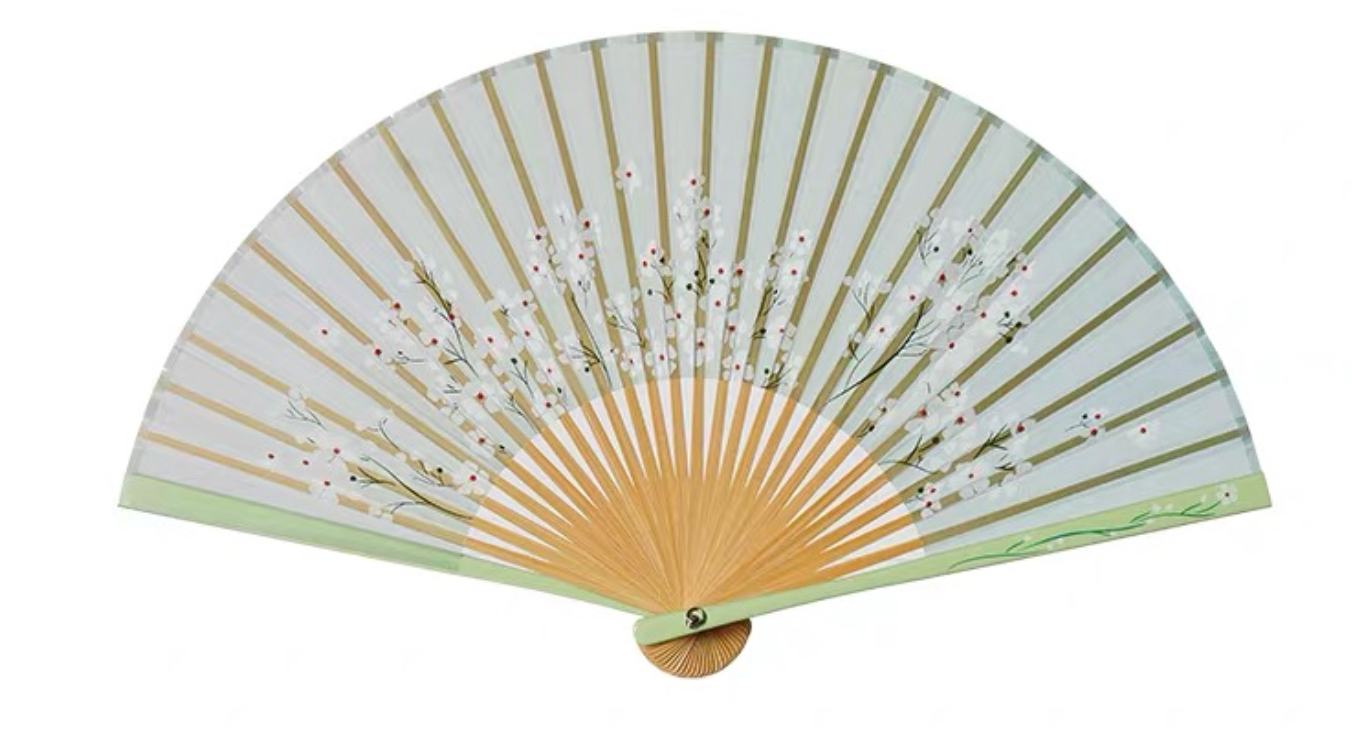
The Architecture of Air: A Master Guide to the History, Anatomy, and Art of the Folding Fan
The folding fan is far more than a simple instrument for the displacement of heat; it is a kinetic artifact of quiet luxury, a handheld gallery of high art, and a profound symbol of cultural status that has navigated the currents of history for over a millennium. Often referred to as the "Architecture of Air," the folding fan represents a convergence of engineering precision, tactile minimalism, and scholarly expression. To the modern connoisseur, a handcrafted fan from Oriental Artisan is an invitation to inhabit a world of refinement where the waxy finish of treated bamboo and the crisp snap of hand-folded Xuan paper serve as a sensory bridge to the imperial grandeur of the East.
This master guide serves as the definitive resource for understanding the intricate evolution, physical complexity, and elevated etiquette of the folding fan. By examining the structural anatomy that permits a flawless glide and the centuries of literati culture that transformed these objects into symbols of intellectual identity, one begins to appreciate the fan as a vessel for the spirit of the ancient world, reimagined for the contemporary aesthetic.
Part I: The Anatomy of a Masterpiece
The physical structure of a high-end folding fan is a study in tension and equilibrium. Every component, from the external protective pillars to the internal skeletal framework, must be engineered to withstand the repeated kinetic stress of opening and closing while maintaining an appearance of effortless grace.
What is the anatomy of a premium folding fan?
A premium folding fan is an engineered assembly consisting of the guards (sturdy outer sticks), ribs (flexible inner sticks), a leaf or mount (the folding surface), and a rivet (the pivot point). Each element is meticulously crafted from materials like first-grade bamboo, Xuan paper, or fine silk to ensure structural integrity and a smooth, rhythmic glide.
The Guards: The External Protective Pillars
The guards, also known as the guard sticks, are the two outermost ribs of the fan. They are designed to be significantly thicker and sturdier than the inner ribs to provide a protective shell for the fan when it is in its retracted or closed position. In luxury fan-making, these guards are not merely functional; they are the primary canvas for the most intricate artistry. At Oriental Artisan, the guards are hand-polished from the premium outer skin of green bamboo, chosen for its smooth, flexible, and long-lasting properties.
In the upper echelons of historical and modern craftsmanship, guards are frequently fashioned from rare and precious materials to signal the object's value and the owner's status. Materials such as aged ebony, fragrant sandalwood, ivory, tortoiseshell, and mother-of-pearl provide a tactile weight and a waxy luster that matures with use. In the Suzhou tradition, guards may feature "Yumen" holes—repetitious rows of openwork that are sometimes inlaid with metal filigree or silk fabric to create a play of light and shadow during motion.
The Ribs: The Skeletal Framework of the Fold
Inner sticks, technically referred to as ribs or slips, constitute the skeletal framework that determines the aerodynamic flow and the accordion-like geometry of the fan. These ribs are typically cut into thin, uniform strips to ensure the fan folds evenly and maintains a slim, elegant profile when retracted. The structural strength of the fan is concentrated at the head, where the sticks are thickest and stacked upon the rivet, while the flexibility required for the breeze is provided by the tapering of the ribs as they enter the leaf.
The number of ribs influences the fan's opening angle and its resistance to air. A masterwork fan from Oriental Artisan often features 8.3-inch ribs sourced from first-grade green bamboo, which provides an effortless, silent opening and closing mechanism. This skeletal structure must be perfectly balanced; if the ribs are too rigid, the fan will feel cumbersome, and if they are too flexible, the fan will fail to provide a consistent current of air.
| Component | Function | Traditional Materials | Aesthetic Role |
| Guards | External protection and structural anchor | Sandalwood, Ebony, Ivory, Thick Green Bamboo | Primary site for carvings, engravings, and lacquer art. |
| Ribs (Slips) | Internal skeleton supporting the leaf | First-grade Green Bamboo, Phoebe wood, Bone | Determines the "snap" and the rhythmic symmetry of the fold. |
| Leaf (Mount) | The folding canvas for art and air displacement | Xuan paper, Silk, Cloud Dragon paper, Vellum | The central "stage" for calligraphy and painting. |
| Rivet (Pivot) | The kinetic axis governing movement | Metal (Brass/Silver), Bone, Jeweled pins | The silent engine of the fan's mechanical life. |
| Head | The base where ribs are joined | Shaped as Swallow-tail, Monk-head, or Magnolia | Defines the silhouette and historical style of the fan. |
The Leaf: The Canvas of Refinement
The leaf, or mount, is the flexible surface attached to the ribs. It serves as both the functional component that moves the air and the aesthetic centerpiece of the fan. In high-end artisanal production, the leaf is rarely a simple sheet of paper or fabric. Oriental Artisan utilizes a luxury composite known as Silk-Backed Cloud Dragon paper. This material is a fusion of high-clarity silk and traditional textured paper, providing both the durability required for thousands of folds and a soft, misty transparency that plays with natural light.
The leaf is the "stage" upon which the literati and master artists have traditionally expressed their talents. Whether it is the cascading grace of purple wisteria or the ephemeral beauty of cherry blossoms, the leaf must be treated with a specific formula to ensure it remains permeable to air while possessing the high strength necessary for longevity. In many instances, authentic natural leaf skeletons (veins) are integrated into the fan face to provide an organic, ethereal texture that distinguishes a mass-produced item from a handcrafted treasure.
The Rivet: The Point of Kinetic Tension
The rivet is the single pin or pivot point at the head of the fan that holds the guards and ribs together. Though small, the rivet is the most critical mechanical element, as it governs the fan's open-and-close rhythm. A poorly tensioned rivet will result in a jerky motion, whereas a masterfully set rivet—often made of metal, bone, or even embellished with jewels—allows the fan to unfurl with a silent, effortless glide.
In more elaborate designs, the rivet is accompanied by a "loop," a small half-round attachment that allows the owner to hang a silk tassel or a handmade glazed crown. This accessory is more than decorative; it adds a counterweight that assists in the smooth handling of the fan during use and serves as an additional expression of personal style.
Part II: The Heritage of the Fold
The history of the folding fan is a narrative of cultural migration, imperial patronage, and artistic elevation. While the rigid hand screen (round fan) has roots in ancient China reaching back to the Shang Dynasty (1600–1046 BC), the specific mechanism of the folding fan—known as zheshan—is an innovation that arrived in China as a refined import.
Where did the folding fan originate?
The folding fan was invented in Japan between the 7th and 9th centuries, initially taking the form of the akomeogi (court fan). It was introduced to China during the Northern Song Dynasty (988 AD) via Japanese monks and Korean envoys as a rare tribute gift, eventually becoming the definitive accessory of the Chinese literati.
The Migration of the Fold: Japan to China
Historical records indicate that the folding fan first arrived at the Chinese court during the reign of Emperor Taizu of the Northern Song Dynasty. A Japanese monk named Chōnen offered twenty wooden-bladed fans (hiogi) and two paper fans (kawahori-ogi) to the emperor in 988 AD. These early imports were viewed as rare, valuable exotics, often featuring indigo-dyed paper and intricate silver tracery.
The format was initially met with some resistance in China, as it was believed to be intended for lower-class people and servants. However, by the early Ming Dynasty (1368–1644), the folding fan had overcome these prejudices. The third Ming emperor, Zhu Di (ruling as Yongle), became fond of folding fans for their convenience and ordered palace craftsmen to imitate the Japanese imports. Under Emperor Xuanzong, the tradition flourished further, with the emperor personally painting and writing calligraphy on fans to present as elegant gifts to court officials.
The Literati Influence and the Wu School
The folding fan reached its artistic and cultural zenith in the Jiangnan area, particularly in Suzhou, during the mid-Ming Dynasty. The unique, curved surface of the fan—wider at the top than the bottom—presented a fascinating challenge for painters and calligraphers. Master artists of the Wu School, including Shen Zhou (1427–1509), Wen Zhengming (1470–1559), and Tang Yin (1470–1524), transformed the fan from a cooling tool into a "handheld gallery".
For the literati, the folding fan was an "accessory for the elegant life" and a carrier for talents. Exchanging fans with poetic landscapes or philosophical inscriptions became a standard gesture of friendship and respect. The possession of a fan painted by a well-known artist was a point of immense pride, and these items were often carried as symbols of refined flexibility and poise.
The Imperial Collections of the Qing Dynasty
During the Qing Dynasty, particularly under the Kangxi and Qianlong emperors, the folding fan was established as a cultural art form appreciated by both the elite and commoners. The Qianlong emperor was an avid calligrapher and painter who personally adorned many fans for his mother, Empress Dowager Xiaoshengxian. He also organized the court collection and sent fans to specialized workshops in Suzhou for repairs and remounting.
The Suzhou workshops became the undisputed center of fan excellence, known for their "Ya Fan" (Elegant Fans). These craftsmen combined modeling, mounting, carving, and inlaying into a single, cohesive discipline. By the end of the Qing Dynasty, the fan head shapes had become highly diversified, ranging from the classic "monk-head" and "swallow-tail" to the "magnolia" and "plum-blossom" silhouettes, reflecting a society obsessed with minute details of aesthetic variation.
Social Significance and Gendered Symbolism
As the folding fan's popularity grew, it acquired complex social meanings. Historically, specific concepts of status and gender were associated with different types of fans. Generally, folding fans were reserved for males due to their association with travel, officialdom, and scholarly pursuits, while rigid round fans (tuanshan) were preferred by women.
The fan also served as a tool for non-verbal communication and social maneuvering. Literati anecdotes from the Northern Song period describe scholars using fans to conceal their faces—not merely to shield against the sun, but to signify social avoidance or a longing for seclusion. In this way, the fan acted as a boundary-defining object, a kinetic shield that could be deployed to "delimit body space" or signal a desire for intellectual solitude.
| Era | Primary Development | Material / Artistic Shift | Social Context |
| Northern Song | Introduction as Tribute | Japanese indigo-dyed paper, silver tracery. | Rare "exotic" items owned by envoys and high officials. |
| Early Ming | Imperial Adoption | Palace craftsmen imitate Japanese imports. | Becomes a necessary accessory for elegant life at court. |
| Mid-Late Ming | Literati Heyday | Wu School painting; Suzhou craft specialization. | Used to exchange poetic landscapes and signify scholarly status. |
| Qing Dynasty | Peak Craftsmanship | Gold painting, red lacquer carving, ivory guards. | Organized imperial collections; widespread use among commoners. |
| Republic Era | Collectibility | High-value artisanal brands; focus on carved bamboo. | Transition from functional accessory to investment-grade collectible. |
Part III: The Craft of the Hundred Steps
The creation of a master-grade folding fan is a process of extreme patience, requiring the coordination of multiple specialized disciplines. In Suzhou, the historical heart of fan production, the craft is famously divided into dozens of specialized steps—often cited as the "Hundred Steps"—to ensure that every movement of the fan is perfectly calibrated.
What is the 100-step process of Suzhou fan making?
The 100-step process refers to the exhaustive manual labor required to create a Suzhou "Ya Fan." It involves curing bamboo for eight years to ensure stability, manually carving patterns with an iron wire bowstring, and applying multiple layers of lacquer or gold powder to the hand-pressed Xuan paper leaf.
The Preparation of Materials: Bamboo and Xuan Paper
The foundation of a premium fan is the quality and preparation of its primary materials. At the workshop of Master Wang Jian, a notable figure in the preservation of Ming-style fans, bamboo must be stored for at least eight years before it is even considered for use in a framework. This long seasoning period allows any weak or cracked pieces to be identified and discarded, ensuring the final object possesses heirloom longevity. Once cured, the bamboo is cut into thin, uniform strips and hand-polished until it is bright, clean, and elegant.
The production of the Xuan paper used for the leaf is equally demanding. Traditional Xuan paper (rice paper) is made from the bark of blue sandalwood trees and rice straw through a process that involves more than one hundred distinct manual steps. For fan use, the paper must be "cooked" or treated with a specific formula—often including pigments of gold powder and glue—to ensure it has the high strength and proper water permeability required for fine calligraphy. This meticulous treatment allows the paper to endure thousands of opening and closing cycles without the fibers snapping.
Artistic Techniques: Carving, Lacquering, and Gold Painting
The guards and ribs of a luxury fan are often masterpieces of micro-carving. Artisans use a variety of traditional techniques to elevate the bamboo or wood:
-
Liu Qing (Green-Bark-Leaving): A master technique where the carver utilizes the thin outer green skin of the bamboo as a relief layer, carving through it to reveal the inner layer and creating a two-tone pattern of landscapes or flowers.
-
Huo Bi (Burnt Painting): Also known as fire-brushing, this involves using glowing metal tools to create burnt marks on the bamboo guards. By following the principle of "design before paint," the artisan burns multiple layers to create a 3D visual effect similar to ink wash shading.
-
Ti Zhu (Carving Red Lacquer): This involves applying up to 200 layers of red lacquer to a base material and carving patterns into the surface when it is half-dried. This technique creates a rich, textured finish that is both visually stunning and incredibly durable.
-
Mud Gold (Gold-Coated Panels): Paper is coated with a pigment made of gold powder and glue. This comes in shades such as "Standard Golden" (pure gold), "Buddhist Golden" (containing copper), and "Field Golden" (containing silver). This texture is sumptuous and highly prized by collectors.
The Sandalwood Crisis and Modern Artisanship
Fragrant sandalwood fans represent the pinnacle of aromatic luxury. Sandalwood gives off a unique, gentle fragrance every time the fan is unfurled. However, real Indian sandalwood has become extremely rare and expensive, with prices skyrocketing to 12 million yuan per ton due to strict sales limits on the endangered wood.
Because of these shortages, master workshops like the Suzhou Sandalwood Fan Co. now reserve their existing stocks of sandalwood exclusively for bespoke, tailor-made orders. A genuine handmade sandalwood fan can take a master craftsman over a month to produce just three pieces, as every openwork pattern must be carved by hand with a bamboo bow and iron wire to achieve a level of smoothness that machine carving cannot replicate.
Environmental Conditions for Mastery
Artisans primarily make fans in the spring and autumn when the temperature is approximately 20 degrees Celsius. This is not merely for comfort; it is the optimal temperature for the behavior of the materials, from the flexibility of the bamboo to the drying time of the paper adhesives. This dedication to the specific conditions of ancient mastery reflects the Oriental Artisan commitment to preserving crafts that are otherwise at risk of disappearing in the era of mass production.
Part IV: The Engineering of the Breeze
While the fan is often viewed as an object of art, its functionality is governed by precise mechanical principles. The transition from a closed "vertical tower" to a radial array involves the careful management of friction, tension, and kinetic force.
The Physics of the Glide and Snap
The "glide" of a fan—the smooth motion of its unfurling—is dependent on the absolute uniformity of the ribs and the precision of the rivet. In artisanal fan-making, the thickness of the ribs is often subtly varied; as the sticks and guards increase in height towards the right of the fan, additional support is required to maintain the stack's integrity.
A high-quality fan should also possess a distinct "snap" when flicked open or shut. This is achieved through the tension of the mount and the friction between the ribs. Properly cured Xuan paper moves "fluidly mid-swing," creating a barely audible rustling sound reminiscent of wind brushing dried reeds. In contrast, the aggressive flutter of cheap synthetic fabrics is viewed as unrefined and unsuitable for scholarly or formal settings.
Aerodynamic Efficiency and 3D Geometry
The three-dimensional structure created by the folds—the accordion effect—not only allows for portability but also significantly increases the structural strength of the thin material. This 3-dimensional architecture creates a more effective airflow by catching and directing air more efficiently than a flat surface of the same dimensions.
Interestingly, the fiber orientation of the paper is traditionally set at right angles to the folding direction. This ensures that the paper maintains its strength along the "valley" and "mountain" segments of the fold, preventing the fibers from snapping under the repeated mechanical stress of use. The result is a device that is as efficient in moving air as it is beautiful in repose.
The Mechanism of the "Snap-Fit"
The interaction between the guards and the ribs involves principles of snap-fit engineering—a fine balance between geometry, friction, and bending elasticity. In high-end fans, the guards must "clutch" the inner ribs with just enough tension to keep the fan closed when not in use, yet release them with a smooth, nonreciprocal response when the user applies horizontal force. This "mechanical asymmetry"—where the fan is easy to open but stays securely closed—is the hallmark of a masterfully engineered pivot point.
Part V: Refined Etiquette and Preservation
The possession of a premium folding fan carries the responsibility of proper handling. To treat a handcrafted fan as a common tool is to overlook the generations of artistry it embodies.
How should one properly open and close a luxury fan?
To open a luxury fan, hold it gently with both hands and use the thumbs to slide the guard sticks apart in a controlled, horizontal motion. To close it, use both hands to ensure the fabric or paper folds correctly according to its original creases, avoiding forceful snapping or flicking which can strain the rivet and misalign the folds.
The Ritual of the Hand and Social Etiquette
In the context of traditional tea ceremonies and formal gatherings, the fan is treated with the same reverence as fine teaware. It is never "flicked" open with a single hand—an action considered aggressive and unrefined—but rather unfurled slowly to minimize damage to the framework. The fan also serves as a "sensory reset tool"; practitioners often use it for gentle airflow control and mindful pauses during conversation.
The fan's role in the tea room is particularly nuanced. Just as the "Three Nods of the Phoenix" in pouring tea signals respect, the way a fan is held and moved reflects the user's cultivation. In formal ceremonies, a fan may be used not for cooling, but as a sign of purity and respect, placed before one as a boundary of traditional etiquette.
Maintenance for Heirloom Longevity
Handcrafted fans are sensitive to their environment because materials like bamboo, silk, and Xuan paper are organic and responsive to atmospheric changes.
-
Humidity and Moisture: Humidity is the primary enemy of the folding fan. It can cause paper blistering, framework deformation, and mold. Fans should be stored in a dry, cool place, potentially using a desiccant that does not directly touch the materials.
-
Sunlight and Heat: Long-term exposure to direct sunlight leads to discoloration of the silk and brittle bamboo. High temperatures can cause the framework to crack. Store your fan away from windows, heaters, and direct light.
-
The Use of a "Cime": A cime is a small strip of Japanese paper or a dedicated sleeve used to keep the fan from losing its shape when not in use. Maintaining the proper tension of the folds ensures the fan will continue to open and close smoothly for years.
-
Protection: Always store a premium fan in a cloth bag or a paulownia wood box. Paulownia is naturally resistant to insects and acts as a deterrent against mold, making it the ideal vessel for protecting heirloom-quality fans.
Part VI: Curation: Selecting Your Signature Piece
Selecting a folding fan is a deeply personal endeavor, akin to choosing a signature fragrance or a bespoke suit. At Oriental Artisan, the collection is curated to align with varying aesthetic temperaments and functional requirements.
The Minimalist Daily Companion
For those who appreciate the "Quiet Luxury" movement—defined by premium materials and expert construction without overt branding—an all-bamboo rib fan or a minimalist raw bamboo piece offers understated elegance. These fans emphasize the natural grain and organic texture of the bamboo, providing a lightweight and durable option for daily refinement. The All-Bamboo Dragonfly Filigree fan is a perfect example, using subtle cutouts to create a sense of airy sophistication.
The Hand-Painted Statement
For formal occasions, weddings, or display, a silk-faced fan with hand-painted motifs is the epitome of luxury. Oriental Artisan’s "Double-Layer" High-End Silk & Vein Leaf fans provide an ethereal transparency that plays with light and shadow. These pieces, featuring cascade motifs like Wisteria or the ephemeral Cherry Blossom, are designed to complement Hanfu or high-end evening wear, acting as a portable masterpiece.
The Heritage Artisan Pledge
Beyond the acquisition of a material object, choosing a fan from Oriental Artisan is an investment in the survival of endangered heritage crafts. Through the "Oriental Artisan Pledge," 1% of all revenue is donated to grassroots charities in China that focus on education, cultural preservation, and sustainable livelihoods. This revenue supports the "unseen hands" of the last remaining masters in regions like Jingdezhen and Suzhou, ensuring that the techniques of the "Hundred Steps" are passed down to future generations.
Conclusion
The folding fan remains one of the most resilient and evocative symbols of Eastern elegance. It is a device that captures the wind, yet it is also a quiet anchor for the mind. Whether it is used to direct a gentle breeze during a summer afternoon, to serve as a mindful breathing anchor during a pause in conversation, or to act as a silent communicator of scholarly status, the fan continues to fulfill its role as a "treasured companion".
As we hold an Oriental Artisan fan—feeling the waxy surface of the hand-polished bamboo and hearing the soft rustle of the hand-folded leaf—we are not just holding a tool. We are holding a piece of history, a masterpiece of engineering, and a testament to the enduring human spirit that seeks to blend functionality with profound beauty.
In the words of a modern connoisseur, a properly crafted fan "has soul" because it responds to the touch and the air differently than any other object. It is, in every sense, the Architecture of Air.
Explore the Handcrafted Fan Collection at Oriental Artisan.

Written by Castor Kwok


Leave a comment
This site is protected by hCaptcha and the hCaptcha Privacy Policy and Terms of Service apply.