



The Art of the Infusion: A Connoisseur’s Guide to Brewing and Honoring Loose-Leaf Tea
The contemporary appreciation of tea has transcended the boundaries of mere refreshment, evolving into a sophisticated discipline that marries historical lineage with exacting material science. For the modern practitioner, the journey toward the "Gold Standard" of tea culture begins with a rejection of industrial convenience in favor of intentionality. In this landscape, a standard ceramic mug is no longer a sufficient vessel; it is a utilitarian compromise that fails to respect the biological and chemical complexity of the leaf. To truly honor the infusion, one must curate an environment—an Oriental Artisan sanctuary—where water, fire, and porcelain converge to liberate the soul of the plant.
Key Takeaways for the Modern Practitioner
| Essential Dimension | The Gold Standard Recommendation | Scientific and Cultural Rationale |
| Leaf Quality | Whole Loose-Leaf (Non-processed) | Maximizes essential oil retention and allows layered flavor extraction via gradual surface area expansion. |
| Water Chemistry | pH 6.8–7.2; TDS 30–50 ppm | Prevents catechin oxidation and maintains liquor clarity; minerals affect aroma volatility. |
| Temperature | Specific to cultivar (160°F–212°F) | Manages the extraction of sweet L-theanine while sequestering bitter tannins and caffeine. |
| Brewing Style | Gongfu Cha (High leaf-to-water ratio) | Facilitates multiple short infusions (15s–30s) to reveal the evolving narrative of the tea’s flavor profile. |
| Vessel Material | Jingdezhen High-Fire Porcelain | Inert surface prevents mineral leaching; superior thermal mass preserves precise temperature ranges. |
| Sensory Focus | Huigan (Returning Sweetness) | A physiological phenomenon where bitterness transforms into a cool, lingering sweetness in the throat. |
The Philosophy of the Leaf: Beyond the Industrial Compromise
The fundamental architecture of tea quality is established long before the first drop of water touches the leaf. It resides in the physical integrity of the Camellia sinensis plant and the preservation of its volatile aromatic compounds. The ubiquitous tea bag, while providing unparalleled ease, represents an industrial collapse of complexity. When leaves are pulverized into "fannings" or "dust," the essential oils—the carriers of nuance and terroir—evaporate nearly instantaneously upon exposure to air. What remains is a flat, one-note shadow of the plant’s potential, often characterized by a sharp, unrefined bitterness.
The Agony of the Leaf and Fick’s Law of Diffusion
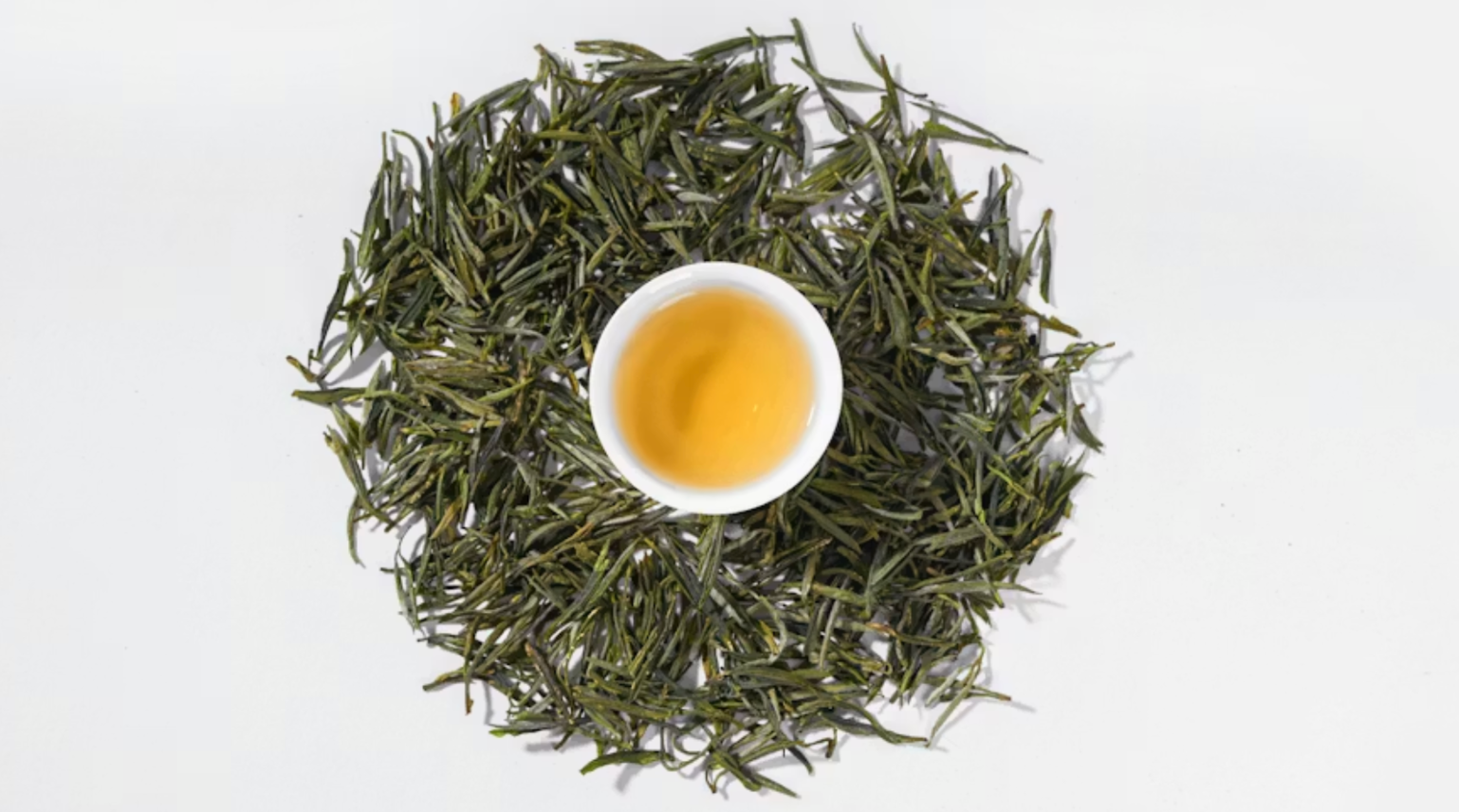
The transition to loose-leaf tea is a commitment to biological transparency. Whole leaves possess a structural integrity that allows them to "bloom" or "unfurl" in a process known to connoisseurs as the "agony of the leaves." This is not merely a poetic observation; it is a mechanical necessity. As the leaf rehydrates, its cellular walls expand, allowing water to penetrate the tissue and dissolve soluble components gradually.
In a standard tea bag, the excessive surface area of the dust particles leads to a rapid, uncontrolled extraction, causing the tea to reach its maximum concentration almost immediately. Conversely, the whole leaf allows for a layered extraction, where different compounds—aromatic esters, amino acids, and polyphenols—dissolve at varying rates across multiple infusions.
The Bioactive Spectrum: Health as a Function of Quality
The health benefits traditionally associated with tea—antioxidant, anti-inflammatory, and neuroprotective properties—are highly dependent on the quality of the leaf. Loose-leaf tea typically scores higher on the Oxygen Radical Absorbance Capacity (ORAC) test because it retains a higher concentration of bioactive substances like catechins and L-theanine. Whole leaves act as a natural vessel, shielding delicate polyphenols from the oxidative degradation that occurs when the leaf is broken. For the consumer seeking wellness, the choice is clear: the potency of the cup is a direct reflection of the leaf's physical wholeness.
The Technical Trio: Water Quality, Thermal Control, and Mineral Synergy
In the hands of a master sommelier, water is not a passive solvent but an active participant in the alchemy of the infusion. The chemistry of the brewing water—its mineral content, pH, and dissolved oxygen—can either elevate a premium tea or diminish it to mediocrity.
The Mineral Dialect: TDS and pH Dynamics
Total Dissolved Solids (TDS) and pH levels are the invisible architects of a tea’s flavor profile. Research indicates that water with a TDS between 50 and 150 ppm is the "Gold Standard" for general brewing, though delicate green and white teas often benefit from an even lower range of 30–50 ppm.
When water is too "hard" (high in calcium and magnesium), it flattens the tea's natural acidity and results in a cloudy, opaque liquor often referred to as "tea scum." This occurs because calcium ions bind to the pectin in the plant cell walls, making them less porous and hindering the extraction of flavor compounds. Furthermore, alkaline water (pH > 7.0) accelerates the oxidation of catechins, turning a vibrant infusion into a dark, muddy liquid with a metallic aftertaste.
| Water Type | pH Level | TDS (ppm) | Effect on Green Tea Profile |
| Pure Water (PW) | 5.5–6.5 | <10 | Clean but potentially flat; lacks "body." |
| Natural Drinking Water | 6.8–7.4 | 30–80 | Optimal balance; enhances floral linalool notes. |
| Tap Water (TW) | 7.0–8.5 | 150–300+ | High oxidation; dull aroma; increased bitterness. |
| Mineral Water (MW) | 7.5+ | 100–250+ | Darker color; promotes catechin polymerization; astringent. |
The Kinetic Engine: Precision Temperature Control
Temperature is the variable that governs the extraction of the tea’s chemical "heart." The goal of the infusion is to find the equilibrium between the sweet, umami-rich amino acids (like L-theanine) and the bitter, astringent catechins and caffeine. Amino acids dissolve readily at lower temperatures, while tannins and caffeine require higher kinetic energy to release from the leaf.
Brewing a delicate West Lake Dragon Well with boiling water ($212^\circ F$) is a tactical error; the extreme heat "scalds" the leaf, triggering an aggressive release of bitter compounds that mask the tea's natural nuttiness. Conversely, robust teas like fully oxidized Black tea or fermented Pu-erh require near-boiling water to penetrate their dense structures and extract the bold, malty notes that define their character.
| Tea Category | Temp (∘F) | Temp (∘C) | Rationale |
| White | 160–175 | 71–79 | Protects subtle floral esters and honey notes. |
| Green | 170–180 | 77–82 | Balances umami vs. bitterness; prevents "cooked" taste. |
| Oolong | 185–205 | 85–96 | Allows complex semi-oxidized layers to open. |
| Black | 200–212 | 93–100 | Full extraction of tannins and bold character. |
| Pu-erh | 212 | 100 | Penetrates aged, compressed leaves; highlights earthy depth. |
The Ritual: Western Utility vs. Gongfu Mastery
The method of preparation is the ultimate expression of the practitioner’s skill. While the "Western Style" focuses on volume and efficiency, the Chinese "Gongfu Cha" (brewing tea with effort or skill) focuses on the evolution of the leaf across time.
The Gongfu Approach: The Meditation of Multiple Infusions
Gongfu brewing is characterized by a high leaf-to-water ratio and very short, repeated infusions. In a small vessel—typically a 100ml to 150ml Gaiwan—the practitioner uses 5 to 8 grams of tea leaves. The first infusion may last only 15 seconds, acting as a "rinse" to awaken the leaves and release the initial surface-level aromatics.
Subsequent infusions increase in duration by 5 to 10 seconds, allowing the water to penetrate deeper into the leaf's core with each pass. This technique reveals the "narrative" of the tea. A premium Oolong might begin with high floral notes, move into a creamy mid-palate, and finish with a deep mineral resonance. This progressive experience is lost in Western brewing, where a single 3-to-5-minute steep extracts everything simultaneously, resulting in a balanced but static cup.
The Tools of Skill: Gaiwan and Cha Hai
The equipment of Gongfu Cha is designed for precision. The Gaiwan (lidded bowl) is the preferred vessel for evaluation because its wide opening allows for the rapid release of heat and the easy inspection of the leaves. The Cha Hai (Fairness Pitcher) is used to decant the tea once the infusion time is reached. This prevents the leaves from continuing to steep in the pot, which would lead to over-extraction, and ensures that the tea poured into each guest's cup is of uniform strength—hence the name "Fairness Pitcher."
Sensory Evaluation: How to "Listen" to the Tea
A world-class sommelier evaluates tea through a systematic sensory protocol. This process goes beyond simple taste, engaging the eyes, the nose, the palate, and even the throat.
The Visual and Olfactory Prelude
Evaluation begins with the dry leaf. The connoisseur looks for "Bloom"—the desirable sheen on a high-quality black tea—and the presence of "Tips," the tender, downy buds that indicate early spring harvesting. Once infused, the liquor clarity is examined; a "Gold Standard" tea should be bright and transparent, never muddy or dull.
The aroma is inhaled from the warmed lid of the Gaiwan and the tea itself. Aromas are categorized into families:
-
Marine: Seaweed and iodine notes common in Japanese Sencha.
-
Floral: Fresh orchids, peonies, or white flowers found in high-mountain Oolongs.
-
Earthy: Damp soil, humus, and forest floor typical of aged Pu-erh.
-
Burnt/Smoked: Toasted hazelnuts or pine smoke characteristic of Lapsang Souchong or charcoal-roasted Da Hong Pao.
The Mouthfeel and the Alchemy of Huigan
The "Body" of the tea refers to its viscosity and weight on the palate. Is it "Velvety," "Silky," or "Syrupy"? This sensation is a result of the tea's dissolved solids and its interaction with saliva. However, the most sought-after sensory experience for the connoisseur is Huigan (回甘), or "Returning Sweetness."
Huigan is a physiological phenomenon that begins as a pleasant, fleeting bitterness (Jia) that triggers an intense salivation response. As the bitter compounds dissociate from the taste receptors, they are replaced by a lingering, cool sweetness that seems to bubble up from the throat. This is not the cloying sweetness of sugar but a dynamic, cinematic experience—a "cinematic tracking shot" of flavor that lives in the palate long after the liquid has been swallowed.
The Vessel as the Soul: Why Porcelain is the Gold Standard
The vessel is the final arbiter of tea quality. While glass is prized for its visual transparency and clay for its flavor-absorbing memory, high-fire porcelain is the undisputed choice for the serious practitioner.
The Material Science of Inertness and Heat
Porcelain is a non-porous material created by firing Kaolin clay and china stone at temperatures exceeding 1300 degree. This process of "vitrification" creates a surface that is essentially a layer of glass, making it chemically stable and inert. Unlike low-fire ceramics, which may leach alkaline minerals that dull acidity, or metals that accelerate oxidation, porcelain does not react with the tea's delicate organic compounds.
Furthermore, porcelain’s high density provides superior thermal mass. It retains heat significantly longer than glass, ensuring that the water temperature remains within the optimal range for flavor development during the critical first two minutes of brewing. For the practitioner, porcelain is the "honest" vessel; it adds nothing and takes nothing away, allowing the true terroir of the leaf to shine.
The Heritage of Jingdezhen: The Birth of "White Gold"
For over a millennium, the city of Jingdezhen has been the singular "Porcelain Capital of the World." Its history is a record of imperial patronage, where kilns were established to serve the Ming and Qing emperors exclusively. The porcelain produced here was so valued it was known as "White Gold," traded along the Silk Road as a commodity as precious as silk itself.
Authentic Jingdezhen porcelain is defined by the "Four Virtues":
-
White as Jade (Bai Ru Yu): A warm, milky whiteness derived from the purity of local Kaolin clay, which contains less than 0.6% iron.
-
Bright as a Mirror (Ming Ru Jing): A vitrified glaze devoid of pinholes, allowing the hand-painted cobalt designs to "breathe."
-
Thin as Paper (Bo Ru Zhi): An ethereal translucency that allows light to pass through the vessel walls.
-
Resonant as a Bell (Sheng Ru Qing): A clear, long-lasting metallic ring when tapped, indicating perfect structural integrity.
The 72 Steps: The Anatomy of an Oriental Artisan Masterpiece
The creation of a handcrafted Oriental Artisan tea set is a laborious process requiring the specialized skills of dozens of masters. This "72-step" system, perfected during the Ming Dynasty, ensures that every element—from the mineral composition to the final brushstroke—is optimized for the tea ritual.
| Phase of Production | Critical Technical Steps | Cultural and Functional Significance |
| Material Preparation | Prospecting, Pounding, Sedimentation | Purifies minerals to ensure the "Jade" whiteness and chemical stability. |
| The Potter’s Wheel | Wheel Throwing, Drying, Fine Trimming | Establishes the ergonomic "Soul" and achieves "Paper-Thin" wall tension. |
| Artistic Expression | Underglaze Painting, Engraving | Uses cobalt oxide for indigo narrative; hand-painted "life" in every stroke. |
| The Fire | Glazing, High-Firing (1300 C) | Vitrification transforms clay into "White Gold"; creates the "Mirror" finish. |
| The Final Cut | Inspection, Foot Ring Polishing | The unglazed foot ring is polished to feel like "baby skin" or polished stone. |
This culture of excellence is the ghost that haunts the modern industrial factory. In an Oriental Artisan studio, the person who throws the clay is not the one who trims it, and the one who paints is not the one who manages the fire. This hyper-specialization is what creates a vessel with "breath"—a set where the lid fits with a whisper, the spout pours with a "clean cut," and the handle remains cool to the touch.
The Connoisseur’s Dialect: Tasting Notes for the Elite
To truly honor an Oriental Artisan set, the practitioner must select leaves of equal pedigree. Each cultivar offers a unique sensory architecture.
West Lake Dragon Well (Long Jing): The Spring Harvest
Dragon Well is the most celebrated green tea in China, specifically when sourced from the "Lion Peak" or "Meijiawu" regions of West Lake.
-
Appearance: Flat, jade-green leaves with a slight sheen.
-
Aroma: Toasted chestnuts and fresh-cut grass.
-
Palate: A silky mouth-filling texture with "nutty overtones" and a crisp, clean finish.
-
Vessel Recommendation: A thin-walled Jingdezhen Gaiwan to dissipate heat quickly and preserve the delicate amino acids.
Wuyi Da Hong Pao (Big Red Robe): The Rock Charm
Da Hong Pao is a heavily oxidized, charcoal-roasted Oolong from the mineral cliffs of the Wuyi Mountains.
-
Aroma: Warm wood, caramel, and a hint of stone-fruit sweetness.
-
Palate: Deep mineral resonance ("Rock Rhyme"), notes of cocoa, and a thick, syrupy body.
-
Vessel Recommendation: A thicker porcelain teapot to maintain the high temperature required to release the roasted complexity.
Aged Sheng Pu-erh: The Liquid Vintage
Pu-erh is a post-fermented tea from Yunnan that evolves over decades.
-
Aroma: Camphor, dried dates, and forest floor.
-
Palate: A complex, earthy sweetness that moves into a powerful Huigan with a menthol-like cooling sensation in the throat.
-
Vessel Recommendation: A dedicated porcelain set or Yixing clay pot to allow the earthy oils to settle and mature over time.
The Conversion Bridge: Why a Standard Mug is Not Enough
In a world defined by "instant everything," the tea ritual is a quietly revolutionary act of slow living. It is a declaration that process matters, that beauty is found in imperfection, and that the smallest daily routines deserve reverence.
A standard mug, while functional, is a barrier to this experience. It lacks the thermal precision to protect delicate greens; its porous surfaces absorb and muddle flavors; and its utilitarian form offers no connection to the centuries of craftsmanship that defined tea culture. To use a handcrafted Oriental Artisan tea set is to cross the threshold from a consumer to a practitioner. It is an investment in Emotional Return—a bridge between the ancient and the present that turns a five-minute break into a sanctuary of peace.
Each Oriental Artisan set is more than kitchenware; it is a companion that listens, a piece of functional art that bears the fingerprints of a master, and a tool of presence that anchors you in the beauty of the moment.
Elevate Your Daily Ritual
The transition to a "Gold Standard" tea experience is a choice to prioritize quality over volume. By selecting whole loose leaves, mastering the alchemy of water and temperature, and honoring the infusion with a Jingdezhen porcelain vessel, you transform a simple beverage into a profound sensory journey. We invite you to explore the Oriental Artisan collection—where the "Four Virtues" of porcelain meet the intentionality of the modern connoisseur. Elevate your daily ritual and discover the true art of the infusion.


Leave a comment
This site is protected by hCaptcha and the hCaptcha Privacy Policy and Terms of Service apply.