
The Ultimate Guide to Sancai Gaiwan: Philosophy, Craftsmanship, and the Art of Gongfu Tea Brewing
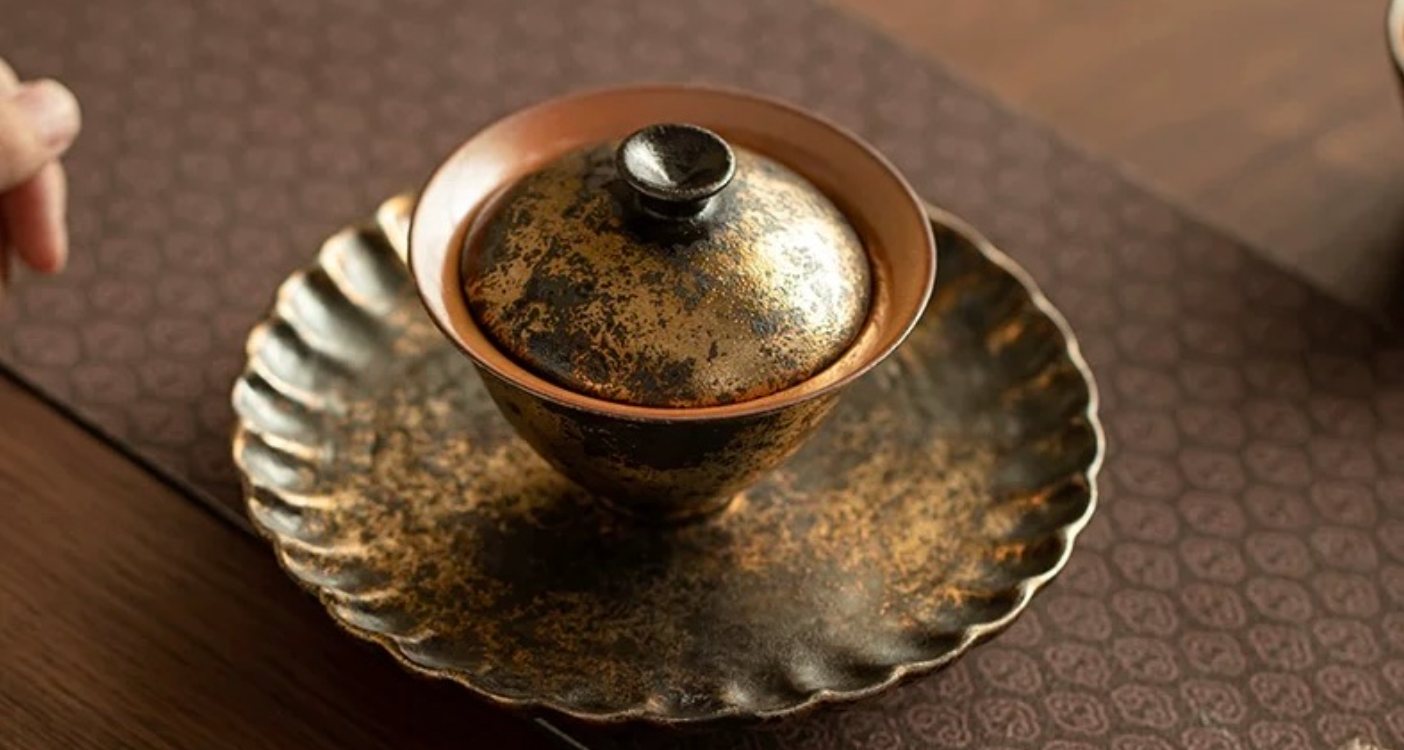
The Sancai Gaiwan stands as a pinnacle of Chinese ceramic art, representing a profound intersection of functional utility and celestial philosophy. For the premium tea enthusiast and the discerning collector, this vessel is more than a mere tool for infusion; it is a microcosm of the ancient Chinese worldview, a bridge between the physical act of drinking and the spiritual pursuit of harmony. In the disciplined practice of Gongfu tea brewing, the gaiwan acts as both teacher and medium, demanding a level of mindfulness that elevates the tea session from a daily habit to a meditative ritual. Understanding the Sancai Gaiwan requires a journey through the annals of the Tang Dynasty, an exploration of the chemical alchemy of the Jingdezhen kilns, and a deep appreciation for the "Three Talents" philosophy that gives the vessel its name.
The Philosophy of Sancai: The Cosmic Triad in the Palm of the Hand
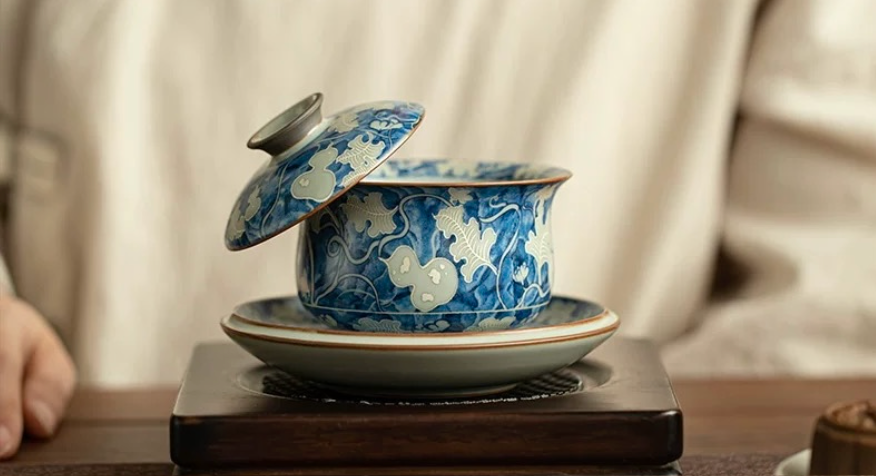
At the heart of the Sancai Gaiwan lies the philosophical concept of Sancai, or the "Three Talents"—Heaven, Earth, and Humanity. This triad is central to the ancient Chinese understanding of the universe's structure and the individual's place within it. The design of the gaiwan is an intentional physical manifestation of this cosmic order, where each of the three components—the lid, the bowl, and the saucer—carries a symbolic weight that mirrors the relationship between the celestial, the terrestrial, and the mortal.
The Symbolic Architecture of the Three Talents
The lid of the gaiwan is symbolic of Heaven (Tian). It sits atop the bowl, covering and protecting the contents, much like the sky covers the earth. In Taoist philosophy, the "Heavenly Way" is a natural law—spontaneous, just, and all-encompassing. By encapsulating the heat and the rising aroma of the tea leaves, the lid allows for the transformation of water and leaf into tea, a process that reflects the generative power of the heavens. The saucer represents the Earth (Di), providing the stable foundation upon which the bowl rests. Just as the earth supports and nurtures all life, the saucer supports the gaiwan, preventing spills and protecting the surfaces it touches from the heat of the brew.
Between these two cosmic forces sits the bowl, representing Humanity (Ren). It is within the human bowl that the interaction occurs; it is where the water meets the leaf, and where the tea master applies their skill to produce the infusion. This positioning emphasizes the role of humanity as a mediator between heaven and earth. Through the ritual of tea, the individual seeks to achieve Tian Ren He Yi, or the unity of heaven and humanity, a state of perfect harmony with the natural order.
Ethical and Aesthetic Harmony
The philosophical depth of the Sancai Gaiwan extends into the Confucian concept of sincerity (Cheng). Sincerity is viewed as the basis of both the Heavenly and Human Ways, a principle that denies duplicity and fosters virtues of being all-embracing and far-reaching. In the context of a tea ceremony, the use of an authentic Sancai Gaiwan demands a sincere engagement with the materials and the process. The vessel is "neutral," particularly when crafted from high-fired porcelain, meaning it does not hide the tea's flaws or exaggerate its virtues. This honesty is a reflection of the practitioner's own pursuit of virtue and clarity.
| Philosophical Element | Gaiwan Component | Universal Symbolism | Ethical Implication |
| Heaven (Tian) | Lid | The Sky, Cosmos, Protection | Natural Law, Justice, Spontaneity |
| Earth (Di) | Saucer | Stability, Foundation, Nurturance | Support, Grounding, Reliability |
| Humanity (Ren) | Bowl | Mediator, Creator, Participant | Sincerity, Balance, Cultivation |
This symbolic structure transforms the act of brewing into a sacred dialogue. To hold the saucer and lift the lid is to engage with the dynamics of energy flowing through the universe. For the modern connoisseur, owning a piece from the Oriental Artisan collection is not merely an acquisition of luxury; it is the claim of stewardship over a narrative that began millennia ago, a narrative etched into the very grain of the porcelain.
Historical Lineage: From Tang Burial Wares to Imperial Tea Rituals
The aesthetic identity of Sancai is inextricably linked to the Tang Dynasty (618–907 AD), an era of cosmopolitan splendor and technical innovation. While the gaiwan form we recognize today did not fully emerge until the Ming and Qing dynasties, the "three-color" (Sancai) glaze technique developed during the Tang laid the artistic foundation for centuries of Chinese ceramic art.
The Tang Dynasty and the Polychrome Revolution
Sancai literally means "three colors," though the term is often applied to pieces featuring a wider palette, including cream, amber, green, and occasionally blue or purple. Developed in the late 7th century, Tang Sancai was a type of lead-glazed earthenware fired at a relatively low temperature of approximately 800°C to 900°C. These wares were primarily intended for funerary purposes, designed to furnish the tombs of the aristocracy with lifelike figurines of horses, camels, and officials.
The vibrancy of Tang Sancai was achieved through the use of metal oxides in a lead flux. Copper resulted in green, iron in amber or yellow, and manganese in purple. The "runny" nature of lead glazes meant that colors would bleed and mingle during firing, creating a splashed, exuberant effect often referred to in the West as "egg and spinach". This fluidity prevented the use of fine details on glazed surfaces, which is why the faces of Tang figurines were often left unglazed and painted later with organic pigments.
The Evolution of the Tea Vessel
During the Tang period, tea was primarily consumed from wide-mouthed bowls known as chawan. It was not until the Ming Dynasty (1368–1644), with the transition from pressed tea cakes to loose-leaf tea, that the need for a lidded vessel arose to keep the tea warm and strain the leaves while drinking. This transition marked the birth of the gaiwan as the "universal tea set".
By the Qing Dynasty (1644–1912), Sancai had transitioned from a funerary earthenware technique to a sophisticated decorative style for functional porcelain. The imperial kilns at Jingdezhen became the epicenter of this evolution, producing high-fired, non-toxic versions of polychrome teaware that catered to the refined tastes of the emperors Kangxi, Yongzheng, and Qianlong.
| Dynasty | Primary Tea Style | Dominant Vessel | Ceramic Innovation |
| Tang | Whisked/Boiled Cake | Chawan (Tea Bowl) | Lead-glazed Sancai Earthenware |
| Song | Powdered Matcha | Tenmoku/Celadon Bowl | Monochrome glazes (Ru, Guan, Ge, Ding, Jun) |
| Ming | Loose-leaf | Early Gaiwan | Blue and White, Underglaze Red |
| Qing | Loose-leaf | Refined Sancai Gaiwan | Falangcai, Wucai, Enamel on Biscuit |
The Sancai Gaiwan thus represents a convergence of two distinct histories: the polychrome glazing tradition of the Tang and the functional evolution of the lidded bowl during the Ming and Qing. Today, brands like Oriental Artisan preserve this lineage by utilizing high-fired, lead-free glazes that maintain the vibrant aesthetic of the Tang while ensuring the purity and safety required for Gongfu tea brewing.
The Science of the Kiln: Ceramic Mastery and the Jingdezhen Legacy
The transition of Sancai from burial earthenware to premium tea ware was made possible by the technical mastery achieved at Jingdezhen, China's "Porcelain Capital". While Tang Sancai was porous and fragile, the modern Jingdezhen tea set is a triumph of material science, characterized by high-fire vitrification and exceptional purity.
High-Fire Porcelain vs. Low-Fire Earthenware
The fundamental difference between decorative Sancai and functional Sancai lies in the firing temperature and the raw materials used. Earthenware is fired at temperatures below 1140°C, resulting in a porous body that can absorb odors and flavors. For a Master Tea Sommelier, this is unacceptable, as the goal of a gaiwan is to act as a "blank slate" for the tea's character.
Authentic Sancai Gaiwans from Jingdezhen are crafted from a blend of kaolin (white clay) and petuntse (china stone) and fired at temperatures between 1300°C and 1400°C. This high-temperature process fully vitrifies the clay, turning it into a dense, non-porous, and translucent material.
| Property | Earthenware (Tang Style) | High-Fire Porcelain (Oriental Artisan Style) |
| Firing Temperature | 800°C - 1000°C | 1300°C - 1400°C |
| Porosity | 10% – 20% | < 0.5% |
| Water Absorption | High (stains easily) | Negligible (flavor neutral) |
| Translucency | Opaque | Translucent (spun from moonlight) |
| Sound | Dull thud | Crisp, bell-like ring |
The Alchemy of the Glaze
The modern Sancai glaze requires a precise application of mineral oxides that can withstand high-fire conditions. Unlike the lead glazes of antiquity, which were often toxic and unstable, modern high-quality glazes use non-toxic fluxes to achieve the same vibrant colors.
-
Copper (Green): Produces shades ranging from vibrant grass green to deep malachite.
-
Iron (Amber/Yellow): Results in warm amber, honey, or brownish-yellow tones.
-
Cobalt (Blue): Used sparingly to create deep, imperial blues that define high-end Sancai.
-
Manganese (Purple): Adds a sophisticated depth to the polychrome palette.
The interaction between these oxides and the high-density porcelain body creates a luminous quality. In Oriental Artisan’s Falangcai Sancai Gaiwans, the enamels are applied in layers, creating a three-dimensional effect that reflects light with an internal fire. This process is labor-intensive, often requiring multiple firings at different temperatures to set each color without compromising the integrity of the porcelain.
Anatomy and Ergonomics: The Precision Engineering of Fine Teaware
A gaiwan is the "teacher" of tea vessels because its simple form offers no place for technical flaws to hide. Every dimension of a premium gaiwan—from the thickness of the walls to the flare of the rim—is engineered to facilitate a perfect infusion while protecting the brewer's hands from heat.
Functional Dimensions and Heat Management
For the serious practitioner of Gongfu tea brewing, the size of the gaiwan is the most important factor. The "Goldilocks" zone for personal brewing is 100ml to 120ml.
-
Too Small (<80ml): The water cools too rapidly, and the small size makes it difficult to grip without touching the hot body of the bowl.
-
Too Large (>150ml): The vessel becomes heavy and unwieldy, requiring a large amount of leaf to fill properly and increasing the risk of over-steeping.
The wall thickness of the porcelain also dictates its thermal profile. Thin-walled porcelain (1.5mm to 2.5mm) is preferred for delicate green and white teas, as it dissipates heat quickly, preventing the leaves from being "cooked". Thicker-walled porcelain or stoneware gaiwans are better suited for oolongs and puerhs, which benefit from sustained high temperatures.
The Flared Rim and the "Cool Zone"
The most common mistake beginners make is buying a gaiwan with a straight or minimally flared rim. When brewing with boiling water, the body of the bowl will inevitably become too hot to touch. A high-quality "Authentic Sancai Gaiwan" features a wide, pronounced flare at the lip. Because this rim is further from the water and has more surface area exposed to the air, it stays significantly cooler than the rest of the vessel, providing a safe "grip zone" for the fingers.
The Finial: The Lid’s Control Knob
The knob on top of the lid, known as the finial, must be designed with both ergonomics and thermal safety in mind. A taller or hollow finial will remain cool even when the gaiwan is full of boiling water, allowing the index finger to press down firmly and secure the lid during the pour. A flat or squat finial, while aesthetically pleasing to some, is a "finger burner" that compromises the functionality of the set.
The Master’s Methodology: Mastering the Art of Gongfu Tea Brewing
Using a Sancai Gaiwan is an exercise in tactile precision. To brew without burning one's fingers is not a matter of heat tolerance, but of technique.
Step-by-Step Instructions for the Perfect Pour
-
The Pre-heat: Pour hot water into the empty gaiwan to warm the porcelain. This "awakens" the vessel and ensures that the brewing water temperature remains stable during the infusion.
-
The Leaf Load: Add the appropriate amount of tea (typically 5-7g for a 100ml gaiwan). Inhale the aroma of the dry leaves against the warm porcelain—a crucial step for evaluating quality.
-
The Water Fill: Fill the gaiwan only to 70% or 80% capacity. The water level should reach just below the point where the rim begins to flare. Overfilling is the primary cause of burnt fingers, as hot water will migrate to the rim when the lid is placed.
-
The Gap Alignment: Slide the lid slightly to one side to create a small crescent-shaped opening. This gap must be wide enough to allow for a smooth flow but narrow enough to catch all the leaves.
-
The Three-Finger Grip: Place your thumb and middle finger on opposite sides of the flared rim. Place your index finger firmly on the cool finial of the lid.
-
The Decisive Tilt: Lift the gaiwan and tilt it toward the fairness pitcher (Gongdao Bei) in one smooth, confident motion. A slow or hesitant tilt causes the tea to dribble down the side of the bowl and onto your fingers.
Pairing Teas with the Sancai Gaiwan
While the gaiwan is versatile, it truly shines with aromatic oolongs like Phoenix Dancong. Because Dancong can become bitter if steeped even a few seconds too long, the gaiwan’s instant pour allows for the "flash brewing" necessary to extract the floral fragrance without the harsh tannins.
| Tea Variety | Water Temp (°C) | Leaf Ratio (per 100ml) | Infusion Time |
| Green Tea | 75°C - 85°C | 3g – 4g | 20s – 30s |
| White Tea | 85°C - 90°C | 4g – 5g | 30s – 45s |
| Dancong Oolong | 95°C - 100°C | 7g – 9g | 5s – 10s (Flash) |
| Wuyi Rock Tea | 95°C - 100°C | 8g – 10g | 10s – 20s |
| Aged Puerh | 100°C | 7g – 8g | 15s – 30s |
The gaiwan allows for a "more intimate relationship with tea," as the open mouth permits the brewer to watch the leaves unfurl and smell the wet leaves directly after each rinse.
The Connoisseur’s Eye: Identifying Authentic Sancai Artistry
In an era of mass production, the ability to identify high-quality hand-painted Sancai is essential for any collector. Oriental Artisan focuses on pieces that maintain the integrity of traditional methods, which can be distinguished from factory imitations through several key markers.
Hand-Painted vs. Decal Imitations
Most "budget" gaiwans found on major marketplaces use decals—essentially heat-transferred stickers. These pieces are perfectly uniform, which is a sign of industrial manufacture rather than art.
-
The Brushwork: On a hand-painted "Jingdezhen tea set," look for the "spirit of the brush." This includes slight variations in line thickness, the texture of the pigments, and visible starting and ending points for strokes.
-
The Depth of Color: Authentic Sancai or Falangcai glazes have a "layered" look. High-quality enamels like those from Oriental Artisan are applied in a way that creates a three-dimensional depth, where colors seem to float above the porcelain surface.
-
The Imperfection: Small, organic variations in shape or pattern are not flaws; they are the fingerprints of the artisan. Mass-produced items lack the "soul" found in pieces where the past is preserved through human labor.
Evaluating the Porcelain Quality
-
Transparency: Hold the bowl up to a light source. High-quality Jingdezhen porcelain should be translucent, allowing the light to pass through the thin walls with a soft, ethereal glow.
-
Acoustics: Gently tap the lid against the bowl. Authentic high-fired porcelain will produce a clear, sustained, bell-like ring. A dull "clunk" indicates lower firing temperatures, a high concentration of impurities, or internal fractures.
-
The Foot Ring: Examine the unglazed circle at the bottom of the bowl and saucer. It should be smooth to the touch, indicating finely purified kaolin, and free of the rough, sandy texture found in low-grade ceramics.
Stewardship and Longevity: Caring for Your Heirloom Pieces
A Sancai Gaiwan is a relic of the future—an object designed to outlive its owner. Proper care ensures that the glaze remains vibrant and the porcelain remains untainted for generations.
The Ethics of Cleaning
-
No Soap: Porcelain is non-porous, but micro-fissures in the glaze (especially in "Ru Ware" style crackle glazes) can trap the perfumes found in modern dish soaps. These scents will contaminate future tea sessions. Always clean your gaiwan with fresh, hot water immediately after use.
-
Stain Removal: If your white porcelain gaiwan develops tea stains, use a paste of baking soda and warm water. Scrub gently with a soft cloth or your fingers. For extremely tough stains, a solution of citric acid and baking soda can be used to "fizz" away the residue without damaging the finish.
-
Thermal Shock Prevention: Never subject your gaiwan to extreme temperature shifts. Do not take a cold gaiwan from a winter cupboard and immediately pour boiling water into it; instead, rinse it with warm water first to "wake up" the material.
Storage and Display
Store your gaiwan in an airy place away from kitchen odors or dust. If stacking multiple gaiwans, place a small piece of soft cloth or felt between them to prevent the foot rings from scratching the interior glazes of the pieces below. For the discerning collector, a display cabinet that allows for both protection and visibility transforms the teaware into a permanent part of the home’s aesthetic narrative.
The Oriental Artisan Collection: Where the Past is Elevated
Oriental Artisan is not merely a brand; it is a sanctuary for those who seek to own the extraordinary. Our curated collection of Sancai Gaiwans represents a bridge between the celestial artistry of ancient China and the refined needs of the modern connoisseur.
Featured Masterpieces
-
"Splendid Intertwining Lotus" Falangcai Gaiwan: This piece utilizes the imperial Falangcai technique, where colorful motifs are hand-painted onto a white porcelain body. The lotus represents purity and the "continuation of life," making it a perfect gift for special occasions.
-
Turquoise Green Enamel "Intertwining Lotus" Floating Gaiwan: A stunning example of modern "Floating" design, where the saucer is sculpted to provide an incredibly deep and stable seat for the bowl, reducing the risk of slippage during professional tea service.
-
Dragon Fish & Yuanbao Design Sancai Teacup: For those who appreciate the smaller details, our hand-painted teacups feature auspicious symbols of prosperity and perseverance, designed to complement the larger gaiwan sets.
Every piece in our collection is forged from the philosophies of Wabi-Sabi and the imperial grandeur of Chinese craftsmanship. When you acquire a gaiwan from Oriental Artisan, you are claiming stewardship of a narrative that began millennia ago, one that will endure long after we are dust.
Conclusion: Claiming Your Seat at the Tea Table
The Sancai Gaiwan is more than a vessel; it is a discipline. It requires the brewer to be present, to be precise, and to be sincere. From its origins in the Tang Dynasty as a low-fired funerary object to its current status as the most versatile tool in the tea sommelier’s arsenal, the gaiwan has remained the "heart of Chinese tea culture".
By understanding the "Three Talents" philosophy, the technical nuances of Jingdezhen porcelain, and the expert techniques for burn-free brewing, you elevate your tea practice from simple consumption to an act of cultural preservation. We invite you to browse Oriental Artisan’s curated collection and find the piece that resonates with your own journey toward harmony and mastery. This is not commerce; this is consecration.
Discover your next heirloom today. Experience the perfect pour. Experience Oriental Artisan.

Leave a comment
This site is protected by hCaptcha and the hCaptcha Privacy Policy and Terms of Service apply.