



The Whispering Breeze and the Sacred Brew: A Cultural History of the Folding Fan and the Ritual of the Orient
The Whispering Breeze: An Evocative Prelude to Scholarly Refinement
In the silent corridors of Eastern history, few objects possess the dual nature of the handheld fan—a tool of practical utility that simultaneously serves as a profound symbol of status, mystery, and scholarly refinement. To hold a traditional Chinese folding fan is to grasp a piece of history that has traveled through the hands of emperors, poets, and master craftsmen for over three millennia. It is not merely a cooling device; it is a "whispering breeze" that carries the weight of a civilization’s aesthetic aspirations. At Oriental Artisan, we view these objects through the lens of Cultural Commerce—the belief that luxury is not defined by transient trends but by the soul etched into every thread, stroke, and grain of a masterwork.
The folding fan, as it exists today, is a testament to the refinement of the Ming and Qing dynasties, eras where the literati—the scholar-officials of the Chinese empire—elevated the fan from a common tool to an essential lifestyle accessory. The fan was an intimate companion, tucked into a sleeve or held with a deliberate grace that communicated one’s place in the social hierarchy. It was a carrier for the "three great arts": poetry, painting, and calligraphy, allowing a scholar to carry a landscape or a verse wherever he traveled. This tradition of "scholarly elegance" is the foundation upon which Oriental Artisan builds its collection, sourcing pieces that embody the "Art of Forever."
As we explore the anatomy and the secret language of these fans, we begin to see a narrative that extends beyond the object itself. The fan belongs to the world of the Yaji—the elegant gathering—where the scent of burning incense, the melody of the Guqin zither, and the precision of a perfect cup of tea create a complete sensory experience. This journey from the external cooling of the body to the internal warming of the soul is a natural transition for the connoisseur of refinement. Just as a fine fan captures the essence of the wind, the Gaiwan—our "Imperial vessel"—captures the essence of the leaf, creating a bridge between the physical and the spiritual that defines the Oriental Artisan ethos.
The Chronology of Grace: A Detailed History of the Traditional Chinese Fan
The evolution of the fan in Chinese history is a mirror to the evolution of the society itself, moving from a rigid symbol of imperial authority to a democratic tool of the people, and finally to a refined object of artistic obsession for the elite. Understanding this chronology is essential for the modern collector, as each era contributed specific aesthetic and structural elements to the contemporary folding fan.
The Foundations of Power: Shang through Tang Dynasties
The earliest fans, appearing as far back as the Shang Dynasty, were known as Shanhan. These were not handheld; they were large screens attached to horse-drawn carriages to shield the royal occupants from the sun and rain. This origin as a protective barrier immediately established the fan as a symbol of high status and power. Over time, these evolved into the Zhangshan, or long-handled fans, which were carried by the emperor's honor guard during processions. These early iterations were often crafted from the feathers of large birds, such as cranes, peacocks, and eagles, symbolizing wisdom and divine authority.
By the Han Dynasty, the "feather fan" remained a luxury item for the aristocracy, but a shift toward democratization began with the invention of more affordable materials. The emergence of fans woven from bamboo strips or cattail leaves allowed the common people to access the practical benefits of the breeze. It was also during the Han period that the silk round fan (Tuanshan) gained prominence, particularly among the women of the imperial palace. These round fans, symbolizing unity and the full moon, became a mainstay of Chinese culture for the next millennium, providing a smooth white surface ideally suited for the burgeoning arts of painting and calligraphy.
The Folding Revolution: Song and Ming Refinement
While the rigid fan dominated the Tang and Song dynasties, the introduction of the folding fan revolutionized the medium. Most scholars believe the folding mechanism was either a native invention inspired by the folding wings of a bat or an import from Japan via Korea during the Northern Song Dynasty. Regardless of its origin, it was during the Ming Dynasty that the folding fan achieved its status as the "necessary accessory to an elegant life."
The Ming Dynasty witnessed the rise of the "Scholar-Fan" tradition. The literati, who valued portability and discretion, found the folding fan to be the perfect canvas for their personal expressions. It was a time of intense artistic exchange; scholars would gather in the Jiangnan region to write poems or paint landscapes on one another’s fans as tokens of friendship and respect. The folding fan's ability to be tucked into a sleeve and then unfurled with a snap became a hallmark of the refined gentleman's social performance.
The Zenith of the Qing and the Republican Era
The art of the fan reached its peak during the Qing Dynasty. Manufacturing became highly specialized, with the city of Hangzhou emerging as the global center for premium fan-making. Famous shops like Wang Xing Ji developed legendary products like the "black paper fan," which underwent an 86-step construction process involving seven layers of fine silk paper and nine layers of lacquer-like paint to make it resistant to the elements.
In the subsequent Republican China era, the fan transitioned from an everyday tool to a prized collector's item. Collectors today search for "complete sets" from this era, where the ingeniously carved bamboo ribs remain paired with their original hand-painted panels—items often referred to as "hot cakes" in the high-end auction market.
Craftsmanship and Anatomy: The Oriental Artisan Standard
At Oriental Artisan, we reject the transient allure of mass production. A true fan is a "monument to permanence," a bridge between the celestial artistry of the past and the modern connoisseur's home. The anatomy of a folding fan is a complex interplay of physics and aesthetics, requiring a mastery of varied materials that must move in perfect harmony.
The Ribs and Guards: The Skeletal Soul
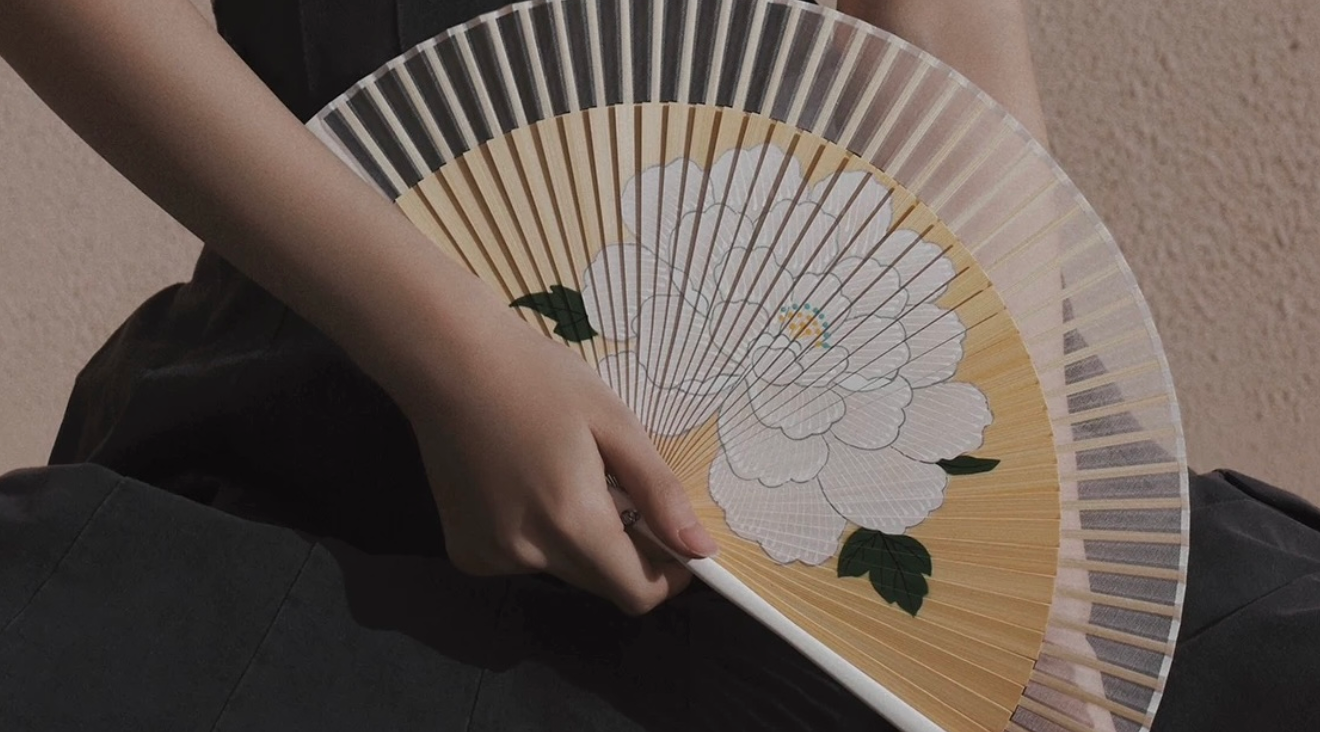
The structural frame of the fan consists of the "ribs" (the internal sticks) and the "guards" (the two thicker outer sticks that protect the fan when closed). For an Oriental Artisan piece, these are never merely wood; they are canvases for the "last of their kind" craftsmen to display techniques like shallow-carving, relief-carving, and "green-bark-leaving."
-
Sandalwood (Tanxiang): This is the apex of fan materials. Sandalwood is prized not only for its strength but for its "overflowing fragrance" when opened. The wood itself contains essential oils that release a sweet, gentle odor, making every use a ritual of aromatherapy. Collectors seek "real sandalwood" for its openwork carving, often depicting scenes like Queen Yang Guifei or intricate floral patterns.
-
Fine Bamboo: The most traditional material, bamboo is selected for its flexibility and lightness. In the hands of a master, bamboo is polished until it feels as smooth as silk, often receiving a "reddish hue" after years of use and handling.
-
Precious Inlays: To elevate a fan to a "relic of the future," guards may be inlaid with mother-of-pearl, tortoiseshell, or even silver filigree. Some fans feature "bo luo lacquer," a mixture of raw lacquer with turquoise, cinnabar, and coral, creating a "tiger fur" or "rhino skin" texture that is virtually indestructible.
The Panel: A Canvas of Silk and Gold
The panel, or "face," of the fan is where the story is told. Whether made of paper, silk, or cotton linen, the panel must be robust enough to withstand the stress of folding while being delicate enough to remain ethereal.
-
Silk Panels: Oriental Artisan silk fans utilize the "Su Embroidery" tradition, featuring techniques like "Gold Couching" (parallel gold threads fixed to the fabric) and "Seed Stitches" (dots that create a relief-style pattern). Silk provides a "fluid, soft sheen" and a quiet motion that is the hallmark of refinement.
-
"Mud Gold" and Hand-Painted Paper: High-end paper fans often feature "mud gold" panels—paper coated with a mixture of gold powder and glue, providing an opulent backdrop for ink-wash paintings of mountains and rivers.
The Tassel and the Pouch: Essential Accoutrements
A masterpiece is incomplete without its protection and its ornament. Oriental Artisan fans are often matched with jade pendants or knot tassels, adding weight and balance to the fan’s swing. To preserve the "Art of Forever," we provide exquisite silk fan pouches, embellished with embroidered symbols of longevity (cranes and deer) or prosperity (peonies and goldfish).
The Language of the Fan: Social Etiquette and the Theatre of Life
In the high societies of the East and West, the fan served as a "tool for secret communication," a way to convey messages that social etiquette forbade one from speaking aloud. This "fanology" or "language of the fan" allowed for a sophisticated non-verbal dialogue that added a layer of mystery and flirtation to every social encounter.
The Silent Lexicon of the Socialite
While different cultures and time periods developed their own variations, certain gestures became almost universal among the elite who frequented salons, theaters, and elegant gatherings.
Fans in Traditional Performance: Kunqu and Peking Opera
Beyond the social salon, the fan is a central prop in the "Theatre of the Capital"—Peking Opera—and the ancient Kunqu opera. Here, fan skills (Shenfai) are body techniques used to express feelings and situations that the bare stage cannot convey.
In the hands of a Xiao Sheng (young scholar) or a Hua Dan (vivacious female role), the fan becomes an extension of the soul. An actor might use the fan to represent a flowing river, a galloping horse, or even a falling cherry blossom. The Snap and Snap-back of the fan are timed precisely to the percussion of the orchestra, highlighting the character's hesitation, joy, or sudden anger. This level of "mastery in every detail" is what Oriental Artisan seeks to bring into the modern home—objects that are not just beautiful, but are "vessels of performance."
The "Scholarly Lifestyle" Bridge: The Concept of Yaji
To understand why a collector of fine fans would naturally gravitate toward the world of tea, one must understand the Yaji, or "Elegant Gathering." Historically, the Yaji was the ultimate expression of the Chinese literati life—a gathering of like-minded intellectuals who met in gardens or mountain retreats to "refine their taste and increase their knowledge."
The Sensory Symphony of the Elegant Gathering
A Yaji was a multimedia experience where the participants would engage in several refined activities simultaneously:
-
The Appreciation of Art: Scholars would unroll scrolls of calligraphy and painting, using their fans to gently point out specific brushstrokes or to fan themselves as they contemplated the work.
-
The Burning of Incense: Using "hexiang" (blended incense) made from sandalwood and agilawood, the scholars created a "romantic" and "subtle spiritual world."
-
The Sound of the Qin: The fretless zither (qin) provided a soundtrack of "hidden energy" and "tranquility," evoking the sound of flowing rivers and mountain breezes.
-
The Ritual of Tea: Tea was the "harmony" that tied the gathering together. The act of "listening to the aroma" (monko) and "tasting the liquor" was a form of moving meditation.
In this environment, the fan was never just an accessory; it was an integral part of a "complete sensory experience." It was used to manage the heat, to appreciate the scent of the incense, and to signal one’s readiness for another cup of tea. The transition from "cooling the body" with a fan to "warming the soul" with tea is the essence of the Yaji—a pursuit of harmony between human and nature.
The Fan and the Tea Ritual: A Shared Philosophy
The fan and the tea set are "two sides of the same coin"—tools for mindfulness. Both require a deliberate, slowed-down approach to life. Using a fan requires a rhythmic, manual effort that connects the user to the air around them; brewing tea requires a similar focus on temperature, time, and the "dialogue with the leaf." For the client of Oriental Artisan, owning these objects is not just about possession; it is about "stewardship of a narrative" that values the "patina of time" and the "imperceptible asymmetry" of true craftsmanship.
From Cooling the Body to Warming the Soul: The Transition to the Gaiwan
As the humid afternoon of a Yaji settles into the cool of evening, the scholar’s fan is folded and laid aside, and the focus shifts to the tea tray. This is where the Gaiwan takes center stage. For those who appreciate the precision of a sandalwood fan, the Gaiwan offers a similar level of "mastery in every detail."
The "Imperial Vessel": Why the Gaiwan is the Teacher of Tea
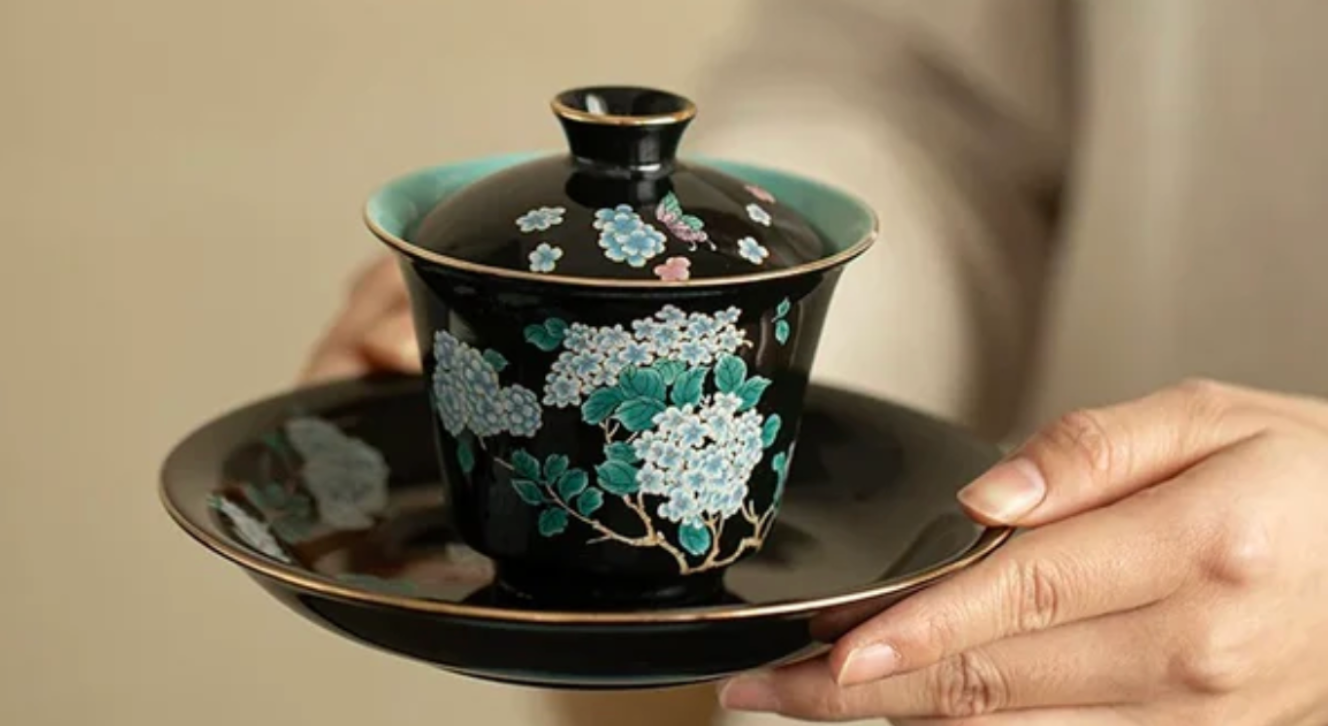
The Gaiwan, or "lidded bowl," is the heart of Gongfu Cha (the meticulous tea brewing ritual). It is favored by serious tea drinkers over the teapot for several technical and aesthetic reasons:
-
Total Control: Unlike a teapot, which pours slowly through a spout, a Gaiwan pours instantly from the rim. This allows for "flash-brewing," giving the practitioner total control over the extraction time, which is critical for delicate green teas or complex oolongs.
-
Aroma Access: The wide mouth and removable lid of the Gaiwan allow the user to "listen to the aroma" directly from the damp leaves—a crucial step in evaluating tea quality that is impossible with a closed teapot.
-
Direct Appreciation of the Leaf: With a Gaiwan, you witness the transformation of the tea leaves firsthand. You can watch them unfurl and appreciate the evolving color of the liquor.
The Sancai Philosophy: Harmony in Three Parts
The structural composition of the Gaiwan is deeply rooted in Daoist philosophy, matching the symbolic nature of the fan. It is often referred to as the Sancai (Three Powers) bowl, representing the sum of the three talents.
-
The Lid (Tian): Symbolizes Heaven. It covers and protects, trapping the fragrance and heat.
-
The Bowl (Ren): Symbolizes Man. It is the center of coordination where the tea, water, and human interaction meet to find balance.
-
The Saucer (Di): Symbolizes Earth. It provides the foundation, support, and heat insulation.
When you hold a Gaiwan, you are holding a "small harmony of heaven, human, and earth"—a quiet reflection of the same cosmic balance that the fan brings to the air.
The Conversion Engine: Discover the Oriental Artisan Gaiwan Collection
Oriental Artisan curates not just objects, but "relics of the future" that are "crafted for the rarefied." Our Gaiwan collection is a testament to the "Imperial grandeur" of Chinese porcelain, reimagined for the modern connoisseur.
The Mutton-Fat Jade Porcelain: Ethereal Translucence
One of our most prized materials is the "Mutton Fat Jade" porcelain from Dehua. This strikingly white, unglazed porcelain has an ethereal, radiant translucence reminiscent of snow or beeswax. Because it is highly vitrified, it does not absorb flavors, making it the perfect "teacher" vessel for tasting various high-quality teas without flavor transfer. It eventually develops a "soft ivory patina," mirroring the way a bamboo fan ages with its owner.
The Hand-Painted Masters: Jingdezhen and Benjarong
For those who seek "vibrant opulence," Oriental Artisan offers hand-painted pieces that are singular works of art.
-
Jingdezhen Porcelain: Our Jingdezhen Gaiwans are renowned for their "exquisite hand-painted designs and delicate thinness." These might feature motifs like the "Emerald Peacock"—a symbol of beauty, nobility, and immortality—or the "Ten Thousand Buddhas" grottoes, where every stroke is a "precise declaration of skill."
-
Benjarong Technique: Sourced through master collaborations, these Gaiwans utilize a Thai-Chinese fusion technique where layer after layer of enamel is hand-painted and fired, creating patterns as unique as the tea within.
Conclusion: Become a Custodian of the Extraordinary
The journey from the "Whispering Breeze" of the folding fan to the "Refined Ritual" of the Gaiwan is a path toward self-cultivation and accomplishment. At Oriental Artisan, we don't just sell products; we curate a legacy. Every piece in our collection—from the click of a bamboo fan to the smooth, clean pour of an Imperial Gaiwan—is designed to transform a daily moment into a sacrament.
True luxury is the "patina of time"—the faint scent of aged cedar, the crackle in a glaze that took a decade to perfect, and the weight of history in your hand. Our clients are not merely consumers; they are custodians of a narrative that began millennia ago and will endure long after we are gone.

Leave a comment
This site is protected by hCaptcha and the hCaptcha Privacy Policy and Terms of Service apply.