

The Art of Wheel Throwing: How Master Potters Transform Clay into Timeless Ceramics
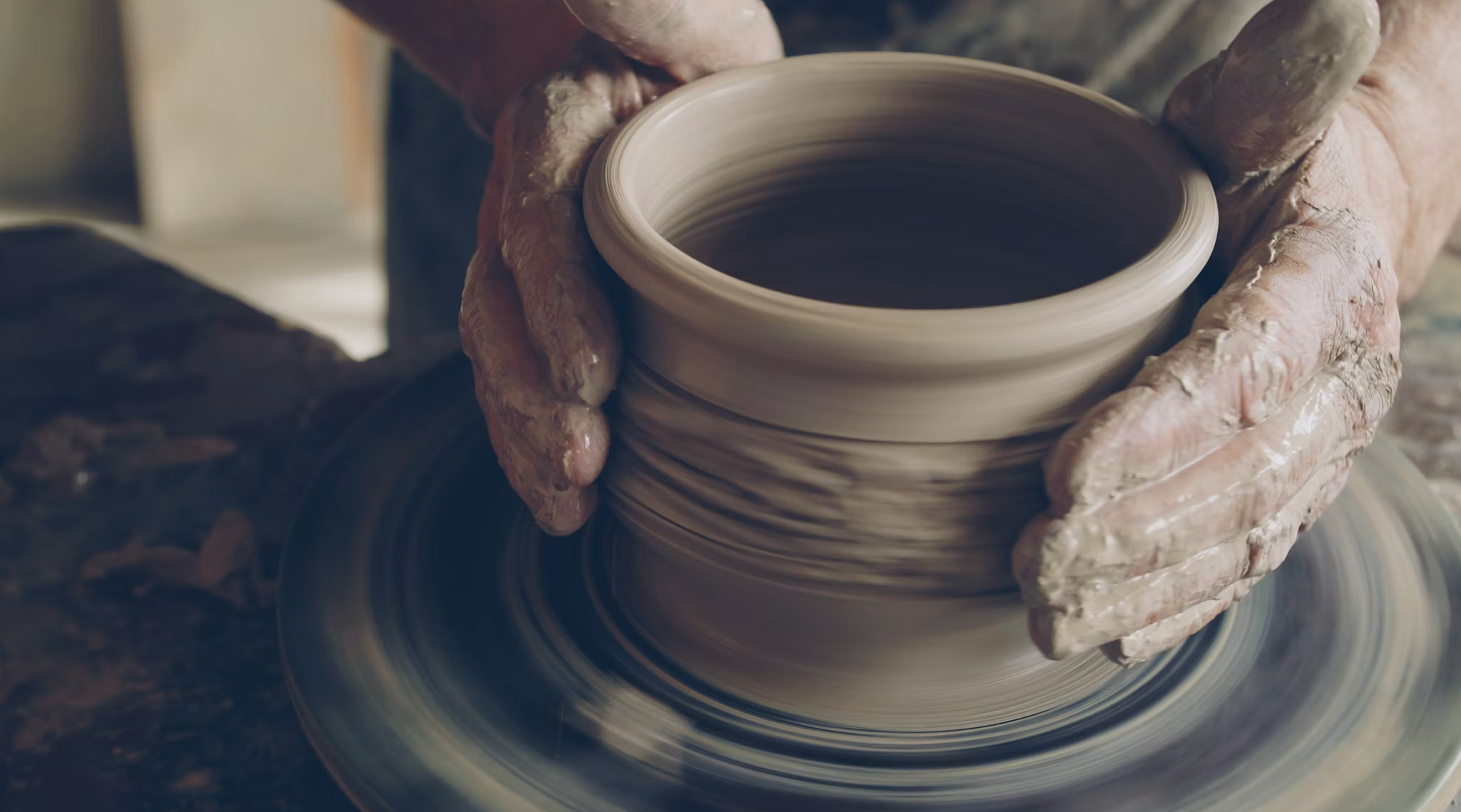
A lump of clay spins silently on a potter’s wheel.
Steady hands gently center the clay, forming a perfect cone. Then, with almost imperceptible pressure, the hands guide the spinning earth outward and upward. The vessel grows, alive in the moment, until it becomes an elegant form. The quiet hum of the wheel is punctuated only by the soft whisper of water and clay. It is a rhythm as old as civilization itself.
How can a simple spinning wheel transform raw earth into timeless works of art?
The answer lies not just in the mechanics of the wheel, but in the dialogue between the maker and the material. This is the art of wheel throwing—a craft that has shaped human culture for millennia and remains the gold standard for authentic ceramic craftsmanship.
What Is Wheel Throwing?
What is wheel throwing?
Wheel throwing is the process of forming clay into symmetrical vessels on a rotating potter’s wheel. Using centrifugal force, the potter manipulates the spinning clay by hand to create various forms—from functional tableware to sculptural art. This technique stands in contrast to hand-building or slip-casting, producing pieces with unique structural integrity and a distinctive aesthetic.
The origins of the pottery wheel are believed to date back to around 3500 BCE in Mesopotamia. While potters still use tools, the essence of the craft remains a raw, physical interaction between human hands and the earth. Today, despite the prevalence of industrial manufacturing, handmade pottery endures as the hallmark of the discerning maker.
The History of Wheel Throwing
The history of wheel throwing is a global narrative of innovation. The earliest wheels were slow-turning devices, likely operated by an assistant, allowing the potter to coil and smooth clay. The invention of the fast wheel (or kick wheel) in East Asia revolutionized production.
In China, the evolution of the potter's wheel was integral to the development of Chinese ceramics. By the time of the Tang Dynasty, the wheel had allowed for the refinement of delicate porcelains. However, it was in Jingdezhen, known as the "Porcelain Capital," that wheel throwing reached an apex. For over a thousand years, Jingdezhen potters have mastered the wheel to create translucent wheel-thrown porcelain.
The potter’s wheel was essential for fine ceramics because it allowed for unparalleled control of shape and wall thickness—qualities that define the elegance of traditional pottery.
The Complete Wheel Throwing Process
Creating a piece of artisan pottery involves a lengthy process that requires patience, a deep understanding of materials, and a steady hand. Here is the step-by-step journey.
1. Preparing the Clay (Wedging)
Before clay meets the wheel, it must be de-aired and homogenized. The potter cuts and slams the clay on a table in a process called "wedging." This aligns the clay particles and removes air bubbles. If the clay is too soft or too hard, it will collapse or resist centering. It is the potter’s first conversation with the earth.
2. Centering the Clay
Centering is arguably the most critical and difficult step. The clay is thrown onto the spinning wheel and pressed down. Using body weight and steady hands, the potter brings the clay into a perfect, motionless center. This is the foundation of the entire piece. If the clay is off-center by a fraction of a millimeter, the finished vessel will be asymmetrical or structurally weak.
3. Opening the Form
Once centered, the potter presses a thumb into the middle of the spinning clay to create a hole, revealing the bottom of the vessel. The depth and width of this hole dictate the thickness of the base. This moment of "opening" is where the form begins to reveal itself.
4. Pulling the Walls
This is the dance of the craft. The potter places hands inside and outside the cylinder, gently compressing and lifting the clay. This "pulling" motion uses the wheel's centrifugal force to stretch the clay upward and outward. It requires incredible sensitivity; too much pressure, and the walls collapse; too little, and the piece remains thick and heavy.
5. Shaping the Vessel
Once the walls are raised to the desired height, the potter shapes the vessel. This could be a curve for a bowl, a sharp line for a teapot, or the gentle swelling of a vase. The potter uses a combination of ribs, sponges, and fingertips to refine the curve, creating the profile.
6. Trimming
After the piece has dried to a "leather-hard" stage (usually a day or two), it is returned to the wheel. Here, the potter trims the foot of the vessel, removing excess clay and carving a subtle ring. This "foot" elevates the piece and ensures it sits perfectly level. It is often an indicator of the potter's skill and attention to detail.
7. Drying and Bisque Firing
The leather-hard piece is left to dry completely to a "bone-dry" state. It is then loaded into a kiln for the bisque firing. This first firing hardens the clay, turning it into a porous, ceramic state.
8. Glazing
With the biscuit-fired pot, the artisan applies a glaze—a liquid suspension of minerals, oxides, and glass formers. This can be painted on, dipped in, or poured over. This step determines the surface quality: glossy or matte, translucent or opaque.
9. Final Firing
The glazed pot is fired again at a higher temperature. During this firing, the glaze melts and fuses to the clay body, creating the final glassy layer. This is the moment when the artist’s vision becomes reality.
Why Wheel Throwing Is So Difficult
Why is wheel throwing difficult?
Wheel throwing is physically and mentally demanding. It requires developing "muscle memory" to control the clay while accounting for its constantly changing moisture and elasticity. Success depends on precise timing, pressure, and speed. Mastery requires years of practice to avoid common pitfalls like collapsing walls or wobbly shapes.
-
Muscle Memory: The hands must act before the brain can think.
-
Precision: A millimeter too much or too little pressure alters the shape.
-
Water Control: Too much water makes clay sloppy; too little makes it drag.
-
Coordination: The speed of the wheel must be constantly adjusted.
Why Every Wheel-Thrown Piece Is Unique
In an age of mass production, imperfection is the new luxury. Because each piece is made by hand, no two wheel-thrown ceramics are exactly alike.
-
Human Touch: The subtle fluctuations in pressure or angle leave unique marks.
-
Natural Variation: Clay is a natural material; inclusions or slight variations in moisture create subtle differences.
-
Artisan Expression: The potter's "handwriting" is visible in the lines and curves.
This uniqueness is the heart of handcrafted ceramics. Industrial ceramics, made in molds, are identical and sterile. A wheel-thrown piece carries the energy of its creator. It is a narrative of the struggle to center, the grace of the pull, and the final decision to stop.
Wheel Throwing vs Molded Ceramics
To understand the value of artisan ceramics, we must compare them to industrial counterparts.
| Feature | Wheel-Thrown (Handmade Pottery) | Molded (Industrial Ceramics) |
|---|---|---|
| Production | Slow, deliberate, one at a time | Fast, automated, hundreds per minute |
| Craftsmanship | High skill, requiring years of mastery | Low skill, reliant on machinery |
| Artistic Value | High; considered a work of art | Low; considered a commodity |
| Collectibility | Highly collectible; unique signatures | Rarely collectible; generic brands |
| Individuality | Completely unique; no two are alike | Identical; repeatable pattern |
| Luxury Appeal | Seen as heirloom quality and luxury | Seen as basic utility |
Why Collectors Love Wheel-Thrown Ceramics
Collectors are often drawn to the narrative of the object. They appreciate the studio pottery movement and the ethos of the "honest" object.
-
Authenticity: It is a genuine expression of human artistry.
-
Emotional Connection: Holding a piece, one feels the maker's presence.
-
Heritage: It connects us to a tradition that is millennia old.
-
Functional Beauty: It elevates the mundane (drinking tea, eating food) into a ritual.
Wheel Throwing and Chinese Tea Culture
The connection between wheel throwing and tea is intrinsic. In China, the appreciation of tea is deeply tied to the appreciation of the vessel.
Why do tea enthusiasts prefer wheel-thrown tea ware?
Tea enthusiasts prefer wheel-thrown tea ware because the thin, balanced walls allow for a better heat distribution and a more delicate lip-feel. The weight of a tea cup in the hand—or a teapot's balance—enhances the "Cha Qi" (tea energy). Handcrafted vessels also absorb and retain the tea's flavor over time, developing a rich patina unique to the piece.
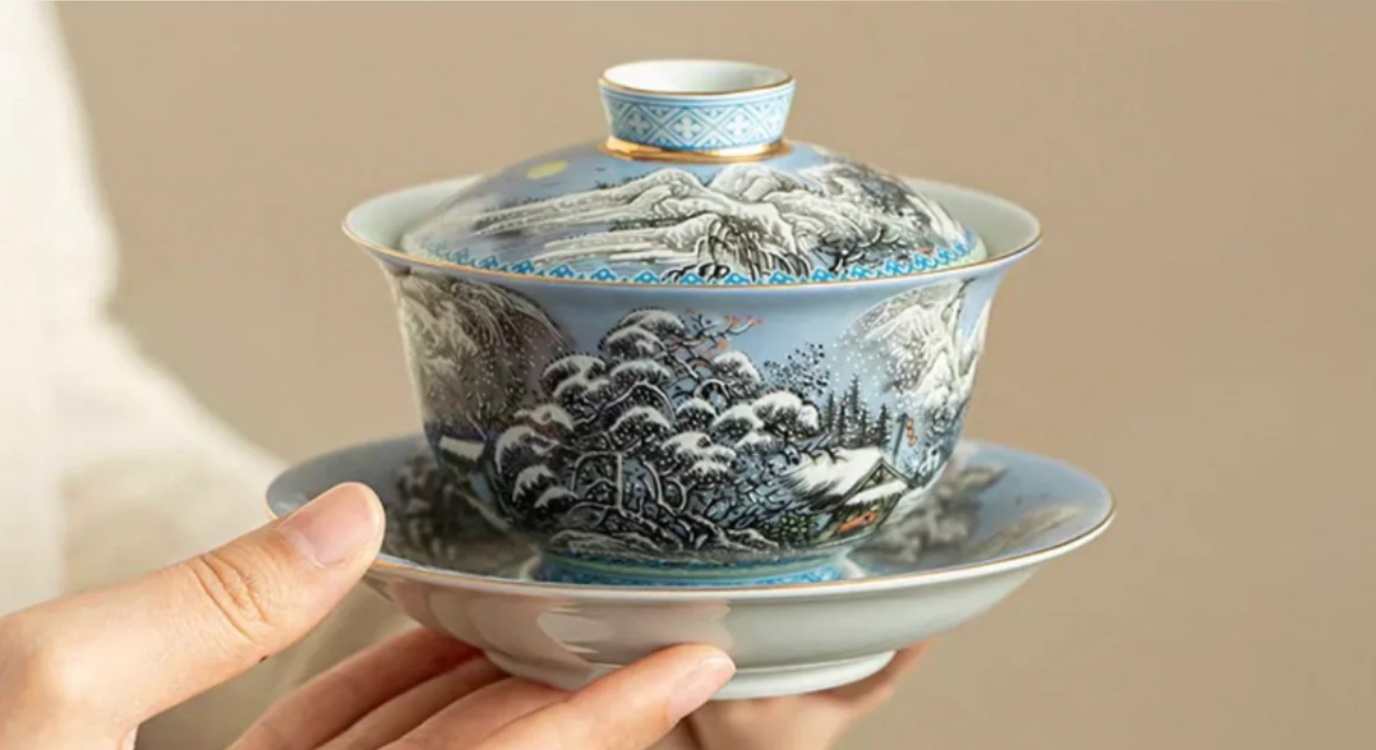
For the preparation of Gaiwans and tea cups, wheel throwing allows for the thin, delicate rims essential for a pleasant mouthfeel. Artisans can create perfect curves and precise wall thicknesses that enhance the tea-tasting experience.
The Philosophy Behind Wheel Throwing
Wheel throwing is a meditation. It requires the potter to be fully present. The clay is an unforgiving master. If the potter is frustrated, the clay will collapse. If the potter is distracted, the walls will become uneven.
This philosophy aligns with the Japanese concept of Wabi-sabi—the beauty of imperfection, of transience, and of the natural. The subtle fingerprints, the slight wobble in a rim, or the uneven glaze are not defects; they are evidence of the human hand and the fire of the kiln.
How to Identify Authentic Wheel-Thrown Ceramics
For the discerning buyer, knowing how to spot quality is essential.
-
Throwing Rings: Look for subtle, horizontal lines on the inside or outside of the piece. This is the "fingerprint" of the pottery wheel. Industrial pieces are usually smooth and "perfect."
-
Weight: A well-thrown piece should be light and balanced. It should feel comfortable in the hand.
-
The Foot: The trimmed base should show signs of hand-finishing. It shouldn't be too heavy or "clunky."
-
Variations: Look for slight asymmetries or glaze pooling. These are signs of an organic, handmade object.
Why Oriental Artisan Celebrates Wheel Throwing
At Oriental Artisan, we believe that the vessel matters. The difference between a mass-produced mug and a handcrafted piece of artisan pottery is the difference between drinking coffee and experiencing a ritual.
We curate a collection of handcrafted ceramics created by skilled artisans who have dedicated their lives to the mastery of the wheel. We support traditional pottery techniques that have been passed down through generations, ensuring that the cultural heritage of Jingdezhen ceramics and other traditions continues to thrive.
When you choose a wheel-thrown porcelain tea cup or a handcrafted vase from Oriental Artisan, you are not just buying an object. You are investing in ceramic craftsmanship, celebrating the patience of the maker, and connecting to a history that spans civilizations. We are a bridge between the ancient art of the potter and the modern luxury of the discerning collector.
Frequently Asked Questions
What is wheel throwing?
Wheel throwing is the process of forming clay on a rotating potter's wheel, using centrifugal force to create symmetrical forms like bowls, vases, and tea cups through the potter's hand manipulation.
Why is wheel-thrown pottery expensive?
The cost reflects the years of skill required, the time-consuming nature of the process, the high risk of loss during firing, and the unique, collectible nature of the finished piece [citation:1].
How long does it take to learn wheel throwing?
Mastery is a lifetime pursuit. While a beginner can make a simple cup in a few sessions, it takes years of practice to achieve the precision and consistency of a professional artisan.
Is wheel-thrown pottery stronger?
Yes. The throwing process compresses the clay particles, aligning them and increasing density. This makes wheel-thrown pots stronger and more durable than slip-cast or slab-built pieces.
What makes wheel-thrown ceramics unique?
The subtle, often intentional irregularities—like throwing lines, slight asymmetries, and maker's marks—make each piece an original work of art, unlike mass-produced copies.
Can beginners learn wheel throwing?
Absolutely. While the initial learning curve is steep, the tactile nature of the craft makes it accessible. With patience and instruction, beginners can create functional pieces.
What is the difference between wheel-thrown and handmade?
Often used interchangeably, "handmade" refers to any object made by hand (including hand-building). "Wheel-thrown" specifically denotes objects made on a potter's wheel.
Why do tea enthusiasts prefer wheel-thrown tea ware?
The thin walls and balanced weight enhance the tea's temperature and mouthfeel, while the handcrafted nature adds aesthetic and spiritual value to the tea ceremony.
How can you identify authentic wheel-thrown ceramics?
Look for throwing rings, a balanced and trimmed foot, and variations in glaze or form. These are indicators of a human touch.
Where can I buy authentic artisan wheel-thrown ceramics?
Oriental Artisan offers a curated collection of authentic, handcrafted ceramics from master potters, ensuring quality, heritage, and artistic integrity.
Conclusion
Wheel throwing is more than a method of making pottery. It is a dialogue between artisan and clay, where centuries of tradition, patient practice, and human creativity converge. Every wheel-thrown vessel carries subtle traces of the hands that shaped it, transforming ordinary earth into an object of beauty, function, and lasting cultural significance.
Explore the Oriental Artisan collection today to discover the enduring artistry behind every wheel-thrown creation.

Leave a comment
This site is protected by hCaptcha and the hCaptcha Privacy Policy and Terms of Service apply.