


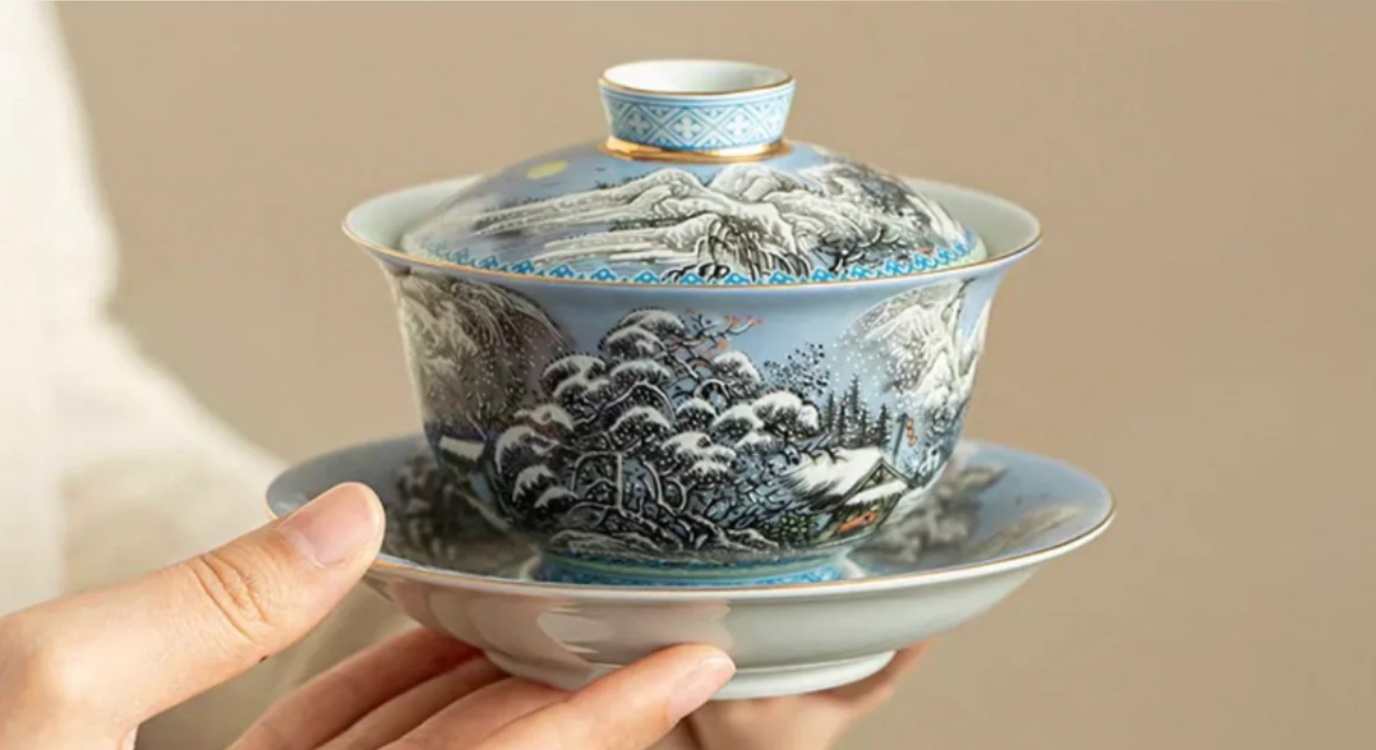
The Master’s Brush: The Rigorous Journey of Ceramic Artisan Training and the Alchemy of Hand-Painted Porcelain
The Silent Alchemy of the Artisan’s Workbench
In the quiet, dust-scented corners of a traditional workshop in Jingdezhen, China, a master artisan sits at a worn wooden workbench, illuminated by a single shaft of natural light streaming through a high paper window. The room is silent save for the rhythmic, soothing breathing of the artist and the distant, soft hum of a water-powered trip hammer pounding porcelain stone in the valley below. Held between the thumb and forefinger is a brush of extraordinary design—constructed of fine, supple rabbit hair tapering to an impossibly fine point. With a fluid, unhesitating sweep of the hand, the artist traces a delicate, swirling dragon scale onto the bone-dry, chalky surface of an unglazed porcelain vessel.
On this highly absorbent, unfired clay, there is absolutely no room for error. The porous surface drinks the mineral pigment instantly; a millisecond of hesitation or a slight tremor of the wrist will cause the paint to pool unevenly, permanently scarring the vessel and ruining days of structural preparation.
How does someone develop the skill to paint on ceramics with such extraordinary precision?
The ability to paint on fine porcelain is not a talent born of simple artistic inclination. It is the culmination of a rigorous, highly structured training process that historically spanned decades. From the secretive family workshops of Imperial China to the guarded mountain kilns of Edo-period Japan, the journey of the ceramic painter is a profound physical and spiritual transformation. It is a path where the artisan’s hand becomes an extension of the material itself, bridging the gap between raw earth and the sublime beauty of finished porcelain.
The Foundations of Ceramic Painting
To comprehend the training of a ceramic painter, one must first understand why ceramic painting is fundamentally distinct from painting on flat mediums such as paper, silk, or canvas. The ceramic surface presents a series of physical and chemical challenges that subvert the standard principles of two-dimensional fine art.
The Unforgiving Topography of Clay
Unlike a stretched linen canvas, which offers a uniform, flat, and flexible plane that can be scraped, sanded, or re-primed, a ceramic vessel is a three-dimensional, curved, and highly reactive canvas. Before the piece is painted, it typically undergoes a low-temperature firing known as bisque or biscuit firing, usually heated to between 800°C and 900°C. This structural phase removes organic matter and chemically bound water, transforming fragile greenware into a durable but highly porous state.
This bisque-fired clay behaves similarly to compressed chalk or dry plaster; it is incredibly thirsty, immediately drawing out the moisture from any brush that touches its surface. Consequently, the painter cannot blend pigments on the ceramic surface as an oil painter would on canvas. Every stroke must be applied with perfect speed and pressure in a single, definitive motion.
The Kiln’s Chemical Illusion
The most challenging aspect of ceramic painting is that the artist paints with mineral pigments that do not show their true colors during application. Raw cobalt oxide, the mineral responsible for the legendary deep blues of Qinghua (blue and white) porcelain, appears as a dusty, pale pink or dull greyish-brown paste when mixed with water and painted onto raw clay. The vibrant, translucent indigo only emerges after the piece is coated in a feldspathic glaze and subjected to the violent, oxygen-starved environment of a reduction kiln at 1300°C.
An apprentice must develop an extraordinary cognitive map of color, learning to "see" the finished, brilliant blues, copper reds, and golden enamels while looking at a palette of mud-grey and pale pink washes.
The Physicality of the Medium
Ceramic painting requires a precise synthesis of:
-
Artistic Vision: Translating classical motifs onto complex, tapering shapes like the shoulders of a Meiping vase.
-
Material Science: Understanding the shrinkage rates of clay, the viscosity of glazes, and the thermal behavior of metal oxides.
-
Muscle Memory: Developing a completely stabilized wrist and suspended forearm to paint consistent, hair-thin lines around a rotating cylinder.
-
Patience and Focus: Sustaining absolute mental clarity over hours of repetitive brushwork, where a single slip of the brush results in the destruction of the piece.
| Attribute | Canvas Painting | Ceramic Underglaze Painting |
| Surface Geometry |
Flat, two-dimensional, predictable |
Curved, three-dimensional, tapering |
| Surface Absorbency |
Low to moderate; paint remains workable |
Extreme; moisture is drawn out instantly |
| Correction Capability |
High; colors can be scraped, sanded, or layered |
Zero; mistakes cannot be erased or painted over |
| Color Fidelity | Instantaneous; colors appear as mixed on the palette |
Delayed; colors transform completely in the kiln |
| Material Risks | Negligible; canvas remains structurally stable |
High; warping, cracking, and running glazes in firing |
Traditional Apprenticeship Systems: The Historical Crucible
Historically, the transmission of ceramic painting techniques was governed by highly secretive, family-bound, or state-controlled apprenticeship systems. These systems prioritized discipline, loyalty, and repetitive labor over personal artistic expression.
The Jingdezhen Guild and Assembly Line System
In Jingdezhen, the world's porcelain capital located in Jiangxi Province, China, the refinement of ceramic production during the Ming and Qing dynasties reached an industrial level of specialization. Rather than a single artist creating a vessel from start to finish, the process was divided into seventy-two distinct procedures, as documented in historical Imperial records.
Within this highly segmented environment, an apprentice did not learn "ceramic art" broadly; instead, they were apprenticed to a specific guild. One might spend a lifetime learning only how to draw outlines (Shuangxian), while another trained exclusively in filling those outlines with washes (Fenshui). This absolute division of labor ensured that each worker achieved an unmatched level of speed and mechanical perfection.
The Japanese "Deshi" and the Secrecy of Okawachiyama
In Japan, particularly in the Saga Domain (modern Saga Prefecture), the discovery of kaolin stone at Izumiyama in 1616 by the Korean potter Yi Sam-pyeong initiated a golden age of porcelain production. The Nabeshima clan, recognizing the immense economic and political value of porcelain, established a highly controlled official kiln in the secluded, mountainous valley of Okawachiyama.
To prevent industrial espionage and protect their secrets, the Nabeshima clan set up a secure guard post at the entrance of Okawachiyama. Highly qualified potters were granted the social status of samurai, allowed to wear swords and use family surnames, but were forbidden from leaving the valley or sharing their technical secrets with outsiders.
Within this environment, the training of an apprentice—known as a deshi—was defined by the concept of dentō (heritage) and shitei (the teacher-student relationship). The training did not begin with formal lectures, but with a period of domestic service and silent observation known as mitoru (learning by watching, or literally "stealing the craft with the eyes").
-
Phase I: Domestic Labor and Material Preparation (Years 1–3): The deshi lived in the master's household, performing chores, sweeping the workshop, and hauling wood. The only craft-related task permitted was the processing of materials: crushing raw clay stones with hydraulic trip-hammers or hand-grinding cobalt pigments.
-
Phase II: Silent Observation (Mitoru): While grinding pigments, the apprentice silently watched the master paint. Asking questions was considered disrespectful; the apprentice had to absorb the angle of the brush, the speed of the stroke, and the posture of the master's body through observation.
-
Phase III: Basic Stroke Practice (Years 4–7): Only after demonstrating absolute obedience and humility was the student allowed to touch a brush. They practiced basic strokes on discarded fragments of bisqueware for years before being trusted with a functional vessel.
The Early Training Years: Clay, Pigments, and Basic Strokes
The first years of a ceramic painting apprentice’s actual brush training are characterized by repetitive, physically demanding exercises designed to build muscle memory and line consistency.
The Chore of Grinding: Stone and Muller
Before an apprentice can apply paint, they must learn how to prepare it. Historically, the production of ceramic pigments was a manually intensive process. Using a flat granite grinding slab and a heavy, glass or stone handheld pestle known as a muller, the apprentice spent hours grinding raw mineral oxides into an ultra-fine paste.
The grinding process was crucial: if the mineral particles were too coarse, they would cause specking, blistering, or pinholes in the glaze during firing. If the grind was too fine, the pigment might lose its depth of color. The apprentice learned to feel the grit of the paste beneath the muller, developing a tactile understanding of different minerals:
-
Cobalt Oxide: Highly powerful, requiring extensive grinding to prevent dark blue-black speckling in the final glaze.
-
Iron Oxide: Weaker and more abrasive, requiring precise suspension to avoid settling.
-
Copper Oxide: Unstable and highly active, melting aggressively in high heat.
Preparing the Surface: "Bu Shui" and Wiping
The apprentice was also tasked with preparing the bisqueware for the master’s brush. This involved sanding away any slight ridges or imperfections left by the trimming lathe and thoroughly cleaning the surface of dust.
In Chinese workshops, this phase is known as Bu Shui (replenishing water). The apprentice lightly wiped the porous bisqueware with a damp sponge or deer skin. This process served a dual purpose: it removed micro-dust that would cause the glaze to bubble, and it temporarily hydrated the clay. If the clay is too dry, it drinks the pigment too quickly, resulting in drag and dry brushmarks; if it is too wet, the pigment bleeds uncontrollably. Learning to judge the exact moisture level of the clay by touching it to one's cheek was a foundational skill.
Line-Making and Concentric Drills
The first brush exercises did not involve painting beautiful flowers or majestic dragons. Instead, the apprentice was forced to paint thousands of straight lines and concentric circles.
The brush had to be held perfectly perpendicular to the vessel. Any variation in angle or pressure would result in a line of varying thickness, which would immediately disqualify the work. This drill was repeated on hundreds of vessels every day for months, carving the necessary muscle memory deep into the apprentice's shoulder and forearm.
Repeating Traditional Motifs
Once line control was mastered, the apprentice progressed to basic, repeating motifs. These motifs were not painted from imagination, but were copied from woodblock-printed manuals or master sheets.
The initial patterns were selected for their structural logic:
-
The Symmetrical Grid: Practicing geometric diaper patterns, fish scales, and waves, which taught the student how to divide a three-dimensional curved space evenly.
-
The Stylized Vine (Chanzhi or Karakusa): A continuous, scrolling vine pattern that required the student to maintain a fluid, unbroken line while navigating the changing diameter of a bottle or bowl.
-
The "Three Friends of Winter" (Sanyou): The pine tree (symbolizing endurance), bamboo (flexibility), and plum blossom (hope). Each of these plants required a different brush technique: the dry, rugged bark of the pine; the sharp, springy strokes of the bamboo leaves; and the delicate, rounded washes of the plum petals.
Developing Advanced Techniques
As the apprentice transitions into an advanced student, the curriculum progresses from basic line-making to the execution of complex pictorial compositions that demand a profound mastery of light, space, and narrative storytelling.
Classical Landscapes and the Illusion of Depth
The pinnacle of underglaze brushwork is the execution of traditional landscapes, known as Sansui-e in Japan or Shanshui in China. Painting a multi-perspective mountain-and-water scene onto a highly tapered ceramic vessel requires a deep understanding of optical illusion.
The artisan must wrap a continuous, flowing narrative around a cylindrical or bulbous form so that the scene remains visually balanced and compositionally coherent from any viewing angle. This requires a delicate play of heavy, dark foreground details and highly diluted, atmospheric background washes, mimicking the misty valleys of traditional ink-on-silk paintings.
Floral Motifs, Birds, and the Botanical Grammar
Advanced students spend years perfecting the organic grammar of flora and fauna. Capturing the kinetic energy of a flying bird or the soft drape of a peony petal requires a combination of fine-tipped detailing and fluid wash control.
The artisan must learn to utilize the natural flow of the brush to create three-dimensional volume. For instance, a lotus leaf is executed by starting with a loaded brush, pressing down to create a broad, saturated plane, and lifting to a sharp, fine edge in a single, continuous sweep of the wrist.
The Rigor of Fine Calligraphy and Inscriptions
A true master-level vessel is often completed with a classical poem, dedication, or imperial reign mark written in elegant, running script. Inscribing calligraphy onto porous bisqueware is incredibly difficult.
The artisan must maintain absolute control over the flow of the pigment, ensuring that every character has uniform density and visual weight. A single smeared character or an uneven line of text can instantly ruin a masterpiece, rendering the entire vessel a loss before it ever reaches the kiln.
Gold Detailing and Multi-Layer Overglaze Enamels
For pieces of extreme luxury, such as Kinrande (gold-brocade style) or Akae wares, the artisan must master the application of pure gold. This involves grinding 24k gold powder with a specialized oil-based binder and painting it over the fired glaze.
The piece is then subjected to a third firing at a much lower temperature (around 700°C) to fuse the metallic gold to the surface, creating a lustrous, brilliant finish that gleams against the translucent porcelain.
Understanding Ceramic Materials: The Synthesis of Science and Art
A master ceramic painter is not merely an illustrator; they are a materials scientist who has spent decades learning the chemical behavior of earth, minerals, and fire.
The Volatility of Metal Oxides
Traditional ceramic painting relies on natural mineral oxides as coloring agents. These oxides are chemically volatile and act as powerful fluxes during high-temperature firing, meaning they lower the melting point of the surrounding glaze.
If an artisan applies cobalt oxide too thickly, the mineral will melt aggressively, causing the painted design to run and dissolve into the glass. To counter this, advanced painters learn to blend their pigments with stabilizing binders, such as kaolin clay, gum arabic, or carboxymethyl cellulose (CMC), which act as structural anchors to keep the brushwork crisp and defined in the kiln.
The Temperament of Clay Bodies and Glazes
Great painters must customize their brushwork to the specific clay body they are working on. High-purity, natural kaolin clay, such as that sourced from the Amakusa pit in Japan, produces an incredibly dense, pure white substrate that reflects light beautifully through the glaze.
However, this clay has a high thermal shrinkage rate, meaning the painter must adjust the thickness of the glaze and pigments to prevent the surface from cracking or crazing during cooling. Conversely, unrefined clays containing trace iron spots require a softer, more rustic painting style that works in harmony with the natural, speckled texture of the fired body.
The Importance of Repetition: The Subconscious Mind of the Artisan
The defining factor that separates a modern hobbyist from a traditional master is the sheer volume of repetition required during training.
The Path to Subconscious Spontaneity
An apprentice in a traditional workshop may paint thousands of identical bamboo leaves or lotus petals before their work is ever deemed fit for public display. This relentless repetition serves a vital cognitive purpose: it transfers the mechanics of the brushstroke from the conscious, calculating mind to the deep motor centers of the body.
True Qi (spontaneity and life force) in traditional Asian art is only achieved when the hand moves faster than thought. If the artist must hesitate to plan the next stroke, the absorbent bisque will draw out the moisture, causing the brush to drag and leaving a static, lifeless line. Through repetition, the artisan's hand becomes completely synchronized with the material, allowing the brush to glide across the curved clay with an unhesitating, breathtaking confidence.
Modern Training Methods: Academy Meets Atelier
In the twenty-first century, the pathways to becoming a ceramic painter have undergone significant transformation, blending ancient apprenticeship traditions with modern, institutionalized education.
The Academic Ascent: Jingdezhen Ceramic University
The primary modern pathway for ceramic training in China is Jingdezhen Ceramic University (JCU), the only multidisciplinary university in the nation dedicated entirely to ceramic arts and engineering. Tracing its roots back to the China Ceramic School founded in 1910 by the industrialist Zhang Jian, JCU offers highly structured undergraduate, master’s, and doctoral programs.
Within this academic environment, the training is highly systematic:
-
The Theoretical Integration: Students study both fine art (traditional Chinese brushwork, calligraphy, and composition) and ceramic materials science (mineral chemistry, glaze formulation, and firing physics).
-
The Studio System: While students attend lectures, they also spend hours in intensive studio workshops, learning directly from folk masters who are hired as professors to bridge academic theory with traditional, hands-on craft.
-
The Global Exchange: Through international summer camps and residency programs, the university hosts artists from around the world, fostering a creative dialogue between classical techniques and contemporary, avant-garde design.
Alongside the academic system, the economic reforms of the late twentieth century led to the closure of state-owned factories and the dramatic rise of self-employed ceramic artisans in Jingdezhen. Today, thousands of young creators, known as Jingpiao (porcelain migrants), flock to the city from across China and abroad.
These independent artists rent studio spaces in collaborative districts like Sanbao Village or exhibit their works at the Letian Pottery Workshop's weekly Creative Market. This new generation has revitalized the traditional industry, applying classical underglaze and overglaze techniques to modern, minimalist forms that appeal to a global market of design collectors and tea enthusiasts.
| Attribute | Traditional Apprenticeship | Modern Academic Training |
| Primary Focus |
Extreme specialization in one technique |
Broad education across design, history, and science |
| Pedagogical Style |
Silent observation (Mitoru) and repetition |
Interactive lectures, step-by-step demonstrations |
| Material Access |
Guarded, secretive workshop recipes |
Open-source chemical formulations and digital kilns |
| Career Path |
Integration into a specific guild or family kiln |
Independent studio ownership or industrial design |
What Separates a Master Artisan from a Beginner
To the untrained eye, two hand-painted teacups may appear similar. However, for experienced collectors and museum curators, there are distinct visual and physical markers that immediately separate the work of a master from that of a beginner.
The Confidence of the Stroke (Qi)
A beginner’s brushwork often reveals a quiet insecurity. Under magnification, a novice’s line may show minute tremors, visual "stammering," or areas where the brush has hovered too long, causing the underglaze pigment to pool into thick, muddy blobs.
A master’s brushwork, by contrast, is defined by absolute line confidence. The lines flow seamlessly around the curved topography of the vessel, displaying a uniform weight, tension, and kinetic energy that can only be achieved through thousands of hours of practice.
Spatial Balance and the Mastery of "Liubai"
Beginners often make the mistake of over-decorating, crowding the canvas and leaving no room for visual rest. A master understands the deep aesthetic power of Liubai—the strategic use of blank, negative white space.
The master balances the painted motifs so that the unpainted white porcelain becomes an active, breathing participant in the composition, representing light, air, or water. The design feels integrated with the three-dimensional form of the vessel rather than simply pasted onto it.
The Diagnostic Checklist for Collectors
When evaluating fine, hand-painted ceramics, one should utilize a specific diagnostic checklist to authenticate master-level craftsmanship:
-
The Brushstroke Test: Examine the piece under a magnifying loop. Look for natural variations in ink thickness, visible brush starts and stops, and the subtle "haloing" of cobalt blue where the mineral has bled microscopically into the melting glaze during high-temperature vitrification. If the lines are composed of perfectly uniform, mechanical dots or sharp, sterile edges, the piece is a factory-printed digital decal.
-
The Foot Rim: Turn the vessel over and examine the unglazed bottom ring. An authentic handmade piece will be trimmed by hand on a lathe, resulting in a foot rim that feels incredibly smooth, fine, and soft—often described as "polished stone" or "baby skin". Machine-cut feet often feel like coarse sandpaper or show perfectly mechanical, rigid ridges.
-
The Ring of Vitrification: Gently tap the rim of the vessel with a wooden stick or another porcelain piece. A high-purity, hand-thrown porcelain fired in a high-temperature wood kiln will emit a clear, bell-like, resonant metallic ring that lingers in the air. Low-grade, mass-produced wares will produce a dull, short "thud".
Why Hand-Painted Ceramics Are Valuable: The Price of a Lifetime
In an era dominated by rapid manufacturing and disposable consumer goods, authentic hand-painted ceramics command a significant premium. It is vital for collectors to recognize that when they purchase a masterfully hand-painted vessel, they are not simply buying a clay object; they are purchasing a physical crystallization of the artisan's entire life.
Every confident brushstroke on a plate or teacup is backed by the silent weight of thousands of ruined pieces, warped vessels, and failed kiln firings that occurred during the artist's training. The collector is paying for the artist’s intuitive judgment, their mastery over volatile mineral chemistry, and their dedication to keeping a centuries-old cultural heritage alive with their own hands. These pieces are not commodities; they are living works of art that carry the soul and physical presence of their maker into the modern home.
Oriental Artisan’s Commitment to Craftsmanship
As a curated destination for collectors and enthusiasts seeking authentic handcrafted works that celebrate the enduring traditions of skilled artisans, Oriental Artisan is deeply committed to preserving the integrity of traditional ceramic arts.
The company establishes direct, ethical partnerships with generational workshops and living masters in Jingdezhen and Arita, ensuring that these slow, labor-intensive painting techniques remain economically viable for the next generation of creators.
By bringing these exquisite, hand-painted treasures directly to discerning global collectors, Oriental Artisan acts as a vital bridge between ancient kiln histories and contemporary lifestyles, celebrating the beautifully irregular "fingerprints" of human creation in an increasingly mechanized world.
High-Precision Shading: Fenshui and Dami
The defining mark of a master ceramic painter is their command over gradient shading. In both Chinese and Japanese traditions, specialized underglaze washing techniques were developed to create seamless transitions of color density, simulating the depth of classical ink-wash paintings on three-dimensional clay.
Jingdezhen Fenshui: The Water-Dashing Technique
The Fenshui (water-dashing) technique, perfected during the Kangxi reign of the Qing Dynasty, is the secret behind the atmospheric depth seen in classical blue and white landscapes.
The process begins with the Shuangxian painter tracing sharp, high-viscosity outline drawings using a highly concentrated cobalt mixture. Once these outlines are dry, the Fenshui master takes over.
The master uses a series of specialized brushes with large, bulbous reservoirs designed to hold massive amounts of liquid pigment. Rather than painting with the tip of the brush, the artisan holds the brush vertically over the horizontal surface of the vessel and gently squeezes the bristles with their fingers. This action releases a controlled pool of cobalt-steeped green tea onto the porous clay.
The artist then tilts the vessel slowly, sliding the pool of liquid across the designated area of the design. The tip of the brush never actually touches the dry clay; it merely guides the hovering drop of water. By adjusting the concentration of the cobalt in five distinct values—ranging from Touguo (the darkest, most saturated blue) to Yingqing (the pale, misty blue)—the artisan achieves a painterly quality reminiscent of ink wash on silk, with up to nine distinct tones of blue emerging from a single firing.
Arita Dami: Squeezing the Drop
In Japan, the sister technique to Fenshui is known as Dami. Used extensively in the decoration of sometsuke (underglaze blue) wares, Dami is a high-skill method of filling in the spaces between fine kotugaki outlines.
The artisan uses a massive, thick-bellied brush called a damifude. The technique requires extraordinary physical coordination:
-
The Loading: The entire bristle head of the damifude is soaked in a diluted solution of gosu (natural cobalt ore containing manganese and iron impurities).
-
The Release: Holding the middle of the wet bristles, the painter lightly squeezes the brush with their thumb and index finger, acting like a pipette to drip a generous pool of pigment onto the bisque-fired body.
-
The Movement: The painter tilts the bowl or vase, sliding the liquid pool horizontally along the contours of the kotugaki outline. The brush tip must glide precisely on top of the liquid drop. If the brush tip touches the dry bisque directly, it will scrape away the delicate clay particles, leaving a dry scar that fires as a white blemish.
-
The Absorption: As the liquid pool reaches the edge of the design, the painter relaxes their finger pressure, allowing the thirsty bristles of the damifude to draw back the excess liquid before it can puddle and cause an uneven, blotchy color.
Because the porous bisque absorbs water within seconds, the painter has only a brief window of time to move the drop across the surface. If they move too slowly, the paint dries mid-stroke, leaving a hard, dark line; if they move too quickly, the color fails to penetrate the clay, firing as a pale, weak patch. The mastery of Dami represents a pinnacle of hand-eye coordination and sensory timing.
Conclusion: Living Works of Art
Every confident brushstroke on a handcrafted ceramic piece represents countless hours of practice, years of learning, and a lifelong dedication to mastery. These vessels are not static, dead consumer items; they are dynamic, living records of human history, material science, and artistic focus.
By choosing authentic hand-painted ceramics, one invites these ancient, slow-burning creative energies into the daily rituals of the home, transforming a simple cup of tea or a beautifully adorned room into a celebratory appreciation of human potential and vitrified heritage.
Key Takeaways of Ceramic Painter Training
-
Porous Bisqueware Demands Unhesitating Speed: Low-temperature bisque firing (800°C–900°C) leaves the clay extremely porous. The dry surface draws moisture instantly from the brush, meaning underglaze painting cannot be blended or corrected once applied.
-
Mineral Pigments Transform in the Kiln: Artisans must paint with greyish or pale-pink mineral mixtures, using their training to conceptualize how those dull pastes will convert into vibrant translucent blues or rich reds at 1300°C.
-
Traditional Apprenticeships Rely on Silent Learning: In both Chinese (Jingdezhen) and Japanese (Arita) lineages, apprenticeships spent years in preparatory labor and silent observation (Mitoru) to cultivate deep material intuition before ever painting a functional piece.
-
High-Precision Gradient Wash Techniques Exist in Both East Asian Traditions: To achieve watercolor-like depth on clay, Chinese masters utilize Fenshui (dashing water washes), while Japanese masters utilize Dami (squeezing a pool of pigment from a fat damifude brush). Both require the brush to guide a hovering liquid pool without directly touching the delicate clay body.
-
Authenticity is Discoverable to Discerning Collectors: Hand-painted ceramics can be verified by searching for natural brush starts/stops under magnification, a hand-trimmed "baby-skin" smooth foot rim, and a clear, bell-like metallic ring when tapped.
Frequently Asked Questions
Why is ceramic painting more difficult than painting on canvas?
Ceramic painting is significantly more difficult because the unglazed, bisque-fired clay surface is highly porous, absorbing the moisture and mineral pigment from the brush instantly. This prevents the artist from blending colors on the surface or erasing mistakes. Additionally, the painter must navigate three-dimensional, curved surfaces while working with raw mineral pigments that do not show their true colors until they are fired at high temperatures in a kiln.
Why is underglaze cobalt mixed with green tea instead of water in Jingdezhen?
Mixing underglaze cobalt with green tea increases the liquid's surface tension and viscosity. This prevents the highly absorbent clay from drawing in the moisture too rapidly, allowing the brush to glide smoothly and draw longer lines. The tea's organic particulates also act as a suspension agent, keeping the heavy cobalt particles from settling, while the natural sugars provide temporary visibility and structure to the painted lines before burning away in the kiln.
What is the difference between the Chinese Fenshui and Japanese Dami techniques?
Both are high-skill underglaze wash techniques used to create gradient shading inside outlines. In Fenshui, the Chinese artisan squeezes a large, water-loaded brush to hover a pool of cobalt tea-solution over the clay, tilting the vessel to slide the liquid without letting the bristles touch the surface. In Dami, the Japanese artisan uses a fat damifude brush, controlling the flow of gosu (cobalt) by squeezing the bristles with their fingers and sliding the drop across the bisque with extreme precision.
What is Kakiemon Nigoshide porcelain, and why was it secretive?
Nigoshide is a warm, milky-white porcelain body developed in Arita, Japan, by the Kakiemon family in the late seventeenth century. It was a closely guarded secret because its pristine, warm color—reminiscent of rice-washing water—beautifully highlighted delicate overglaze enamels. The formula required a precise 6:3:1 ratio of three local stones, and because of extreme shrinkage differentials during firing, it suffered from a very low success rate, making it highly valuable.
How can a collector distinguish a hand-painted ceramic piece from a mass-produced decal?
Under close examination or magnification, a printed decal will show a perfectly uniform, flat matrix of digital dots or mechanical lines. A hand-painted piece will show organic signs of life: slight variations in pigment thickness, visible brush starts and stops, subtle pooling of color in the contours of the design, and a soft "haloing" where the underglaze pigment has bled slightly into the melting glaze during high-temperature firing.
What was the social status of the traditional ceramic painters in Japan?
In the official domain kilns of the Nabeshima clan at Okawachiyama, highly skilled ceramic painters and potters were granted the social status of samurai. They were allowed to carry swords, use family surnames, and were provided with stable stipends by the clan. However, to protect their secretive techniques from industrial espionage, they were subjected to intense surveillance, confined to the valley, and forbidden from selling their works on the open commercial market.

Leave a comment
This site is protected by hCaptcha and the hCaptcha Privacy Policy and Terms of Service apply.