

Wabi-Sabi: The Japanese Art of Finding Beauty in Imperfection
Introduction
There is a quiet revolution taking place in the world of design and living. It whispers rather than shouts. It celebrates the worn, the weathered, and the wonderfully imperfect. This is the philosophy of Wabi-Sabi.
In a world obsessed with perfection—flawless surfaces, symmetrical spaces, and the relentless pursuit of the new—Wabi-Sabi offers a profound alternative. It is not a trend to be followed but a way of seeing the world that has shaped Japanese culture for centuries. It is the beauty of a cracked ceramic bowl mended with gold, the quiet elegance of a rustic teahouse nestled in a mossy garden, and the serene acceptance of a fading autumn leaf.
For those who appreciate craftsmanship, design, and intentional living, Wabi-Sabi is more than an aesthetic—it is an invitation to slow down, to look more closely, and to find profound meaning in the authentic, the handmade, and the naturally imperfect. It is the art of finding beauty not in spite of imperfection, but because of it.
This guide explores the essence of Wabi-Sabi—its origins, its principles, and its enduring relevance in a modern world that is increasingly hungry for authenticity and connection.
What is Wabi-Sabi?
At its simplest, Wabi-Sabi is the Japanese philosophy of finding beauty in imperfection, impermanence, and incompleteness. It is an aesthetic and a worldview that encourages us to appreciate the modest, the humble, and the unconventional.
Unlike Western ideals that often prize symmetry, durability, and perfection, Wabi-Sabi finds value in the natural cycle of growth and decay. It is the beauty of things that are "unstudied and inevitable looking". A cracked vase is not a flaw to be hidden but a story to be told. A rustic, uneven bowl is not a mistake but a testament to the human hand that shaped it.
Wabi-Sabi is often described as a "beauty of things imperfect, impermanent, and incomplete". It is a state of mind as much as a design style, asking us to appreciate the simple beauty in life—a chipped vase, a quiet rainy day, the fleeting bloom of a cherry blossom. As author Andrew Juniper observed, "If an object or expression can provoke in us a feeling of serene melancholy and spiritual longing, then that object can be considered wabi-sabi".
In essence, Wabi-Sabi is a philosophy of acceptance. It teaches us to embrace the natural world, to find peace in the transient, and to see the profound beauty that lies in the authentic and the imperfect.
The Meaning Behind the Words "Wabi" and "Sabi"
To understand Wabi-Sabi, one must first understand its two constituent parts. While often combined into a single concept, wabi and sabi each carry distinct, complementary meanings that together form a richer whole.
Wabi: Simplicity and Humble Beauty
Originally, the word wabi carried connotations of loneliness and the misery of living alone in nature, away from society. However, around the 14th century, its meaning began to evolve in a more positive direction.
Today, Wabi represents a kind of rustic, refined, and solitary beauty. It denotes simplicity, quietude, and a deep appreciation for the unadorned. It is the beauty found in the modest and the humble—a hand-thrown ceramic bowl, a simple wooden stool, a tea house with earthen walls. Wabi is about finding richness in simplicity and spiritual wealth in a life free from material excess.
It also incorporates the beauty of accident and happenstance—the small flaw that gives an object its unique character, such as the pattern made by a flowing glaze on a ceramic object. This is the essence of wabi: the quiet, unpretentious beauty that emerges from the natural and the handmade.
Sabi: The Beauty of Age and Patina
Sabi, in its original form, meant 'chill', 'lean', or 'withered'. Like wabi, its meaning transformed over time to embrace a more positive aesthetic value.
Sabi is the beauty that stems from age. It refers to the patina of time, the mellowing that occurs through use and exposure to the elements. It is the appreciation of the old and the faded, the weathered and the worn. Sabi is the green corrosion on a bronze statue, the pattern of moss and lichen on wood and stone, or the smooth, darkened surface of a wooden handle held by countless hands over generations.
Sabi also incorporates the concept that changes due to use may make an object more beautiful and valuable. It is an appreciation of the cycles of life and the careful, artful mending of damage. In this sense, sabi is deeply connected to the passage of time and the acceptance of impermanence.
When combined, wabi and sabi create a philosophy that celebrates both the quiet simplicity of the present moment and the profound beauty of things that have been touched by time.
The History of Wabi-Sabi
The roots of Wabi-Sabi are deeply entwined with Zen Buddhism and the development of the Japanese tea ceremony. While its influences can be traced back further, the philosophy as we understand it today was largely shaped during the Muromachi and Momoyama periods.
The Influence of Zen Buddhism
Wabi-Sabi's core principles—impermanence, imperfection, and incompleteness—resonate strongly with Buddhist teachings, particularly the concept of the "three marks of existence" (impermanence, suffering, and non-self). Zen Buddhism, with its emphasis on meditation, intuition, and a direct connection to nature, provided the spiritual and philosophical foundation upon which Wabi-Sabi was built.
The Rise of Wabi-Cha
The most significant development in the history of Wabi-Sabi was its integration into the Japanese tea ceremony, or chanoyu. In the 15th century, a monk and tea master named Murata Jukō began to redefine the way of tea drinking, creating a ceremony based upon the philosophical ideals of wabi-sabi. This new form of tea appreciation, which would later become known as wabi-cha, emphasized simplicity, rusticity, and a deep appreciation for the humble and the imperfect.
Jukō's vision was further developed by subsequent tea masters, most notably Takeno Jōō and his student, Sen no Rikyū (1522-1591). It was Rikyū who perfected the tea ceremony and raised it to the level of an art. He firmly established the concepts of wabi (deliberate simplicity in daily living) and sabi (appreciation of the old and faded) as its aesthetic ideals.
Under Rikyū's direction, the teahouse became smaller and more secluded, the utensils were characterized by a rustic simplicity, and the entire ceremony was imbued with a profound sense of spiritual depth. Rikyū's influence was so great that he is often referred to as a "tea saint".
The Evolution of a Philosophy
Over the centuries, the meanings of wabi and sabi have crossed over so much that today the line separating them is very blurry. The philosophy has permeated all aspects of Japanese culture, influencing not only the tea ceremony but also poetry (particularly the haiku of Matsuo Bashō), garden design, architecture, and the visual arts.
In the 20th century, Wabi-Sabi began to capture the imagination of the West. Leonard Koren's seminal book, Wabi-Sabi for Artists, Designers, Poets & Philosophers, first published in 1994, played a pivotal role in introducing the concept to a global audience. Since then, Wabi-Sabi has become a significant influence on modern design, architecture, and lifestyle movements, offering a compelling antidote to the excesses of consumerism and the pursuit of superficial perfection.
The Philosophy of Imperfection
At the heart of Wabi-Sabi lies a profound philosophical acceptance of the natural world. It is a worldview that recognizes three simple realities: nothing lasts, nothing is complete, and nothing is perfect.
Embracing Impermanence (Mujō)
The Buddhist concept of mujō (impermanence) is central to Wabi-Sabi. Everything is in a constant state of flux—buildings crumble, flowers wilt, and our own bodies age. Instead of resisting this truth, Wabi-Sabi invites us to embrace it. The fleeting beauty of a cherry blossom is all the more precious because it will soon fall. A weathered wooden beam is beautiful precisely because it bears the marks of time. This acceptance of impermanence fosters a deep appreciation for the present moment.
Finding Value in the Incomplete
Wabi-Sabi finds beauty in the incomplete and the unfinished. A half-finished thought, a piece of pottery that retains the marks of the maker's hands, a garden that is left to grow wild—these are not seen as lacking but as possessing a unique kind of beauty. They invite contemplation and allow space for the imagination to fill in the gaps. This is the beauty of things that are "modest and humble" and "unconventional".
The Aesthetic of the Natural
Wabi-Sabi is fundamentally about a return to nature. It celebrates the organic, the irregular, and the unpolished. The asymmetry of a hand-thrown vase, the earthy texture of unglazed clay, the subtle variations in a natural dye—these are all expressions of a beauty that is rooted in the natural world.
Wabi-Sabi and the Japanese Tea Ceremony
The Japanese tea ceremony, or chanoyu, is perhaps the most complete and profound expression of Wabi-Sabi. It is not merely about drinking tea; it is a transformative practice centered around the aesthetic of wabi-sabi, emphasizing simplicity, humility, and a deep connection to the present moment.
The Teahouse as a Wabi-Sabi Space
The traditional teahouse is a masterpiece of Wabi-Sabi design. It is a small, modest structure, often built of wood and earthen walls, with a thatched or bark roof. It is deliberately simple, with a minimum of decoration. The entrance is small, forcing all who enter to bow, a gesture of humility and equality.
The space is designed to be intimate and contemplative. The tokonoma (alcove) may display a simple hanging scroll and a single, seasonal flower arrangement. The colours are muted, the textures are natural, and the overall effect is one of serene tranquility. Rikyū's teahouses, with their 2-mat rooms (approximately 6 feet square), are the ultimate expression of this aesthetic.
The Utensils: Beauty in Rusticity
The utensils used in the tea ceremony are central to the Wabi-Sabi experience. They are not precious, gilded objects but humble, handcrafted tools made of wood, bamboo, and most importantly, ceramics.
Tea bowls (chawan) are perhaps the most iconic. They are often asymmetrical, with uneven glazes, visible throwing marks, and a surface that is a pleasure to touch. They are not perfect, and that is precisely the point. Each bowl is unique, bearing the marks of its maker's hands and the firing process.
Other utensils, such as the mizusashi (water container), hanaire (vase), and kensui (slop bowl), are similarly characterized by their rustic simplicity and natural beauty. They are valued not for their perfection but for their authenticity and their ability to evoke a sense of quiet, contemplative beauty.
The Spirit of Ichi-go Ichi-e
The tea ceremony embodies the Wabi-Sabi principle of impermanence through the concept of ichi-go ichi-e—"one time, one meeting". This phrase reminds us that each gathering is unique and will never be repeated. It encourages both host and guests to be fully present in the moment, appreciating the fleeting beauty of the tea, the season, and the company. This heightened awareness of the present is the very heart of the Wabi-Sabi spirit.
Why Handmade Objects Embody Wabi-Sabi
In a world of mass production, where objects are identical and flawless, handmade items stand apart as true embodiments of Wabi-Sabi. They are not merely products; they are the physical manifestations of a human being's skill, intention, and spirit.
The Mark of the Maker
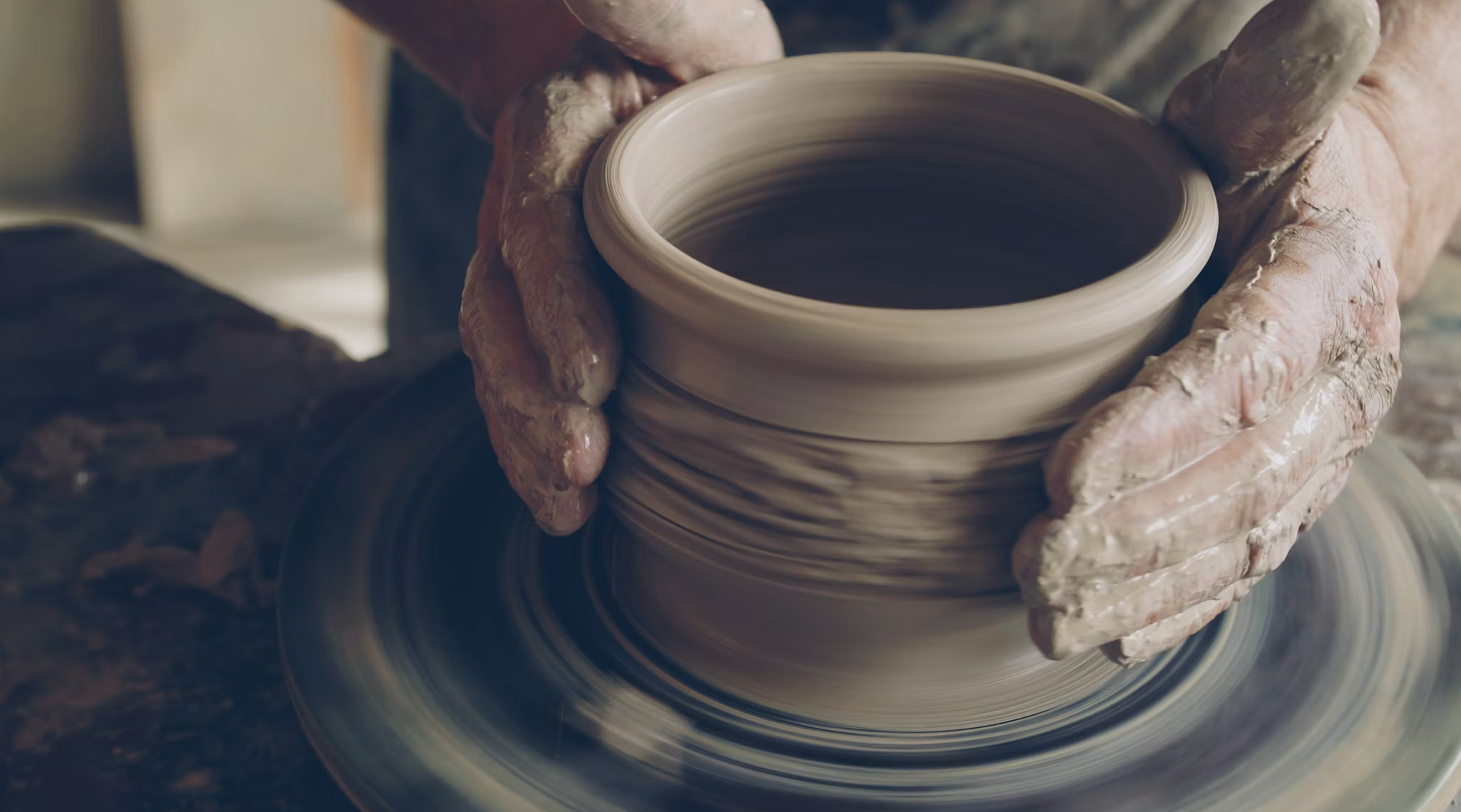
When you hold a handcrafted ceramic bowl, you can see the subtle ridges left by the potter's fingers. You can feel the gentle unevenness of the glaze. These are not flaws; they are the marks of the maker. They tell the story of the object's creation and connect us, across time and space, to the person who shaped it.
This is the essence of wabi: the quiet, unpretentious beauty that arises from the human touch. A machine can produce a perfectly symmetrical vessel, but only a human hand can imbue an object with warmth, character, and soul.
The Beauty of the Natural Process
Handmade objects are often made using natural materials and traditional techniques that allow the material itself to shine. A wood-fired ceramic piece, for example, will bear the marks of the flame and the ash, creating unique patterns and textures that are impossible to replicate. The glaze may flow in unexpected ways, the clay may crack slightly, and the final piece may be subtly asymmetrical.
These are not imperfections to be corrected but expressions of the natural process. They are the beauty of things that are "unstudied and inevitable looking". They remind us of the elemental forces of fire, earth, and water, and they connect us to the timeless traditions of human craftsmanship.
A Connection to the Past
Handmade objects often carry with them a sense of history and tradition. They are made using techniques that have been passed down through generations, connecting us to a long lineage of artisans. When we use a hand-thrown tea bowl, we are participating in a tradition that stretches back centuries. This connection to the past, to the sabi of age and tradition, is a profound part of the Wabi-Sabi experience.
Wabi-Sabi in Japanese Ceramics
Japanese ceramics are perhaps the most celebrated and accessible expression of Wabi-Sabi. From the rustic simplicity of Raku ware to the elegant imperfections of Shino and Oribe, Japanese pottery embodies the philosophy in its very essence.
The Aesthetic of the Fired Surface
One of the key characteristics of Wabi-Sabi ceramics is the beauty of the fired surface. Glazes may be uneven, with patches of bare clay showing through. Cracks, pitting, and ash deposits from the wood-firing process are not hidden but celebrated. The surface is often textured and tactile, inviting the hand to explore its contours.
This emphasis on surface texture is a rejection of the smooth, glossy, and perfectly uniform finish that is so prized in mass-produced ceramics. Instead, the Wabi-Sabi potter embraces the unpredictable nature of the firing process, allowing the fire and the clay to create a surface that is rich, complex, and deeply beautiful.
Form and Function
Wabi-Sabi ceramics are not just objects of beauty; they are functional objects meant to be used. A tea bowl is meant to be held, a vase is meant to hold flowers, a sake set is meant to be shared. This emphasis on function is a core part of the Wabi-Sabi philosophy. The object is not meant to be admired from a distance but to be lived with, touched, and used. Over time, it will develop a patina of use, becoming more beautiful with age.
Notable Ceramic Traditions
Several Japanese ceramic traditions are particularly associated with the Wabi-Sabi aesthetic:
Raku Ware: Developed in the 16th century specifically for the tea ceremony, Raku ware is characterized by its hand-molded, rather than wheel-thrown, construction. It is often low-fired, resulting in a soft, porous body and a distinctive, crackled glaze. The forms are simple, rustic, and often imperfect.
Shino Ware: Known for its thick, milky-white glaze and its bold, often abstract designs, Shino ware is celebrated for its warmth and its tactile quality. The glaze often pools and cracks, creating a rich, textured surface.
Oribe Ware: Characterized by its bold, green copper glaze and its often asymmetrical, dynamic forms, Oribe ware is a more playful and exuberant expression of Wabi-Sabi. It is a celebration of the unconventional and the unexpected.
These traditions, and many others, demonstrate the profound connection between Japanese ceramics and the philosophy of Wabi-Sabi.
Wabi-Sabi in Interior Design
In recent years, Wabi-Sabi has become a significant influence on interior design around the world. It offers a compelling alternative to the sterile perfection of minimalism and the excessive ornamentation of more traditional styles.
Principles of Wabi-Sabi Interior Design
A Wabi-Sabi interior is not about creating a "look" but about cultivating a feeling. It is about creating spaces that are serene, authentic, and deeply connected to nature.
Natural Materials: Wabi-Sabi interiors are characterized by the use of natural materials—wood, stone, clay, linen, and paper. These materials are valued for their texture, their warmth, and their ability to age gracefully. A live-edge wooden table, a stone floor, or a linen curtain all bring a sense of the natural world into the home.
An Earthy Palette: The colour palette of a Wabi-Sabi interior is soft and muted, drawing from the colours found in nature. Earthy tones like brown, beige, grey, green, and terracotta create a sense of calm and tranquility. There are no bright, jarring colours; instead, the palette is harmonious and soothing.
Asymmetry and Irregularity: Wabi-Sabi celebrates asymmetry and irregularity. A room does not need to be perfectly balanced. A single, slightly off-center vase can be more beautiful than a perfectly symmetrical arrangement. This embrace of the irregular adds a sense of life and spontaneity to a space.
The Beauty of Age: Wabi-Sabi interiors embrace the signs of age and wear. A weathered wooden beam, a patinated metal surface, or a worn Persian rug are all seen as beautiful. They tell the story of the space and add a sense of depth and history.
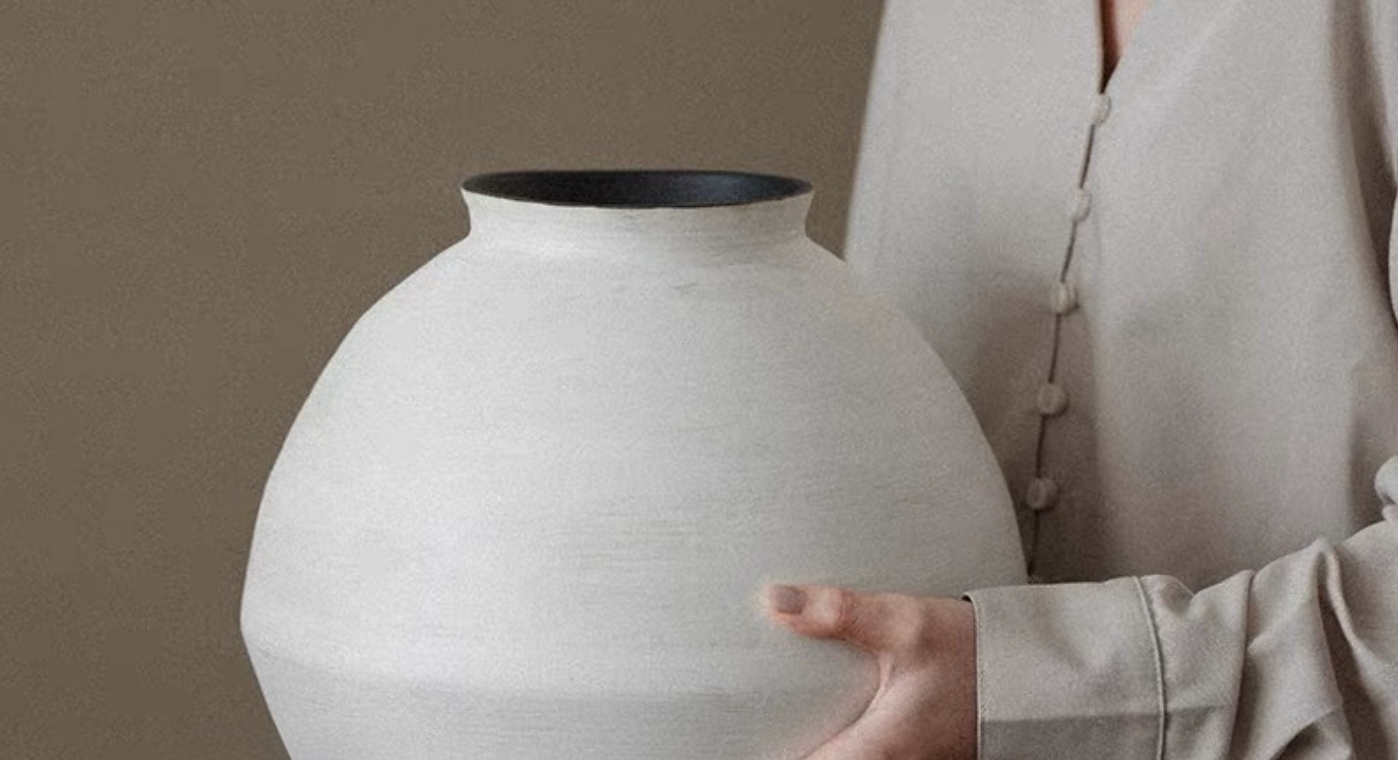
Handcrafted Objects: Handmade objects are essential to a Wabi-Sabi interior. A hand-thrown ceramic vase, a woven basket, or a simple wooden bowl all add a sense of authenticity and human touch. They are not just decorations; they are objects with a story to tell.
The Wabi-Sabi Home
Ultimately, a Wabi-Sabi home is a sanctuary. It is a place where we can escape the pressures of the modern world and reconnect with what is essential. It is a space that is not perfect but is deeply human, a space that embraces the natural cycle of growth and decay, and a space that is filled with objects that are beautiful, meaningful, and authentic.
Wabi-Sabi vs. Minimalism: Understanding the Difference
Wabi-Sabi and minimalism are often confused, and while they share some similarities, they are fundamentally different philosophies.
The Similarities
Both Wabi-Sabi and minimalism value simplicity, a lack of clutter, and a focus on the essential. Both reject the excess and ornamentation of more traditional styles. Both can create spaces that are serene and calming. A minimalist interior and a Wabi-Sabi interior might both feature a neutral colour palette and a limited number of carefully chosen objects.
The Key Differences
The key difference lies in their underlying values.
Minimalism is primarily about reduction. It is about getting rid of the non-essential to create a space that is clean, ordered, and free from distraction. It often strives for perfection—clean lines, smooth surfaces, and a sense of control.
Wabi-Sabi, on the other hand, is about acceptance. It is not about getting rid of things but about appreciating them as they are, flaws and all. A Wabi-Sabi space embraces asymmetry, irregularity, and the signs of age and wear. It is softer, more forgiving, and more deeply connected to the natural world.
While minimalism seeks to control the environment, Wabi-Sabi seeks to find beauty in its natural state. Minimalism is often cool and intellectual; Wabi-Sabi is warm and deeply human.
How to Bring Wabi-Sabi into Your Home
You don't need to travel to Japan or become a Zen monk to embrace Wabi-Sabi. It is a philosophy that can be integrated into your daily life and your living space, one small step at a time.
Start with a Single Object
The most powerful way to introduce Wabi-Sabi into your home is to acquire a single, meaningful, handcrafted object. This could be a ceramic vase, a hand-thrown tea bowl, or a simple incense holder. Choose an object that speaks to you, one that you find beautiful not despite its imperfections but because of them.
Place it where you will see it every day. Take the time to look at it, to appreciate its unique qualities, to feel its texture. Let it be a daily reminder of the beauty of imperfection.
Embrace Natural Materials
Introduce natural materials into your home. This could be as simple as a wooden chopping board, a linen tablecloth, or a stone vase. Choose materials that will age gracefully, developing a patina of use over time. Avoid synthetic materials that look new forever.
Let Go of Perfection
One of the most challenging but rewarding aspects of embracing Wabi-Sabi is learning to let go of the need for perfection. Don't worry if your throw pillows are slightly mismatched or if your books are not perfectly aligned. Embrace the irregularity. Allow your space to feel lived-in and human.
Curate, Don't Decorate
Instead of buying mass-produced "decor" items, curate a collection of objects that are meaningful to you. This could include family heirlooms, objects from your travels, or pieces you have made yourself. A room filled with objects that tell a story is far more beautiful than a room filled with objects that are merely fashionable.
Slow Down
Perhaps the most important step is to slow down. Wabi-Sabi is not just about how we decorate our homes but about how we live our lives. Take the time to appreciate the simple things—a quiet morning, a cup of tea, the changing of the seasons. By slowing down, we create the space to see the beauty that is all around us.
Why Authentic Artisan Craft Matters
In a world of mass production and disposable goods, the work of authentic artisans has never been more important. When you choose a handcrafted object, you are choosing something that is the opposite of disposable. You are choosing quality, authenticity, and a connection to a living tradition.
A Commitment to Quality
An artisan is not a factory worker. They are a skilled craftsperson who has dedicated their life to mastering their art. They work with their hands, using traditional techniques that have been passed down through generations. Every piece they make is unique, bearing the marks of their skill and their individual creative vision.
Preserving Cultural Heritage
By supporting artisans, you are helping to preserve cultural heritage. Traditional crafts are not just skills; they are living repositories of history, culture, and identity. When you purchase a handcrafted object, you are helping to ensure that these traditions continue for future generations.
A More Meaningful Life
Choosing handmade objects is a choice for a more meaningful life. It is a rejection of the throwaway culture that leaves us feeling empty and disconnected. It is an embrace of quality over quantity, of authenticity over superficiality, and of human connection over impersonal transaction. It is, in its own way, a practice of Wabi-Sabi.
Frequently Asked Questions
What is Wabi-Sabi?
Wabi-Sabi is a Japanese philosophy and aesthetic that finds beauty in imperfection, impermanence, and incompleteness. It celebrates the modest, the humble, and the unconventional, and it encourages us to appreciate the natural cycle of growth and decay.
Where did Wabi-Sabi originate?
Wabi-Sabi originated in Japan, with its roots in Zen Buddhism. It was developed and refined through the Japanese tea ceremony, particularly by the tea master Sen no Rikyū in the 16th century.
What does Wabi-Sabi mean?
The word is a combination of wabi and sabi. Wabi represents a kind of rustic, refined, solitary beauty, emphasizing simplicity and quietude. Sabi refers to the beauty that stems from age, the patina of time, and the appreciation of the old and faded.
Why is Wabi-Sabi important?
Wabi-Sabi is important because it offers a profound alternative to the modern obsession with perfection and consumerism. It teaches us to accept the natural world, to find peace in impermanence, and to appreciate the authentic and the handmade. It is a philosophy that can lead to a calmer, more meaningful, and more connected life.
How is Wabi-Sabi different from minimalism?
While both value simplicity, minimalism is about reduction and the pursuit of perfection, while Wabi-Sabi is about acceptance and the celebration of imperfection. Minimalism is often cool and intellectual; Wabi-Sabi is warm, earthy, and deeply human.
What are the principles of Wabi-Sabi?
The core principles of Wabi-Sabi are the acceptance of impermanence (mujō), the beauty of imperfection, and the value of incompleteness. It is a philosophy that embraces asymmetry, simplicity, the natural world, and the beauty of age and wear.
How can you practice Wabi-Sabi at home?
You can practice Wabi-Sabi at home by incorporating natural materials, embracing asymmetry, letting go of the need for perfection, and curating a collection of meaningful, handcrafted objects. It is about creating a space that is authentic, serene, and deeply connected to nature.
How does Wabi-Sabi relate to ceramics?
Wabi-Sabi is perhaps most perfectly expressed in Japanese ceramics. Handmade ceramic objects, with their uneven glazes, visible throwing marks, and natural imperfections, are tangible embodiments of the philosophy. They are functional, beautiful, and deeply connected to the human hand that made them.
What are examples of Wabi-Sabi?
Examples of Wabi-Sabi include a rustic hand-thrown tea bowl, a weathered wooden beam, a moss-covered stone, a cracked ceramic vase mended with gold (kintsugi), a simple flower arrangement, or a quiet, meditative garden. It is the beauty found in the everyday, the imperfect, and the transient.
How does Wabi-Sabi influence modern interiors?
Wabi-Sabi has had a significant influence on modern interior design, inspiring a move towards natural materials, earthy colour palettes, asymmetry, and the appreciation of handcrafted objects. It offers a warm, authentic, and serene alternative to the cold perfection of minimalism.
Final Thoughts
Wabi-Sabi is more than a design trend or a philosophical concept; it is a way of seeing the world. It is an invitation to slow down, to look more closely, and to find profound beauty in the everyday, the imperfect, and the transient. It is a quiet rebellion against a culture of perfection, consumption, and haste.
In a world that often feels fragmented and chaotic, Wabi-Sabi offers a path to a more grounded, meaningful, and connected life. It teaches us to appreciate the simple things, to find peace in the present moment, and to see the beauty that is all around us—in a cracked ceramic bowl, a weathered wooden beam, or the quiet elegance of a fading autumn leaf.
As you begin to embrace this philosophy, remember that Wabi-Sabi is not about achieving a perfect, Wabi-Sabi "look." It is about cultivating a Wabi-Sabi spirit. It is about learning to see the world with fresh eyes, to appreciate the beauty of imperfection, and to find joy in the simple, the modest, and the authentic.
Explore Oriental Artisan’s Curated Collection
If you feel inspired to bring the spirit of Wabi-Sabi into your home, we invite you to explore the Oriental Artisan Wabi-Sabi collection. Each piece in our curated collection has been handcrafted by master artisans across Asia, using traditional techniques that have been passed down through generations. From rustic tea bowls and elegant ceramic vases to simple incense holders and functional sake sets, each object is a unique embodiment of the Wabi-Sabi philosophy—imperfect, impermanent, and deeply beautiful.
When you choose a piece from Oriental Artisan, you are not just acquiring an object; you are bringing a piece of living history into your home, supporting a tradition of craftsmanship, and embracing a philosophy that celebrates the authentic, the handmade, and the beautifully imperfect.


Leave a comment
This site is protected by hCaptcha and the hCaptcha Privacy Policy and Terms of Service apply.