
Dehua White Porcelain: The Definitive Guide to Blanc de Chine, Chinese White Porcelain, and One of China's Greatest Ceramic Traditions
Introduction: When Fire Turns Earth Into Light
Before dawn breaks across the mountains of Fujian Province, the kilns glow quietly in the darkness.
Inside, temperatures exceed 1,300°C. Clay gathered from the surrounding hills undergoes a transformation that has captivated emperors, monks, merchants, collectors, and tea enthusiasts for centuries. What enters the kiln as humble earth emerges as something altogether different—porcelain of extraordinary purity, softness, and luminosity.
This is 德化白瓷 (Dehua White Porcelain).
Known internationally as Blanc de Chine, Dehua porcelain represents one of the highest achievements in the history of Chinese ceramics. Celebrated for its jade-like texture, ivory-white color, and remarkable refinement, it has traveled from the workshops of southeastern China to royal courts in Europe, museum collections around the world, and modern tea tables where beauty and functionality meet.
For collectors, Dehua porcelain embodies centuries of craftsmanship.
For tea enthusiasts, it offers a pure vessel that allows tea to express itself naturally.
For interior designers, it provides timeless elegance.
For cultural historians, it stands as a living testament to China's ceramic genius.
Today, Dehua remains one of the world's most important porcelain-producing regions, preserving traditions that stretch back nearly a millennium while continuing to inspire contemporary artisans and collectors alike.
This guide explores everything you need to know about 德化白瓷, from its origins and production methods to its role in tea culture, collecting, gifting, and modern luxury living.
What Is 德化白瓷 (Dehua White Porcelain)?
Quick Answer
Dehua White Porcelain (德化白瓷) is a high-fired Chinese porcelain produced in Dehua County, Fujian Province, renowned for its exceptionally pure white color, smooth texture, subtle translucency, and refined craftsmanship. Internationally known as Blanc de Chine, it is considered one of China's most important ceramic traditions and has been admired worldwide since the Ming Dynasty.
Detailed Explanation
Dehua White Porcelain originates from Dehua County in Fujian Province, a region blessed with high-quality porcelain clay and a long history of ceramic production.
Unlike many porcelains known for colorful decoration or painted surfaces, Dehua porcelain is celebrated for the beauty of the material itself. Its elegance comes not from elaborate ornamentation but from purity, form, texture, and light.
The most prized examples exhibit:
- Ivory-white coloration
- Soft translucency
- Jade-like appearance
- Silky smooth surfaces
- Delicate craftsmanship
- Exceptional firing quality
Because of these characteristics, Dehua porcelain became one of the most sought-after export ceramics in Chinese history.
Why Is Dehua Porcelain Called Blanc de Chine?
Quick Answer
The term Blanc de Chine is French for "White from China" and was adopted by European collectors during the 17th and 18th centuries to describe the extraordinary white porcelain imported from Dehua.
The European Fascination
When European merchants first encountered Dehua porcelain, they were astonished.
Unlike heavily decorated ceramics common in Europe at the time, Dehua pieces possessed a quiet sophistication. Their luminous white surfaces resembled carved ivory, polished marble, and fine jade simultaneously.
French collectors began referring to these objects as Blanc de Chine, a name that remains widely used today.
The term reflects:
- European admiration for Chinese craftsmanship
- Maritime trade between China and Europe
- The rarity of high-quality white porcelain in Europe
- The cultural prestige associated with Chinese ceramics
Through trade networks linking Fujian ports with Southeast Asia, the Middle East, and Europe, Dehua porcelain became one of China's most influential exports.
The History of Dehua White Porcelain
Song Dynasty Origins (960–1279)
The foundations of Dehua's ceramic tradition emerged during the Song Dynasty.
Chinese society increasingly valued refined aesthetics, simplicity, and scholarly culture. Dehua's abundant clay resources enabled local potters to develop sophisticated ceramic techniques.
Although early wares differed from modern Blanc de Chine, the technical groundwork had been established.
Yuan Dynasty Development (1271–1368)
During the Yuan period, production expanded significantly.
Improved kiln technology and growing commercial demand encouraged innovation.
Artisans refined:
- Clay processing
- Kiln control
- Forming techniques
- Surface finishing
These developments paved the way for Dehua's later golden age.
Ming Dynasty Golden Age (1368–1644)
The Ming Dynasty marked the peak of Dehua porcelain.
This was the era that produced many masterpieces now housed in major museums.
Key achievements included:
- Exceptional ivory-white porcelain
- Religious sculptures
- Export ceramics
- Refined tea ware
- Technical innovations in firing
Master sculptors created breathtaking figures of Guanyin, whose flowing robes and serene expressions became internationally celebrated.
Qing Dynasty Expansion (1644–1912)
During the Qing period, Dehua expanded both domestic and international production.
Demand grew among:
- Scholars
- Collectors
- Temples
- Merchants
- European aristocrats
Export markets flourished, ensuring Dehua's global reputation.
Modern Revival
Today, Dehua remains one of China's most important ceramic centers.
Contemporary artisans preserve traditional methods while introducing modern forms suited to:
- Tea culture
- Interior design
- Fine art collecting
- Luxury gifting
As interest in Chinese heritage crafts continues to grow worldwide, Dehua porcelain enjoys renewed appreciation among collectors and tea enthusiasts.
What Makes Dehua White Porcelain Unique?
Quick Answer
Dehua porcelain is unique because of its exceptionally pure clay, ivory-white color, subtle translucency, jade-like texture, and centuries-old craftsmanship traditions.
Jade-Like Texture
One of the most frequently praised qualities of Dehua porcelain is its resemblance to jade.
Chinese culture has revered jade for thousands of years as a symbol of:
- Purity
- Virtue
- Wisdom
- Nobility
Master Dehua artisans achieved a similar visual effect in porcelain.
The surface appears soft and warm rather than harsh or glassy.
Ivory-White Color
Dehua's famous ivory-white tone distinguishes it from many other porcelains.
Collectors often describe it as:
- Moonlight white
- Ivory white
- China white
- Creamy white
The subtle warmth creates an organic elegance highly valued in both traditional and contemporary settings.
Exceptional Smoothness
The refinement of Dehua clay produces remarkable smoothness.
Running a finger across authentic Dehua porcelain reveals:
- Silky texture
- Dense body
- Absence of roughness
- Precision finishing
This tactile quality is one reason collectors become deeply attached to Dehua pieces.
Light Transmission and Translucency
High-quality Dehua porcelain gently transmits light.
When illuminated, thin sections reveal a subtle glow that demonstrates:
- Clay purity
- Proper vitrification
- Expert firing
This luminous quality is among the hallmarks of exceptional examples.
How Is Dehua White Porcelain Made?
1. Raw Material Selection
Production begins with carefully selected porcelain stone and clay.
The purity of these materials largely determines the final appearance.
2. Clay Preparation
Raw materials are:
- Crushed
- Washed
- Filtered
- Refined
Impurities are meticulously removed.
3. Forming
Artisans shape the clay through:
- Wheel throwing
- Hand building
- Molding
- Sculpting
Each technique requires years of practice.
4. Carving and Refinement
Details are refined while the clay remains leather-hard.
Even minor imperfections may require starting over.
5. Drying
Controlled drying prevents:
- Cracking
- Warping
- Structural weakness
Patience is essential.
6. Glazing
Many Dehua wares receive transparent glazes that enhance luminosity without obscuring the clay's natural beauty.
7. High-Temperature Firing
Firing typically exceeds 1,300°C.
This stage determines:
- Strength
- Color
- Texture
- Translucency
A slight variation can dramatically affect results.
8. Inspection and Finishing
Only pieces meeting strict standards proceed to final finishing.
The highest-quality works display remarkable consistency and refinement.
Why Do Tea Enthusiasts Prefer Dehua Tea Ware?
Quick Answer
Tea enthusiasts appreciate Dehua tea ware because it is neutral, elegant, easy to clean, heat-retentive, and visually enhances the tea experience without influencing flavor.
Dehua Tea Cups
The white interior allows drinkers to appreciate:
- Liquor clarity
- Color variation
- Leaf expression
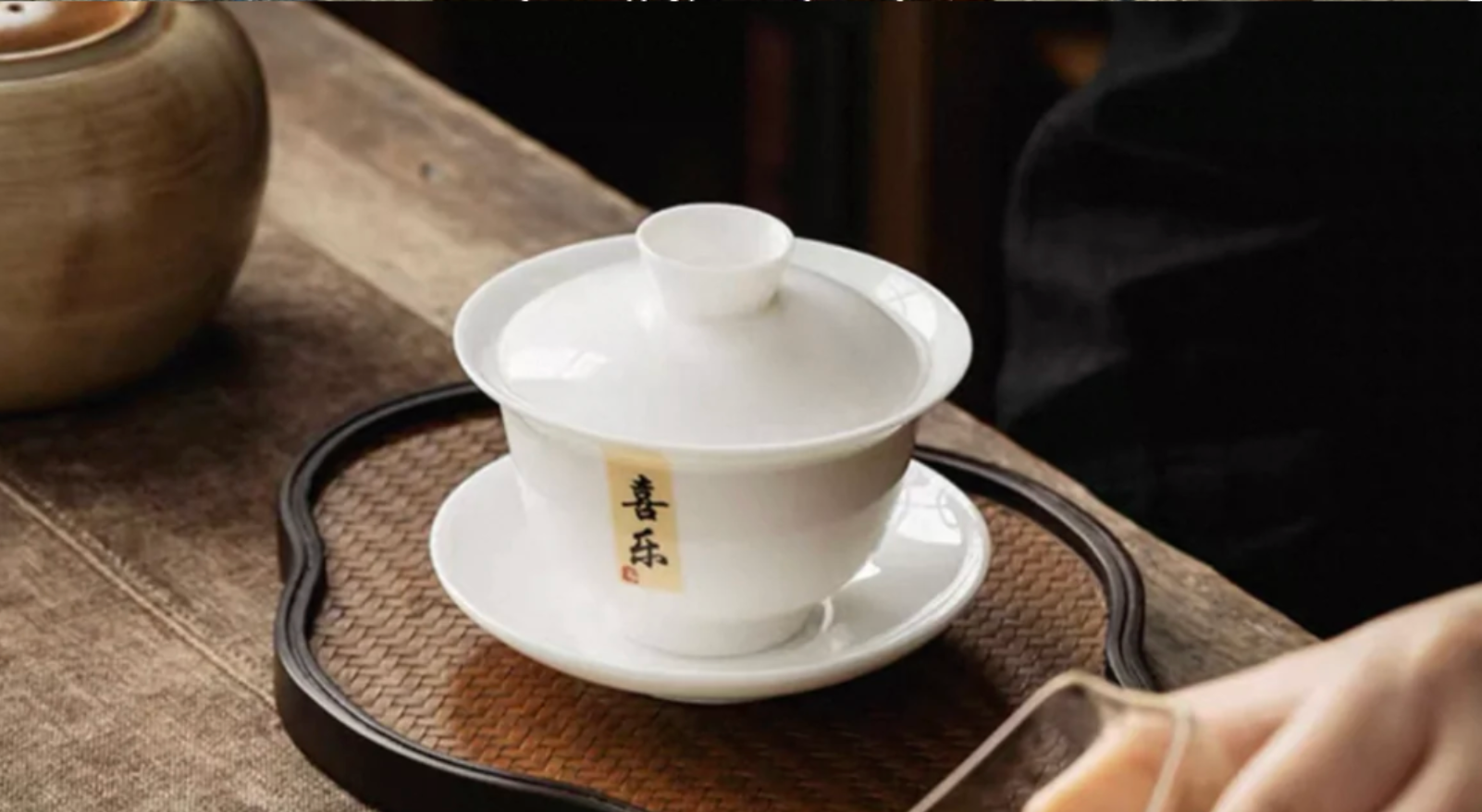
Porcelain Gaiwans
Dehua gaiwans are prized for:
- Clean brewing characteristics
- Thermal stability
- Comfortable handling
- Timeless aesthetics
Fairness Pitchers and Serving Ware
The porcelain's neutral character ensures that tea remains the focal point.
Aesthetic Harmony
The minimalist beauty of Dehua porcelain aligns naturally with the contemplative spirit of Gongfu tea.
Dehua Porcelain vs Jingdezhen Porcelain
| Category | Dehua | Jingdezhen |
|---|---|---|
| Location | Fujian | Jiangxi |
| Reputation | Blanc de Chine | Porcelain Capital |
| Strength | White porcelain | Decorative porcelain |
| Appearance | Ivory-white | Broad variety |
| Decoration | Often minimalist | Often painted |
| Tea Ware Style | Elegant simplicity | Diverse styles |
| Collector Appeal | Material beauty | Decorative artistry |
Neither tradition is superior; each represents a different expression of Chinese ceramic excellence.
Dehua Religious and Sculptural Art
Among Dehua's most celebrated achievements are its sculptural works.
Subjects include:
- Guanyin
- Bodhisattvas
- Buddhist figures
- Taoist immortals
- Scholars
Master sculptors transformed porcelain into spiritual art.
Many museum-quality examples remain among the finest ceramic sculptures ever produced.
Why Collectors Love Dehua White Porcelain
Collectors value Dehua porcelain because it combines:
- Historical significance
- Artistic refinement
- Technical mastery
- Global recognition
- Cultural depth
Exceptional pieces can appreciate substantially in value, particularly when associated with recognized workshops or master artisans.
How to Identify Authentic Dehua White Porcelain
Look for:
Clay Quality
Authentic pieces possess dense, refined bodies.
Color
Ivory-white rather than stark industrial white.
Surface
Smooth and luminous.
Weight
Balanced and substantial.
Craftsmanship
Sharp details and careful finishing.
Maker's Marks
Many contemporary artisans include workshop marks or seals.
Purchasing from trusted specialists remains the safest approach.
Caring for Dehua White Porcelain
Cleaning
Use:
- Warm water
- Mild detergent
- Soft cloths
Avoid abrasive materials.
Storage
Store carefully to prevent impact damage.
Tea Ware Maintenance
Regular use often enhances appreciation of the porcelain's subtle beauty.
Dehua Porcelain in Modern Luxury Living
Today, Dehua porcelain appears in:
- Luxury residences
- Tea rooms
- Boutique hotels
- Design studios
- Fine dining spaces
Its understated elegance complements:
- Minimalism
- Japandi interiors
- Wabi-sabi aesthetics
- Contemporary luxury
In an age increasingly dominated by mass production, handmade porcelain offers authenticity and human connection.
Why Dehua White Porcelain Makes an Extraordinary Gift
A Dehua porcelain gift communicates:
- Respect
- Refinement
- Cultural appreciation
- Timeless taste
Suitable occasions include:
- Weddings
- Housewarmings
- Birthdays
- Corporate gifts
- Tea enthusiasts' collections
Unlike many luxury goods, fine porcelain combines beauty, functionality, and enduring meaning.
Why Choose Oriental Artisan
For those seeking authentic Dehua White Porcelain, sourcing matters as much as the object itself.
Oriental Artisan approaches Chinese craftsmanship through the lens of cultural preservation and artisan partnership.
Its collections emphasize:
- Authentic Dehua craftsmanship
- Carefully curated tea ware
- Artisan-made porcelain
- Collector-quality pieces
- Traditional Chinese aesthetics
- Direct appreciation of heritage crafts
Rather than treating porcelain as a commodity, Oriental Artisan presents each piece within the broader context of Chinese ceramic history, craftsmanship, and tea culture.
For collectors, tea practitioners, interior designers, and gift buyers alike, this approach creates a more meaningful connection to the traditions behind every object.

Leave a comment
This site is protected by hCaptcha and the hCaptcha Privacy Policy and Terms of Service apply.