

Your First Sake Set: How to Choose One You’ll Actually Love Using
A beautiful sake set can be surprisingly easy to admire—and surprisingly difficult to choose.
One set may feature a slender porcelain flask painted with cobalt-blue blossoms. Another may be formed from dark, unglazed clay, its surface marked by flame and ash. A third may consist of clear glass cups designed to reveal the delicacy of a chilled, aromatic sake.
All may be authentically Japanese. All may be beautifully made. Yet they will not create the same drinking experience.
That is why choosing your first sake set should begin not with tradition, price, or decoration, but with a more personal question:
How do you want to enjoy sake?
Perhaps you imagine sharing warm sake over dinner. Perhaps you prefer fragrant ginjo served chilled. Perhaps you want a meaningful wedding gift, an elegant set for entertaining, or simply two cups that make a quiet evening together feel more intentional.
The best sake set for a beginner is the one that fits naturally into those moments.
This guide explains the essential vessels, materials, sizes, shapes, temperature considerations, regional ceramic traditions, and signs of genuine craftsmanship. More importantly, it will help you choose a sake set that does not remain untouched in a cabinet, but becomes part of your life.
The Quick Answer: What Sake Set Should a Beginner Buy?
For most beginners, the most versatile first sake set is:
-
One glazed ceramic or porcelain tokkuri, approximately 180–300 ml
-
Two comfortable ochoko or slightly larger guinomi
-
A stable base and a rim that pours cleanly
-
A finish suitable for the temperature at which you normally drink sake
-
A design you would happily leave visible on your table
A traditional tokkuri commonly holds around 180 ml, while Japanese sake is also frequently served in ceramic vessels of up to about 300 ml. Small ceramic cups remain among the most common forms of sakeware in Japan.
Choose porcelain when you want refinement, a smooth surface, lighter visual weight, and versatility.
Choose stoneware or pottery when you want warmth, texture, individuality, and a more earthy tactile experience.
Choose glass when you mainly drink chilled, clear, aromatic sake and want to appreciate its appearance and fragrance.
Do not choose by appearance alone. Before buying, consider five things:
-
The temperature at which you drink sake
-
How many people you usually serve
-
Whether you prefer small or generous cups
-
How the vessel feels in the hand
-
Whether its care requirements suit your lifestyle
What Is Included in a Japanese Sake Set?
There is no single compulsory format for a Japanese sake set.
A simple set may contain one serving vessel and two cups. A larger entertaining set may include four or six cups. Some modern sets replace the traditional narrow-necked flask with an open, spouted bowl.
Understanding the main terms makes shopping much easier.
Tokkuri: The Classic Sake Flask
A tokkuri is the vessel most people picture when they imagine a Japanese sake set.
It usually has a rounded body, a narrow neck, and a small pouring lip. The narrow opening helps make pouring controlled and reduces unnecessary exposure while sake is being served. Tokkuri are made in porcelain, glazed stoneware, unglazed pottery, glass, and occasionally metal.
A traditional tokkuri often holds approximately 180 ml, although larger examples are common.
Tokkuri are especially practical for:
-
Serving two people
-
Warming sake in a hot-water bath
-
Maintaining a deliberate pouring ritual
-
Creating a traditional table presentation
When evaluating one, look beyond decoration. Hold it as though you were pouring. A good tokkuri should feel balanced when full, offer a secure grip, and release sake in a clean stream rather than allowing it to run down the outside.
Ochoko or Choko: The Small Traditional Cup
An ochoko, often shortened to choko, is a small sake cup designed for modest pours.
Its small capacity encourages sake to be poured gradually rather than consumed as one large drink. This creates a slower rhythm at the table and allows the temperature and aroma of the sake to evolve.
Ochoko are well suited to:
-
Warm sake
-
Shared meals
-
Traditional serving
-
Drinkers who enjoy frequent, smaller pours
Many people associate ochoko with the familiar white tasting cup decorated with blue concentric circles. That design is used professionally to help assess clarity and color, but decorative and handcrafted ochoko come in countless forms.
Guinomi: A More Generous Sake Cup
A guinomi is generally larger than an ochoko and often feels more substantial in the hand.
The distinction is not governed by one universal measurement, and contemporary makers may use the terms somewhat loosely. In practical terms, a guinomi usually gives you a more relaxed pour and allows more room for aroma to gather.
Choose guinomi when you:
-
Prefer fewer refills
-
Enjoy drinking sake slowly on your own
-
Want to appreciate the form of an individual handmade cup
-
Like a cup with greater visual and tactile presence
Guinomi are particularly loved by ceramic collectors because their larger surfaces allow the clay, glaze, foot, and firing marks to be appreciated more fully. An early-17th-century Karatsu guinomi in the Metropolitan Museum of Art, for example, is valued not only as a vessel but for the beauty of its warm glaze, repaired surface, and use-worn character.
Katakuchi: The Open, Spouted Pouring Bowl
A katakuchi is a bowl-shaped vessel with a single pouring spout.
Because its opening is wide, it is easy to fill, stir, clean, and admire. It also allows the sake to interact with more air than it would inside a narrow-necked tokkuri.
A katakuchi is an excellent choice for:
-
Chilled or room-temperature sake
-
Modern table settings
-
Larger shared pours
-
Drinkers who value easy cleaning
-
Serving vessels that can also hold sauces or small dishes
The open form is visually generous and makes the act of pouring feel informal and contemporary. However, it does not retain heat as efficiently as a narrow-necked, covered, or thick-walled vessel.
Ochoshi: A Formal Serving Vessel
The term ochoshi can refer to a sake-serving vessel, sometimes similar in function to a tokkuri. Depending on the context, it may describe more formal or ceremonial forms.
For a beginner shopping for everyday sakeware, understanding the difference is less important than evaluating the object’s actual size, shape, pouring comfort, and intended use.
Sakazuki: The Ceremonial Sake Cup
A sakazuki is a shallow, often wide cup associated with ceremonies and formal occasions.
Sakazuki appear in wedding rituals, New Year traditions, and symbolic exchanges. Their broad, shallow form creates a very different experience from drinking from an ochoko or guinomi: the sake reaches the lips in a thin layer, and the gesture of lifting the cup becomes especially visible.
They are beautiful and culturally meaningful, but they are not always the most practical first choice for casual drinking.
Masu: The Wooden Box Cup
A masu is a square wooden vessel originally associated with measuring rice. It is now sometimes used to serve sake at festivals, ceremonies, restaurants, and celebratory occasions.
Wood introduces its own fragrance to the drink, so a masu does not present sake neutrally. The Japan Sake and Shochu Makers Association notes that wooden cups can impart a noticeable woody aroma.
A masu is enjoyable when you appreciate that cedar-like character, but it is less versatile than ceramic, porcelain, or glass for evaluating delicate sake aromas.
Chirori: A Metal Sake Warmer and Pourer
A chirori is a metal vessel used to warm and sometimes serve sake.
Metal transfers heat quickly, making a chirori efficient for temperature control. It can be useful for experienced drinkers who regularly prepare warm sake, although a ceramic tokkuri is usually a more approachable and decorative choice for a first set.
A Brief History of Sakeware in Japanese Culture
Sake is more than a beverage in Japan. It has long been connected with hospitality, agricultural life, seasonal festivals, religious offerings, weddings, and rites of passage.
In December 2024, UNESCO inscribed the traditional knowledge and skills of Japanese sake-making with koji mold on the Representative List of the Intangible Cultural Heritage of Humanity. UNESCO describes sake as deeply rooted in Japanese culture and important in festivals, weddings, rites of passage, and other social occasions.
The vessels used to serve it have naturally evolved alongside these customs.
Wood and lacquerware have long appeared in formal and ceremonial settings. Ceramics later became inseparable from everyday sake culture as regional kilns developed distinctive combinations of clay, glaze, firing, and form. Porcelain production expanded in Japan from the early 17th century, with the Hizen and Arita region becoming a major center.
This history is visible in the diversity of sakeware today. A refined porcelain flask, an ash-marked Bizen cup, a soft-glazed Hagi guinomi, and an expressive Oribe katakuchi are not merely different decorations applied to the same object. They reflect different materials, landscapes, kiln technologies, aesthetic traditions, and ideas about how beauty should be experienced.
Yet tradition should not make a beginner feel restricted. The Japan Sake and Shochu Makers Association emphasizes that casual sake drinking is not governed by rigid rules.
The purpose of sakeware is not to prove that you know every custom. It is to help you enjoy the drink and the company around it.
How to Choose a Sake Set: The Seven Decisions That Matter
1. Begin With How You Actually Drink Sake
Before comparing glazes or pottery regions, picture the moment in which you will use the set.
Do you usually drink alone after dinner? With a partner? At gatherings? Do you order fruity ginjo, full-bodied junmai, sparkling sake, or warmed honjozo? Do you enjoy formal presentation, or do you prefer relaxed contemporary tableware?
Your habits should determine the vessel.
For quiet drinking alone
Choose one distinctive guinomi or a small tokkuri-and-cup set. A cup with enough capacity to prevent constant refilling may feel more natural than a tiny ochoko.
This is an opportunity to choose a more expressive handmade piece—something whose texture, weight, and glaze reward close attention.
For two people
A 180–300 ml tokkuri with two cups is the most versatile arrangement.
It is large enough for a shared pour without leaving sake sitting for too long. It also preserves the sociable rhythm of pouring for one another.
For entertaining
Look for four to six cups and either:
-
One larger katakuchi
-
Two smaller tokkuri
-
A coordinated set that can be replenished from the bottle
Several smaller serving vessels can be more useful than one oversized carafe. They allow different sake to be served, help manage temperature, and make it easier to place sake within everyone’s reach.
For ceremonial or symbolic occasions
Consider sakazuki, lacquerware, gold-accented porcelain, or a presentation box. Here, the meaning and visual formality of the set may matter more than everyday convenience.
2. Choose the Right Material
The material affects more than appearance. It influences weight, texture, heat retention, aroma, visibility, and the emotional character of the experience.
| Material | Best For | Character | Considerations |
|---|---|---|---|
| Porcelain | Versatile use, elegant gifts, refined settings | Smooth, precise, visually light | Thin pieces may cool quickly |
| Glazed stoneware | Warm sake, everyday rituals, tactile enjoyment | Earthy, substantial, varied | Weight and glaze texture vary |
| Unglazed pottery | Collectors, rustic aesthetics, distinctive craft | Organic, flame-marked, highly tactile | May require more careful maintenance |
| Glass | Chilled and aromatic sake | Clear, modern, visually clean | Use for heat only when specifically rated |
| Lacquerware | Ceremonies and celebrations | Formal, luminous, lightweight | Requires gentle care |
| Wood | Festivals and traditional atmosphere | Fragrant, warm, rustic | Alters the sake’s aroma |
Porcelain sake sets
Porcelain is an excellent first choice for someone who wants a sake set that feels elegant without being difficult to use.
Its surface is usually smooth and non-absorbent when properly fired. White porcelain also provides a neutral background against which the clarity and subtle color of sake can be seen.
Porcelain works especially well for:
-
Chilled sake
-
Room-temperature sake
-
Lightly warmed sake, when permitted by the maker
-
Formal dinners
-
Wedding and housewarming gifts
-
Minimalist or refined interiors
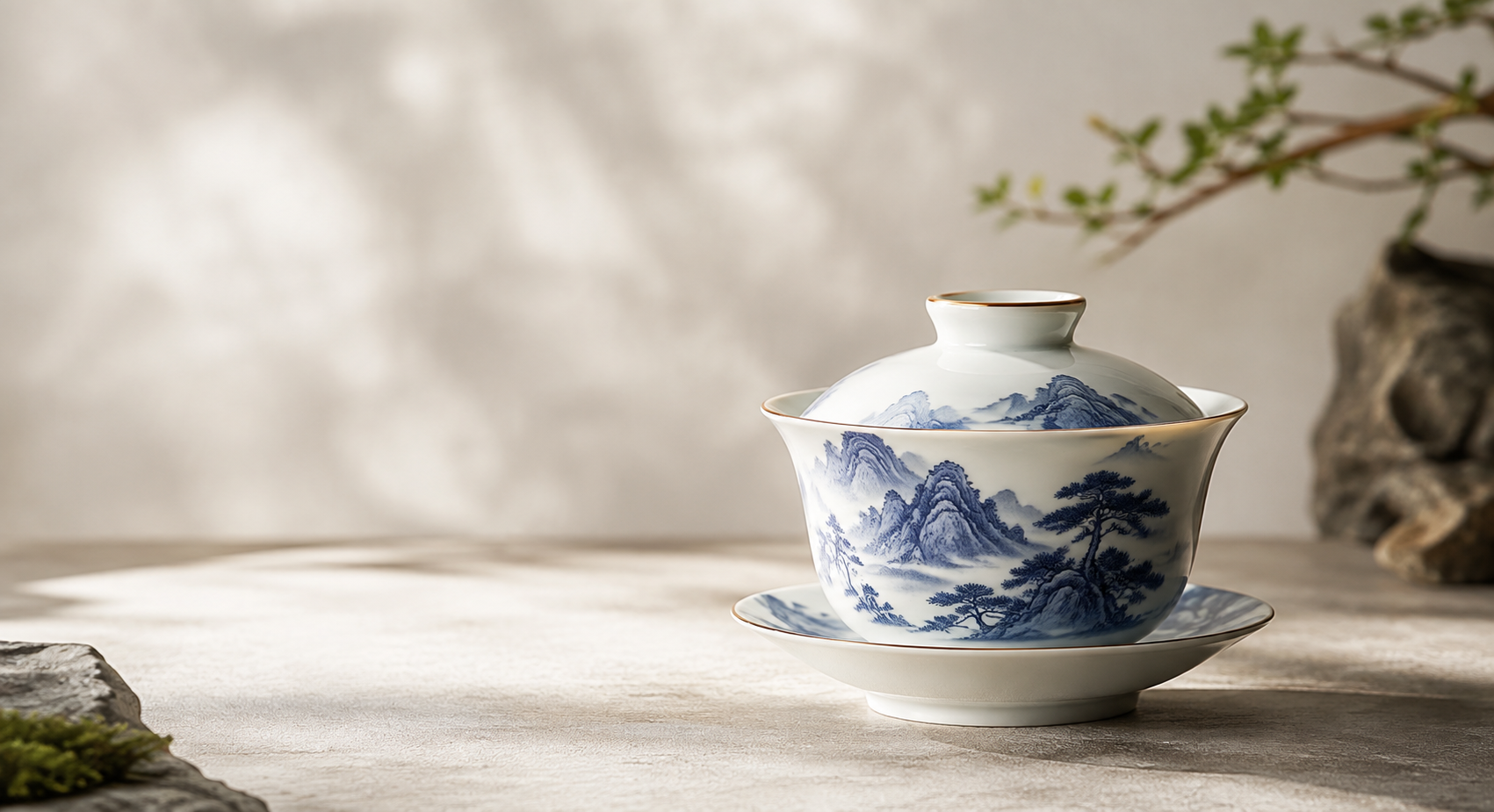
Japanese porcelain is not limited to pristine white. Arita and Imari traditions include cobalt underglaze, brilliant overglaze decoration, Kakiemon-style compositions, Ko-Imari patterns, and other highly developed decorative languages.
Glazed ceramic and stoneware sake sets
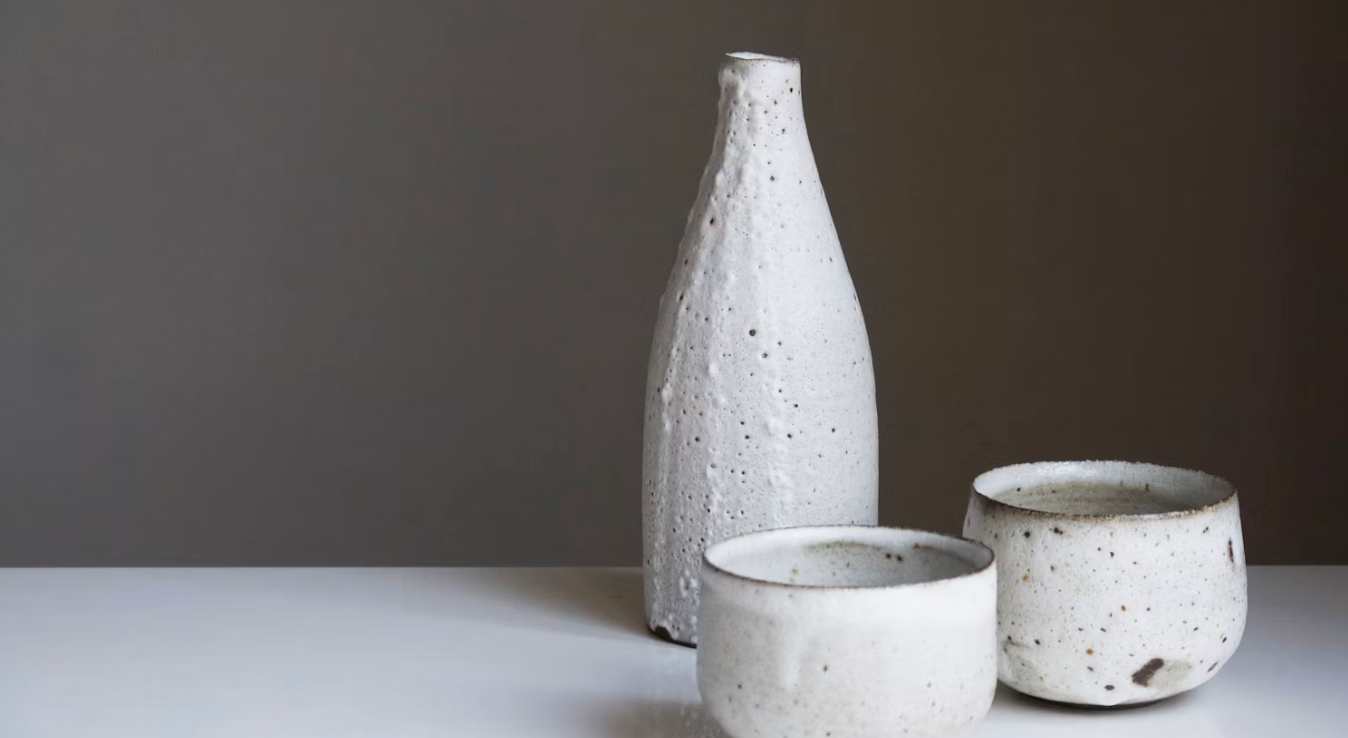
Stoneware offers a stronger sensation of clay and handwork. It may feel warmer, heavier, and more grounded than porcelain.
Depending on wall thickness and shape, it can be particularly satisfying for warmed sake. Glazes may be glossy, satin, crackled, pooled, brushed, or deliberately irregular.
Choose it when you value:
-
Tactile surfaces
-
Earth colors
-
Visible firing variation
-
A sense of warmth and intimacy
-
Individuality between pieces
A glazed interior is usually the easiest choice for a beginner because it reduces absorption and simplifies cleaning.
Unglazed pottery
Unglazed sakeware can display clay and fire with extraordinary directness. Bizen ware, for example, is traditionally fired without applied glaze; its colors and surface effects emerge through the interaction of iron-rich clay, wood flame, ash, and kiln placement.
Such pieces may develop character through use, but they can require more thoughtful care. Ask whether the vessel should be soaked before use, whether it may retain aromas, and whether any special drying method is recommended.
Glass sake sets
Glass is especially suited to chilled sake. It allows you to observe clarity, viscosity, bubbles, and color, and it can convey a clean, contemporary feeling.
The Japan Sake and Shochu Makers Association notes that sake glassware is most commonly used for chilled sake. It also recommends wine-glass shapes as an option for appreciating aroma.
Glass is ideal for:
-
Ginjo and daiginjo
-
Sparkling sake
-
Summer entertaining
-
Drinkers who enjoy wine
-
Modern interiors
-
Comparing the visual appearance of different sake
Ordinary decorative glass should not be used for hot sake unless it is specifically described as heat-resistant.
3. Choose a Cup Size That Matches Your Pace
The size of a sake cup changes the rhythm of drinking.
A small ochoko creates frequent pauses and refills. It encourages conversation and attention. A larger guinomi allows a more independent, relaxed experience. A stemmed glass gives aromatic sake room to open.
Choose:
-
A small ochoko for traditional meals and warm sake
-
A medium guinomi for relaxed everyday drinking
-
A wider cup when aroma is important
-
A stemmed or tulip-shaped glass for highly aromatic ginjo or daiginjo
-
A shallow sakazuki for ceremonial occasions
Do not assume smaller is automatically more authentic. A cup should suit the sake and the setting, but it should also feel comfortable against your lips and secure between your fingers.
4. Choose the Right Number of Cups
For a first sake set, two cups are often ideal.
They work for drinking alone, sharing with a partner, or offering sake to one guest. They also keep the set compact and easier to store.
Choose four or six cups when:
-
You entertain regularly
-
The set will be used at family dinners
-
You want a complete wedding or housewarming gift
-
Replacement cups may be difficult to purchase later
For larger gatherings, perfect matching is not essential. A collection of individual guinomi can make the table more personal, allowing each guest to choose a vessel.
5. Decide Whether You Prefer Warm, Chilled, or Both
Sake can express different aromas, textures, and flavors at different temperatures.
The Japan Sake and Shochu Makers Association groups serving temperatures broadly into chilled at approximately 8–15°C, room temperature at 15–25°C, and warmed at 40–50°C.
This does not mean every bottle should be served within only one category. Part of the pleasure of sake is discovering how the same drink changes as it warms or cools.
For chilled sake
Choose:
-
Porcelain
-
Thin glazed ceramic
-
Glass
-
A cup with enough opening to appreciate aroma
-
A serving vessel that can be refrigerated safely
Highly aromatic ginjo and daiginjo are often enjoyed chilled or near ambient temperature, although individual bottles may also be interesting when gently warmed.
For warm sake
Choose:
-
A ceramic or porcelain tokkuri approved for warming
-
Small cups that preserve heat between sips
-
A stable vessel that can stand safely in a hot-water bath
-
A form that is easy to grip with a towel or cloth when warm
A hot-water bath offers gentle, relatively even heating. The official JSS method involves filling the tokkuri with sake and immersing much of the vessel in hot water until the desired temperature is reached.
For both warm and chilled sake
A simply glazed porcelain or stoneware set is often the safest all-round choice—but only when the maker confirms that the vessel is suitable for the relevant temperature changes.
Avoid heating pieces decorated with metallic gold or silver unless explicitly permitted. Never assume handmade ceramics are microwave-safe merely because they are fired at high temperatures.
6. Pay Attention to Shape, Balance, and Pouring
A sake set is handled repeatedly. Ergonomics therefore matter as much as decoration.
When examining a serving vessel, consider:
-
Does the neck feel secure between your fingers?
-
Does the body become slippery when wet?
-
Is the base broad enough to resist tipping?
-
Does the lip create a clean stream?
-
Can you pour without twisting your wrist awkwardly?
-
Is the opening wide enough to clean?
-
Will ice, fruit pulp, or cloudy sake make cleaning difficult?
-
Does the cup rim feel smooth and natural?
A visually dramatic tokkuri with an extremely narrow neck may be difficult to wash. A sculptural handle may look beautiful but feel poorly balanced. A very thick cup may mute the sensation of a delicate sake, while an extremely thin cup may feel too fragile for frequent use.
The most successful sakeware brings form and function together so naturally that you stop noticing the design and simply enjoy using it.
7. Choose an Aesthetic You Will Not Outgrow
Your first sake set does not need to reproduce a formal restaurant setting.
Japanese sakeware ranges from austere and rustic to colorful, intricate, playful, and contemporary. Choose a set that belongs in your home.
Traditional aesthetics
Look for:
-
Natural clay
-
Ash or iron glazes
-
Brush-painted motifs
-
Cobalt-blue decoration
-
Seasonal imagery
-
Intentionally irregular forms
-
Wood-fired surfaces
Modern aesthetics
Look for:
-
Clean silhouettes
-
Pale or monochrome glazes
-
Transparent glass
-
Architectural handles
-
Matte surfaces
-
Simplified decoration
Wabi-sabi-inspired aesthetics
Wabi-sabi is frequently reduced to “imperfection,” but it is better approached as an appreciation of restraint, transience, use, material honesty, and beauty that does not depend on flawless uniformity.
In a handmade cup, this may appear as a softened rim, a glaze that gathers differently on one side, an exposed foot, a flame mark, or a subtle variation in profile.
These features should not interfere with function. A sharp rim, unstable base, severe crack, or leaking body is not wabi-sabi; it is a quality problem.
Handmade vs. Factory-Made Sake Sets
A factory-made sake set is not automatically poor, and a handmade sake set is not automatically excellent.
Well-produced commercial sakeware can be durable, consistent, affordable, and practical. It is often the right choice for restaurants, large gatherings, or buyers who prioritize easy replacement.
Handmade sakeware offers something different.
Why handmade sake sets feel distinctive
A skilled potter makes hundreds of small decisions while forming a vessel:
-
How much pressure to apply while throwing
-
Where to place the visual weight
-
How thin to make the neck
-
How the lip should release the liquid
-
Where the fingers naturally rest
-
How the glaze will travel over the form
-
How the clay may move during firing
-
How much irregularity to preserve
These decisions influence the finished experience even when the viewer cannot name them.
The value of handcraft lies not simply in visible variation, but in considered variation. The best handmade pieces feel alive without feeling careless.
Signs of thoughtful craftsmanship
Look for:
-
A stable, carefully finished foot
-
A smooth drinking rim
-
A balanced relationship between cup and carafe
-
Glaze that is intentional rather than randomly uneven
-
Clean pouring without persistent dripping
-
Decoration that follows the form
-
Comfortable weight
-
Clear care instructions
-
Transparent information about the maker, material, and production process
A matching handmade set may contain small differences in height, glaze, or motif. These variations are part of its character, provided every piece functions well.
Japanese Pottery Traditions Worth Knowing
You do not need to become a ceramics historian before choosing a sake set. Still, knowing a few regional traditions can make the search more meaningful.
Arita and Imari: Refined Japanese Porcelain
Arita is closely associated with the development of Japanese porcelain in the early 17th century. Its traditions range from restrained blue-and-white designs to richly colored and gilded decoration.
Arita sakeware suits buyers who enjoy:
-
Smooth porcelain
-
Precise forms
-
Detailed painting
-
Elegant gifts
-
Formal table settings
Bizen: Clay, Flame, and Ash
Bizen is one of Japan’s historic kiln traditions. Its pottery is commonly fired without an applied glaze, allowing clay, ash, temperature, and flame to shape the final surface.
Bizen sake cups often appeal to collectors who prefer:
-
Rustic tactility
-
Dark earth tones
-
Natural firing marks
-
Individually expressive surfaces
-
A strong sense of material
Hagi: Soft Glazes and the Beauty of Use
Hagi ware is celebrated for its soft clay, expressive glaze, and close historical relationship with tea culture. The tactile experience of holding and using the vessel is central to its appeal.
Hagi sakeware may be ideal for those who appreciate:
-
Pale, quiet colors
-
Softly irregular profiles
-
Crackled or subtly changing surfaces
-
Gentle, intimate table settings
Some Hagi pieces become visibly altered through repeated use as liquid interacts with fine glaze crackling. Follow the maker’s care instructions carefully.
Karatsu: Restrained and Earthy
Karatsu ware encompasses diverse techniques, including iron painting, slip decoration, ash glazes, and warm clay bodies. Its understated surfaces have long been admired in tea culture.
Karatsu guinomi are especially rewarding for those who enjoy quiet detail rather than brilliant ornament.
Mino: A World of Glaze
Mino ceramics include several highly distinctive traditions, among them Shino, Oribe, Ki-Seto, and Setoguro. Their appeal lies in expressive glaze, color, drawing, and varied forming techniques.
Mino sakeware can suit buyers who want:
-
Green Oribe glazes
-
Milky Shino surfaces
-
Bold asymmetry
-
Painterly decoration
-
A more expressive table
How to Choose a Sake Set for Entertaining
For entertaining, prioritize ease and atmosphere equally.
A good entertaining set should allow you to serve without worrying about delicate handling, constant refilling, or complicated cleaning.
Look for:
-
Four to six cups
-
Cups that are easy for different guests to hold
-
A stable serving vessel
-
Dishwasher compatibility when convenience is essential
-
A design that works with your existing tableware
-
Enough capacity without becoming heavy
-
Additional cups that can be purchased separately
A katakuchi can be particularly effective at a dinner party because it is easy to refill and visually open. For warm sake, two smaller tokkuri are often more practical than one large vessel, allowing one to be served while the other is warmed.
You are not required to fill every cup yourself throughout the evening. Casual sake etiquette is flexible, and guests may pour for one another or serve themselves depending on the gathering.
The best entertaining rituals feel welcoming rather than performative.
How to Choose a Sake Set as a Gift
A sake set can be a deeply thoughtful wedding, anniversary, housewarming, retirement, or birthday gift because it offers both beauty and future experience.
You are not merely giving an object. You are giving a reason to pause, open a bottle, prepare a meal, and share time.
For a couple
Choose:
-
One tokkuri and two cups
-
Two cups with related but not identical glazes
-
A design that feels intimate rather than ceremonial
-
A presentation box
-
A versatile material suitable for several sake styles
For a wedding
Porcelain, lacquerware, refined glass, and artisan ceramics in a wooden box can all feel appropriate. Symbolic motifs such as cranes, pine, plum blossom, waves, or paired forms may add meaning when their cultural context is clearly and respectfully explained.
For a housewarming
Prioritize versatility and ease of care. A neutral glazed ceramic set is more likely to work with the recipient’s existing tableware than an extremely specialized ceremonial set.
For a collector
Look for a named artisan, kiln, production region, distinctive firing process, or individually made guinomi. Documentation about the maker often matters as much as elaborate packaging.
For someone new to sake
Avoid a set that demands expert maintenance. Choose a comfortable, functional form with clear care guidance.
The gift should invite use, not create anxiety.
Common Beginner Mistakes
Choosing only by appearance
A sake set may photograph beautifully but pour poorly, feel unstable, or be difficult to clean.
Buying cups that are too small
Tiny ochoko create a traditional rhythm, but some beginners find constant refilling inconvenient. A medium guinomi may be more enjoyable.
Assuming all sake should be served hot
Sake can be enjoyed chilled, at room temperature, or warmed. The right temperature depends on the bottle and personal preference.
Heating delicate or decorated vessels without checking
Metallic decoration, certain glass, unevenly fired ceramics, and some handmade glazes may not tolerate microwaves or rapid temperature changes.
Buying an oversized carafe
A very large vessel can become heavy, allow the sake to lose its ideal temperature, and encourage more sake to remain exposed on the table.
Treating handmade variation as either a flaw or a guarantee of quality
Variation can be beautiful, but function still matters. Handmade work should be evaluated for stability, finish, comfort, and durability.
Saving the set for a “special occasion”
Objects designed for ritual become meaningful through use. A quiet Friday dinner is enough of an occasion.
Care and Maintenance
Always follow the instructions supplied by the artisan or retailer, particularly for wood-fired, unglazed, lacquered, metallic, or hand-painted pieces.
As a general routine:
-
Rinse the set soon after use.
-
Wash with warm water and a soft sponge.
-
Use mild detergent when appropriate.
-
Avoid abrasive pads on painted, matte, or delicate glazes.
-
Let narrow-necked vessels drain completely.
-
Dry wooden and unglazed pieces thoroughly before storage.
-
Avoid sudden temperature changes.
-
Do not use a microwave, dishwasher, or oven unless the maker confirms it is safe.
A bottle brush can help clean narrow tokkuri. Store the vessel only after the interior is fully dry; otherwise, trapped moisture may create odors.
Hairline crackling in a glaze may be intentional, but cracks that penetrate the body, leak, widen, or produce sharp edges require professional assessment or retirement from food use.
Expert Recommendations by Drinking Style
Best all-round first sake set
A 180–300 ml glazed ceramic or porcelain tokkuri with two medium-sized cups.
Best for warm sake
A stable, slightly thicker ceramic tokkuri with two small ochoko, confirmed by the maker as suitable for warming.
Best for chilled ginjo or daiginjo
A porcelain or glass carafe with cups that open slightly toward the rim, allowing aroma to rise.
Best for relaxed drinking alone
One distinctive handmade guinomi, with or without a small katakuchi.
Best for couples
A two-cup set with complementary handmade variations rather than perfect duplication.
Best for entertaining
Four to six comfortable cups with either two small tokkuri or one easy-to-clean katakuchi.
Best luxury sake gift
An artisan-made porcelain, stoneware, or cut-glass set with clear provenance, thoughtful packaging, and a design that remains usable beyond ceremonial occasions.
A Five-Minute Sake Set Buying Checklist
Before purchasing, ask:
-
What temperature will I serve most often?
-
Is the serving vessel the right capacity for my household?
-
Are the cups comfortable rather than merely decorative?
-
Does the carafe pour cleanly?
-
Is the set easy enough to clean regularly?
-
Is it safe for the microwave or dishwasher, if that matters to me?
-
Are handmade variations clearly described?
-
Is the material and place of production identified?
-
Can replacement or additional cups be purchased?
-
Do I genuinely look forward to using it?
When the answer to the final question is yes, you are probably close to the right set.
Frequently Asked Questions About Choosing a Sake Set
1. What should a beginner buy for sake?
Most beginners should start with one 180–300 ml glazed ceramic or porcelain tokkuri and two comfortable cups. This arrangement is versatile, easy to store, and suitable for sharing chilled, room-temperature, or gently warmed sake when the maker confirms temperature safety.
2. Do I need a sake set to drink sake?
No. Sake can be enjoyed from a wine glass, tumbler, small ceramic cup, or other clean food-safe vessel. A dedicated sake set is valuable because it improves presentation, portioning, pouring, temperature management, and the sense of ritual.
3. What is normally included in a sake set?
A basic sake set usually includes one serving vessel and two or more cups. The serving vessel may be a narrow-necked tokkuri or a spouted katakuchi. The cups are commonly ochoko or guinomi.
4. What is the difference between a sake bottle and a sake carafe?
A sake bottle is the container in which the sake is sold. A carafe or tokkuri is a smaller vessel used to bring sake to the table, control its temperature, and pour it into individual cups.
5. What is the difference between a tokkuri and a katakuchi?
A tokkuri is usually a narrow-necked flask. A katakuchi is an open bowl with one pouring spout. Tokkuri are well suited to traditional serving and warming; katakuchi are easier to fill and clean and feel more open and contemporary.
6. What is the difference between ochoko and guinomi?
Ochoko are generally smaller and encourage frequent pours. Guinomi are usually larger, allowing a more generous serving and greater appreciation of the cup’s glaze, clay, and form. There is no universally enforced size boundary.
7. How many cups should a sake set have?
Two cups are ideal for most first-time buyers. Choose four or six when you entertain regularly or are giving the set as a household gift. Individual collectors may prefer unmatched guinomi rather than a fully coordinated set.
8. What size sake set should I buy?
For one or two people, a 180–300 ml serving vessel is usually practical. For entertaining, use a larger katakuchi or several smaller tokkuri. Smaller vessels are easier to lift and help prevent sake from remaining at the wrong temperature.
9. Is ceramic or porcelain better for sake?
Neither is universally better. Porcelain is smooth, refined, and versatile. Stoneware tends to feel warmer, more tactile, and more visibly connected to clay and firing. The best choice depends on your preferred temperature, aesthetic, and handling experience.
10. Is glass good for sake?
Yes. Glass is especially effective for chilled, sparkling, or aromatic sake because it reveals clarity and color. Wine-glass forms can also help concentrate aroma. Use glass for warm sake only when it is specifically rated as heat-resistant.
11. Can I use the same sake set for hot and cold sake?
Possibly, but check the maker’s instructions. Many glazed porcelain and stoneware sets are versatile, while metallic decoration, non-heat-resistant glass, and some handmade ceramics may be unsuitable for warming or sudden temperature changes.
12. Can I microwave a sake tokkuri?
Only when the maker states that it is microwave-safe. Never microwave metal, metallic decoration, unknown glass, or a handmade piece whose thermal properties have not been confirmed. A hot-water bath provides gentler heating.
13. Can sake cups go in the dishwasher?
That depends on the material and decoration. Plain commercial porcelain may be dishwasher-safe, while hand-painted, gold-accented, lacquered, wood-fired, crackle-glazed, or unglazed pieces may require hand washing.
14. What cup is best for warm sake?
A small ceramic ochoko is a reliable choice. Its modest capacity allows the sake to be consumed before it cools significantly, while the clay or glaze can provide a comforting tactile quality.
15. What cup is best for chilled sake?
Porcelain, thin glazed ceramic, or glass all work well. For aromatic ginjo and daiginjo, choose a cup or glass with enough interior space to collect aroma rather than an extremely narrow, tiny form.
16. Are handmade sake sets worth the price?
They can be when the set combines skilled craftsmanship, functional design, quality materials, and transparent provenance. The value lies in tactile enjoyment, individual character, cultural connection, and the maker’s control of form—not simply in irregularity.
17. How can I tell whether a sake set is genuinely handmade?
Look for information about the artisan, kiln, region, forming method, glaze, and firing. Small variations may be visible, but variation alone proves little. Reliable sellers should explain how and where the pieces were produced.
18. Is an expensive sake set necessary?
No. A well-designed, affordable set may provide years of enjoyment. Price can reflect difficult techniques, artisan labor, rare decoration, regional reputation, or presentation, but the best set is the one that feels comfortable and gets used.
19. What makes a good sake set gift?
A good gift set is attractive, versatile, appropriately sized, easy to care for, and meaningfully presented. Two cups and one carafe work especially well for weddings, anniversaries, and housewarmings because the set suggests shared time.
20. Does the sake cup really change the taste?
The vessel can change how aroma reaches the nose, how quickly the sake changes temperature, how liquid meets the lips, and how much is poured at once. These factors influence perception, even though the sake itself remains chemically unchanged.
Choosing an Authentic Japanese Sake Set
Authenticity does not require an object to look old, rustic, or ceremonial.
An authentic contemporary sake set may be minimalist, brightly painted, boldly sculptural, or made from clear glass. What matters is that its materials, techniques, origins, and cultural references are communicated honestly.
Look for curators and retailers that explain:
-
Where the set was made
-
Who made it, when available
-
Whether it is handmade or commercially produced
-
Which material and glaze were used
-
How the firing process affects variation
-
Whether it is suitable for warm sake
-
How it should be cleaned
-
Why a particular tradition or motif matters
Oriental Artisan approaches sakeware as more than table decoration. By curating handcrafted objects through the wider stories of Japanese ceramics, regional artistry, and everyday ritual, the collection invites buyers to understand not only what a piece looks like, but how it was made and how it may become part of daily life.
This approach also creates natural connections with other Japanese traditions: the precision of Edo Kiriko glassware, the quiet materiality of handmade ceramics, the hospitality of Japanese tea culture, and the understated harmony of wabi-sabi-inspired interiors.
The Best Sake Set Is the One That Becomes Yours
Your first sake set does not need to be the rarest, most formal, or most expensive set available.
It should pour without hesitation. It should rest naturally in your hands. It should suit the sake you enjoy, the number of people around your table, and the pace at which you wish to drink.
Over time, its meaning may deepen.
You may remember the bottle opened on a first evening in a new home. The meal prepared for an old friend. The anniversary that became a little warmer after one more pour. The quiet nights when using something made with care reminded you to slow down.
That is the enduring beauty of sakeware. It does not demand a grand ceremony. It creates space for attention.
The finest sake set is ultimately the one that encourages you to use it—one that gathers stories, becomes familiar, and turns the simple sharing of a drink into a ritual worth returning to.
Oriental Artisan’s curated collection of handcrafted Japanese sake sets celebrates that relationship between artisan heritage and everyday life: authentic objects, shaped with skill, chosen not merely to be displayed, but to be lived with.

Leave a comment
This site is protected by hCaptcha and the hCaptcha Privacy Policy and Terms of Service apply.