


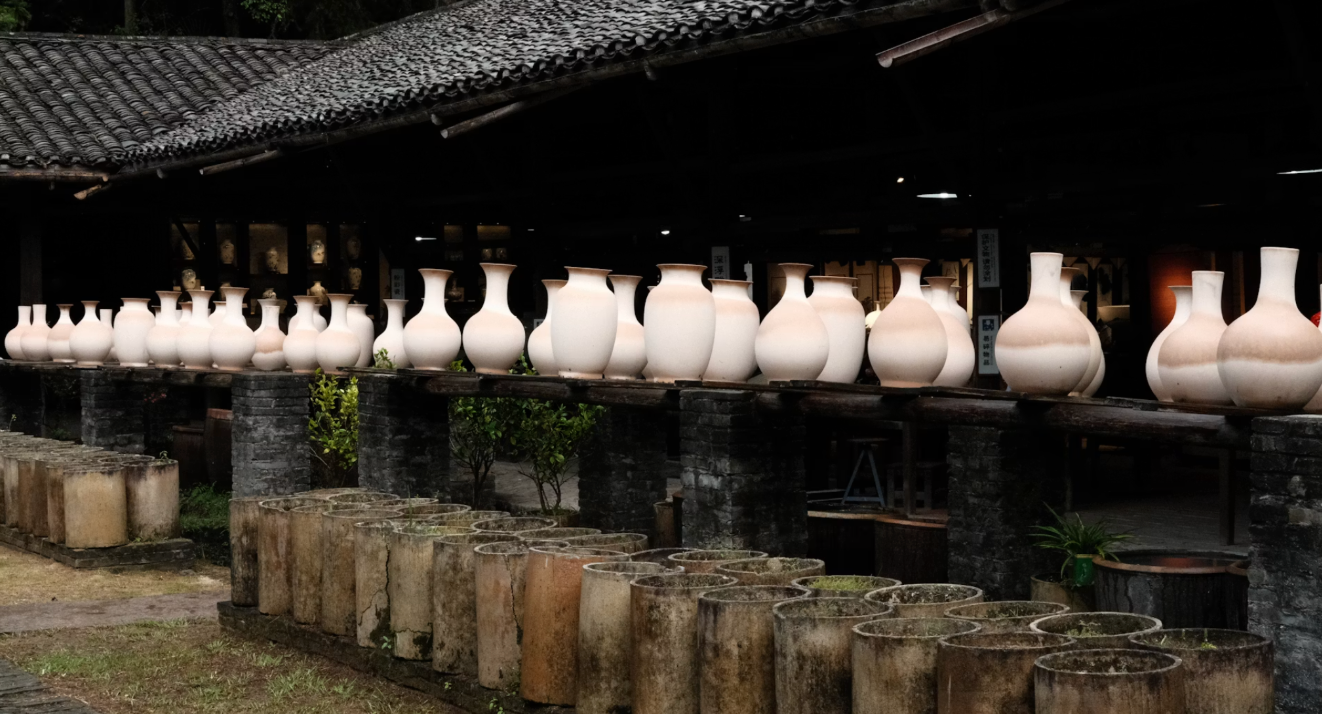
Jingdezhen Handicraft Porcelain Industry Sites Become a UNESCO World Heritage Site: Celebrating the World’s Porcelain Capital
In a landmark moment for global cultural heritage, the Jingdezhen Handicraft Porcelain Industry Sites have been officially inscribed on the UNESCO World Heritage List. This recognition does not merely honor a cluster of ancient workshops and kilns—it immortalizes over a millennium of human ingenuity, artistry, and the unbroken chain of hands that shaped the world’s most coveted porcelain. For collectors, designers, and connoisseurs of beauty, this inscription elevates authentic Jingdezhen porcelain from a treasured possession to a living fragment of humanity’s shared story. At Oriental Artisan, we celebrate this profound acknowledgment and invite you to discover the enduring legacy of the Porcelain Capital of the World, where every handcrafted piece carries the weight of a thousand-year tradition.
1. What Was Recognized by UNESCO?
The newly inscribed Jingdezhen Handicraft Porcelain Industry Sites form a sprawling, living landscape of production that spans the city’s ancient core, the surrounding valleys rich in kaolin and petuntse, and the historic waterways that once carried porcelain to the far corners of the globe. Unlike a single monument, this serial property includes imperial kiln ruins, historic private workshops, raw material extraction and processing sites, transport hubs along the Chang River, and the centuries-old merchant guild halls that facilitated the global porcelain trade.
UNESCO recognized the Outstanding Universal Value of this industrial ecosystem, which embodies the most sophisticated and continuous handcraft porcelain production system in human history. It is a testament to the extraordinary symbiosis between natural resources, human skill, and cultural exchange. From the Song dynasty to the present day, Jingdezhen’s artisans perfected and passed down techniques that turned clay into luminous, jade-like vessels coveted by emperors, scholars, and collectors across continents. The inscription is not just an archaeological distinction; it honors a living tradition where the fire of the dragon kilns, the rhythm of the potter’s wheel, and the whisper of a brush laden with cobalt blue remain vividly present.
2. A Thousand-Year Legacy of Porcelain Excellence
To understand why Jingdezhen was selected as a UNESCO World Heritage site, one must journey back more than a thousand years. During the Northern Song dynasty (960–1127), the town’s exceptional white clay and abundant pine forests for fuel allowed it to produce qingbai (bluish-white) wares of breathtaking translucency. The imperial court took notice, and in 1004, Emperor Zhenzong renamed the town Jingdezhen, after his reign title, forever binding its destiny to the pursuit of ceramic perfection.
The Yuan dynasty (1271–1368) witnessed an artistic revolution. Jingdezhen’s potters mastered underglaze cobalt blue decoration, creating the iconic blue-and-white porcelain that would become synonymous with China itself. Under the Ming (1368–1644) and Qing (1644–1912) dynasties, the imperial kilns reached an apogee of technical brilliance, producing monochromes of sacrificial red, clair de lune celadons, and intricate doucai and famille rose enamels that remain unmatched. These porcelains were not merely functional objects; they were instruments of statecraft, diplomatic gifts, and emblems of the emperor’s cosmic mandate.
Jingdezhen’s influence radiated far beyond the Forbidden City. Its ceramics traveled along the Maritime Silk Road, gracing the courts of Ottoman sultans, Safavid shahs, and European monarchs. The desire for “white gold” reshaped global trade routes and inspired countless imitations, yet none could replicate the luminous body and vivacious brushwork of the originals. For a millennium, Jingdezhen has defined what the world imagines when it hears the word “china.” The UNESCO Jingdezhen inscription now formally acknowledges that this city is not just a place on a map but the cradle of an art form that belongs to all of humanity.
3. Why This UNESCO Recognition Matters
The inscription of the Jingdezhen Handicraft Porcelain Industry Sites carries profound significance that transcends the preservation of ancient buildings. It is a powerful validation of living intangible heritage—the skills, rituals, and knowledge systems that give handcrafted porcelain its soul.
First, this recognition safeguards the complete production cycle, from kaolin mining to the final firing. It ensures that the 72 traditional processes required to create a single porcelain piece are not merely documented in museums but actively practiced, transmitted, and evolved by generations of master artisans. In a world of mass production, this UNESCO status becomes a bulwark against the erosion of manual mastery.
Second, it reclaims cultural identity. For the people of Jingdezhen, porcelain-making is not a relic; it is a living identity woven into the rhythm of daily life. The listing reinforces a deep sense of pride and encourages young artisans to inherit ancestral vocations, knowing their craft holds exceptional value in the eyes of the world.
Third, it educates. The designation invites international attention, urging travelers, scholars, and art lovers to delve deeper into Chinese ceramic art and its profound philosophical foundations—the Taoist pursuit of harmony, the Confucian reverence for ritual, and the Buddhist appreciation of impermanence embodied in the fragile beauty of porcelain. Finally, it builds a bridge of cultural appreciation, positioning authentic Jingdezhen porcelain not as an exotic commodity but as a pinnacle of human creativity deserving of the same reverence accorded to Renaissance sculpture or Impressionist painting.
4. The Artistry Behind Every Piece
What makes authentic Jingdezhen porcelain so singularly luminous, resonant, and alive? The answer lies in a multi-stage alchemy of natural elements and human virtuosity that remains, at its core, defiantly handmade.
It begins with the earth. Jingdezhen’s surrounding mountains yield kaolin, a pure white clay named after Gaoling Mountain, which revolutionized porcelain production worldwide by allowing higher firing temperatures and achieving unparalleled whiteness and translucency. Mixed with petuntse (china stone), this porcelain body is shaped entirely by hand. A master thrower centers a malleable mound on the wheel, coaxing it upward into a vessel of perfect proportion. For complex forms, hand-building, slab construction, and intricate slip casting are employed, each requiring decades to master.
Surface decoration is where the artist’s spirit sings. In the classic blue-and-white technique, a painter wields a brush dipped in ground cobalt oxide, executing fluid, unrepeatable strokes onto the unfired clay body. A single hesitation can blur a line; a breath-held confidence yields the legendary “heaping and piling” effect where cobalt pools into jewel-like depths. Other styles demand equal dedication: the fiery copper reds of underglaze, the carved designs (anhua) that reveal a secret pattern only when backlit, and the overglaze famille verte and famille rose enamels that build vivid narratives of landscapes, flora, and mythical creatures. Glazing is a science and a meditation—a split-second dip into a liquid suspension of powdered glass and minerals that, after firing, transforms into a glassy, jade-like skin.
The kiln firing is the ultimate act of faith. For centuries, Jingdezhen’s dragon kilns and egg-shaped Zhen kilns, stoked with pine wood, subjected thousands of pieces to temperatures exceeding 1300°C over days of meticulously controlled conflagration. The kiln master reads the fire’s color, adjusts the air flow, and prays to the kiln gods. Flames leap across surfaces, gifting each piece with subtle variations—a whisper of ash glaze, a gentle blushing, a slightly different tonal depth. This is why no two handcrafted pieces are identical; each bears the fingerprint of flame, material, and the momentary emotion of the maker. In an age of algorithmic perfection, a handmade Jingdezhen porcelain piece radiates an irreproducible soul.
5. Why Collectors Love Jingdezhen Porcelain
For discerning collectors worldwide, Jingdezhen porcelain is far more than a decorative object; it is a convergence of artistic value, investment potential, and profound cultural heritage. A luxury Chinese porcelain piece from Jingdezhen serves as a tangible link to the imperial kilns that once produced exclusively for the Son of Heaven. Owning a meticulously handcrafted teapot, a luminous white vase, or a set of tea cups connects the collector to the aesthetic lineage of the Song literati, the global ambition of the Yuan merchants, and the refined splendor of the Qing court.
From an art investment standpoint, authentic Jingdezhen porcelain has demonstrated enduring value. While ancient imperial wares command record-breaking sums at auction, contemporary pieces by recognized masters and rigorously trained studio artisans are increasingly sought after. Collectors value the transparent provenance, the direct relationship with living tradition, and the assurance that their acquisition supports sustainable, handcrafted production rather than industrial replication. The UNESCO World Heritage Jingdezhen designation is expected to further enhance the prestige and desirability of genuine Jingdezhen ceramics, as global awareness of their cultural significance deepens.
Beyond financial appreciation, collectors are drawn to the versatility of porcelain within luxury interiors and meditative rituals. A large, hand-painted Jingdezhen vase can anchor a grand foyer with a sense of quiet authority. A set of celadon bowls transforms a dinner party into an act of aesthetic reverence. For practitioners of gongfu tea, a Jingdezhen porcelain gaiwan or a delicate porcelain tea cup, with its ability to reveal the true color of the tea liquor and its gentle lip feel, elevates the entire sensory experience. Handcrafted porcelain also makes for a profoundly meaningful gift, carrying wishes for peace, prosperity, and enduring beauty. It is a legacy object, destined to be passed down through generations, its meaning deepening with time.
6. Bringing UNESCO-Level Craftsmanship Into Your Home
At Oriental Artisan, our mission has always been to honor and sustain the very legacy that UNESCO has now celebrated. We work directly with skilled Jingdezhen artisans—families who have thrown, painted, and fired porcelain for generations—to bring you collections that embody the highest standards of handmade craftsmanship and cultural authenticity. Every piece we offer is crafted using the time-honored methods now recognized as part of the Jingdezhen Handicraft Porcelain Industry Sites.
Our commitment is to small-batch production that respects both the artisan and the material. We do not deal in mass-produced wares. Instead, we curate porcelain that breathes: teacups with hand-painted landscapes where each scholar’s robe carries a different shade of indigo, moon jars whose subtle asymmetries tell of the potter’s hands, and vases whose carved peonies seem to bloom in the play of light. By choosing Oriental Artisan, you are not merely acquiring a beautiful object. You are becoming a patron of a World Heritage tradition, supporting the artisans who keep the kilns burning, and welcoming a fragment of this enduring story into your own home. Our curated collection is designed for collectors, interior designers, and tea enthusiasts who demand authenticity, artistry, and a genuine connection to the Porcelain Capital of the World.
7. Frequently Asked Questions
What is UNESCO World Heritage?
UNESCO World Heritage is a designation granted to sites of Outstanding Universal Value to humanity, whether cultural, natural, or a combination of both. Inscription commits the international community to their protection and celebrates them as irreplaceable treasures.
Why was Jingdezhen added to the UNESCO World Heritage List?
Jingdezhen was recognized for its unique, continuous, and highly sophisticated handcraft porcelain production system that spans over a thousand years. The sites encompass the complete production cycle—from raw material extraction to firing—and represent living intangible heritage as much as physical monuments.
What are the Jingdezhen Handicraft Porcelain Industry Sites?
They are a series of interconnected historic locations in and around Jingdezhen, including imperial kiln ruins, ancient private workshops, kaolin mines, processing sites, transport facilities, and merchant halls, collectively illustrating the world’s most influential porcelain-making center.
Why is Jingdezhen famous? Why is it called the Porcelain Capital of the World?
Jingdezhen has continuously produced porcelain of the highest quality for over a millennium, serving as the imperial kiln city for multiple dynasties. Its inventions—including true blue-and-white porcelain—defined global ceramic standards, and its exports shaped global trade and culture.
What makes Jingdezhen porcelain valuable?
Its value derives from pure raw materials like kaolin clay, the mastery of 72 handcraft processes, the artistic excellence of hand-painted decoration, the demanding high-temperature firing, and its deep historical and cultural significance as the benchmark of fine Chinese porcelain.
Is Jingdezhen porcelain still handmade? Is every piece handmade?
Yes, traditional Jingdezhen porcelain production remains heavily reliant on hand craftsmanship. Authentic artisanal pieces are hand-thrown or hand-built, hand-painted, hand-glazed, and fired in small batches. However, not all porcelain sold from Jingdezhen is entirely handmade; industrial production exists alongside studio craft. True handcrafted porcelain will exhibit natural variations and the vitality of the artisan’s touch.
Can visitors still see traditional porcelain craftsmanship today?
Absolutely. The UNESCO-inscribed sites include functioning workshops and ancient kiln areas where visitors can observe the entire process—from throwing and carving to painting and firing—often under the guidance of state-recognized masters.
Where can you buy authentic Jingdezhen porcelain?
You can purchase authentic, handcrafted Jingdezhen porcelain from trusted curators like Oriental Artisan, who work directly with master artisans and guarantee genuine production methods, provenance, and quality that honor the newly inscribed World Heritage legacy.
Conclusion
The inscription of Jingdezhen on the UNESCO World Heritage List is far more than a line in a register—it is a coronation of patience, fire, and the human hand. It tells the world that the artistry flowing from this ancient city is not a fading echo but a vibrant, evolving song. Every handcrafted porcelain piece that emerges from Jingdezhen today carries forward a silent covenant between past and future, matter and spirit, maker and collector.
When you hold a piece of authentic Jingdezhen porcelain, you are cradling the kaolin of mountains that have watched dynasties rise and fall, the skill of hands that trace their lineage to imperial workshops, and the radiance of a flame that has never been truly extinguished. Oriental Artisan invites you to explore our curated collection of genuine Jingdezhen handcrafted porcelain—each piece a bearer of this World Heritage legacy, waiting to begin its story anew in your care.

Leave a comment
This site is protected by hCaptcha and the hCaptcha Privacy Policy and Terms of Service apply.