
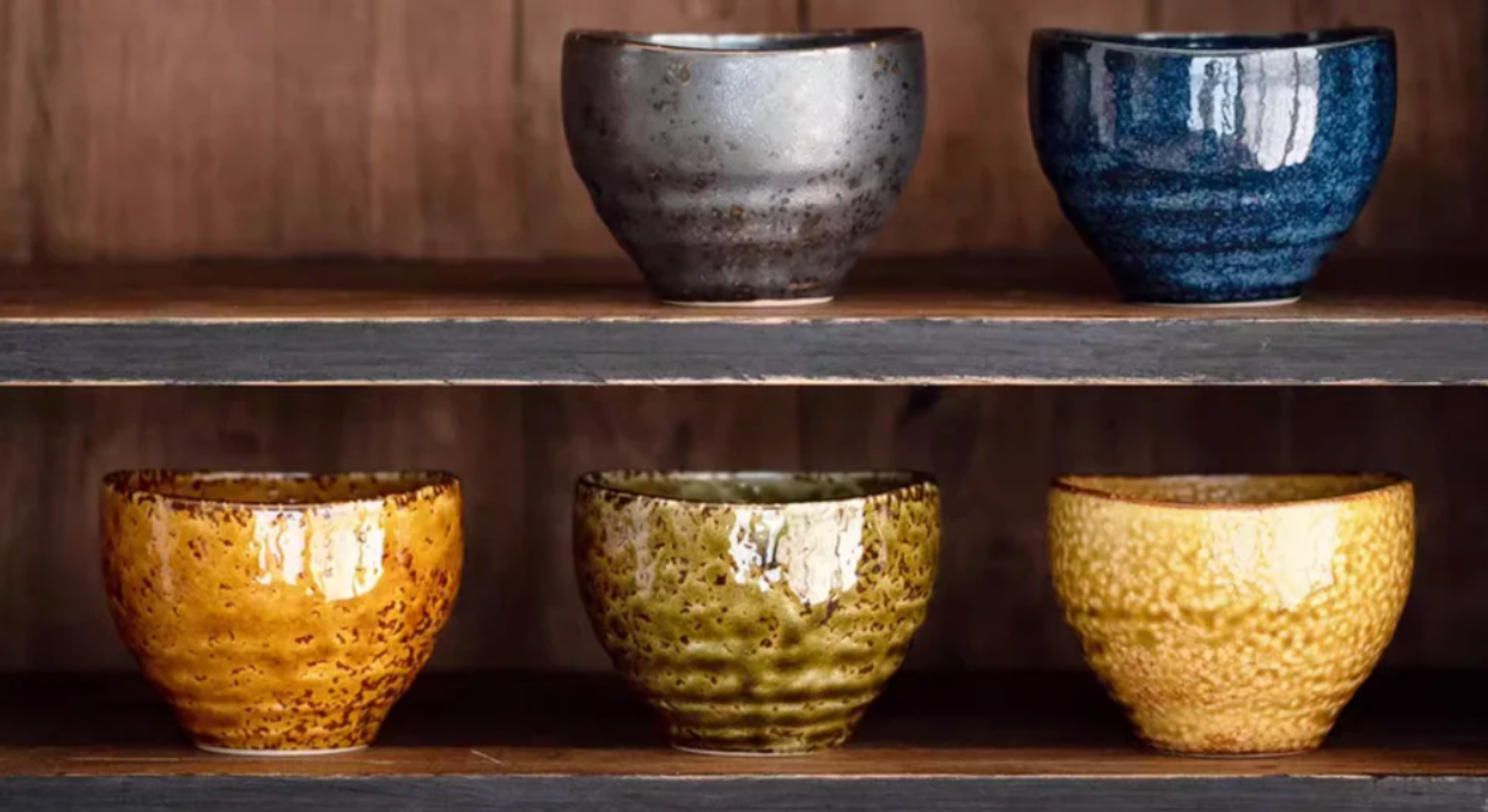
The Art of the Everyday: A Comprehensive Guide to Mino Yaki Pottery
In the quiet interior of a tea room, or upon the minimalist surface of a contemporary dining table, there exists an object that bridges the gap between the terrestrial and the transcendental. It is an object defined not by a single form, but by a thousand years of adaptation. This is Mino Yaki—a ceramic tradition that accounts for over half of Japan’s pottery production and yet remains one of the most intellectually and tactually rewarding subjects for the modern collector. To understand Mino Yaki is to understand the soul of Gifu Prefecture, the technical rigors of the kiln, and the "quiet luxury" of an art form that prioritizes the "soul of the hand" over the sterility of mass production.
This Mino Yaki Guide serves as the definitive pillar of knowledge for the connoisseur, the interior designer, and the enthusiast of handcrafted Japanese ceramics. We invite you to explore the intersections of history, chemistry, and philosophy that define Oriental Artisan’s curated approach to these heritage objects.
The Tono Region: The Geographic Heart of Japanese Ceramics
The narrative of Mino Yaki is inseparable from the geography of the Tono region in southeastern Gifu Prefecture. Comprising the cities of Tajimi, Toki, Mizunami, and Kani, this area represents the highest density of ceramic production in Japan. The region's dominance is the result of a "perfect storm" of natural resources, historical migration, and a climate that has forged a culture of resilience and innovation.
A Geology of Excellence
The Tono region is blessed with an abundance of mogusa clay—a high-quality white clay that is remarkably low in iron and high in refractory properties, making it the ideal canvas for the thick, feldspathic glazes that would later define the Shino style. This geological foundation allowed Mino potters to experiment with temperatures and glaze chemistries that were impossible in other regions.
Historically, the region was favored not only for its clay but for its timber. The vast forests of Gifu provided the red pine necessary to fuel the anagama and noborigama (climbing) kilns, which require steady, high-intensity heat to reach the 1,200°C to 1,400°C thresholds necessary for vitrification.
The Urban Tapestry of Mino Yaki
While "Mino Yaki" is a collective term, the individual cities within the Tono region have evolved distinct specializations. This progressive division of labor has allowed the region to maintain its market share while preserving artisanal niches.
| City | Specialized Production | Technical Legacy |
| Toki | High-output porcelain, earthenware sake bottles, and donburi bowls. | Home to the highest ceramic output in Japan; specializes in mass-produced high quality. |
| Tajimi | Global center for mosaic tiles, Western-style tableware, and fine art ceramics. | Known for its "Town of Tiles" and the prestigious Kobei-gama workshop. |
| Mizunami | "Mizunami Yaki," blending Japanese and Western aesthetics for global luxury markets. | Focuses on innovation and tableware that transitions seamlessly into modern dining. |
| Kani | Historical site of Momoyama-era kiln fragments; centers on artisan revival. | Where Arakawa Toyozo rediscovered the lost techniques of Shino. |
The Chronicles of Fire: 1,300 Years of Evolution
The history of Mino Yaki is a study in creative survival. It is the story of how a utilitarian craft transformed into an avant-garde artistic movement during the 16th century, before adapting once more to the industrial demands of the modern era.
From Sueki to Yamajawan: The Utilitarian Roots
The earliest traces of ceramic production in the Toki area date back 1,300 years to the 7th century. These early pieces, known as Sueki, were unglazed, high-fired earthenwares produced in subterranean anagama kilns. By the Heian period, the introduction of Kaiyu (ash glaze) enabled potters to mimic the prestigious celadons and white porcelains of the Tang and Song dynasties in China.
As demand grew among the common people, the kilns of Mino turned toward the production of yamajawan—"mountain tea bowls." These were simple, unglazed, and mass-produced. While they lacked the refinement of later periods, they established the region’s capacity for high-volume production, a trait that would eventually make Mino Yaki the "chameleon" of Japanese porcelain styles.
The Momoyama Renaissance: The Birth of Quiet Luxury
The most critical juncture in the Mino Yaki Guide occurs during the Azuchi-Momoyama period (1573–1615). This era saw a radical shift in Japanese aesthetics, pioneered by tea masters such as Sen no Rikyu and Furuta Oribe. As the wabi-sabi philosophy—celebrating the beauty in imperfection and the rustic—took hold, the polished symmetry of Chinese imports (karamono) was replaced by a desire for uniquely Japanese forms (wamono).
During this time, potters from the neighboring Seto region fled to Mino to escape the ravages of war, bringing with them advanced glazing and kiln technologies. In the protected valleys of Gifu, they developed the four iconic pillars of Mino Yaki: Shino, Oribe, Kizeto, and Setoguro. These were the first ceramics in Japan to utilize underglaze painting and intentional deformation, marking the birth of handcrafted Japanese ceramics as a medium for personal artistic expression.
The Four Pillars: A Deep Dive into Mino Aesthetics
To truly appreciate Mino Yaki, one must understand the specific tactile and chemical nature of its four primary styles. Each style represents a different interaction between the artisan's intent and the unpredictable nature of the kiln.
Shino-yaki: The First White Satin
Shino-yaki is perhaps the most ethereal of the Mino styles. It was Japan’s first successful white-glazed pottery, characterized by a thick, feldspathic glaze that appears milky, translucent, and soft to the touch.
The Tactile Nature of Shino
The hallmark of Shino is its "orange peel" texture—small pinholes and "crazing" patterns caused by the slow release of gases during the firing process. This creates a surface that is not merely white but holds a dimensional depth, often described as having the soft textures of a Claude Monet painting.
Subtypes of Shino-yaki
-
Muji-shino: Plain white ware, emphasizing the purity of the glaze and the subtle "fire marks" (hi-iro) that appear as orange or pink blushes where the glaze is thinnest.
-
E-shino: Underglaze iron painting featuring motifs from nature—grasses, bridges, or birds. The thick white glaze allows the iron to peek through with a soft, blurred effect.
-
Nezumi-shino: "Mouse-gray" Shino. The piece is first coated with an iron-rich slip, and designs are carved away before the white Shino glaze is applied. The resulting contrast is a sophisticated gray-on-white aesthetic.
Oribe-yaki: The Geometry of Rebellion
If Shino represents stillness, Oribe-yaki represents movement. Named after the tea master Furuta Oribe, this style is defined by its vibrant green copper glaze and its "warped" or asymmetrical forms.
The Oribe Aesthetic
Oribe was a rebellion against the standard. The kutsugata (shoe-shaped) bowls were intentionally deformed, squeezed, or scraped with spatulas while the clay was still wet. The iconic green color comes from copper-sulfate glazing fired in an oxidation atmosphere.
Subtypes of Oribe-yaki
-
Ao-Oribe (Green Oribe): The classic style, where part of the vessel is covered in vibrant green and the rest is decorated with geometric or natural patterns in iron oxide.
-
Oribeguro (Oribe Black): Utilizing the techniques of Setoguro, these pieces are jet-black but often feature the distorted shapes characteristic of Oribe.
-
Narumi-Oribe: A complex technique using two different colors of clay (white and red) joined together, allowing for dual-tone glazing and intricate contrasts.
Kizeto: The Balance of Yellow Ash
Kizeto (Yellow Seto) is valued for its quiet, matte elegance. It features an opaque yellow glaze created by iron-rich wood ash.
Technical Finesse
Collectors prize "Aburage-de" Kizeto, which has a surface texture resembling fried tofu—warm, dry, and subtle. High-quality Kizeto is often thin-walled and decorated with delicate incisions of plum blossoms or irises, highlighted with "tanpan" (copper green) or "tessai" (iron brown) pigments. It is the embodiment of "Yellow Seto vs Shino ware" in terms of aesthetic preference: one offering warm transparency, the other milky opacity.
Setoguro: The Pure Black Void
Setoguro (Seto Black) is the most dramatic of the Mino styles. It is a jet-black pottery achieved through a high-stakes technical maneuver.
The Pull-Out Technique
While the kiln is at its peak temperature of 1,200°C, the potter uses iron tongs to pull the vessel directly from the fire into the ambient air. This rapid cooling locks the iron in the glaze into a deep, lustrous black that cannot be achieved through natural cooling. These tea bowls were the favorites of the warrior elite, providing a profound, obsidian backdrop for the bright green of ceremonial matcha.
Technical Alchemy: Kiln Temperatures and Glaze Chemistry
To provide the technical depth essential for collectors, we must look at the specific parameters that define high-quality Mino Yaki. The transition from raw earth to a culinary masterpiece is a matter of precise chemistry and thermal management.
Temperature and Atmosphere
The atmosphere inside the kiln (oxidation vs. reduction) is as important as the heat itself.
| Style | Firing Temperature | Atmosphere | Primary Glaze Component |
| Shino | 1,200°C - 1,250°C | Reduction (Oxygen Starved) | Feldspar (Choseki). |
| Oribe | 1,200°C - 1,280°C | Oxidation (Oxygen Rich) | Copper Oxide + Ash. |
| Kizeto | 1,150°C - 1,200°C | Oxidation | Iron-rich Wood Ash. |
| Setoguro | 1,200°C (Rapid Cool) | Neutral/Oxidation | High Iron Slip. |
| Porcelain | 1,300°C - 1,400°C | Reduction | Kaolin (Pottery Stone). |
The Physics of Tactility
The "soul of the artisan's hand" is often found in the thickness and viscosity of the glaze. Shino glazes are highly viscous, which is why they "crawl" during firing, exposing bits of the raw clay underneath—a feature that collectors call "the landscape" of the bowl.
In contrast, the glazes used in Sometsuke (blue-and-white porcelain) are transparent and thin, allowing the cobalt design to show with sharp precision. The transition from these ancient methods to modern tables has required artisans to develop functional glazes that mimic these historical effects while being safe for contemporary use—a bridge that Oriental Artisan meticulously vets when selecting handcrafted Japanese ceramics for the global market.
Modern Versatility: The "Chameleon" of Ceramics
Mino Yaki is often called the "chameleon" of Japanese ceramics because it does not have a single, fixed style. Instead, it encompasses over 15 officially recognized styles, ranging from the rustic to the hyper-modern. This versatility is why Mino ware is the premier choice for Michelin-starred chefs and luxury interior designers alike.
Bridging the Gap: From Tea Ceremony to Michelin Stars
Historically, Mino Yaki was the exclusive domain of feudal lords and tea masters. Today, that same spirit of omotenashi (hospitality) is used to elevate the modern dining experience. At high-end establishments across the globe, the pottery is as integral to the meal as the ingredients.
Why Designers and Chefs Choose Mino Yaki:
-
Heat Retention: Fired at high temperatures, Mino ceramics are excellent at keeping soups and teas at their ideal temperatures longer than standard porcelain.
-
Visual Contrast: The "Black Seto" or "Oribe Green" provides a striking visual contrast to the seasonal colors of Japanese cuisine—white rice, red tuna, and green vegetables.
-
Customization: Mino artisans have a history of borrowing forms from lacquerware and Chinese porcelain, making them uniquely capable of producing custom shapes that fit contemporary plating trends.
The Japandi Aesthetic: Minimalist Modern Dining
In the world of interior design, the "Japandi" trend (Japanese minimalism meets Scandinavian functionality) has created a surge in demand for authentic Mino ware. The warm, honeyed neutrals of Kizeto and the rustic, textured whites of Shino align perfectly with the "warm minimalism" movement.
These pieces are no longer relegated to display cabinets; they are "functional art." A Shino mug or an Oribe pasta plate brings a sense of quiet luxury to the home—a subtle reminder of the maker’s presence in a world increasingly dominated by the digital and the transient.
The Collector’s Eye: How to Identify High-Quality Mino Yaki
For the discerning collector, identifying high-quality Mino Yaki requires an understanding of both the physical object and the historical provenance. The "soul" of the artisan’s hand is visible to those who know where to look.
Identifying Authenticity and Quality
When evaluating handcrafted Japanese ceramics, use the following criteria to ensure you are acquiring a piece of lasting value:
-
The Base and Foot (Kodai): Authentic pieces will show natural signs of the clay type. For Shino, look for the toothier aspect of mogusa clay on the unglazed foot. The foot should feel intentional, often showing the marks of a bamboo spatula or the potter's finger marks where the piece was held during dipping.
-
Weight and Balance: High-quality Mino Yaki is deceptive. A piece that looks heavy should feel surprisingly well-balanced in the hand. A well-balanced teacup or bowl indicates a master's understanding of structural precision.
-
Glaze Depth and "Crawling": In Shino and Oribe, the glaze should feel like a thick, living layer. Look for crawling or pinholing—in artisan pottery, these are not defects but landscapes that prove the piece was wood-fired and handmade.
-
Artisan Markings: Look for the Inkan (impressed seal) or Kao (painted signature) on the base. Researching the artist or the kiln (such as the Kobei-gama or Suigetsu-gama) can verify the piece’s pedigree.
The Myth of Perfection
One of the most important lessons in the "Collector's Eye" is to embrace asymmetry. Perfect symmetry is the hallmark of the machine. In contrast, handcrafted Mino Yaki celebrates the warped and the distorted. These irregularities are the fingerprints of the artisan and the signature of the fire.
| Feature | Authentic Artisan Mino Yaki | Mass-Produced "Mino-Style" |
| Symmetry | Often asymmetrical or intentionally "warped." | Perfectly symmetrical and uniform. |
| Glaze | Variations in thickness, "crawling," and fire marks. | Even, flat coverage with no character. |
| Weight | Balanced and ergonomic. | Often bottom-heavy or overly light. |
| Markings | Hand-painted Kao or kiln-specific Inkan. | Stamped "Made in Japan" or no mark. |
| Tactility | "Orange peel" or "satin" feel; varies by piece. | Smooth, glassy, and sterile. |
The Oriental Artisan Commitment: A Living Heritage
At Oriental Artisan, we believe that luxury is found in the unhurried. Our curated collection of Mino Yaki is the result of direct relationships with the workshops and kilns of Gifu Prefecture. We do not merely sell ceramics; we preserve the tender, beautiful stories that take place between maker and user.
By choosing Oriental Artisan, you are supporting the continuation of 1,300 years of heritage. Every "Authentic Mino Ware" piece we offer is a testament to the resilience of Japanese craftsmanship. We bridge the gap between the ancient kilns of Toki and Tajimi and the discerning tables of the global collector, ensuring that the "Art of the Everyday" remains a vibrant, living reality.
The Future of Mino Yaki
As we look toward the future, the Mino region continues to innovate. Young artists are reinterpreting traditional styles for global audiences, experimenting with new glaze formulas and minimalist forms that cater to modern aesthetics. This "Modern Adaptation" ensures that Mino Yaki remains relevant, proving that the values of the Momoyama period—simplicity, authenticity, and beauty—are timeless.
Bringing History into Your Home
The journey through the Mino Yaki Guide reveals a tradition that is as much about the spirit as it is about the stone. Whether it is the milky white satin of a Shino bowl or the bold, emerald rebellion of an Oribe platter, these objects invite us to find resplendent calm in our daily rituals.
The quiet luxury of Mino Yaki lies in its ability to be both a tool and a treasure. It is a tangible slice of Japanese history that elevates the mundane—the morning coffee, the evening meal—into an artful experience.
We invite you to bring this legacy into your own space. Explore the depths of the Tono region through our carefully selected offerings, and discover why Mino Yaki remains the envy of the ceramic world.
Explore the Collection
Step into the "Ceramic Valley" and find the object that will become a part of your own history. Visit the Oriental Artisan collection today and bring a piece of Japanese soul into your home.

Leave a comment
This site is protected by hCaptcha and the hCaptcha Privacy Policy and Terms of Service apply.