


Why Jilan Porcelain Is So Rare and Beautiful: The Imperial Blue That Captivated Emperors
Introduction
There are few colors in the world of ceramics capable of stopping a collector mid-step.
Jilan porcelain (霁蓝瓷) possesses that power.
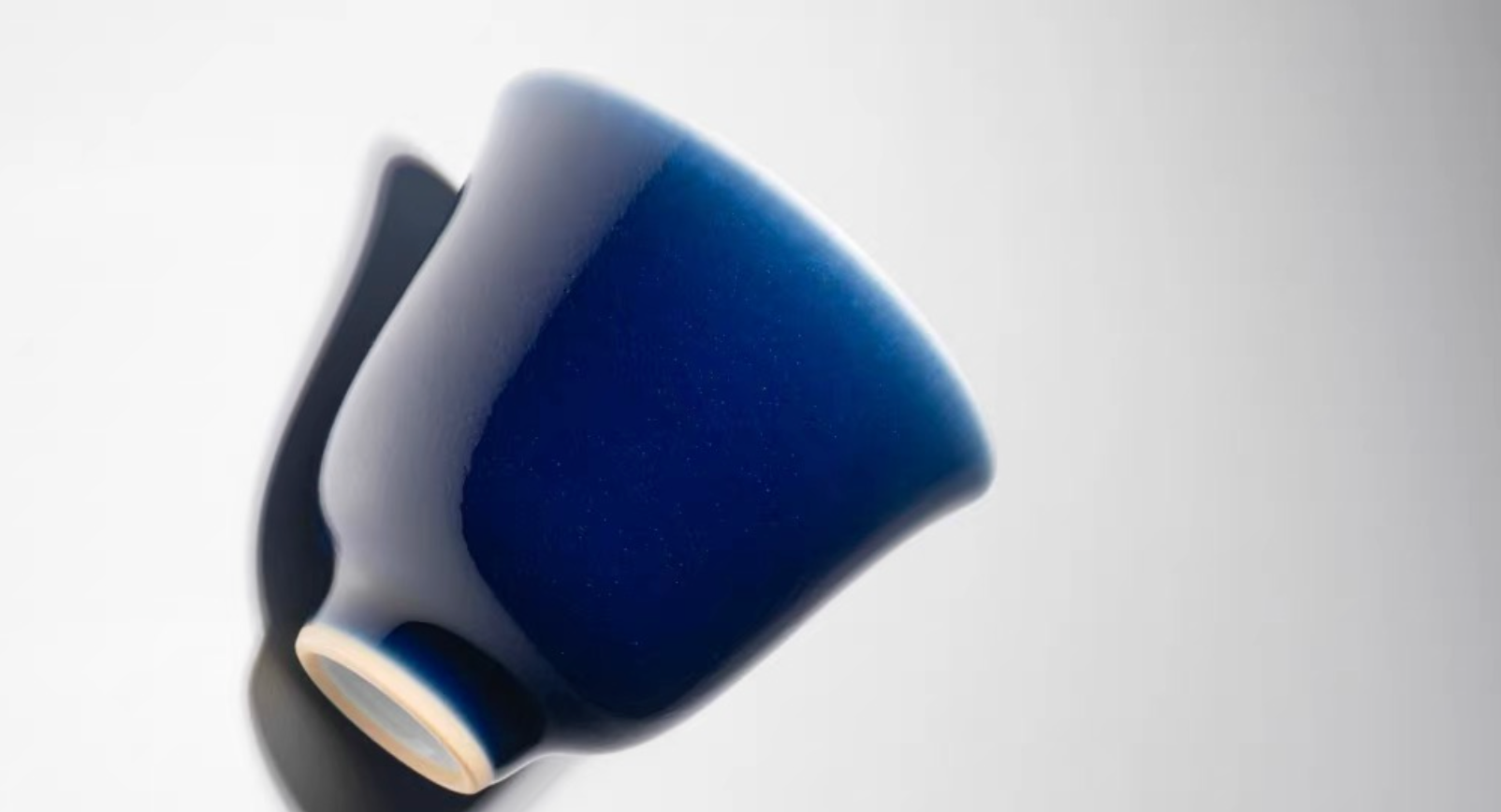
At first glance, an authentic piece appears almost impossibly blue—a deep sapphire surface so rich that it seems to absorb light rather than merely reflect it. Under changing illumination, the glaze reveals hidden layers of depth, resembling a midnight sky after rainfall, a tranquil ocean at dusk, or a polished gemstone formed over millennia.
Unlike blue-and-white porcelain, which dazzles through painted decoration, Jilan porcelain captivates through restraint. There are no intricate motifs competing for attention. No elaborate scenes or floral patterns. Instead, there is only color—pure, profound, and endlessly mesmerizing.
This extraordinary blue became one of the most admired ceramic achievements in imperial China. Produced for emperors, court officials, and ceremonial purposes, Jilan porcelain represented technical mastery at the highest level. Its creation demanded rare materials, exacting kiln conditions, and generations of accumulated knowledge.
Even today, centuries after its emergence, authentic Jilan porcelain remains among the most difficult ceramic traditions to reproduce successfully. Collectors, tea enthusiasts, interior designers, and ceramic connoisseurs continue to seek it out not only for its beauty but for the remarkable story embedded within every piece.
What makes Jilan porcelain one of the most beautiful and elusive ceramic traditions in Chinese history?
The answer lies in a fascinating combination of imperial patronage, artistic refinement, scientific complexity, and extraordinary craftsmanship.
What Is Jilan (霁蓝) Porcelain?
Quick Answer: What Is Jilan Porcelain?
Jilan porcelain (霁蓝瓷) is a traditional Chinese monochrome porcelain characterized by a deep sapphire-blue glaze created through cobalt-based coloring agents fired at high temperatures. Historically associated with imperial kilns and court use, it is celebrated for its rich color, technical difficulty, and exceptional beauty.
The term "霁蓝" (Jì Lán) carries poetic significance.
The character "霁" refers to the clearing of rain clouds after a storm, while "蓝" means blue.
Together, the name evokes the image of a freshly washed sky after rainfall—a profound, luminous blue that feels both serene and majestic.
This poetic association reflects an important characteristic of traditional Chinese aesthetics. Chinese artisans often sought inspiration from nature, attempting to capture fleeting atmospheric moments in ceramic form. Jilan glaze embodies this philosophy perfectly.
Unlike painted porcelain, Jilan belongs to the distinguished category of monochrome ceramics. These wares rely on a single glaze color rather than decorative imagery to achieve artistic impact.
In Chinese ceramic history, monochrome glazes were often considered the ultimate test of a potter's skill.
When decoration disappears, every detail becomes visible:
-
The quality of the clay
-
The shape of the vessel
-
The smoothness of the glaze
-
The consistency of the firing
-
The purity of the color
Nothing can hide imperfections.
This is one reason why master ceramic artists and collectors have long admired monochrome porcelains as some of the highest achievements in Chinese ceramic art.
The Imperial Origins of Jilan Porcelain
Quick Answer: What Is the History of Jilan Porcelain?
Jilan porcelain reached its greatest prominence during the Ming Dynasty, particularly through production at imperial kilns in Jingdezhen. Reserved for court use, ceremonial functions, and elite patronage, it became one of China's most prestigious monochrome ceramic traditions.
The story of Jilan porcelain is inseparable from the rise of imperial ceramic production.
By the early Ming Dynasty, Jingdezhen had become the undisputed center of Chinese porcelain manufacturing. Supported by imperial investment and staffed by highly skilled artisans, its kilns produced ceramics destined for the highest levels of society.
Among the many innovations developed during this period, monochrome blue glazes emerged as some of the most technically demanding and visually striking.
The Xuande period (1426–1435) is often regarded as a golden age for cobalt-based ceramic artistry. Imperial workshops refined glazing techniques to unprecedented levels, achieving deeper and more uniform blues than previously possible.
Subsequent reigns, including the Chenghua period, continued to value these monochrome masterpieces.
Within the Forbidden City, blue held profound symbolic meaning.
It represented:
-
Heaven
-
Cosmic order
-
Authority
-
Spiritual purity
-
Imperial legitimacy
As a result, blue-glazed porcelain frequently appeared in ceremonial contexts and court collections.
Imperial patronage elevated Jilan porcelain beyond a decorative object.
It became a symbol of refinement, prestige, and cultural sophistication.
Because imperial standards were extraordinarily strict, only the finest examples survived selection. Many imperfect pieces were rejected or destroyed, further contributing to the rarity of authentic historical specimens.
The Extraordinary Beauty of Jilan Porcelain
Why Is Jilan Porcelain Considered So Beautiful?
Collectors admire Jilan porcelain because its deep sapphire-blue glaze creates extraordinary visual depth, subtle light interaction, and a sense of elegance that few decorative techniques can match.
The Color
The first thing anyone notices is the blue.
Not a bright blue.
Not a decorative blue.
But a profound, almost meditative blue.
Depending on lighting conditions, authentic Jilan glaze can resemble:
-
A midnight sky after rain
-
Deep ocean waters
-
Polished lapis lazuli
-
A sapphire gemstone
-
Distant mountain shadows at dusk
The color feels alive.
As light moves across the surface, subtle variations emerge, creating visual complexity within what appears to be a single hue.
This dynamic quality is one reason photographs often struggle to capture the true beauty of Jilan porcelain.
It must be experienced in person.
The Surface
Equally captivating is the glaze surface itself.
Masterfully fired Jilan porcelain possesses a remarkable smoothness.
The glaze appears almost liquid.
Light glides effortlessly across the vessel, creating reflections that emphasize its contours and proportions.
This interaction between color, light, and form transforms even simple shapes into objects of extraordinary presence.
A modest tea cup can command attention as effectively as an elaborate sculpture.
The Power of Simplicity
In Western decorative traditions, complexity is often associated with luxury.
Chinese ceramic aesthetics frequently embrace the opposite philosophy.
The greatest challenge is not adding decoration.
The greatest challenge is achieving perfection through simplicity.
Monochrome porcelains exemplify this ideal.
Without painted motifs or carved embellishments, the glaze itself becomes the artwork.
Every nuance matters.
Every imperfection becomes visible.
This pursuit of purity is one reason connoisseurs often regard monochrome ceramics as more sophisticated than heavily decorated wares.
Why Jilan Porcelain Is So Rare
Quick Answer: Why Is Jilan Porcelain Rare?
Jilan porcelain is rare because it requires exceptionally pure materials, precise cobalt formulations, highly controlled kiln conditions, and extensive artisan expertise. Even small errors can ruin a piece, leading to high failure rates during production.
This rarity is not marketing.
It is a direct consequence of the manufacturing process.
Even today, producing high-quality Jilan porcelain remains remarkably difficult.
Rare Materials
The distinctive blue color depends on cobalt compounds.
Historically, obtaining suitable cobalt was a major challenge.
The material needed to meet strict purity standards because impurities could cause:
-
Color distortion
-
Surface defects
-
Unwanted discoloration
-
Firing instability
Throughout Chinese ceramic history, access to premium cobalt significantly influenced glaze quality.
The finest pieces often relied upon carefully selected materials processed with meticulous attention.
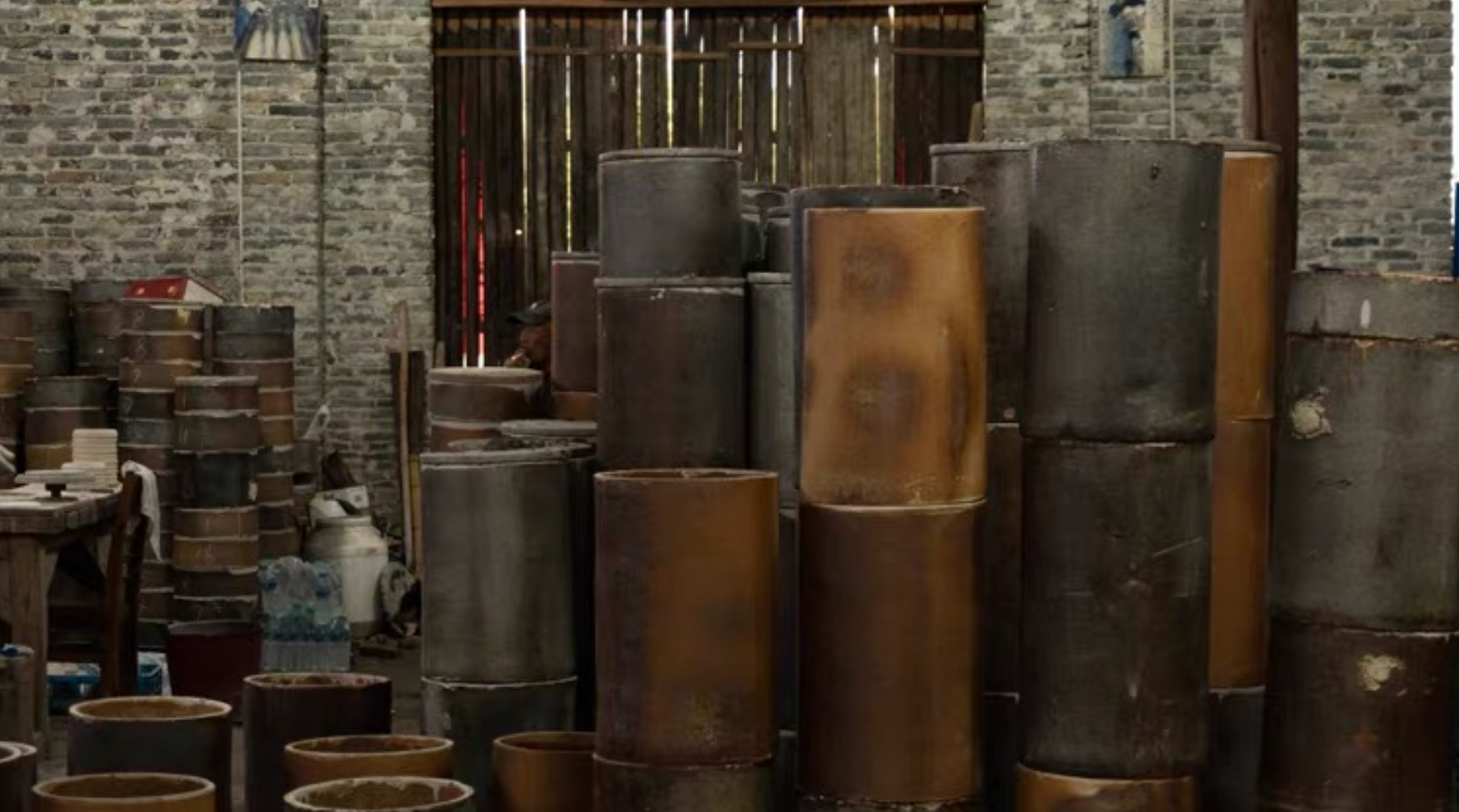
Extreme Firing Difficulty
Color alone does not create Jilan porcelain.
The kiln does.
A beautifully prepared glaze can still fail during firing.
Traditional Jilan glazes require temperatures exceeding 1,250°C (2,282°F).
At these temperatures, even minor fluctuations can dramatically affect results.
Artisans must control:
-
Heat distribution
-
Oxygen levels
-
Firing duration
-
Cooling rates
-
Kiln atmosphere
A small variation can shift the blue toward dullness, unevenness, or undesirable tones.
The margin for error is astonishingly small.
High Failure Rates
One of the least understood aspects of luxury ceramics is the number of pieces that never reach the market.
Jilan porcelain is notorious for production losses.
Common defects include:
Uneven Color
Variations in glaze thickness can produce inconsistent blue tones.
Pinholes
Tiny surface imperfections may emerge during firing.
Glaze Crawling
The glaze can pull away from sections of the body, exposing the porcelain beneath.
Surface Blemishes
Dust, contaminants, or firing irregularities may compromise the finish.
Inconsistent Depth
The blue may lack the visual richness expected of high-quality Jilan ware.
For collector-grade pieces, these defects are unacceptable.
Many ceramics are discarded before ever leaving the workshop.
Master Craftsmanship Required
The final ingredient is human expertise.
No machine can fully replace the judgment of a skilled ceramic artist.
Master artisans develop their abilities over decades.
They learn to interpret:
-
Clay behavior
-
Glaze chemistry
-
Kiln dynamics
-
Seasonal variations
-
Environmental conditions
This accumulated knowledge often determines whether a piece succeeds or fails.
The rarity of experienced craftsmen contributes directly to the rarity of exceptional Jilan porcelain itself.
The Science Behind the Blue
What Is Jilan Glaze?
Jilan glaze is a cobalt-based ceramic glaze that develops its distinctive deep blue color through chemical transformations occurring during high-temperature firing.
Although the visual effect appears magical, the underlying process is rooted in chemistry.
Cobalt is responsible for the famous blue.
When incorporated into the glaze and exposed to intense kiln temperatures, cobalt ions interact with surrounding materials and light in complex ways.
The result is a color that appears remarkably saturated while maintaining translucency and depth.
This combination is difficult to replicate because numerous variables influence the final outcome:
-
Mineral composition
-
Glaze thickness
-
Firing temperature
-
Kiln atmosphere
-
Cooling schedule
Even when using identical recipes, slight differences can produce noticeably different results.
This explains why authentic artisan porcelain often displays subtle individuality.
Each firing becomes a unique event.
In many ways, Jilan porcelain represents a collaboration between artist, material, and fire.
The artisan can guide the process.
But complete control remains impossible.
That element of uncertainty is part of what makes each successful piece so remarkable.
%20possesses%20that%20power.%0AAt%20first%20glance,%20an%20authentic%20piece%20appears%20almost%20i...)
Leave a comment
This site is protected by hCaptcha and the hCaptcha Privacy Policy and Terms of Service apply.