


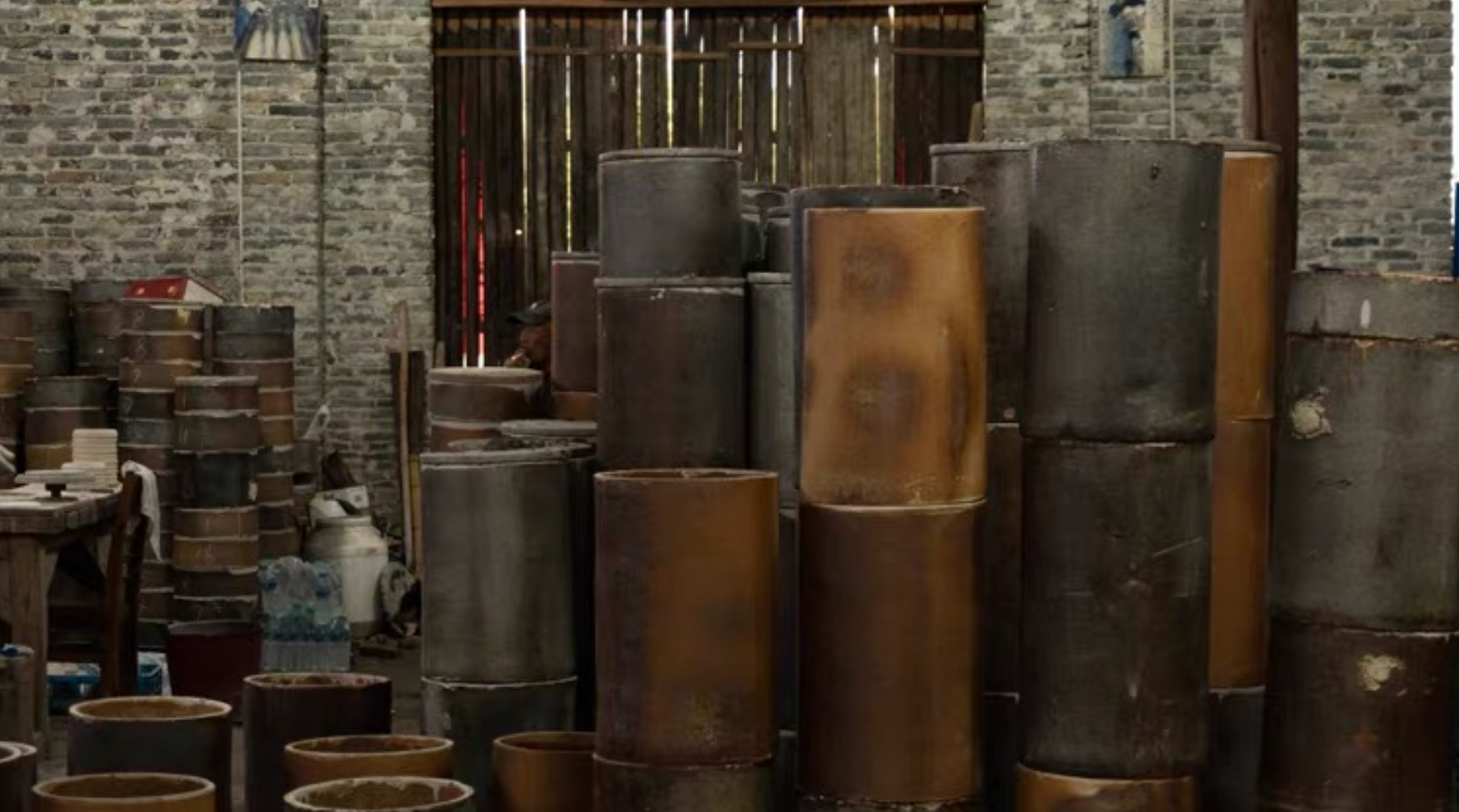
The Beauty of Wood-Fired Ceramics: Why Nature Creates What No Factory Can Replicate
Introduction
Imagine standing before a kiln that has been burning continuously for four days.
The air shimmers with heat. Flames roar through chambers packed with carefully placed ceramic vessels. Artisans take turns feeding split wood into fireboxes throughout the day and night. Sparks rise into the darkness. Ash drifts through the kiln like snow carried by a fiery wind.
Inside, an extraordinary transformation is taking place.
Clay is becoming stone.
Ash is becoming glaze.
Fire is becoming art.
When the kiln is finally opened days later, nobody—not even the most experienced master potter—knows exactly what will emerge.
Some pieces will display flowing rivers of natural ash glaze.
Others may reveal subtle golden flashes, charcoal shadows, or surfaces that resemble weathered stone, ancient bark, or distant landscapes.
Every firing is unique.
Every piece is unrepeatable.
This is the enduring magic of wood-fired ceramics, known in Chinese as 柴烧 (Cháishāo).
In an era dominated by automation, precision manufacturing, and perfect uniformity, wood-fired ceramics remain refreshingly unpredictable. They celebrate nature's participation in the creative process and remind us that true beauty often emerges from collaboration rather than control.
For collectors, tea enthusiasts, and lovers of craftsmanship, wood-fired ceramics represent something increasingly rare: objects that cannot be mass-produced, duplicated, or fully predicted.
They are the result of patience, skill, fire, and time.
What Is Wood-Fired Pottery?
Quick Answer
Wood-fired pottery is ceramic ware fired in a kiln fueled primarily by wood rather than electricity or gas. During firing, ash from the burning wood settles on the ceramic surfaces and melts at high temperatures, creating natural ash glazes and unique visual effects that cannot be precisely replicated.
Unlike modern industrial production, wood-firing introduces a dynamic relationship between clay, fire, atmosphere, ash, and artisan judgment.
The resulting ceramics often display:
-
Natural ash deposits
-
Organic glaze patterns
-
Flame markings
-
Rich surface textures
-
Unique color variations
-
Exceptional depth and character
No two pieces are ever identical.
This uniqueness is one of the primary reasons wood-fired ceramics are so highly valued worldwide.
The Ancient Origins of Wood-Fired Ceramics
Long before electric kilns existed, all ceramics were fired using wood.
In many ways, the history of ceramics is also the history of humanity learning to control fire.
Archaeological evidence suggests that wood-fired pottery traditions extend back thousands of years. Ancient civilizations across China, Japan, Korea, Europe, and the Middle East developed increasingly sophisticated kiln technologies to transform clay into durable ceramic vessels.
China played a particularly important role in this story.
By the Tang Dynasty and Song Dynasty, Chinese kiln builders had already achieved remarkable technical sophistication.
Dragon kilns (龙窑), climbing kilns built along hillsides, became capable of reaching extraordinarily high temperatures.
These kilns allowed artisans to produce:
-
Stoneware
-
Porcelain
-
Tea ware
-
Ritual vessels
-
Decorative ceramics
Many of the world's most celebrated ceramic traditions were born within wood-fired kilns.
Long before modern industrial ceramics existed, fire and wood were shaping masterpieces that continue to inspire collectors today.
Fire, Ash, and Transformation
One of the reasons wood-firing fascinates collectors is that the process remains partially beyond human control.
The artisan prepares the clay.
The artisan designs the form.
The artisan loads the kiln.
But once the firing begins, nature becomes a collaborator.
Fire behaves like a living force.
Flames move unpredictably through the kiln.
Ash travels with air currents.
Temperatures fluctuate across different chambers.
Each vessel experiences a unique microenvironment.
As a result, every piece undergoes its own transformation.
This dynamic relationship between control and unpredictability is central to the appeal of wood-fired ceramics.
The artisan guides the process.
Nature completes it.
The Natural Ash Glaze Phenomenon
What Is Natural Ash Glazing?
Natural ash glaze occurs when wood ash lands on ceramic surfaces during firing and melts into a glass-like coating at high temperatures.
This phenomenon is one of the defining characteristics of authentic wood-fired ceramics.
As wood burns, minerals within the ash become airborne.
Over many hours—or even days—these particles settle onto the pottery.
At temperatures often exceeding 1,250°C (2,282°F), the ash begins to melt.
The molten ash fuses with the ceramic surface, creating a naturally formed glaze.
Unlike factory-applied glazes, these effects cannot be painted on or mechanically reproduced.
The resulting surfaces may display:
-
Glassy pools
-
Flowing drips
-
Satin textures
-
Crystalline effects
-
Golden highlights
-
Greenish ash deposits
-
Layered depth
The kiln itself becomes part of the artistic process.
Every firing creates its own visual language.
Why No Two Pieces Are Ever the Same
Quick Answer
Every wood-fired ceramic piece is unique because flame paths, ash deposits, kiln temperatures, oxygen levels, and firing conditions vary across the kiln. Even pieces fired side by side can develop dramatically different appearances.
This unpredictability is one of the defining features of authentic wood-firing.
Consider two tea cups positioned only inches apart.
One may emerge with dramatic ash deposits and flowing glaze effects.
The other may develop subtle flame markings and a dry, textured surface.
Neither outcome is inherently better.
Both are expressions of the firing environment.
Collectors often compare wood-fired ceramics to fingerprints.
Each piece possesses characteristics that can never be repeated exactly.
In a world of identical products, this individuality carries tremendous appeal.
Why Wood-Fired Pottery Is So Expensive
Quick Answer
Wood-fired pottery is expensive because it requires extensive labor, large quantities of fuel, specialized kilns, highly skilled artisans, long firing times, and significant production risks. Many pieces fail during firing, increasing the cost of successful works.
The economics of wood-firing differ dramatically from industrial ceramics.
A factory can produce thousands of identical pieces efficiently.
A wood-firing workshop often spends:
-
Weeks preparing work
-
Days loading the kiln
-
Several days firing continuously
-
Additional days cooling
-
Significant time sorting results
A single firing may require:
-
Hundreds or thousands of kilograms of wood
-
Around-the-clock labor
-
Years of accumulated expertise
Even then, losses remain common.
Cracks.
Warping.
Glaze defects.
Unexpected kiln behavior.
The extraordinary commitment required explains why authentic wood-fired ceramics occupy the luxury end of the ceramic market.
Collectors are not simply purchasing a cup or bowl.
They are acquiring the result of an intricate and demanding artistic process.
The Aesthetic Beauty of Wood-Fired Ceramics
Perhaps the greatest appeal of wood-fired ceramics lies in their visual depth.
Unlike industrial ceramics, which often prioritize uniformity, wood-fired surfaces celebrate variation.
The beauty is organic rather than manufactured.
Common characteristics include:
Natural Texture
Surfaces often feel alive beneath the fingertips.
Earthy Coloration
Wood ash produces subtle, nature-inspired tones.
Visual Complexity
Multiple layers of color and texture emerge from a single firing.
Sense of Time
Many pieces appear ancient, weathered, or shaped by natural forces.
Authenticity
The firing process leaves visible evidence of its journey.
Every mark tells a story.
Every surface reveals interaction between clay, flame, and ash.
This is beauty that feels discovered rather than manufactured.

Leave a comment
This site is protected by hCaptcha and the hCaptcha Privacy Policy and Terms of Service apply.